Posts Tagged ‘cycling’
Roman holiday short and sweet
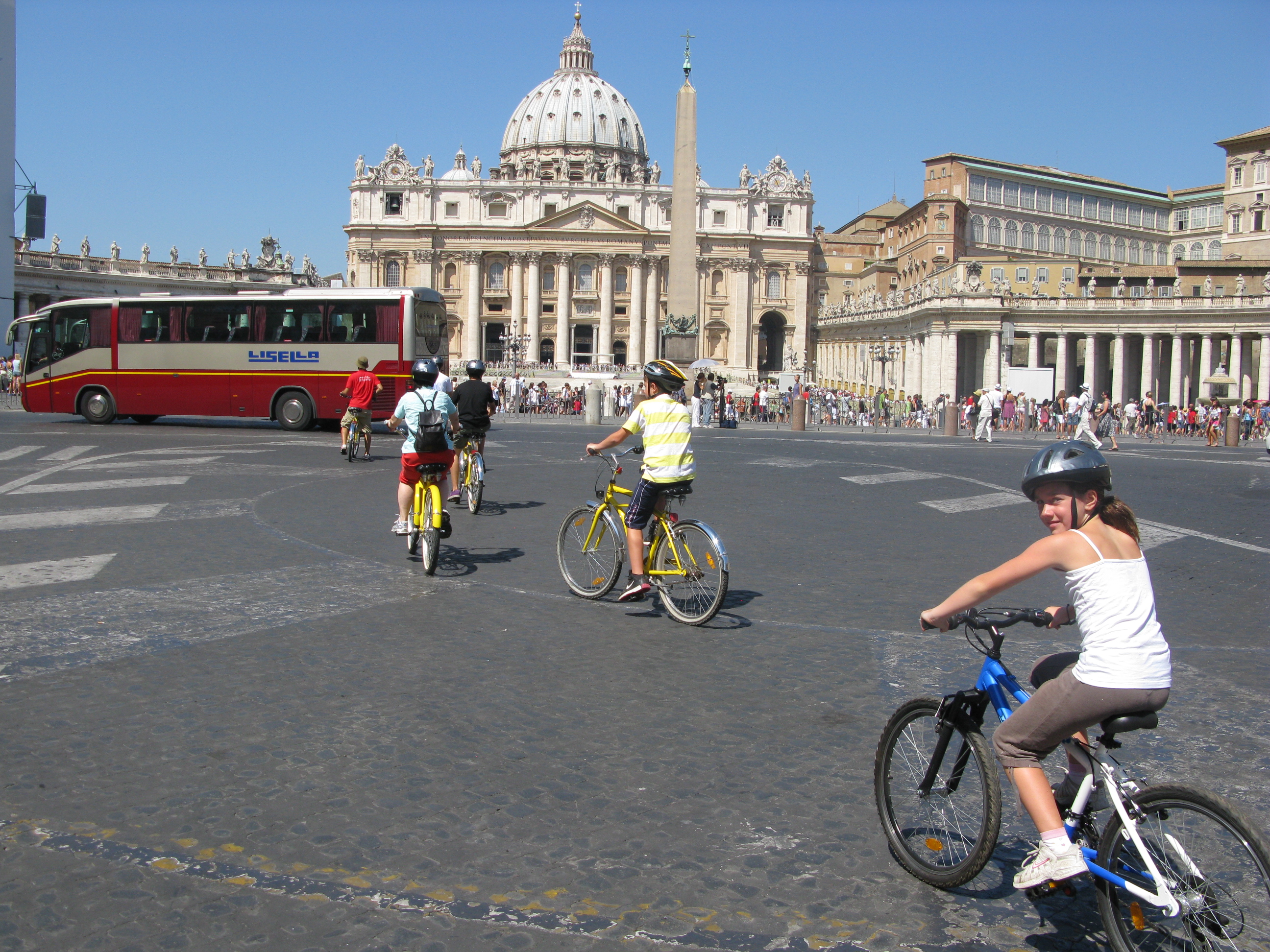
It's not exactly the stuff of gladiators, but cycling Rome will still get your adrenaline pumping.
You think skydiving is exciting?
Try riding a bike through Rome for four hours: With your kids.
“Roman motorists tend to think of pedestrian crossings as just another hurdle to be navigated,” said Roberto, our guide. “In other words, don’t expect them to stop … for anything.”
Roman motorists probably tend to think of cyclists as ‘another hurdle’, which may explain why we saw so few bicycles during the two days we were there. But with less than 48 hours in Rome, a bike tour made sense. Riding plugs you into a city’s arteries and its heartbeat. When those arteries get as clogged as Rome’s, two wheels keep you moving and come with a breeze — more than welcome in 35-degree heat.
We mounted cruiser bikes on Via Ostilia, a back street a couple of blocks from the Colosseum. A minute later we were pedalling past the most iconic symbol of the Roman
Empire. Over the course of six centuries, half a million people are estimated to have lost their lives fighting in the Colosseum. “Sometimes it would be flooded to stage water battles,” Roberto told us.
My mind wandered to Russell Crowe, gladiators, executions and exotic animal hunts.
“Wouldn’t it be great if they converted it into a soccer stadium,” said my son Ryan.
“Vancouver library looks like that,” said my daughter Emma.
Watching the hordes sweat in lineups to enter the Colosseum only made me happier to push on, following closely behind Roberto as he sailed past tour buses and taxis to Circus Maximus.
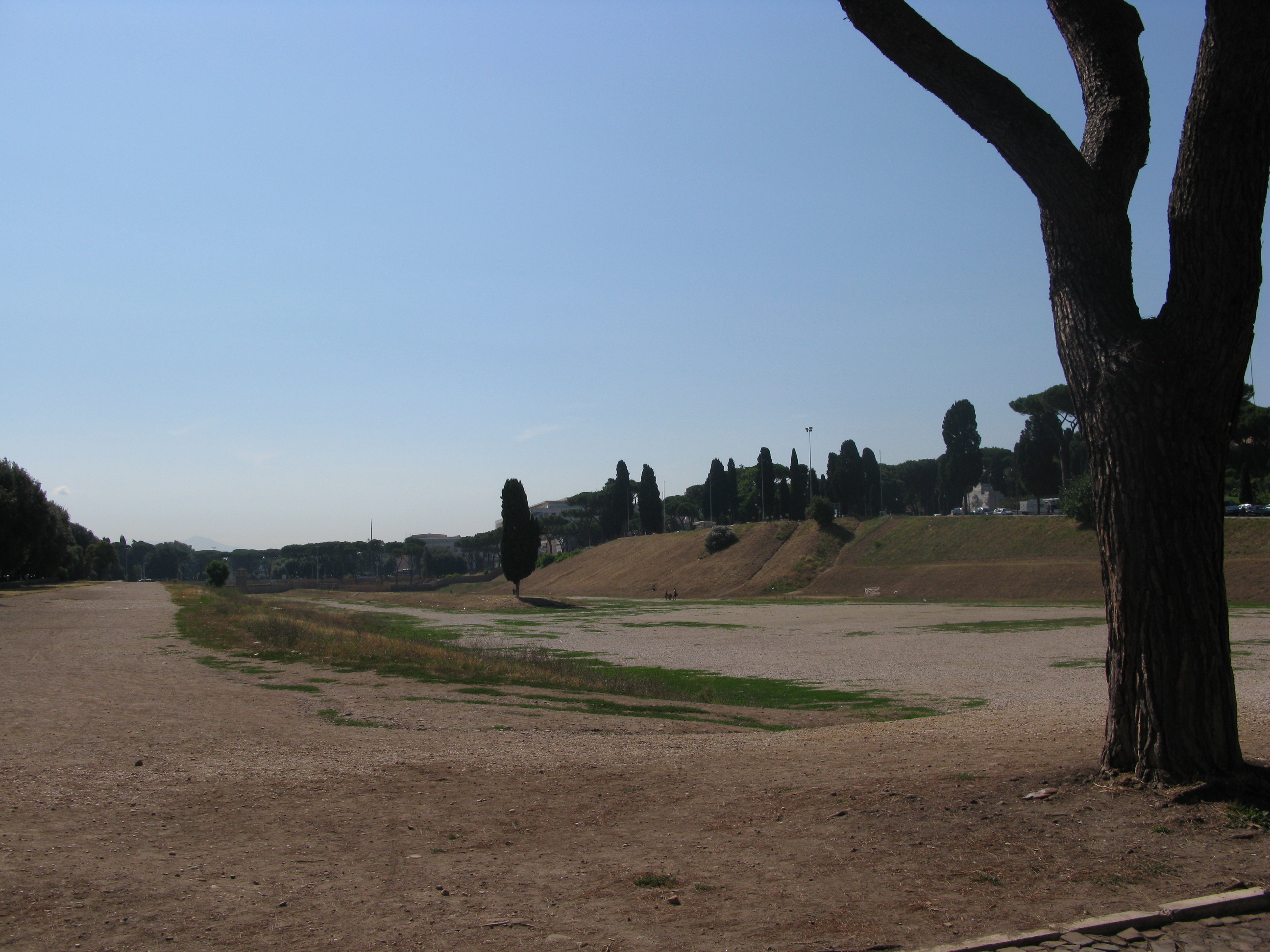
This used to be the largest man-made venue in the world. Where did everything go?
Considering it was the greatest arena ever built, once accommodating 330,000 people, Circus Maximus today is an anticlimax. Dog walkers and joggers use the greenery where chariots once thundered. The only evidence of the venue’s illustrious past is the spina, a raised median in the middle of what was once the racing track.
“Much of the Rome you see today was built with material looted from Circus Maximus,” said Roberto. “They say parts of Circus Maximus are all over the city.”
The venue between the Aventine and Palatine hills still serves as a useful meeting place for Romans. More than 700,000 of them gathered here to celebrate Italy’s soccer triumph in the 2006 World Cup. And those who weren’t there packed Campo dei Fiori, where we cycle a little later.
“It was chaos in here … anarchy” said Roberto, recalling the night Italy beat France on penalty kicks.
A few market vendors were quietly selling fish and veg in the piazza, which is fronted by bars and cafés. But it was easy to imagine several thousand soccer fans funnelling
through narrow surrounding streets and conquering the piazza for a night. And they didn’t have to go far to gloat. Just around the corner is Palazzo Farnese, 150 feet of
Roman Renaissance splendour and the home of the French embassy.
“There were a few hundred French fans gathered outside,” said Roberto. “They left pretty quietly afterwards.”
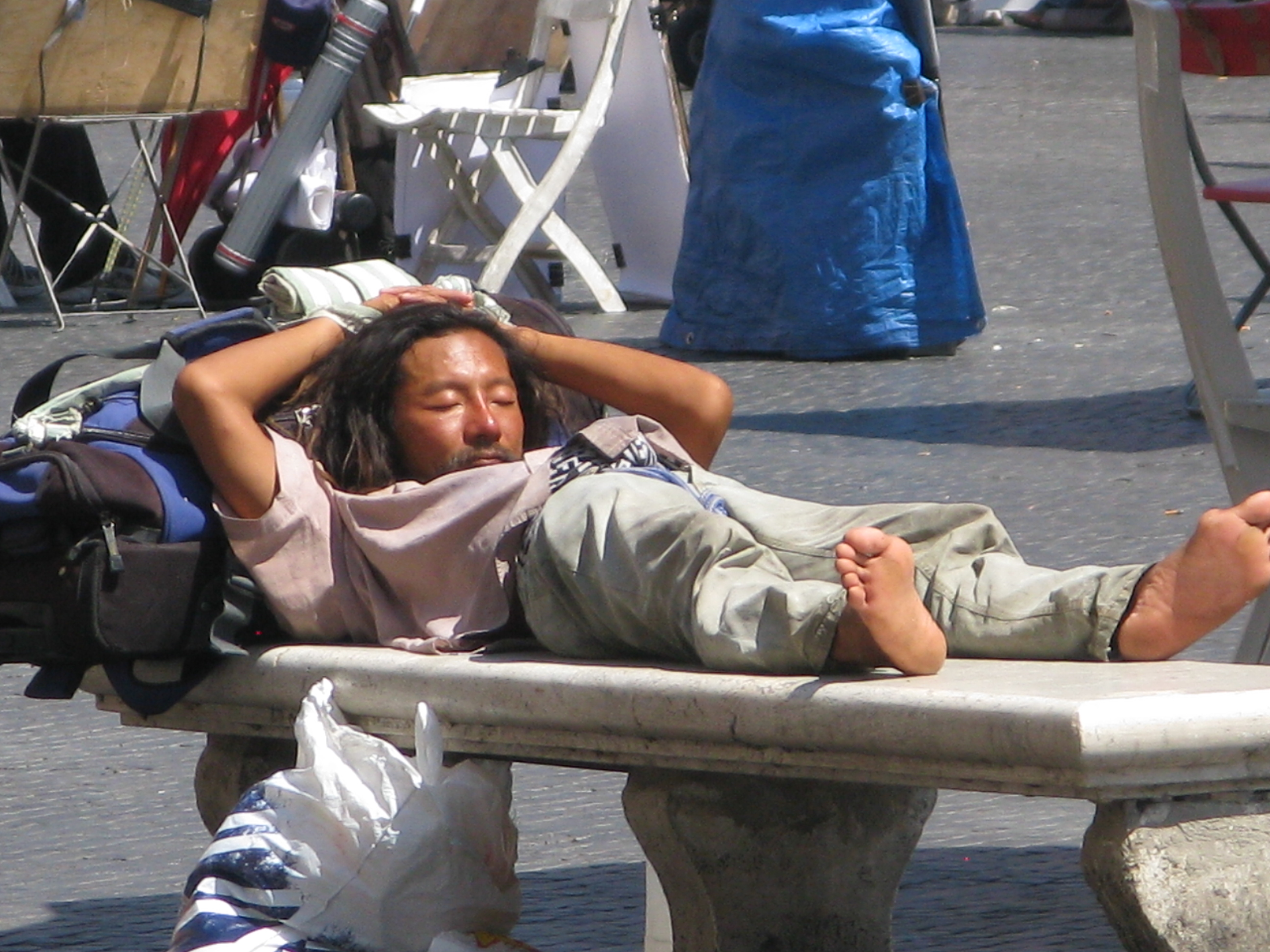
Nap time in Roma.
We refilled our water bottles from an antiquated cast-iron water fountain. You’ll find a municipal water fountain on almost every street corner in Rome. They all bear the initials SPQR, ‘Senatus Populas Que Romanus,’ or ‘the Senate and the People of Rome’. That’s if you can see past the graffiti, which taints almost every public space in
Rome. Thankfully graffiti is harder to spot in Piazza Navona, a square so beautiful cyclists tend to spontaneously dismount.
Emma walked off to watch sketch artists at work while the rest of us sat and gazed at the Fountain of the Four Rivers, Gianlorenzo Bernini’s Baroque Roman masterpiece. Four Gods frame the centrepiece of the fountain, the Obelisk of Domitian, which is crowned with a dove. They represent the Nile, Danube, Plate and Ganges, the world’s known major rivers in 1651 when Bernini created the landmark.
What little shade cast by the Obelisk had been taken so we admired the Gods, all sinew and marble menace, while cooling our wrists in the water. Moments later we were back on our bikes slaloming between pedestrians ambling through Piazza Navona. The more we cycled the more comfortable we became navigating traffic. Perhaps it’s the raised saddle of a cruiser bike, but we couldn’t help feeling somehow superior to the other tourists trudging along baked cobblestones.
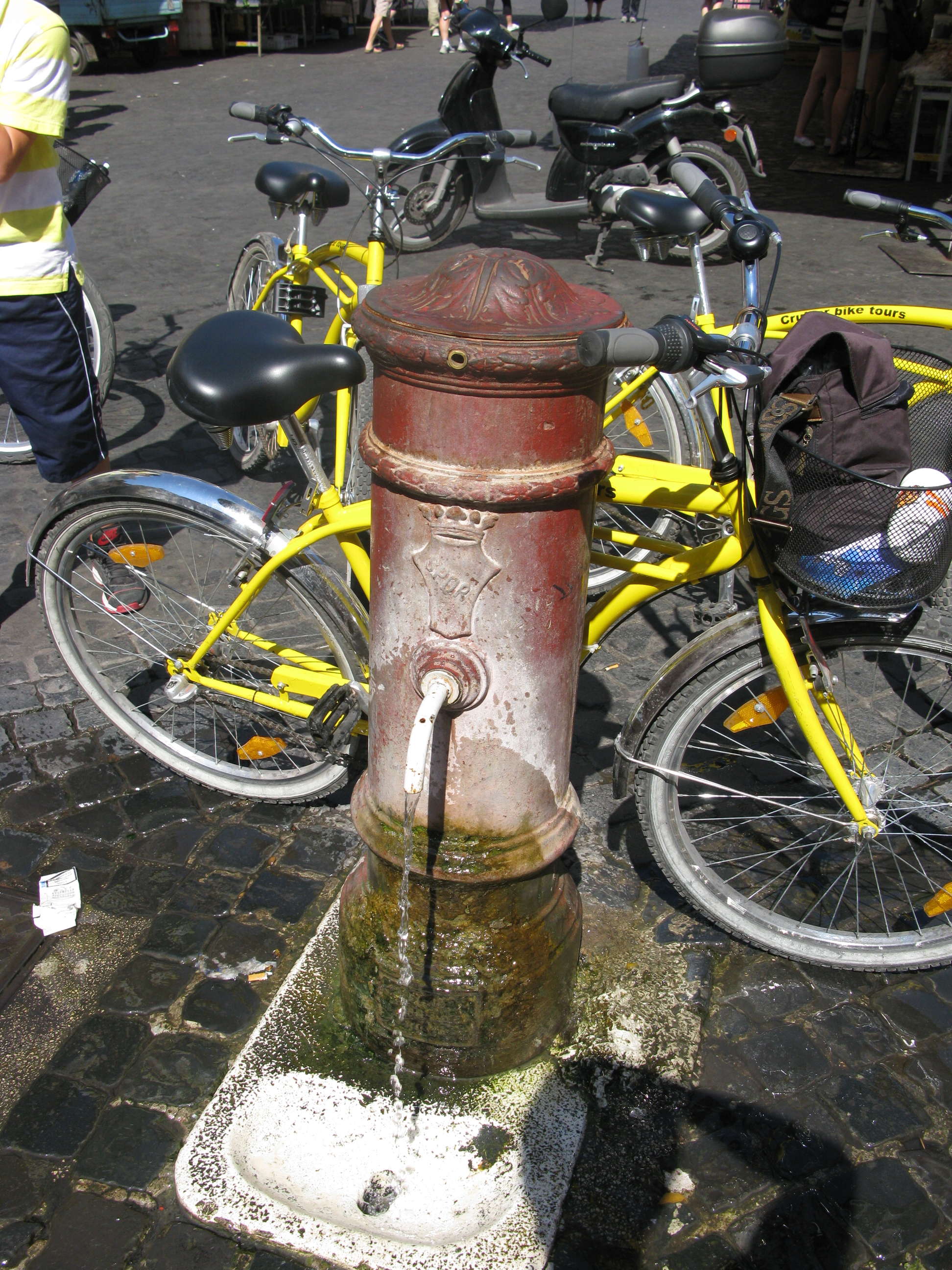
Water fountains are everywhere in Rome. So is the graffitti.
We had no choice but to join them at the Trevi Fountain where, unable to carve out a cycle path, we parked our bikes with Roberto and walked. It’s probably fitting that
seemingly half the world’s tourists would besiege one of the world’s most famous fountains. An estimated 3,000 euros are thrown in the fountain each day and anyone thinking of diving in to steal ready cash had better be prepared for a slow getaway.
It’s easy to see why so many people come: Almost 26 metres high and 20 metres wide, the Trevi Fountain is hard to ignore, especially with Neptune, God of the sea, taking centre stage on a chariot pulled by rampant horses. But it’s also hard to linger, surrounded by so many people, who probably all feel the same way.
Stopping for another drink might have been sensible thing to do. Roberto had other ideas. Not far from the chaos of the Trevi Fountain is Giolitti. In a city full of gelateries, Giolitti stands out for one simple reason. It has more than 100 flavours to choose from, and some of the recipes are almost a century old. The Coppa Giolitti, which combines chocolate ice cream, custard, chilled zabaione, and is topped with cream and hazelnut shavings, has been responsible for ice cream headaches since 1920.
For cyclists young and old, the restorative powers of ice cream cannot be underestimated, especially when it comes in flavours like Nutella, English Trifle, kiwi and Kit Kat.
Being North American we naturally chose to cram three flavours on top, since customers pay by the cone, not by the scoop. The gluttony delayed our progress by a full 15 minutes, but, according to Emma: “This is the best part of the tour.”
Second best might have been us cycling along the Tiber River, past the imposing cylindrical fortress Castel Sant’ Angelo and up Via della Conciliazione to St. Peter’s Square.
So many confining streets, narrow alleyways and busy piazzas only serve to emphasize the vastness of St. Peter’s Square and the basilica. Amid the chaos of the tour buses,
the taxis and countless buzzing scooters, we drank from a water fountain and watched the world go by.
It may have been chaos, but it was beautiful chaos.
Visit http://www.italysegwaytours.com for details about tours of Rome.
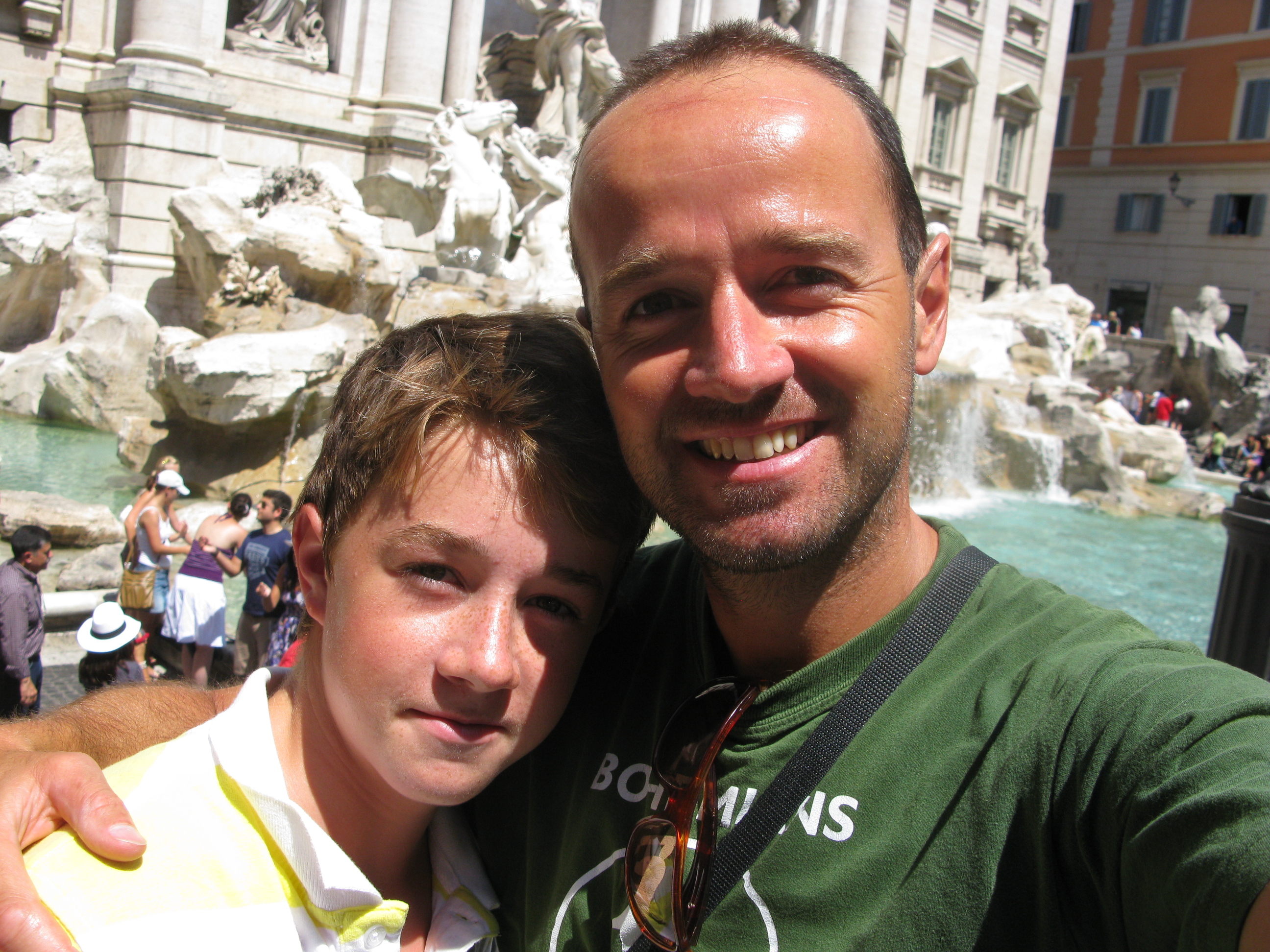
Hard to believe 5,000 tourists are two feet from Ryan and I.
Oregon and on and on …
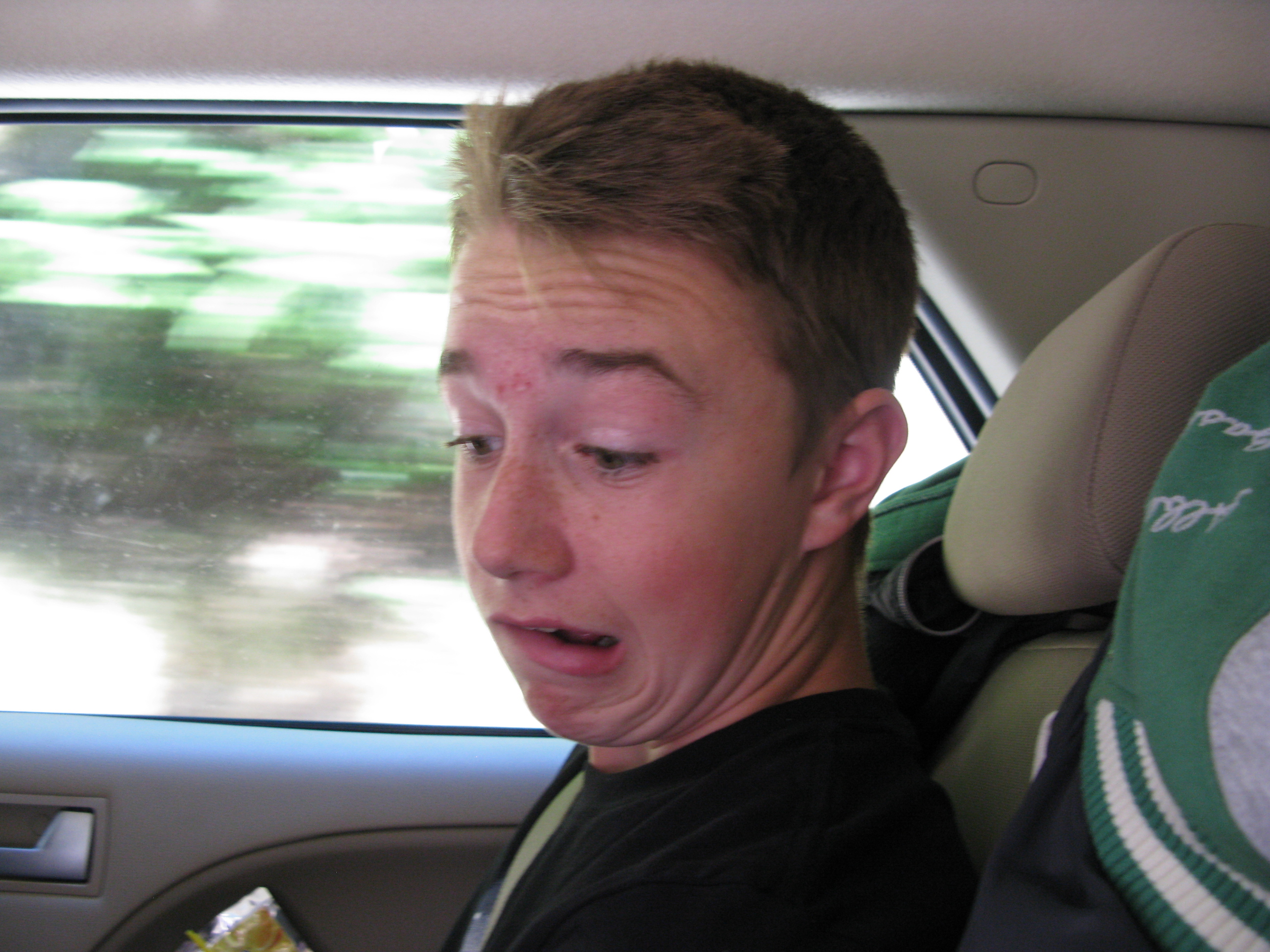
On the road again ... Ryan may be tiring of the car.
I can sense a little burnout in the Judd family.
For me it’s a mix of eating out, paying for it and being on the road every other day. For the kids, it’s the threat of having to mount a bike or the prospect of their parents getting them lost on two wheels or four. Leah just misses our cats, Murphy, Holly and Sylvester – the latter who thinks he’s the heavyweight champion of the world and may need the vet when we return.
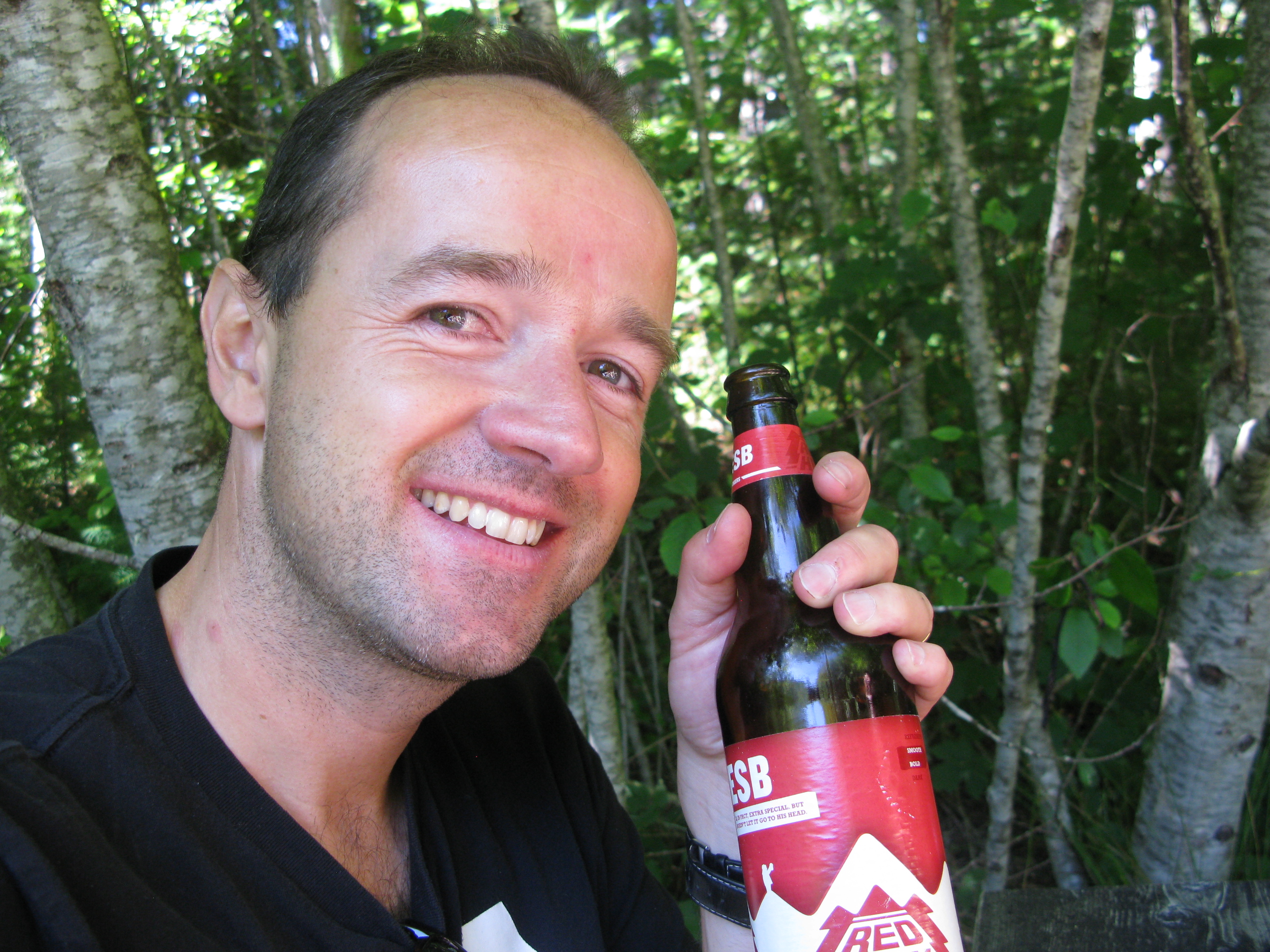
I could be a beer blogger.
We have one last day and night in Portland. Ryan and I will see the Whitecaps versus Portland Timbers tomorrow night. With the temperature forecast to be 32 Celsius (90F) tomorrow, my nylon, long-sleeve Whitecaps jersey should feel just great now I’ve gained 10 pounds. I just spent 30 minutes on a hotel treadmill (we’re done with camping). My chest was wobbling just walking down the corridor to the fitness room.
We’re at the DoubleTree Hotel in northeast Portland. The hotel is hosting a Beer Bloggers’ Convention. I’m wearing my Beer T-shirt (there’s a picture of a bear with antlers on the front) and I’m sitting in the bar, but so far no one from the convention has asked me to join.
They may be shunning me for using the fitness centre.
Fat wieners at Fort Stevens
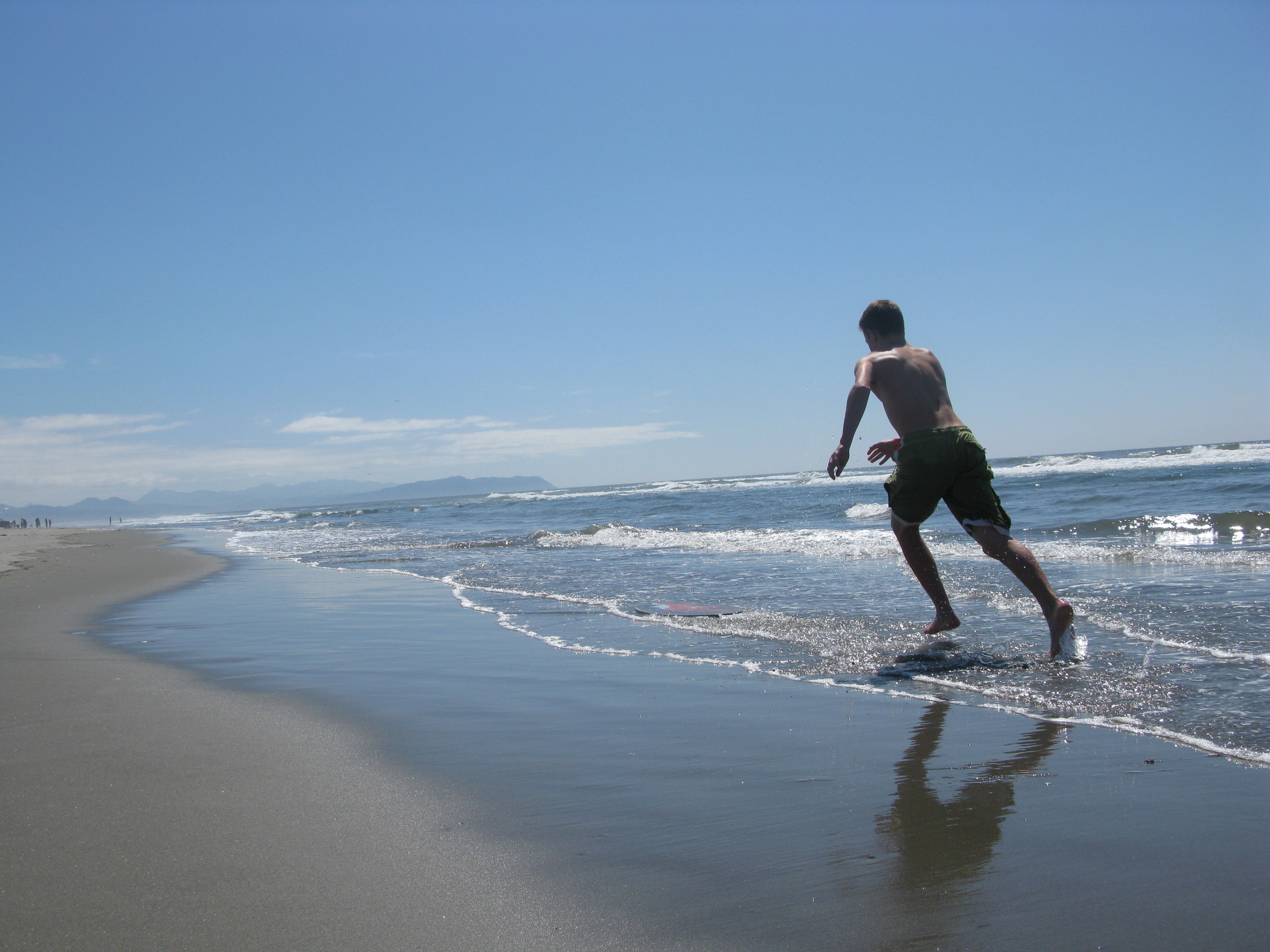
Ryan skimboarding: Dude's ill.
I get a little excited in new places. (I don’t get out much.)
The moment I saw Cannon Beach I literally ran down Hemlock Street (the main drag), inquiring about places to stay for the night. For those of you familiar with Whistler, BC, it’s a bit like showing up Christmas week and asking if there are any cheap places to stay – ski in/ski out, preferably one night.

Here's one of the 200 photos I took of the Peter Iredale, a century-old wreck on the Fort Stevens shoreline.
So we ended up camping half an hour away in Fort Stevens at the mouth of the Columbia River for $40 a night. The KOA campground here has thought about everything a camper might want and provided it, right down to a free endless pancake breakfast (cue angels singing), a giant, bouncy inflatable pillow (not castle), indoor swimming pool, dog run (kind of a fenced off assault course – Wipeout for canines), mini golf, Internet cafe (hence this blog) and laundromat/games room. (Play ping pong during your rinse cycle.)
We’re in a tent, but there’s a range of cabins available and some of the RVs pulling in are far bigger than their names suggest: Scamper, Prowler and Arctic Fox hardly conjure up 15-wheeled juggernauts but that’s what most of them are. The 20-wheeled Bitch Slap at least lives up to its name.
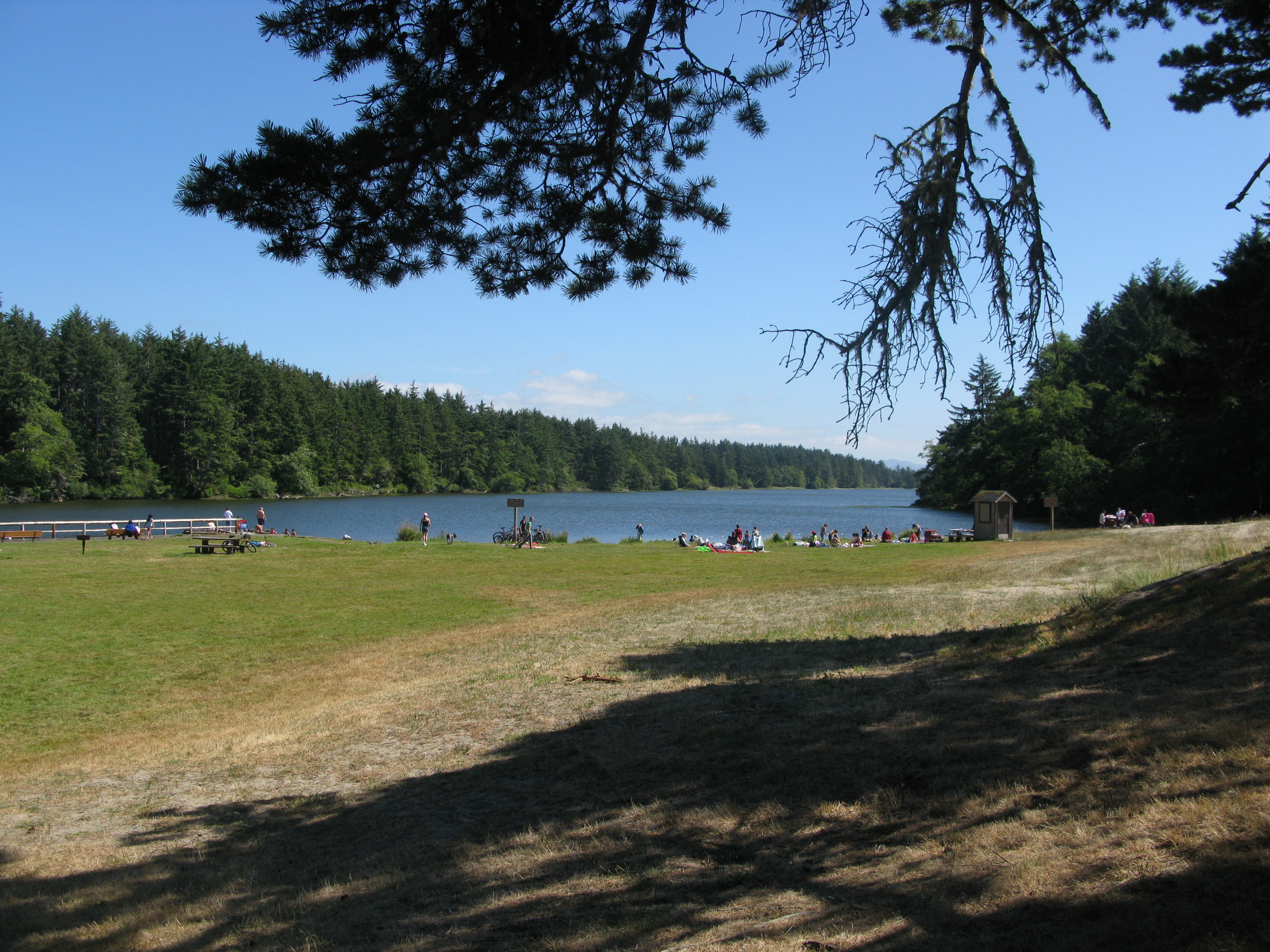
The calm of Coffenbury Lake, for when the onshore breeze gets a little too bracing at the beach.
Better than the campsite though, is the beach – a bike ride away and every bit as epic as Cannon Beach, but without Haystack Rock. Unlike most of the accommodation options around here during the height of summer, the beach is empty – too vast to be conquered by tourists. It also doesn’t take kindly to ships, wrecking 2,000 of them since 1792. This isn’t the first place to describe itself as the Graveyard of the Pacific, but Fort Stevens’ credentials are impressive. The Columbia River has been forming and reforming pesky sandbars for centuries, creating endless hazards for boats that stray too close to the shoreline; boats like the century-old Peter Iredale, whose remains continue to rust on the shoreline here.
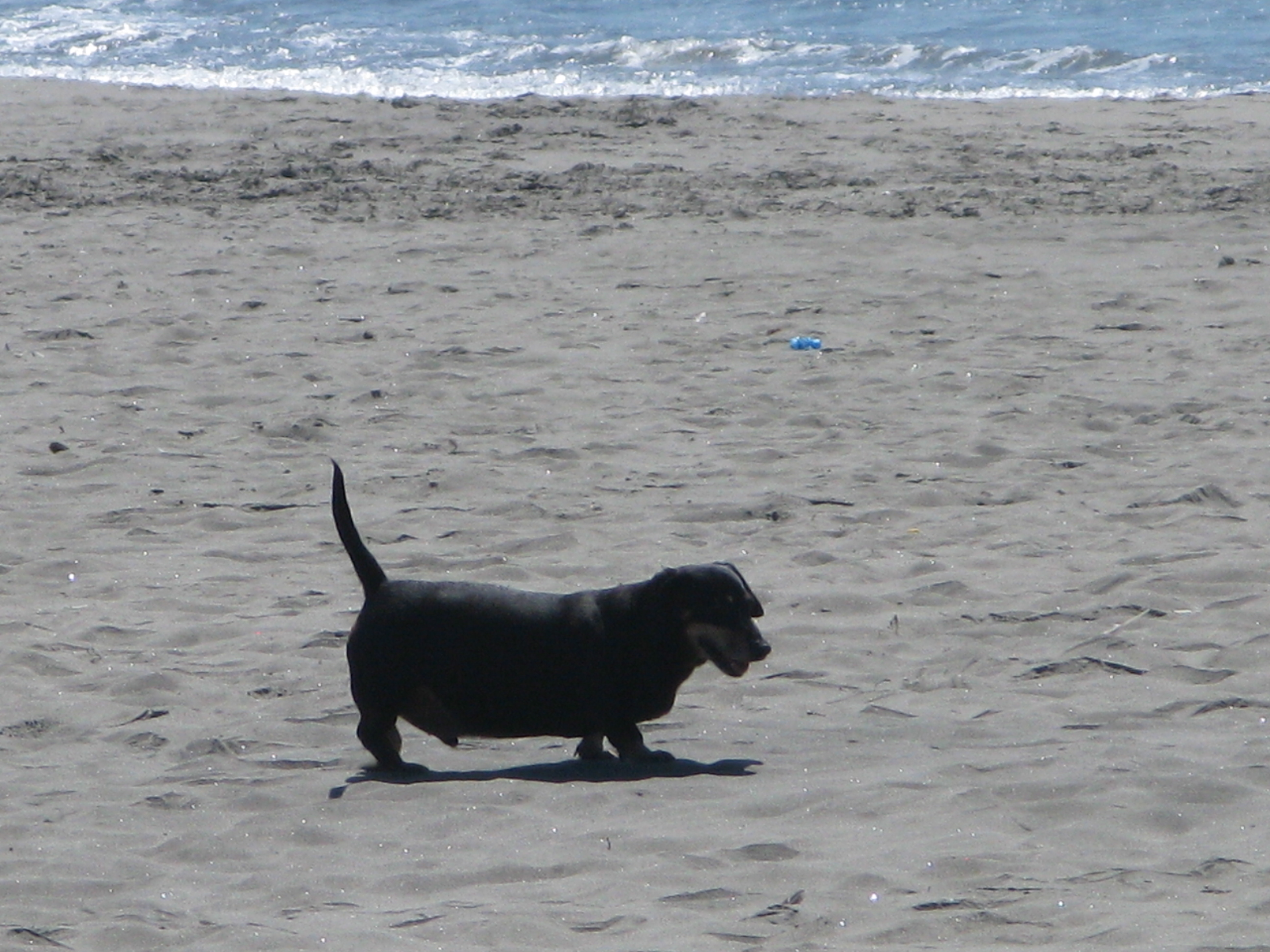
Does the sand make my wiener look fat?
We’re heading back to Portland tonight. The newlyweds camping next to us have awoken me several times. One of them snores louder than the hemmy engine on a 20-wheeled Bitch Slap. I give the marriage 18 months.
PS: As far as I know, there is no RV called a Bitch Slap. I made it up.
Cannon Beach: Like a great duvet, but with bed bugs
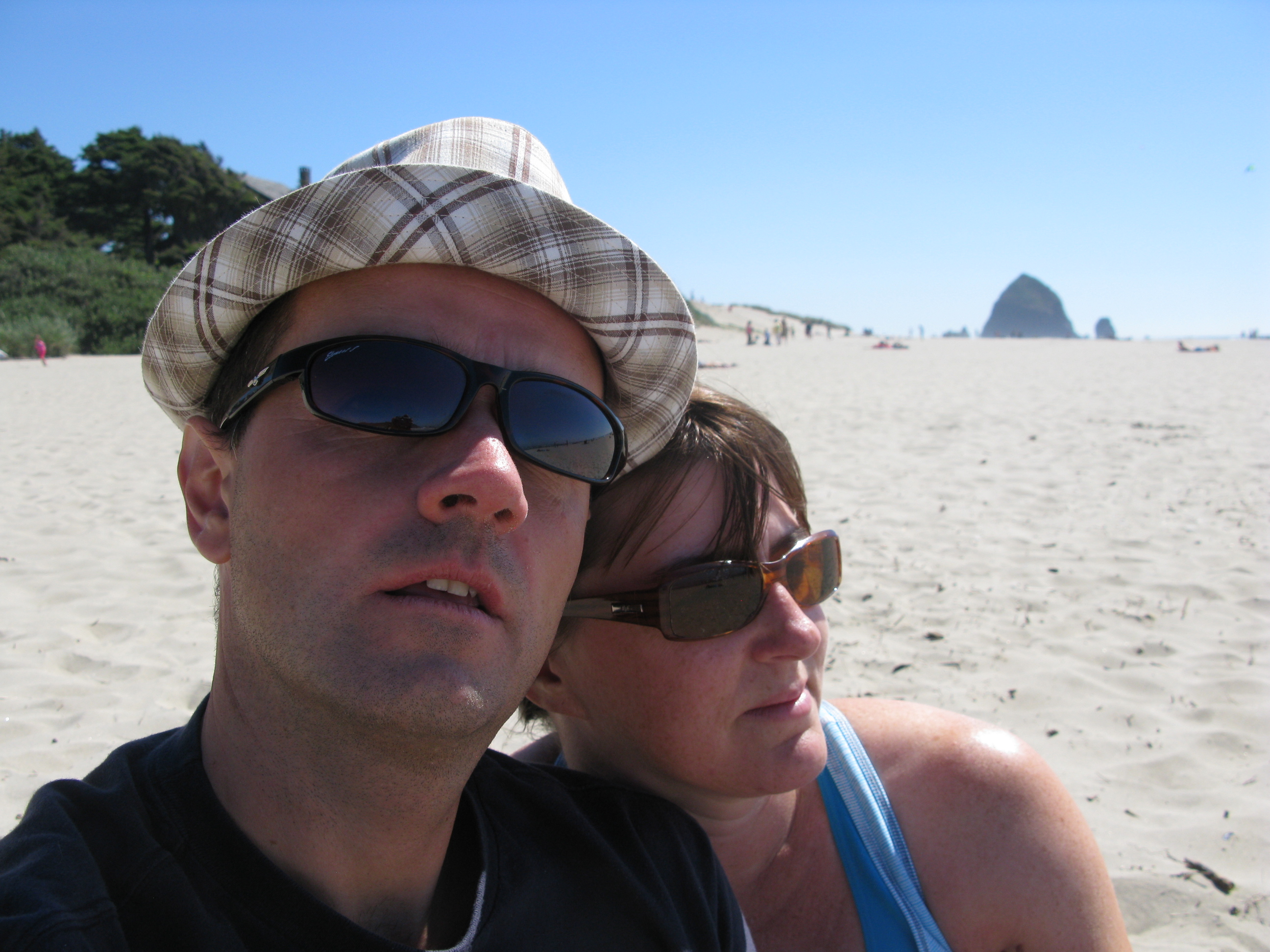
You’re in an expensive hotel and you throw yourself on top of a snow-white duvet. Cannon Beach is a bit like that. We’d been driving for ages, parked and walked straight to Cannon Beach. On seeing the white sand, Haystack Rock and the Pacific Ocean, we all did the same thing: flopped on the sand and made sand angels. Then we applied sunscreen, rolled around some more, then watched Ryan and Emma bury each other.
Now I’m sitting by a camp fire in Warrenton, near Astoria, typing almost blind and marvelling at how good it feels to be covered in sand, smoke and stale sunscreen. Of course, my bedfellows may disagree, but they’re in the tent and almost asleep.
I’d write more, but wifi is sketchy in rural Oregon campsites, plus I’ve got to pee so bad my back teeth are floating.
You are now entering Vernonia, aka The Twilight Zone
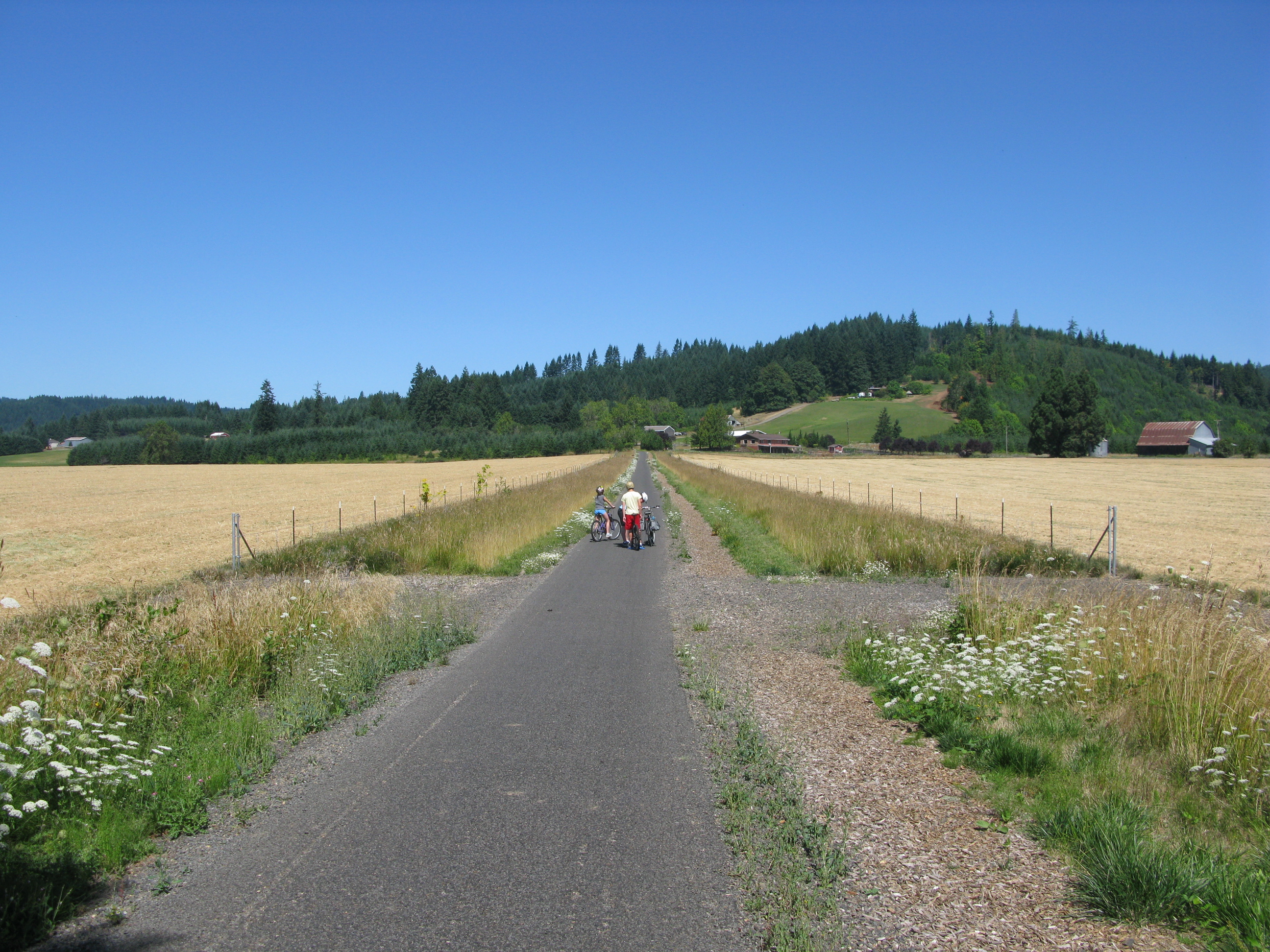
People are friendly in Vernonia, Oregon.
Within minutes of cycling into town, a woman told Ryan how much she liked his new Nikes; another woman asked me if I needed directions (I must have looked confused); and a motorist braked sharply so as to avoid ruining the photo I was about to take.
Other strangers said hello, and as we cooled our feet in the Nehalem River, kids floated by in inner tubes. No one swore and I couldn’t see any graffiti. Perhaps we’d entered the Twilight Zone.

Under cloudless skies, we’d just cycled 22 miles across wheat fields and through forests on a paved trail from Banks, about half an hour west of Portland. At Mile 12, Leah and Emma decided they’d had enough and cycled back to Banks while Ryan and I rode on the Vernonia. Ironically, that meant the ladies actually cycled farther than we did, and they were nice enough to drive to Vernonia to pick us up.
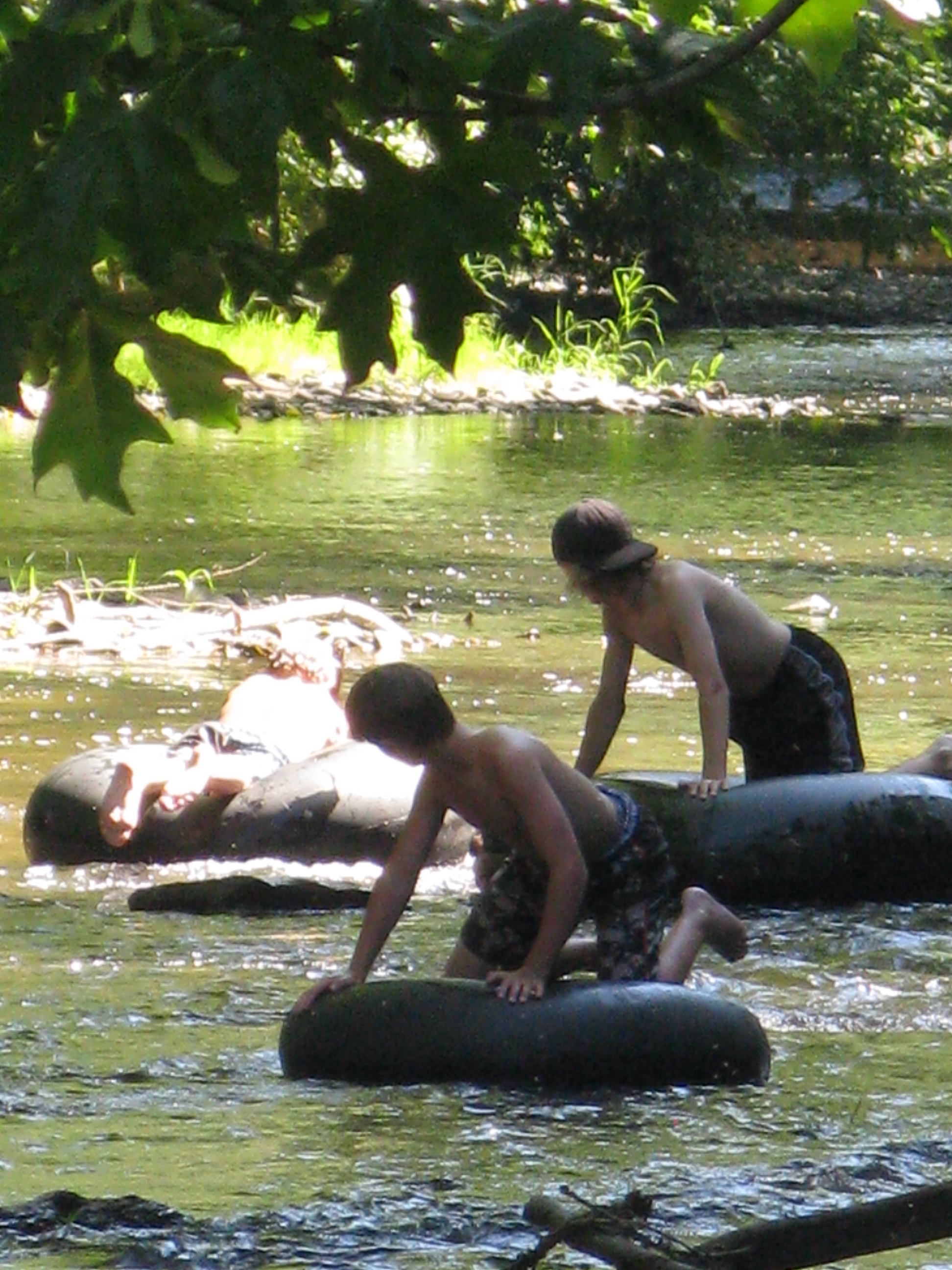
Tubing down the Nehalem River in Vernonia, Oregon.
Visit Tacoma. Seriously!

Tacoma's Stadium High School, as seen in 1999 movie 10 Things I Hate About You.
Tacoma’s a nice place. Who knew?
There’s a decent boardwalk for bikes and pedestrians, with lots of fishing piers and waterfront pubs and restaurants. Downtown is a mix of reclaimed warehouses converted into coffee shops, pubs and funky little fashion outlets. It feels a bit like Seattle in miniature. There’s a pedestrian bridge to Tacoma’s glass museum featuring two glass trees created by Dale Chihuly. Chihuly is to glass blowing what Frank Lloyd Wright is to architecture. Ryan thought the random glass foliage was actually plastic bags, but then he was looking from a distance and hadn’t eaten in 20 minutes.
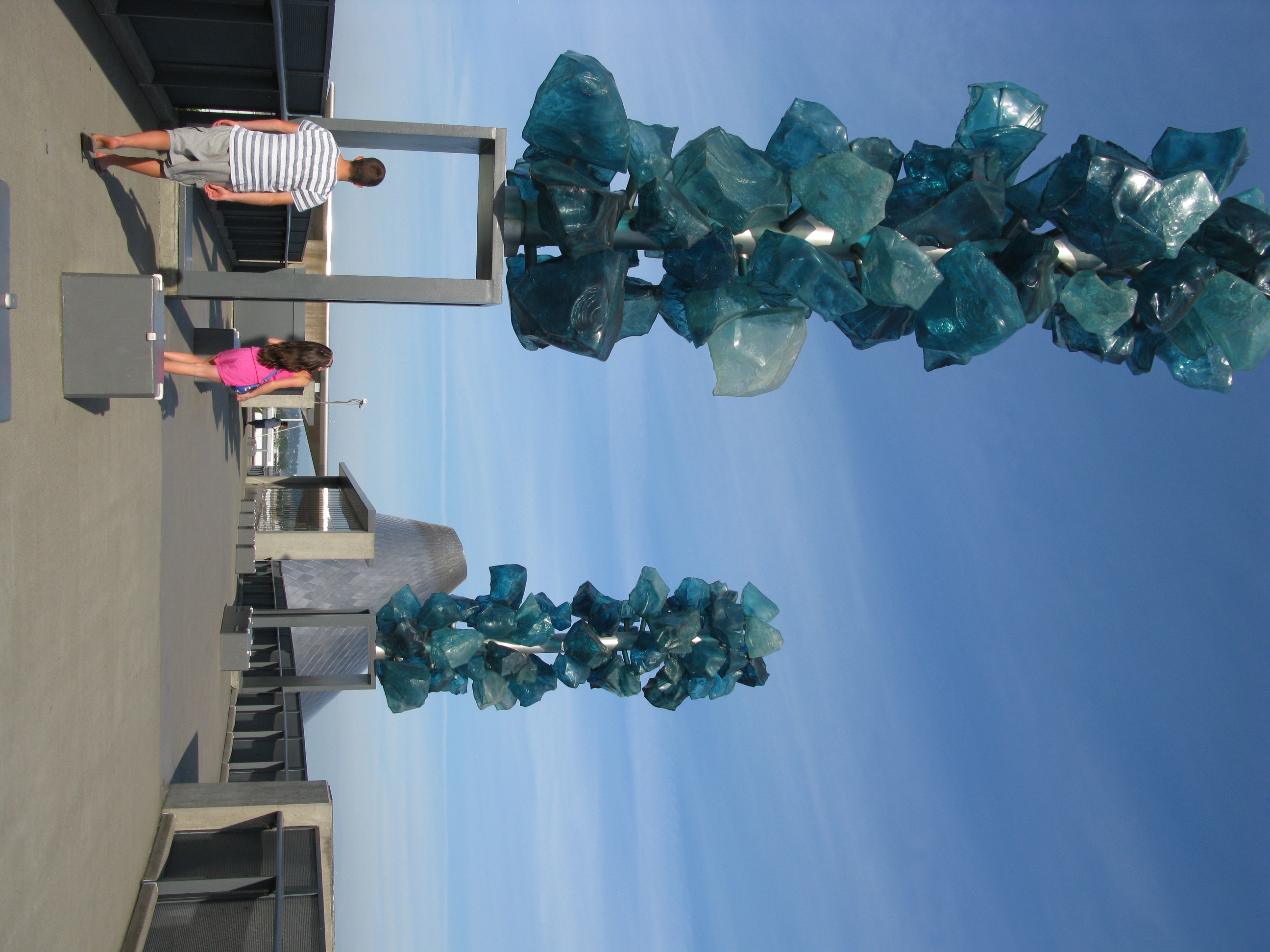
Dale Chihuly's glass trees on the bridge to Tacoma's glass museum. They can look like plastic bags from a distance.
Best of all, for fans of 1999 movie 10 Things I hate About You, Tacoma is home to Stadium High School, one of the most impressive-looking schools in all of North America. All brick turrets and Gothic spires, Stadium High School stands on a bluff over looking Tacoma and towers over a steep-sided stadium. Ryan and I tried to get in to kick a ball around, but it was all locked up. 10 Things I hate About You features Claire Danes and Heath Ledger (RIP) and was based on Shakespeare’s Taming of The Shrew.
Our accommodation beside the I5 freeway at the La Quinta Inn and Suites would not be noteworthy, but for the fact that it was full of middle-aged rockers wearing wigs and spandex. The lobby looked like a Richard Simmons video gone horribly wrong. Turns out Motley Crue were playing the Tacoma Dome half a mile away. Vince Neil must have worn them out because they were a lot quieter coming back than going out.
Tickets to ride
What’s worse for schoolkids on summer holiday? Getting up at 7 a.m., or cycling 26 miles with no apparent destination?
I’ll let you know Sunday, Aug. 14, after we’ve completed the annual Providence Bridge Pedal in Portland, Oregon.
I decided to spare Ryan and Emma the 36-mile, 10-bridge option, so we at least have a chance of making it to VooDoo doughnuts by mid-afternoon.
Instead, we’ll cross the Willamette River via eight bridges with Stumptown Coffee coursing through our veins.
Wish us luck!
PS: Here’s a look at my last trip to Portland, courtesy of The Province Two-wheeled and weird in Portland and Vancouver Province Portland2
 Nev Judd: Online and out there