Archive for the ‘snow’ Category
The Icemen Cometh

Unlike Amundsen, who used dogs exclusively, Scott’s exploration and scientific teams usually man-hauled their heavily-laden sledges, often over great distances. Courtesy RBCM © Bettmann/CORBIS
With the benefit of a century’s hindsight, it’s clear only one man could have reached the South Pole first and made it back alive. In 1911-12, Norwegian explorer Roald Amundsen made his 1,660-mile roundtrip with 52 dogs, four sledges, five men and a single-minded focus on being first.
British Navy Captain Robert F. Scott made his final push for the Pole with 10 ponies, 22 dogs, 12 sledges, two motorized sledges, 16 men and a determination to log as much scientific data as possible. The Brits wore cotton; the Norwegians fur. The Brits brought 35,000 cigars and a pianola. The Norwegians did not.
Hindsight doesn’t diminish the enormity of what both men set out to accomplish, or the sacrifices they made. Their decisions drive the compelling tale of ‘Race to the End of the Earth,’ the feature exhibition at Victoria’s Royal B.C. Museum.
The noise of howling winds greets visitors to the exhibit, which recreates an epic story of triumph and tragedy through original artifacts, photographs, letters and authentic re-creations.
Scott’s Terra Nova Expedition had set out to be the first to reach the South Pole, a feat Scott and four companions thought they had achieved Jan. 17, 1912, only to discover that Amundsen’s team had beaten them by 33 days. Trapped in a nine-day blizzard without food or fuel, Scott and his party died on their return. The Norwegians made it back to their ship and a heroes’ welcome in Hobart, Tasmania, where their triumph was made public in March 7, 1912.

Roald Amundsen. Courtesy RBCM © AMNH Library
The exhibit is divided into seven sections, which chronologically tell the story of the men and their shared goal. Amundsen’s binoculars, chronometer, shotgun and sledge are on display, complemented with letters and photographs. A sledge pennant owned by Cecil H. Meares, Scott’s dog handler, is also among the original artifacts. True to the British tradition of Arctic exploration, sledges featured colourful silk flags to be spotted during blizzards. Meares’ pennant is one of only a few that has survived from the era and is locally significant because Meares moved to Victoria in the late 1920s.
Meares isn’t the only connection to Victoria. Scott himself visited the city in 1889/1890 as a Royal Navy Lieutenant. He developed a friendship with a local family and corresponded with them during the next 20 years. And a Canadian member of Scott’s team, decorated scientist Charles S. Wright, worked at the Pacific Naval Laboratory in Esquimalt, and at UBC and Royal Roads before retiring to Salt Spring Island. He died in Victoria in 1975.
The life-sized reconstructions of Scott’s living quarters and Amundsen’s underground workrooms are impressive. So, too, is an Emperor penguin diorama, vividly recreating ‘the worst journey in the world,’ an apt description of a five-week scientific expedition undertaken in winter by three of Scott’s men to collect Emperor penguins eggs. The three barely made it back alive.
And another of the savvy Norwegians’ decisions, that of building underground quarters out of the extreme wind and cold, is dramatically realized in a life-size re-creation
But it’s the smaller details that are memorable; the sepia photos of both men in their living quarters, on their skis and hauling sleds (the Brits felt hauling their own sleds showed strength of character); and the farewell letters written by Scott, in which he urges, “for God’s sake, take care of our people”. The British public was inspired to raise more than $75,000 ($7 million today) for those widowed and orphaned by the expedition. In 1913, King George V attended a standing-room-only memorial service for Scott’s team in St. Paul’s Cathedral.
The Royal B.C. Museum includes interactive and hands-on educational activities, allowing visitors to see how scientists live and work in Antarctica today. “Touch-this” stations are a nice addition, too, encouraging visitors to feel Reindeer fur and an Emperor penguin’s egg, among other items.
RBCM’s conservator Jana Stefan recently returned from her second visit to Antarctica, where she’s been helping to restore Scott’s expedition base camp – still standing after more than a century! Her work preserving more than 10,000 of the camp’s artifacts is presented on video. And for film on a more epic scale, IMAX Victoria in the RBCM is screening Shackleton’s Antarctic Adventure. British explorer Sir Ernest Shackleton’s 1914-1916 Antarctica Expedition is an extraordinary story of survival – beautifully filmed, and narrated by actor Kevin Spacey.
The RBCM is the only Canadian stop for Race to the End of the Earth, which runs until Oct. 14. Children’s summer camps and a lecture series featuring B.C. adventurers who have explored Antarctica are scheduled. For details, visit www.royalbcmuseum.bc.ca or call 1-888-447-7977.
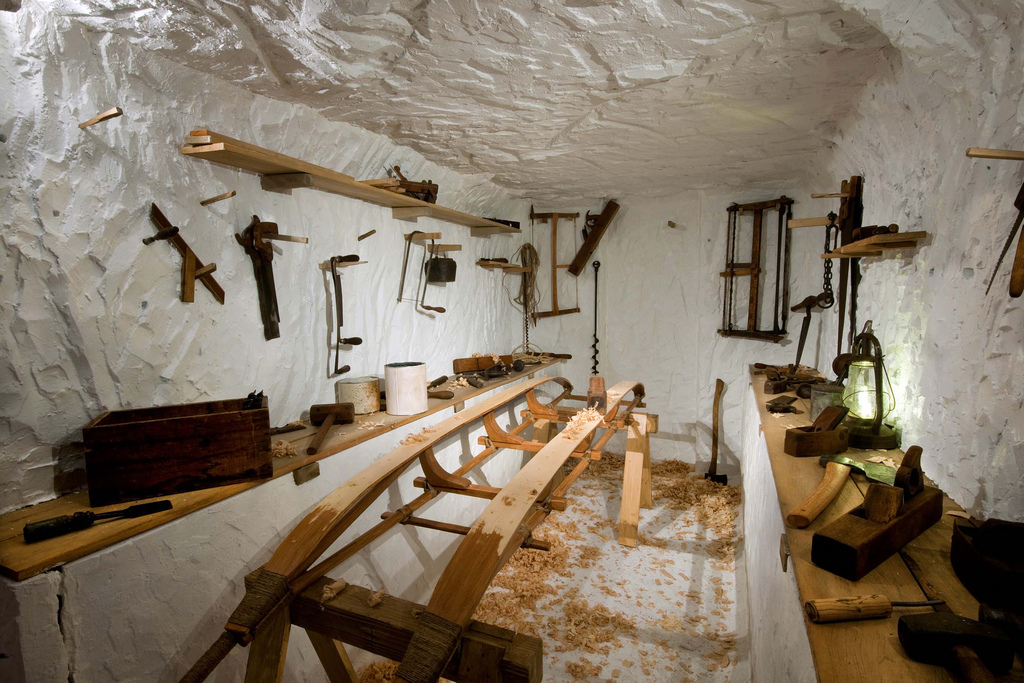
During the winter, Amundsen’s men dug an extensive network of tunnels and rooms, including a bathroom and even a sauna. This life-sized re-creation shows an underground workroom in which his crew was able to work on their expedition gear away from the extreme wind and cold outside. Courtesy RBCM © AMNH/D. Finnin
If you go:
Victoria’s Parkside Hotel and Spa is a short walk from the Royal B.C. Museum. It offers a family package from $179 a night, including family admission to the museum, two-hour rental of the hotel’s private movie theatre, plus a snack basket with pop, popcorn and candy. Call 1-866-941-4175 or visit http://www.parksidevictoria.com/.
B.C. Ferries offers numerous summer package deals to Vancouver Island, including a Victoria Getaway from $109 per person, based on double occupancy. The package comprises one night at the Chateau Victoria Hotel, round-trip ferry from Vancouver for two adults and a car, plus complimentary parking. For more information on this and other deals, visit http://www.bcferriesvacations.com/ or call 1-888-BC FERRY.
For all other matters-Victoria, visit http://www.tourismvictoria.com/.
One night in Flin Flon
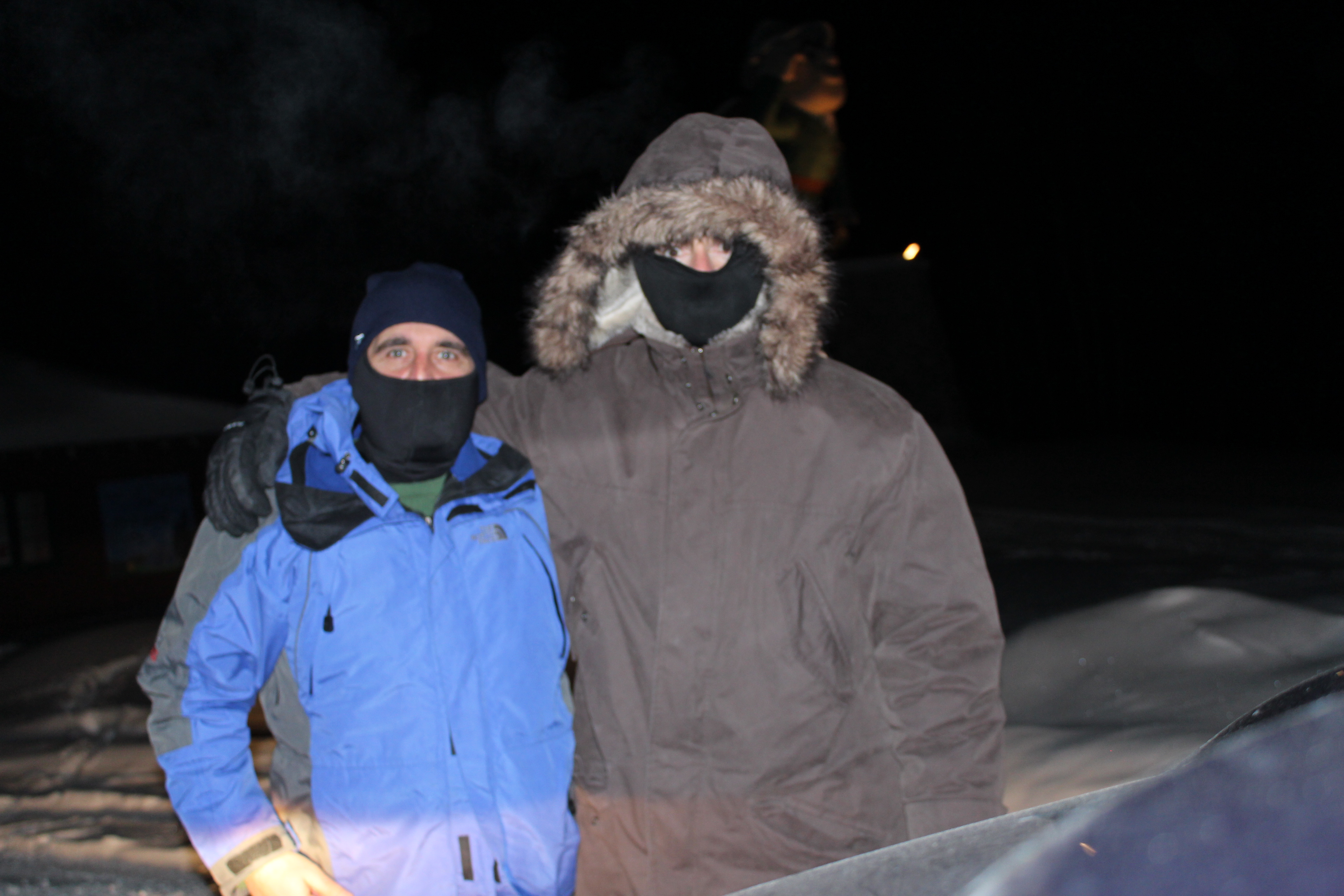
What minus 40 looks like in Flin Flon, birth place of Bobby Clarke and the phrase, “it’s a dry cold”.
They don’t sell postcards in Flin Flon, Manitoba; at least none that I found. It’s a desperately cold place most of the year.
“Chilly” is how the pilot describes it upon landing. Helen at the car rental desk confirms that, yes, it’s cold. “But tolerable without the wind.”
How cold?
Minus 39.6, according to the airport’s only baggage handler. “We’ll call it minus 40,” he says.
Celsius … Fahrenheit, it doesn’t matter. My idea of cold will never be the same. Lager’s cold. So is a dip in the sea off Margate. But February 1st in Flin Flon is worthy of its own definition of cold.
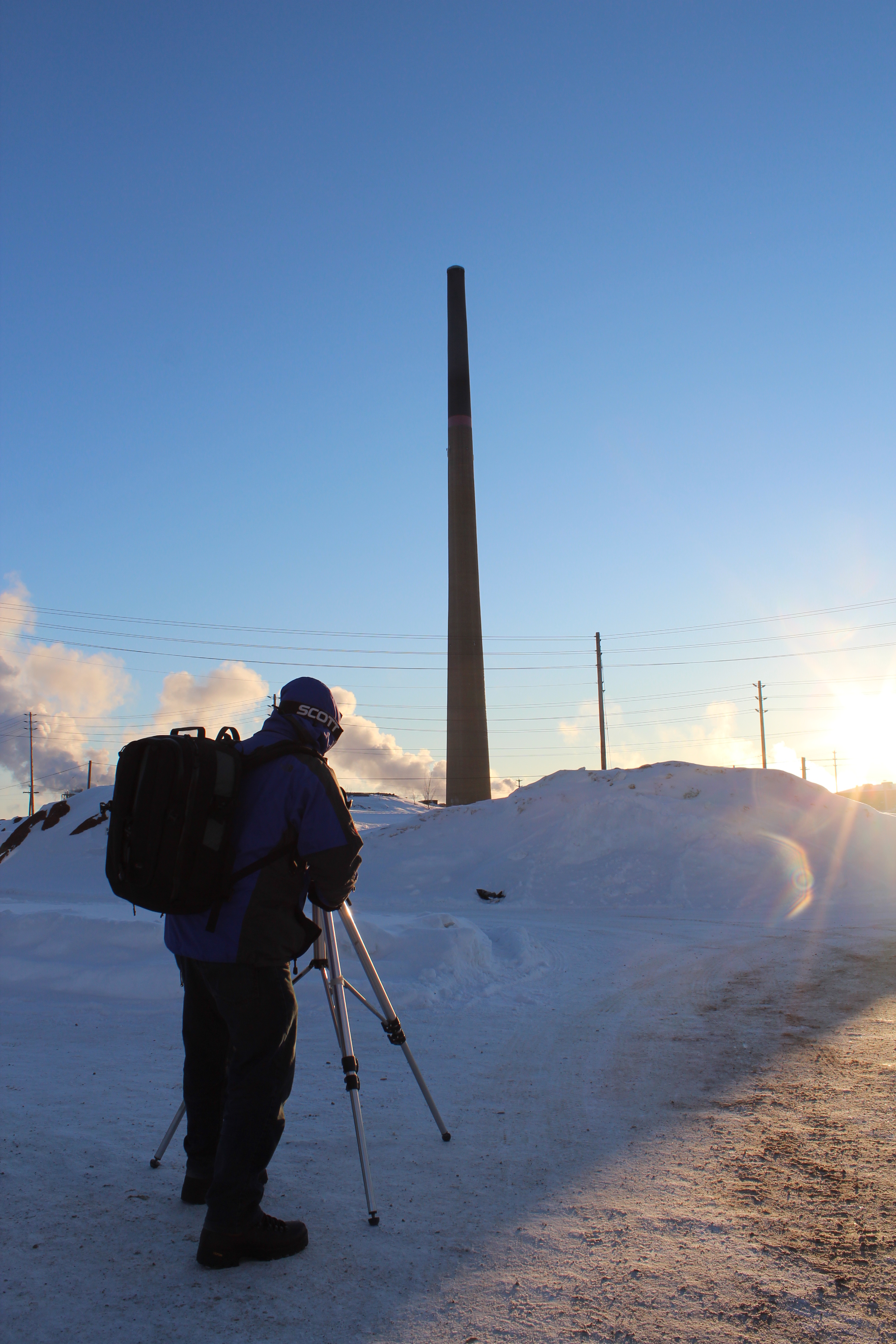
A kilometre below where Javier is standing it’s about 55 degrees warmer – which isn’t much consolation really.
My colleague Javier and I are here from Vancouver to film a video in Flin Flon’s copper mine. We try to look casual, hauling our camera gear across the car park to the rental truck. “It’s not that bad,” says Javier. “No, not so bad,” I wheeze, acutely aware of snot freezing in my nose.
The pallid sun we’d last seen during a stopover in Winnipeg has long since set and we drive in twilight to Flin Flon. Manitoba looks grainy monochrome, a stunted boreal forest dotted with lakes frozen into frigid stillness.
In Flin Flon, we plug our truck into a block heater outside the Victoria Inn. Inside, we eat perogies and drink beer. Our server tells us that minus 40 is mitigated by the fact that Flin Flon’s cold “is a dry cold”.
Her tongue is not in her cheek.
Fortified by curiosity, we drive into town, and then walk down Main Street. Most of the houses are old and wooden, with rooftops wilting under snow whipped into drifts. At the Co-op I buy myself a Flin Flon Bombers hockey jersey. I tell the cashier about a friend from Saskatchewan, who hated coming to play hockey against Flin Flon, the toughest team in the Canadian junior league.
At first she’s offended. “Why,” she demands. “Because they knew they’d have to fight,” I tell her. She smiles. “We love our Bombers,” she says.
We tread gingerly on a snowy sidewalk up the street to Flin Flon’s war memorial and a view overlooking the town. Fumes from the mine are the only thing obscuring a sky full of stars. The only other person on the street nods hello as he passes us, and calls us pussies for wearing gloves. He’s not wearing gloves.
A short drive away, we arrive at Flinty, a statue of a cartoonish-looking prospector. Gloves off, I photograph Flinty – built in tribute to Josiah Flintabbatey Flonatin. Flonatin appears in a sci-fi novel called The Sunless City. He pilots a submarine through a bottomless lake and into an underground world through a hole lined with gold. Prospector Tom Creighton had a copy of the book when he stumbled on a rich vein of copper here in 1918.
Flin Flon might be the only town named after a character in a dime-store paperback.
But that’s another story.
-

- Prepared for the worst.
-

- Flinty by day.
-
- A jumbo drill at work, a kilometre below Flin Flon.
-

- Five minutes in Winnipeg and he’s a Jets fan.
 Nev Judd: Online and out there