Archive for the ‘travel’ Category
Bright lights, big city
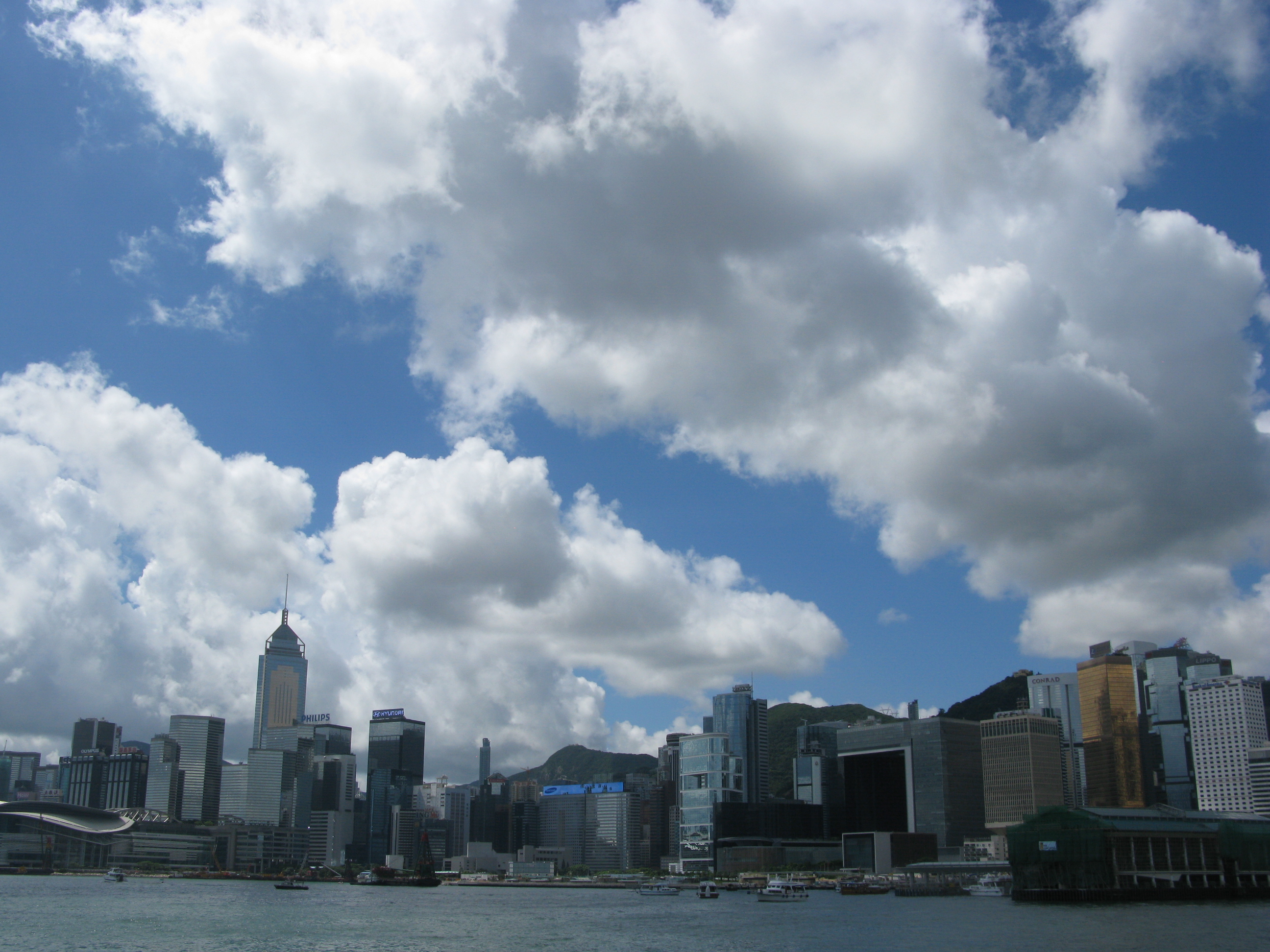
Hong Kong can feel like a science fiction movie: From the airport, set adrift from Lantau Island on a strip of man-made land, to the steep condo blocks that sprout like weeds on even steeper hillsides.
Rush hour in Mongkok starts at about 4 a.m. Or maybe that’s when it finishes.
It’s hard to tell in this Hong Kong neighbourhood, which has the dubious distinction of being the most densely populated place on earth.
With 130,000 people for company in one square kilometre, you stop saying “excuse me” after a while. You also learn that outside of Mongkok’s air conditioned malls and hotels, deodorant is a waste of time. So is sleep. There’s far too much to see.
Langham Place in Mongkok stands as a bridge between two very different worlds. From the rooftop pool, 42 storeys up, to its spas, bars and restaurants, the hotel exudes opulence. But within a block you’ll find markets selling everything from snakes and frogs, freshly skinned and dismembered, to sea cucumbers and dried pig skin.
Such extremes are everywhere in Hong Kong.

Mongkok’s street markets cater to a wide variety of tastes, including freshly skinned snakes.
From the moment we landed, everything about the place felt like a science fiction movie: From the airport, set adrift from Lantau Island on a strip of man-made land, to the steep condo blocks that sprout like weeds on even steeper hillsides.
Before Mongkok, we stayed two nights in Central on Hong Kong Island, which faces Kowloon from across Victoria Harbour. As our cab driver raced from the airport through a blur of neon and thundershowers, 13 hours aboard Cathay Pacific suddenly didn’t seem so gruelling.
Especially when we arrived at 38 Elgin Street, a third-storey condo we’d booked through airbnb.com. (See sidebar.) After driving on such modern highways and tree lined city boulevards, Elgin Street was a shock. Steep and winding, it barely fit one-way traffic between sidewalks buzzing with bars, restaurants and late-night shoppers.
Within 50 yards we could choose from Thai, Japanese, Moroccan, and Italian, yet we fought off fatigue at The Globe, a pub with as extensive a beer list as I’ve ever seen. With a pint of Old Speckled Hen, a scotch egg and tandoori chicken skewers, midnight came and went.
Aided by jet lag and adrenaline, we were up six hours later on Hollywood Road, eating breakfast at the Tsui Wah 24-hour restaurant. Fried beef in noodles with scrambled eggs and buttered bun set us back about $2 each and set us up for a morning of walking through cobbled streets as chaotic as the numerous signs competing for space above us.
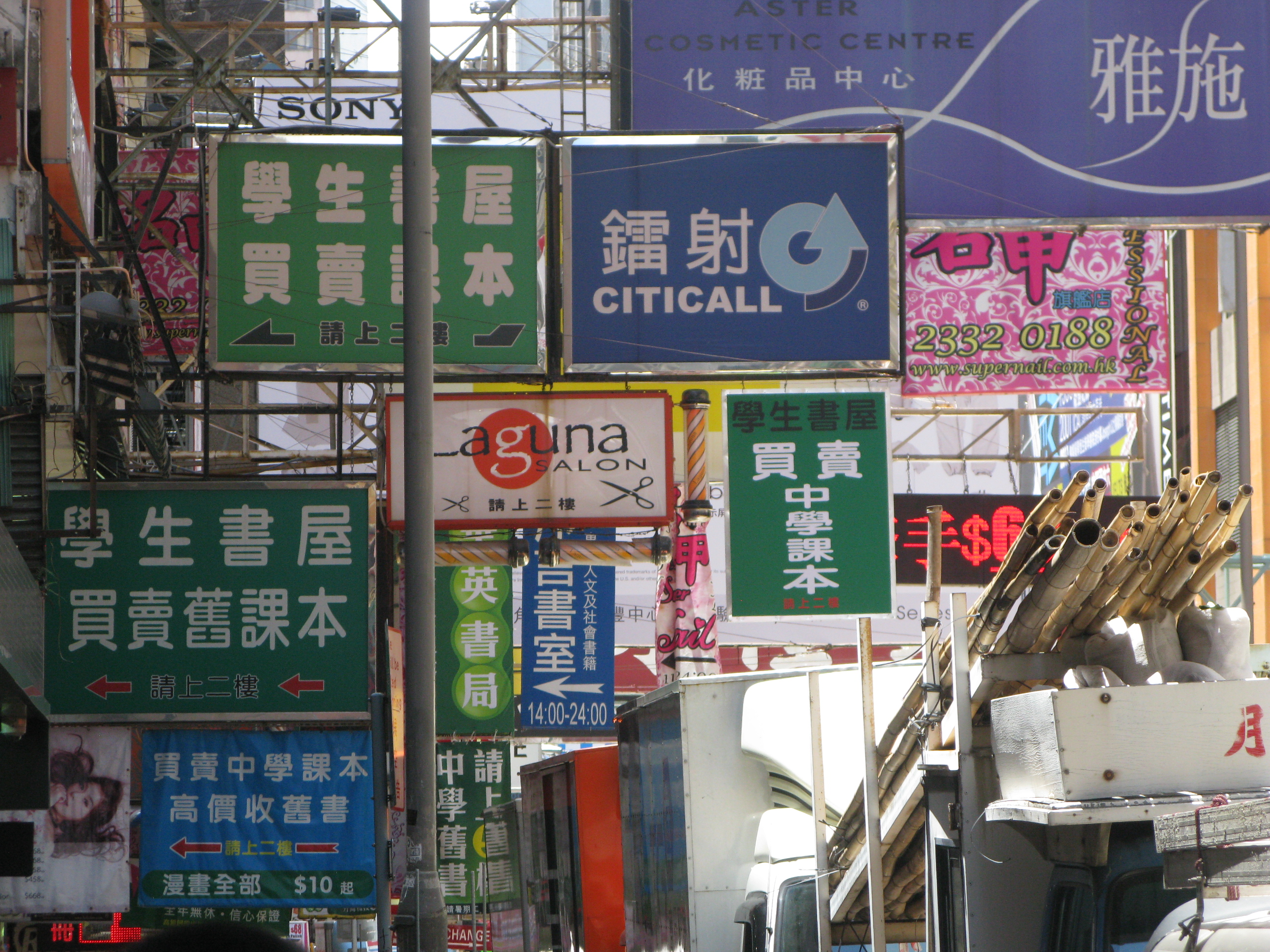
It’s not just people jostling for space in Hong Kong: signs are everywhere!
With 150 square feet to call home, the average Hong Kong resident clearly prefers to live life outside. On first impressions, shopping, socializing and worshipping all seem to shape those lives. At the Wong Tai Sin Temple, we found respite from Hong Kong’s hustle. Dwarfed by high-rise apartments to the south and hills to the north, the temple’s pools and waterfalls consoled us in the 35-degree heat and 100 per cent humidity. Followers of Taoism, Buddhism and Confucianism worship at the temple where they pray for spiritual answers beneath hundreds of hanging lanterns in a haze of incense.
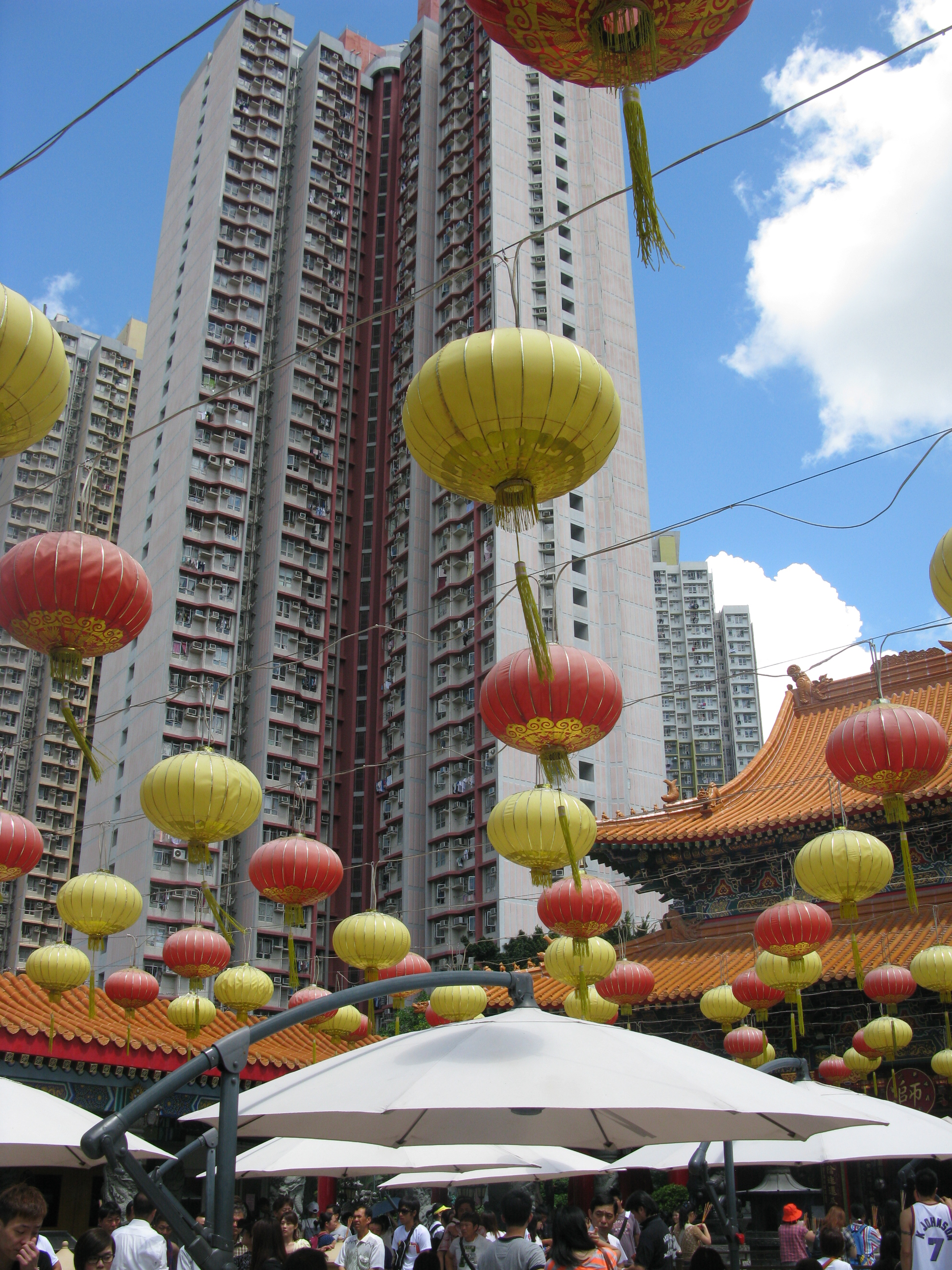
Dwarfed by high-rise apartments to the south and hills to the north, Wong Tai Sin Temple’s pools and waterfalls consoled us in the 35-degree heat and 100 % humidity.
One temple for three different religions and open to all sums up tolerance in Hong Kong. During five sweltering, crowded days and nights in Hong Kong, I did not witness even a hint of anti-social behavior – even during an afternoon at Hong Kong Disneyland! And this is an exceptionally easy place to get around quickly. On Hong Kong’s MTR (Mass Transit Railway System), we didn’t wait longer than two minutes for a train and above ground, less than five minutes for a bus. Star Ferries across Victoria Harbour operate about every 10 minutes and are a cheap way to see Hong Kong’s skylines up close.
To see those skylines from above, we rode the 124-year-old funicular Peak Tram to the top of Victoria Peak – at 552 meters, the highest point of Hong Kong Island. It’s the best place to definitively gauge your bearings of Hong Kong and witness the magnitude of its growth. Forty years ago, few buildings here rose more than six storeys. Today, legions of skyscrapers bounded by ocean, islands, and forested hills stretch to the horizon.
If you can’t catch a breeze atop Victoria Peak, you should get one on the 30-minute ferry ride to Lamma Island. With quiet walking trails, sandy beaches and a coal-fired power station, Lamma is a surreal escape from the city. Within sight of the power station’s towers, we swam at Hung Shing Ye, a beach with life guards, changing rooms and cabbages floating in the ocean. A thunderstorm chased us from the waves and we took cover at the Bookworm Café in the village of Yung Shue Wan – one of two ferry stops on Lamma. The Bookworm epitomizes the village’s bohemian vibe, with good vegan food and indifferent service.
There’s a surreal air about the Ngong Ping 360 experience on Lantau Island, too. From the MTR’s Tung Chung Station, Ngong Ping’s cable cars ferried us 5.7 kilometres over Tung Chung Bay, past Hong Kong International Airport and high above the Lantau North Country Park – all with a glass bottom to look through. The 25-minute cable car ride alone is worth the price of admission, but so too is what awaits at Ngong Ping village, the Tian Tan Buddha, otherwise known as the Big Buddha. Despite being a popular tourist attraction, it’s possible to find a little serenity at the 34-metre bronze statue, or on any of the 240 steps to its base. And it’s not all tourists here. I watched an elderly lady stop and pray on every single step.
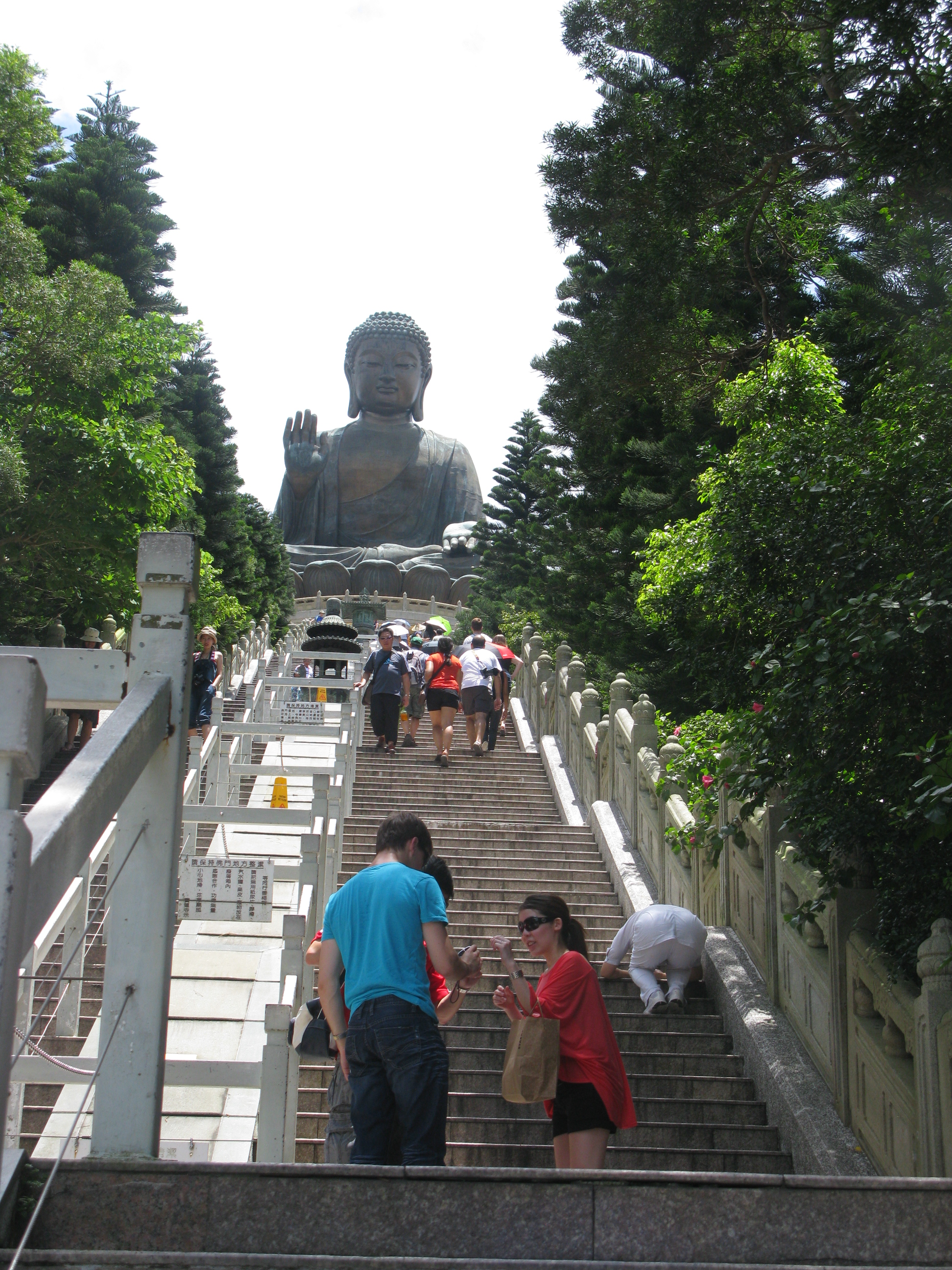
Take it one step at a time to the base of Tian Tan Buddha, otherwise known as the Big Buddha
Ngong Ping’s ‘Chinese-themed’ village, complete with fast food and souvenir stores, were of little distraction. All the consumerism we could handle was back in Mongkok. By mornings we’d shop the markets close to the Langham for fresh oranges, bananas, persimmons, mango, pears, lychees and cherries. By night, we immersed ourselves in Mongkok’s night markets. Nothing quite prepares you for the human tide that flows back and forth down Mongkok’s streets full of merchandise and vendors waiting to haggle: unless you’re a teenager with cash burning a hole in your pocket.
While my wife and daughter disappeared into Tung Choi Street (aka Ladies Street for its clothing and cosmetics), I watched my 15-year-old son Ryan buy soccer cleats and a Liverpool jersey on Fa Yuen Street (aka Sneakers Street, where you’ll find all sporting goods), Dre Beats headphones and iPod case on Sai Yeung Choi Street (an electronics mecca) and two watches on Temple Street (men’s fashions).
“You should buy something,” Ryan told me.
He was right. About 50 cents later I was eating fried squid and spicy fish balls from a food stand. And I didn’t haggle.
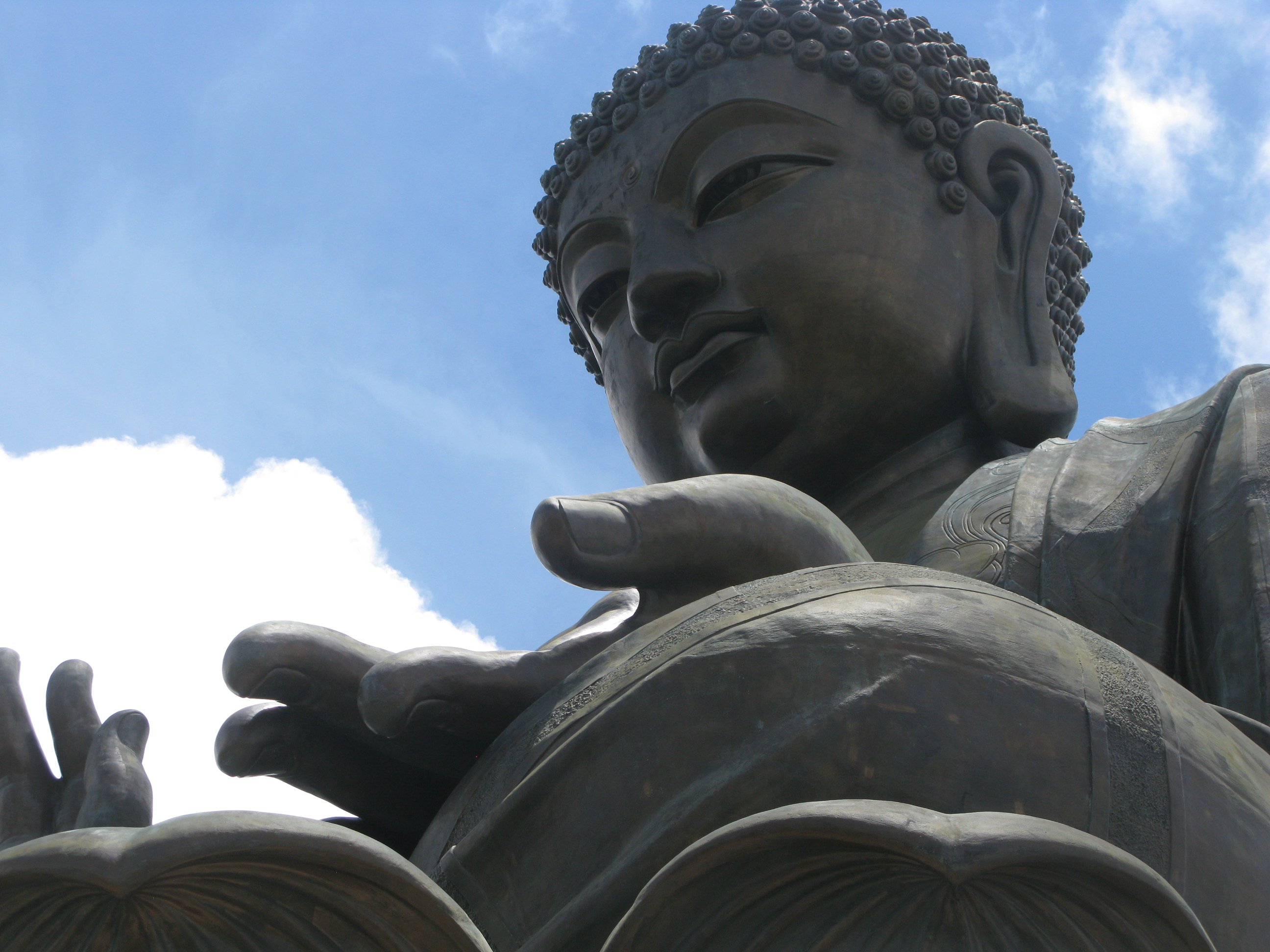
Serenity now with the Big Buddha in Ngong Ping village.
If you go
Langham Place (http://hongkong.langhamplacehotels.com/) might be the only hotel with a pillow menu, (scents include rose and lavender) such is its attention to whims and wishes. It also offers free guided walking tours to acquaint guests with nearby markets, culture and history.
Airbnb.com is an online marketplace for people to list and book unique accommodations worldwide. We followed instructions to text a housekeeper upon landing, and she was there to let us in to our home away from home. It came with everything we needed, including the use of a computer and several of the owner’s local restaurant reviews.
Disney-lovers will find most of their favourite rides at Hong Kong Disneyland, including Grizzly Gultch – similar to Big Thunder Mountain and newly opened this summer. (hongkongdisneyland.com)
For more on Ngong Ping, visit www.np360.com.hk
For more on Hong Kong, visit www.discoverhongkong.com
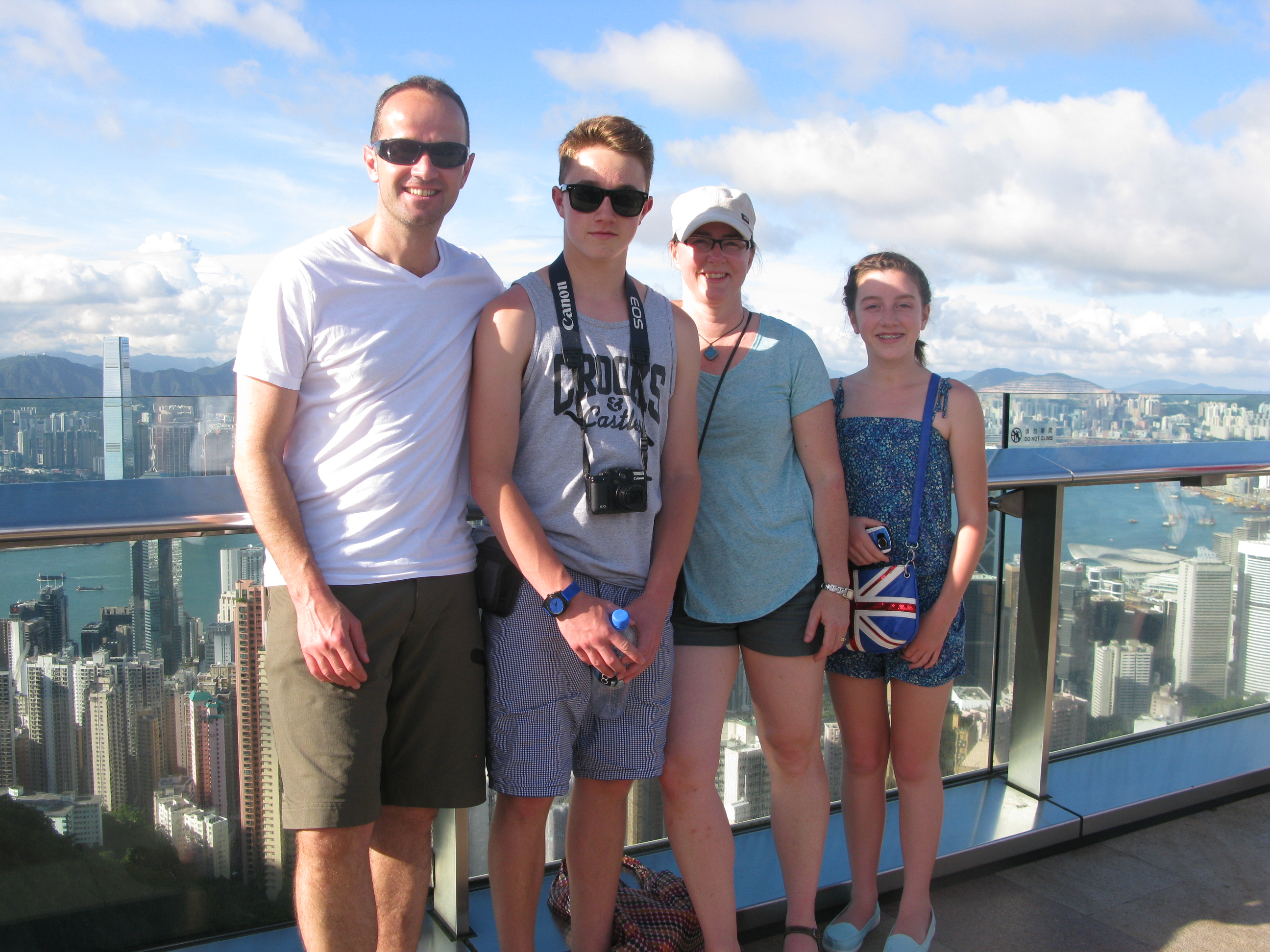
No one in the history of Hong Kong tourism ever thought to take the same photo atop Victoria Peak – seriously!
Cabin fever
Snowshoers make their way to Mount Steele Cabin, one of four cabins built by the Tetrahdron Outdoor Club in 1987. Reynold Schmidt photo

“We came in by the light of the benevolent and gibbous moon waxing to near fullness. The skies were clear and the spirits were high, peeling laughter for 48 hours and sleeping for six.”
– An entry in the Bachelor Lake Cabin, Tetrahedron Provincial Park
Some people move to the Sunshine Coast to get away from it all. The Tetrahedron is where Sunshine Coasters go to get away from it all. Six thousand hectares of mountains, lakes, streams, wetlands and forest, the Tet, as it’s fondly known, has long been cherished by backcountry enthusiasts.
In 1987, a group of those enthusiasts banded together to mobilize more than 200 volunteers, 45 businesses, schools, community groups and several levels of government: their mission, to build cabins linked by a trail network.
Back then, they called themselves the Tetrahedron Ski Club. A quarter of a century later, they’re the Tetrahedron Outdoor Club, a group justifiably proud of the legacy created northeast of Sechelt. Last summer, club members marked the 25-year milestone with dances, parties, pancake breakfasts and numerous trips down memory lane.

Tannis is one of 10 beautiful lakes in Tetrahedron Provincial Park. In June, the lake was still partially frozen.
Now they’re enjoying the snow.
“Early December, after that first big dump of snow; that’s my favourite time to go,” says club president, Reynold Schmidt. “I usually go with club members, friends – before the crowds.”
It’s June when Reynold and I visit Bachelor Lake Cabin, a one-hour hike from the trailhead up Grey Creek Forest Service Road. With snow more than a metre deep in places, I’m grateful for snowshoes. Partially frozen Tannis Lake is a testament to the cold, wet spring endured down at sea level, 1,100 metres below. At least the mosquitoes are still asleep.
Tannis is one of 10 beautiful lakes in Tetrahedron Provincial Park. There are three mountain peaks – Panther, Steele and Tetrahedron – and some of the oldest trees in the country. Amabilis fir, mountain and western hemlock, yellow cedar and white pine can all be found here. So, too, can the club’s four rustic, two-storey cabins each built to accommodate 16 people – first-come, first serve. They can be reached via a 25-kilometre trail network and are located at Bachelor Lake, above Edwards Lake, between McNair and Chapman Lakes, and below the summit of Mt. Steele.
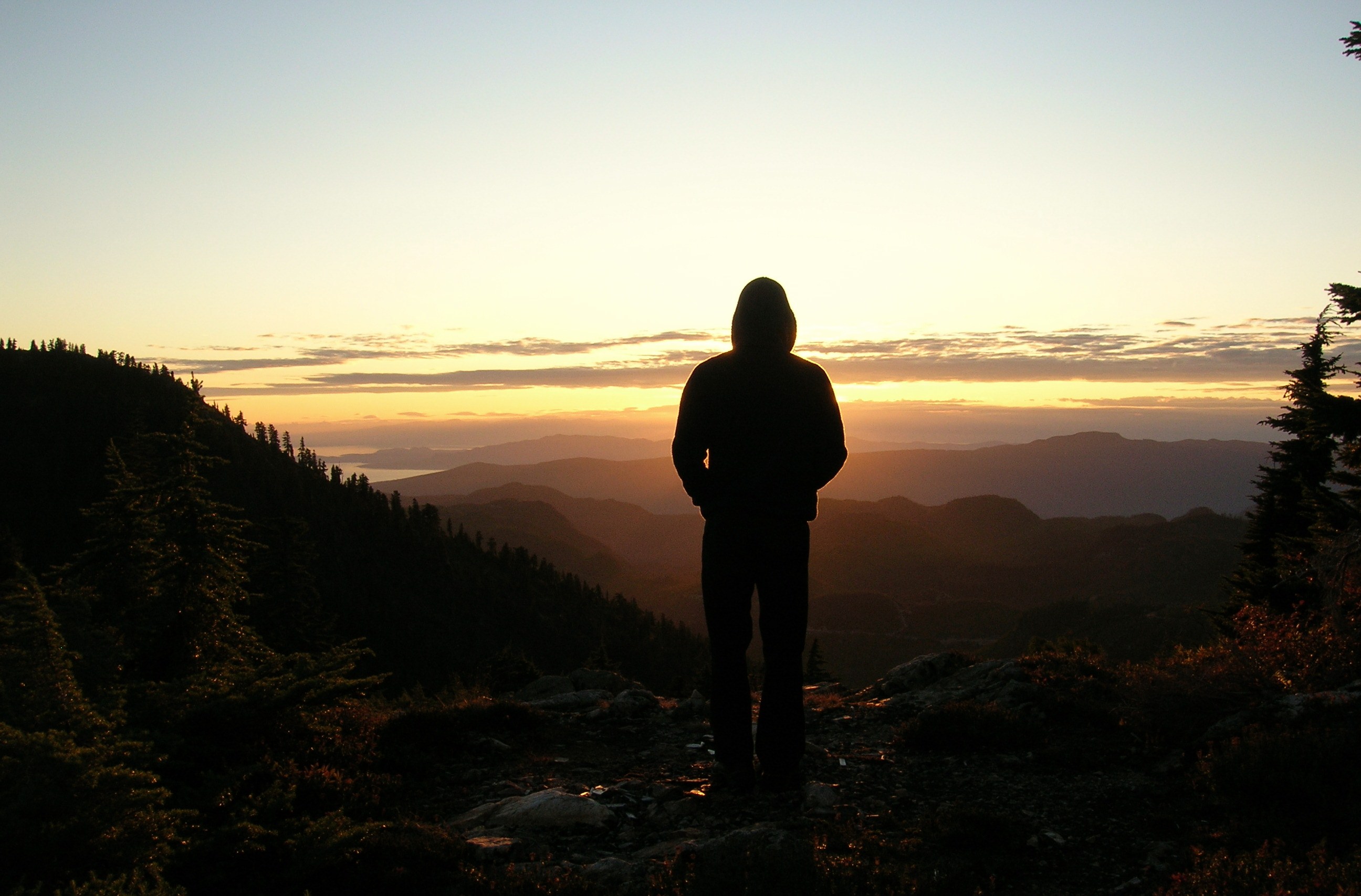
A 25-kilometre trail network links the cabins in Tetrahedron Provincial Park. BC Parks photo
Inside Bachelor Cabin, we stop for lunch, seated on a long wooden bench at a metal table. There’s a wood stove and firewood. Above us is a sleeping loft with foam mattresses. From the kitchen window, looking across frozen Bachelor Lake, it’s hard to imagine “crowds”. We haven’t seen a soul all day. But weekend and holidays during the winter can be busy at the cabins, confirms Reynold, a natural resource officer with B.C. Ministry of Forests, Lands and Natural Resource Operations.
“We’ve had our problems with vandalism over the years, people coming just to party and not cleaning up after themselves,” he says. “There has been a lot of debate within the club to create a reservation system, but some members are adamant the cabins remain for everyone’s use.”
This year, the club has appointed stewards, two people per cabin, responsible for maintenance and regular monitoring. “They’re regular backcountry users who get to use the lockboxes to store their gear, so they don’t have to carry stuff in each time,” says Reynold.
“It helps dispel the sense that these are party cabins,” he adds.
Naturally, the cabins are there to be enjoyed. How they came to be there is a different story, far removed from pristine mountain air – below sea level in fact!
A basement in Franklin Road, Gibsons, is where George Smith pitched his idea for a cabin and trail network. In 1985, George had skied Mount Steele with his friend Ian McConnell on June 1 weekend. He was struck by the quality of the snow and the potential of backcountry recreation in the area.

Bachelor Cabin, the closest of the four cabins to the trail head.
“The Sunshine Coast was in the midst of an economic depression,” recalls George. “People weren’t exactly light and breezy, but I thought this idea made sense.”
George approached his Franklin Road neighbor, Wayne Greggain, the titular head of the Tetrahedron Ski Club. After a heyday in the late 1960s and 70s, mostly skiing Mount Elphinstone courtesy of a Tucker Snow Cat and 600-foot lift purchased from Hollyburn Mountain, the ski club was all-but defunct by 1985. Wayne agreed to host a meeting of ski enthusiasts in his basement where George explained his vision.
The prevailing mood, recalls George, was: “We don’t know how good an idea this is, but if we don’t do it, someone else might and they won’t do it right.”
The group agreed that if George could secure funding for the project, the ski club would run it as a non-profit. By the fall of 1986, George – then a sometimes reporter with the former Coast News – had secured more than $150,000 in federal funding and another $20,000 from the province.
Yet another Franklin Road resident, Paul Anslow, was contracted to build the cabins at Sechelt airport. The cabins would then be disassembled and flown by helicopter to be reassembled on site. Forestry company, Canfor, and the Sunshine Coast Regional District donated timber, Sechelt Creek Contracting provided logging service, Airspan donated some air time, Gibsons Building Supplies provided crane trucks and the Outdoor Recreation Council pitched in with chainsaws.
A small army of volunteers mobilized to clear trails while 18 people during the course of the project worked on the cabins.
George describes former club president and long-time member, Victor Bonaguro, “a force of nature” who could “build anything”.
“Part of the reason we were able to get funding was because we created an 11-point education plan for the workers, so they would have the tools to go out and find work afterwards,” says George. Aside from cabin-building, workers learned valuable lessons in surveying and industrial and wilderness first aid, thanks to time donated by local experts.
By the time the cabins opened to the public in 1987, the club had raised more than $300,000 for the project. But perhaps more importantly, one great idea had united governments, businesses, and local volunteers in the midst of a recession, no less.
The Tetrahedron was declared a Class A provincial park in 1995. And in 2004, recognizing the year-round activities of its members, the ski club changed its name to the Tetrahedron Outdoor Club.”
“This resource is at least as good today as when it was first built,” says George, who’s still in love with the Tetrahedron.
“I feel lucky. When you walk in a forest that’s never been logged, it just feels different. It’s wonderful to be there.”
- For more information about the Tetrahedron Outdoor Club, visit www.tetoutdoor.ca
- Four-wheel drive and chains are essential for visiting the Tetrahedron. For more information about the park, visit www.env.gov.bc.ca/bcparks
- For an armchair view of the Tetrahedron, visit Coast adventurer Quinn Barabash’s website at captainquinn.com and see his video at captainquinn.com/adventure-video-blog/
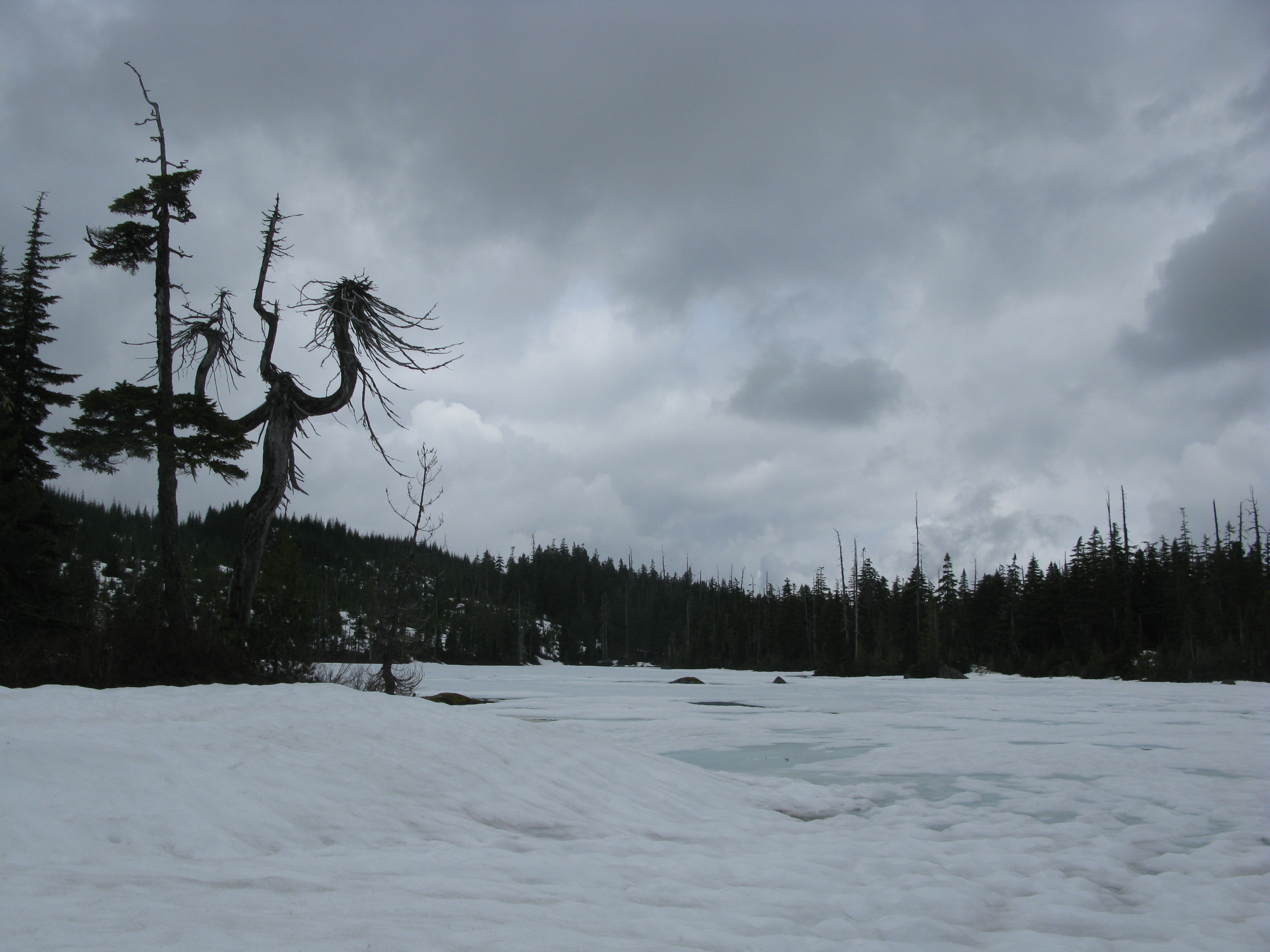
Summer comes late to Bachelor Lake, pictured here in June.
Whistler celebrates readers and writers
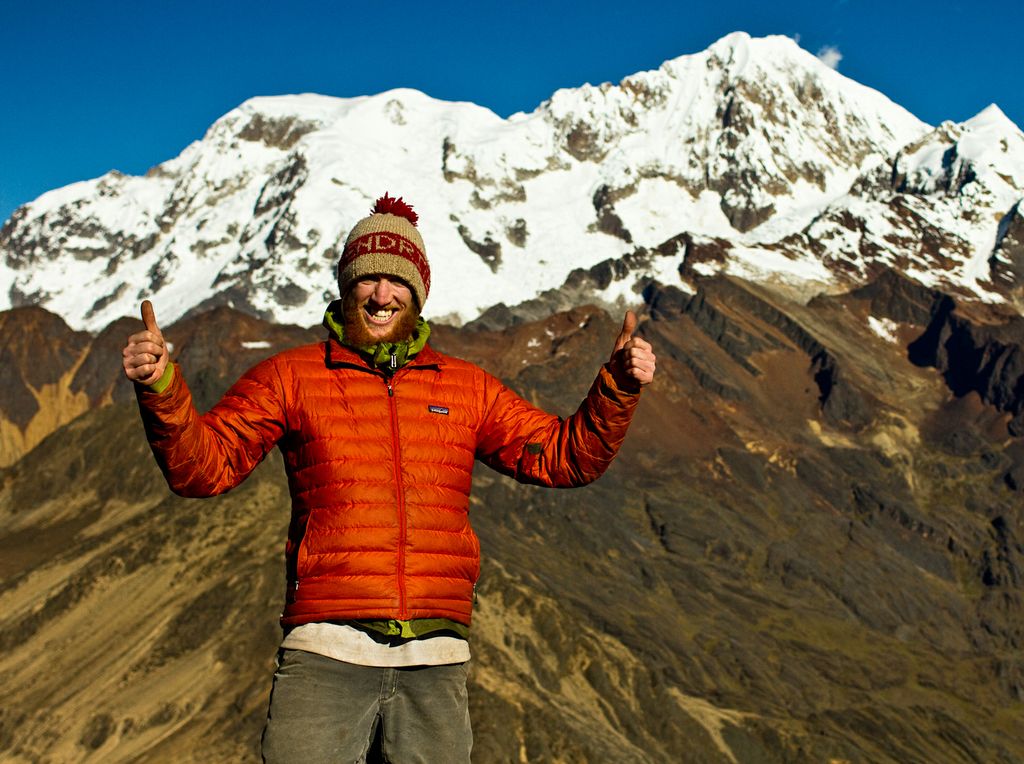
Sunshine Coast filmmaker Nicolas Teichrob appears at the Whistler Readers and Writers Festival, Oct. 12-14.
A comfy bed and a good book sound like the perfect antidote to the chilly onset of fall, but organizers of the Whistler Readers and Writers Festival have something less solitary in mind.
From Oct. 12-14, the resort will showcase the art of storytelling with a celebrated lineup of Canadian and international authors. Panel discussions, workshops, and speaking events make up the festival, which also pairs authors with wine and jazz at a Saturday-night gala to be held at the Chateau Fairmont Whistler. The Squamish Lil’Wat Cultural Centre will host the festival’s opening night reception.
Whistler’s festival events have an intimate feel, say organizers, who add that booklovers can interact and connect with top authors from all over North America.
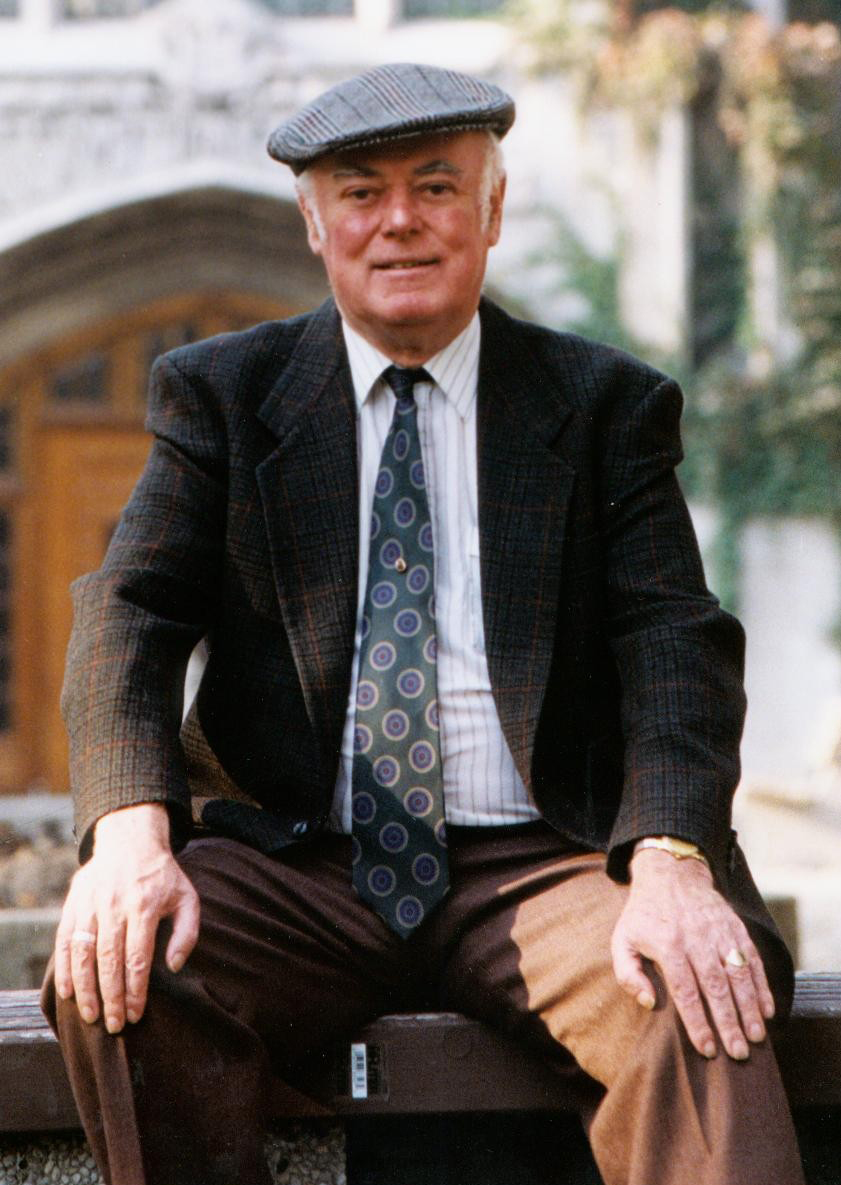
Festival headliner, Alistair MacLeod.
Headlining is Canadian author, Alistair MacLeod, best known for his critically acclaimed collection of short-stories Island as well as his multiple award-winning novel No Great Mischief. Lawrence Hill, author of the international best-seller and prize winning The Book of Negroes will be there, along with short-story author and journalist Zsuzsi Gartner (Better Living Through Plastic Explosives). Also speaking will be young adult writer Susan Juby (Alice, I Think, The Woefield Poultry Collective); non-fiction and fiction writer Margaret Macpherson (Nellie McClung: Voice for the Voiceless, Body Trade); historical fiction novelist, Jack Whyte (A Dream of Eagles, The Templar Trilogy); fiction and poetry writer Miranda Hill (Sleeping Funny) and celebrated poet John Burnside(Black Cat Bone). Local author and festival director Stella Harvey will be releasing her new book, Nicolai’s Daughters.
In 2001, Harvey founded the Whistler Writers Group, otherwise known as The Vicious Circle.
“Our first festival was 20 people in my living room,” laughs Harvey. “We had a guest author – Andreas Schroeder – and a workshop the following day. We were finished by 4:30!”
Harvey invited the poet, novelist and Roberts Creek resident, Schroeder, back for the festival’s 10th anniversary. Another Sunshine Coast resident, Nicolas Teichrob, will appear at this year’s festival. The filmmaker will be part of a panel discussion on writing and film on Oct. 14.
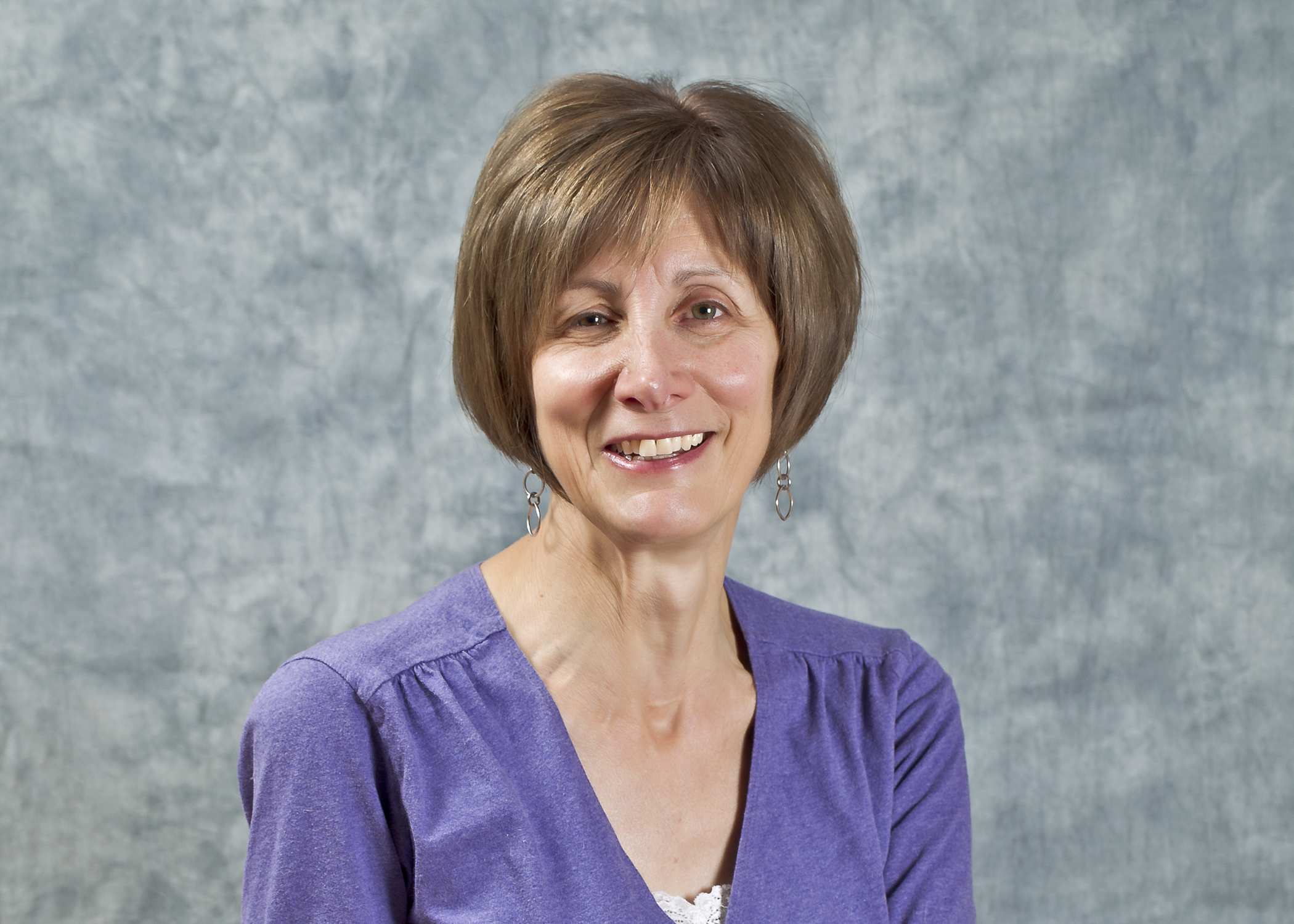
Festival founder, Stella Harvey.
The Whistler Writers Group now has about 150 members and has seen its annual festival grow to a three-day event, attracting internationally acclaimed writers and about 300 participants last year.
But, says Harvey, the festival has lost none of its intimacy.
“One of the things we hear most in evaluations by guests and authors is that intimacy is a great strength of the festival. The fact that you can share lunch or a coffee with the authors and hear about the books they like, or what their motivations are, is definitely appreciated.”
Saturday night’s “Wine, Books and Jazz” event at the Fairmont Chateau Whistler is a first for the festival, says Harvey, who hopes it will be another way to cultivate that intimacy. “It will be a pub-like setting and a chance to share a drink with authors while listening to good music.”
The New Orleans Ale Stars take the stage with swing-era jazz from 7:30 p.m.
In partnership with the Fairmont Chateau Whistler, the Whistler Readers and Writers Festival is offering “Book and Bed” packages. The full “Book and Bed” package starts at $658 and includes two full event passes (entry to 14 events over the festival weekend) for the festival plus accommodation for two nights, based on two sharing.
For more information, visit www.theviciouscircle.ca and http://www.fairmont.com/whistler/special-offers/other-offers/readers-writers-festival/, or call 1 800 606-8244.
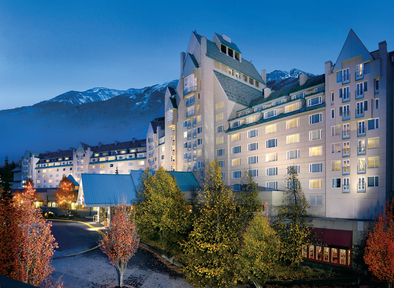
The Fairmont Chateau Whistler hosts the Whistler Readers and Writers Festival, Oct. 12-14.
White and wild on Dakota Ridge

If cross-country skiing is a little slow for you, tobogganing should get your adrenaline racing on Dakota Ridge.
Forty minutes ferry-ride from West Vancouver, the Sunshine Coast is better known for The Beachcombers, scout camps and verdant shorelines. People don’t typically associate this 140-kilometre peninsula with snow. But there it is, several feet of the stuff, just waiting to be played in.
You just have to look up.

There's cross-country skiing for all ages on Dakota Ridge.
Poking through the clouds about 1,200 metres above the beaches and pretty parks is Dakota Ridge, one of the best cross-country ski destinations in the last place you’d expect to find it. Between November and March, if it’s raining at sea level, there’s a good chance it’s snowing up there.
And it’s only a 20-minute drive from sea level.
“You can come up for a couple of hours and be in a completely different world,” says Craig Moore, a cross-country skier and long-time member of the Dakota Ridge Winter Recreation Society, a non-profit group working to promote the area. “For cross-country skiing it beats anywhere on the west coast.”
It’s pretty good for tobogganing and snowshoeing, too.
A 620-hectare (1,532 acres) plateau atop a working watershed, Dakota Ridge offers a rolling landscape of stunted old growth hemlock and yellow cedar. On a clear day you can see the North Shore mountains, the Gulf Islands and Vancouver Island beyond – even Mount Baker down in Washington State.
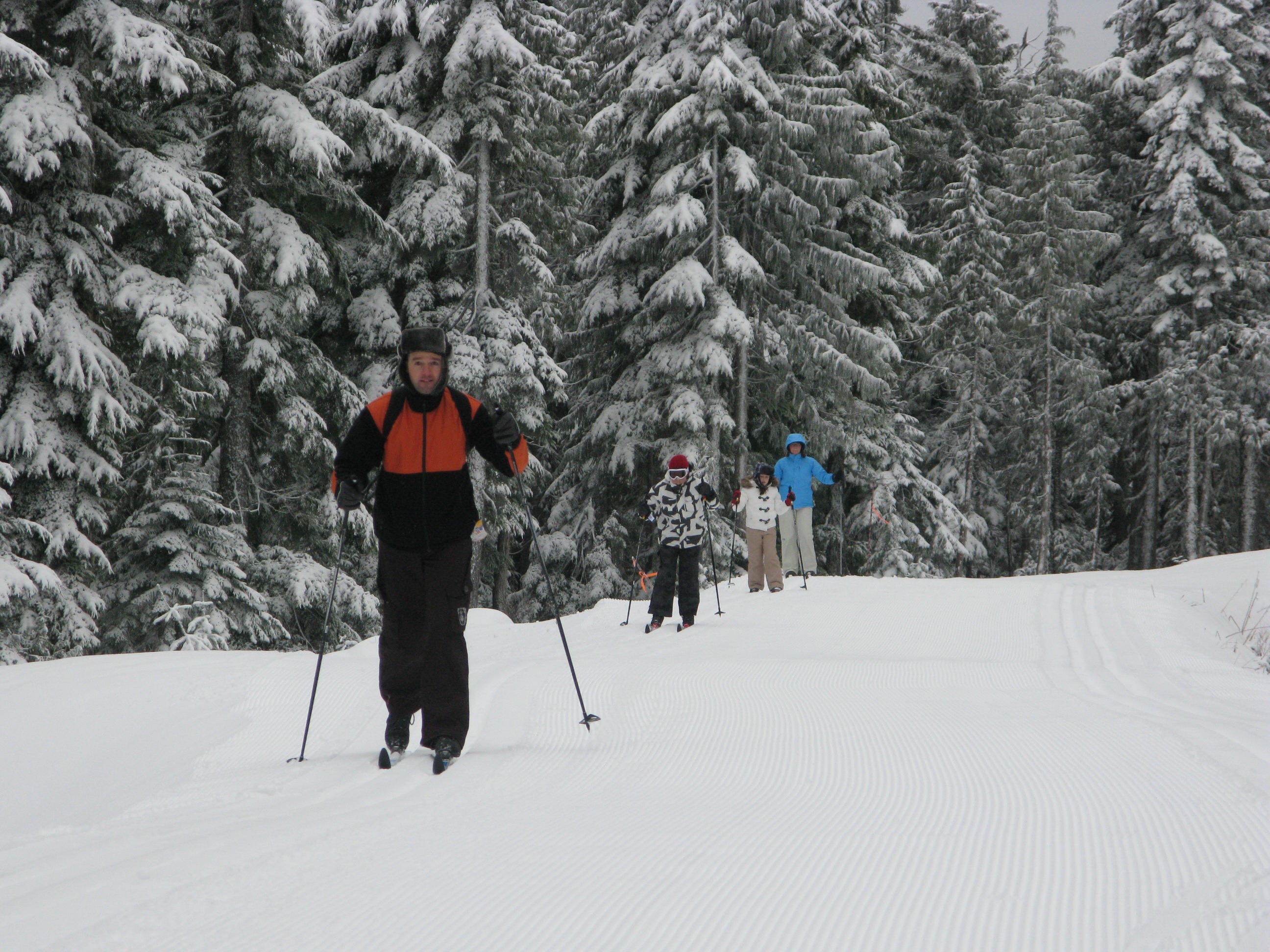
There are 13 kilometres of groomed trails for cross-country skiers on Dakota Ridge.
Cross-country skiers will find 13 kilometres of groomed Nordic trails, all of them signposted and colour-coded according to degree of difficulty. Professional engineer Reidar Zapf-Gilje, who prepared Callaghan Valley’s 2010 Nordic Olympic course, designed Dakota Ridge’s trail network.
“In many cross-country skiing areas you’re skiing through woods and you don’t see too much,” says Zapf-Gilje.
“Dakota Ridge is way up there in terms of esthetics. Its real strength is its potential for recreation and citizen [cross-country] races.”
Jamie Mani hopes that potential will be realized. Mani owns Alpha Adventures, a Wilson Creek outdoor-adventure store specializing in guided snowshoe and cross-country ski touring on the Ridge.
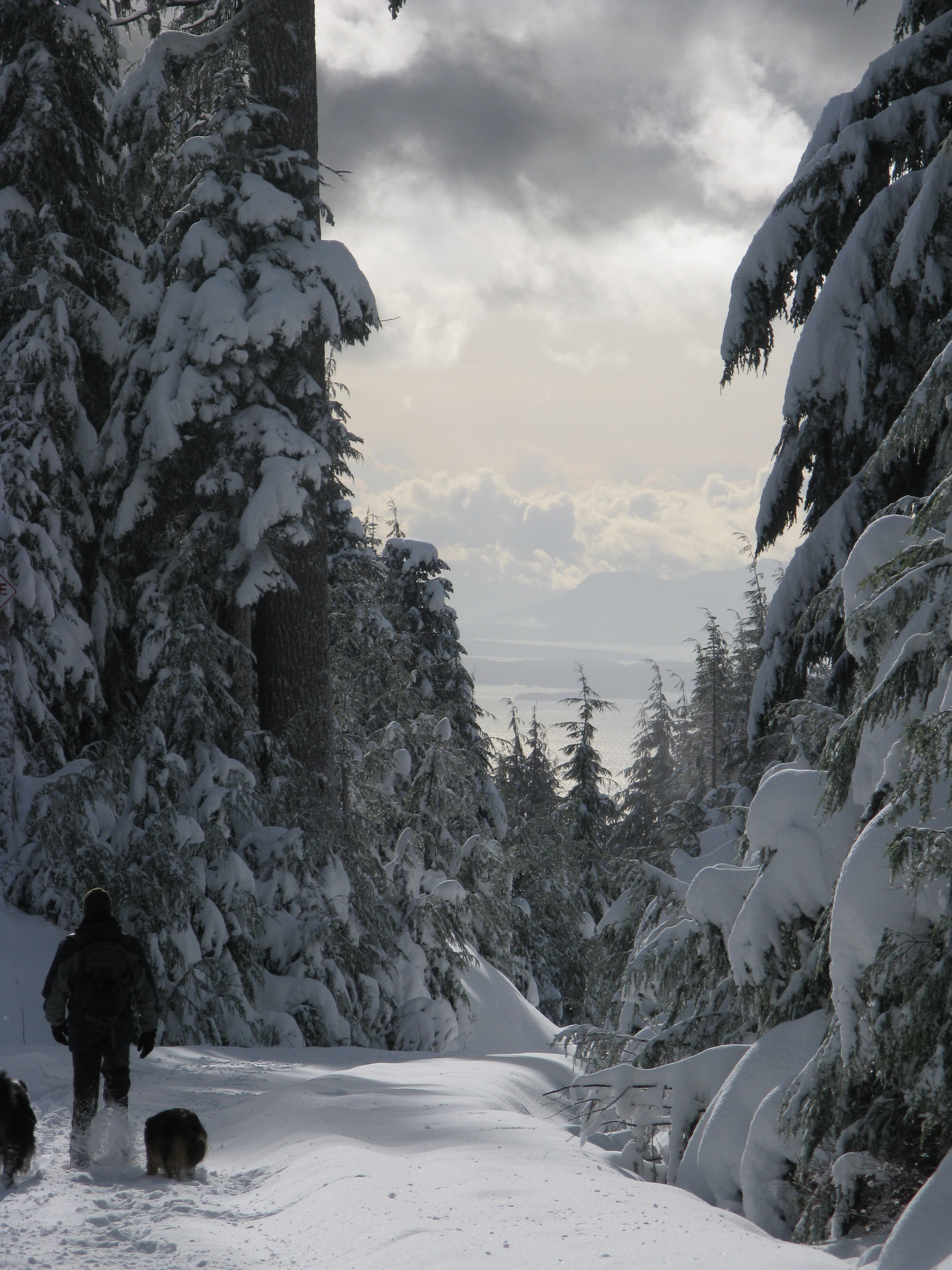
When it's not snowing, the views from Dakota Ridge can be spectacular.
“One of the great things about this place is its proximity to so many other activities,” says Mani. “Someone can literally be out snowshoeing in the morning up in the mountains and then golfing or kayaking in the afternoon.
“And for Nordic skiing we have excellent potential because of great snowfall and a blend of flat and rolling trails. We have been skiing on the Ridge as late as May in previous years.”
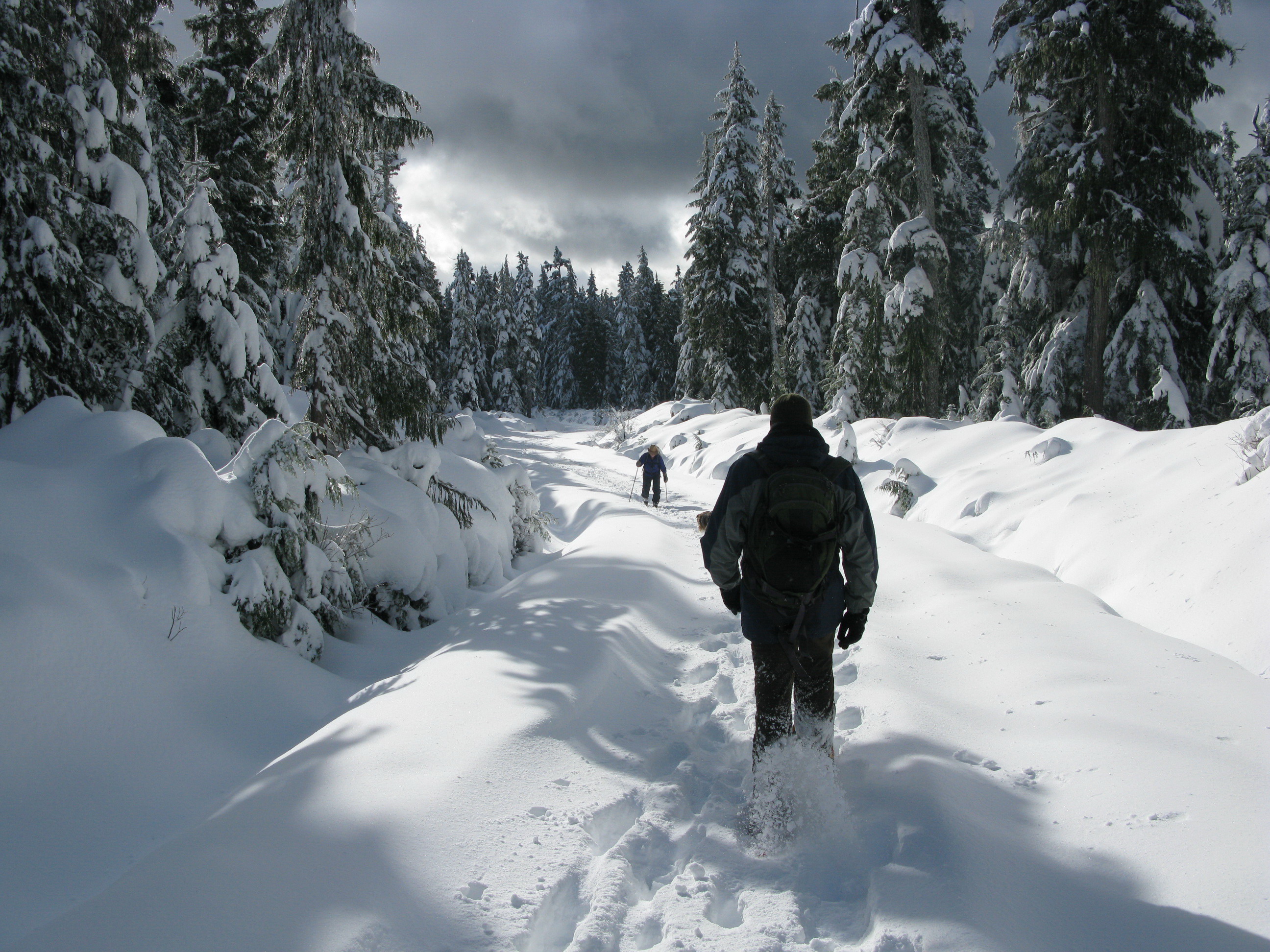
Snowshoers will find their own trails and there’s plenty of room for hiking and tobogganing. You’ll find a parking lot, warming hunt and toilet at the trailhead.
The turnoff for Dakota Ridge is at the top of Field Road in Wilson Creek, about half way between Gibsons and Sechelt, and 20 kilometres drive from BC Ferries’ Langdale terminal. For many years, the unplowed access road to Dakota’s trailhead made it a ridge too far for some. In recent years the 11-kilometre road has been upgraded to allow for regular plowing, but four-wheel drive vehicles equipped with chains are still the way to go.
Or take advantage of Alpha Adventure’s shuttle service.
- To learn more about Dakota Ridge, visit http://www.scrd.ca/Dakota-Ridge
- For road updates and snow conditions on the Ridge, visit www.suncoastcentral.com/outdoor-reports.asp.
- To book cross-country ski lessons, a guided tour, equipment rentals or shuttle service up to Dakota Ridge, call Alpha Adventures at 1 604 885-8838 or visit www.outdooradventurestore.ca
Vicious cycle: Biking the Big Apple’s core and beyond

You try and raise your kids right - Minutes into the Five Boro bike ride and Emma's nabbed by NYPD.
F. Scott Fitzgerald loved Manhattan. In The Great Gatsby, he described its “first wild promise of all the mystery and all the beauty in the world,” when viewed from the Queensboro Bridge.
Chances are Fitzgerald wasn’t crossing the Queensboro on a bike when he wrote those words.
With 30,000 other cyclists.
In the pouring rain.
I looked back at Manhattan over a river of bobbing bike helmets on the Queensboro Bridge and saw imposing shades of grey, the tops of skyscrapers concealed by even greyer clouds.
It was Kilometre 24 of New York’s annual TD Bank Five Boro Bike Tour, a 68-kilometre celebration of car-free cycling through Manhattan, The Bronx, Queens, Brooklyn and Staten Island. The week before, temperatures hit 32 degrees Celsius. Today, the day of the big ride, the reason we’d trained together as a family, our motivation for flying almost 4,000 kilometres to New York, the mercury was barely nudging 10.
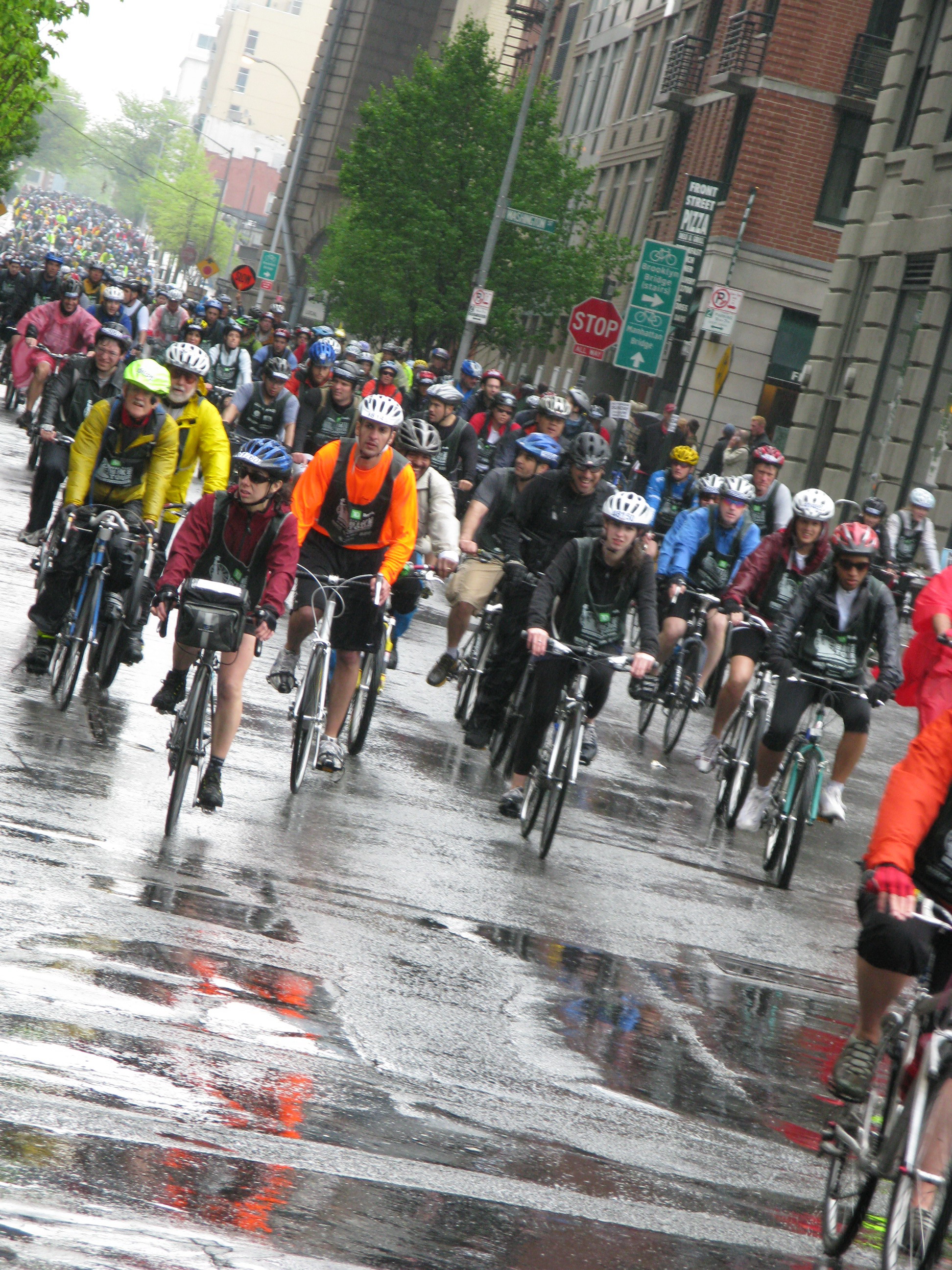
30,000 cyclists brave the rain in New York's Five Boro bike ride.
“This is actually fun,” said my daughter Emma, without even a hint of sarcasm. “Really!” she added, registering my look of disbelief.
Emma was clearly enjoying being the centre of attention as one of the tour’s younger participants. Soon after our 8-a.m. mass start from Battery Park and ride through the concrete canyon of Sixth Avenue, she’d been noticed by three NYPD bike cops as we snaked through Central Park.
“Hey, look at that kid, she’s barely breaking a sweat!” shouted one.
“What’s your name kid?” shouted another. “Well, listen Emma, don’t be thinking of beating us to the finish line, Emma. We can ticket you.”
We seemed destined to bump into the trio throughout the day, despite the numbers of riders involved and the distance covered. Accommodating 30,000 cyclists through New York’s five boroughs and across five major bridges must be a logistical minefield.
The fact that the tour has been staged annually since 1977 surely helps, but it’s only in recent years the city has begun to embrace bike culture on the other 364 days of the year. New York has expanded its urban bicycle network by 320 kilometres since 2006 while the number of New Yorkers commuting by bike has doubled in the last six In one of the busiest cities in the world, home to seven million people and 13,000 honking yellow taxi cabs, where rush hour starts at 5 a.m. and finishes about 15 hours later, riding a bike here is not as intimidating as you might think.
The day before the Five-Boro Bike Tour we had rented bikes from Liberty Bicycles five blocks south of Central Park. With some trepidation we cycled our aluminum hybrids west to the Hudson River Greenway, the longest stretch of a series of bike paths that circle the island of Manhattan. While busy with walkers, joggers and inline skaters, the greenway with its dedicated lanes and traffic signals is a great place to get acclimatized to biking in New York.
And after our first two days spent hopping on and off open-top buses visiting the Big Apple’s more obvious attractions — Empire State Building, for example — we felt a little less like tourists. (You can hardly visit New York and not visit such places, but be prepared for long lineups and short tempers.)
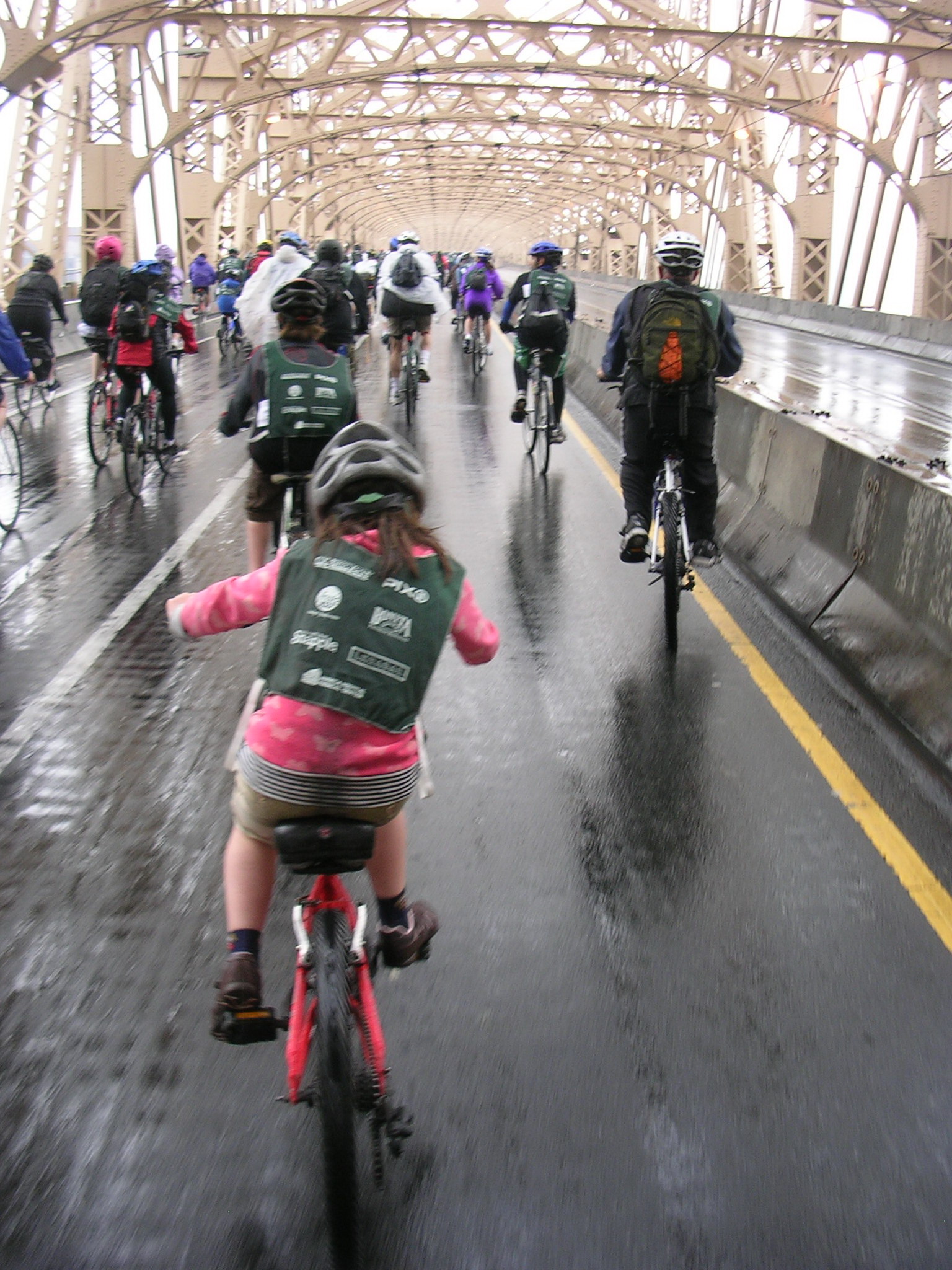
Crossing the Queensboro Bridge, over a century old, much loved by F. Scott Fitzgerald and made famous by Simon and Garfunkel’s 59th Street Bridge Song (Feelin’ Groovy).
With the eight-lane Joe DiMaggio Highway rumbling just a few metres to our left, it felt good to be setting our own pace, gliding south along the Hudson River past waterfront tennis courts, batting cages and soccer fields, piers and playgrounds. We had little trouble navigating the older, narrower streets of Greenwich Village, where we hooked up with a two-wheeled tour conducted by Levi Zwerling and Bike The Big Apple.
The company takes small groups of cyclists beyond the tourist trail through New York’s diverse neighbourhoods.
Nowhere epitomized that more than the Bedford- Stuyvesant neighbourhood in Williamsburg, Brooklyn, where we cycled empty streets in eerie silence.
Home to a burgeoning population of Satmar, a Hasidic movement of mostly eastern European Jews who survived World War II, this well-kept community of row houses and apartments might just be the quietest place in all of New York’s five boroughs during Saturday sabbath. Conservatively dressed families, distinguished by men wearing oversized fur hats called shtreimel, ambled along the sidewalks ignoring the less modestly clothed cyclists in their midst.
By contrast, we stopped for a noisy lunch and beer-tasting at the Brooklyn Brewery, whose 150-year-old premises have been restored to their original bare brick and timber finery.
Various estimates put the number of community gardens in New York at more than 600, with 10 per cent of those located in the hip East Village and Manhattan’s Lower East Side. We paused to admire one, only for two of its creators to stop by and supplement Levi’s tour with their own version.
“That happens a lot in the East Village,” said Levi with a smile.
The ride back to Manhattan across Brooklyn Bridge’s busy boardwalk proved to be the most hair-raising part of the day. As we weaved in and out of pedestrians, clearly we no longer thought of ourselves as tourists — or at least not the kind of tourists who wander in and out of bike lanes. (Think Stanley Park seawall on any summer weekend.)
The experience helped prepare us for the Five Boro Bike Tour, which required plenty of weaving with almost 30,000 companions jockeying for space. While we passed expensivelooking Cannondales, Cervélos, Konas and Bianchis all requiring various repairs — usually flats — our trusty rentals kept us moving through the Bronx where churchgoers smiled at us in sympathy as the rain intensified.
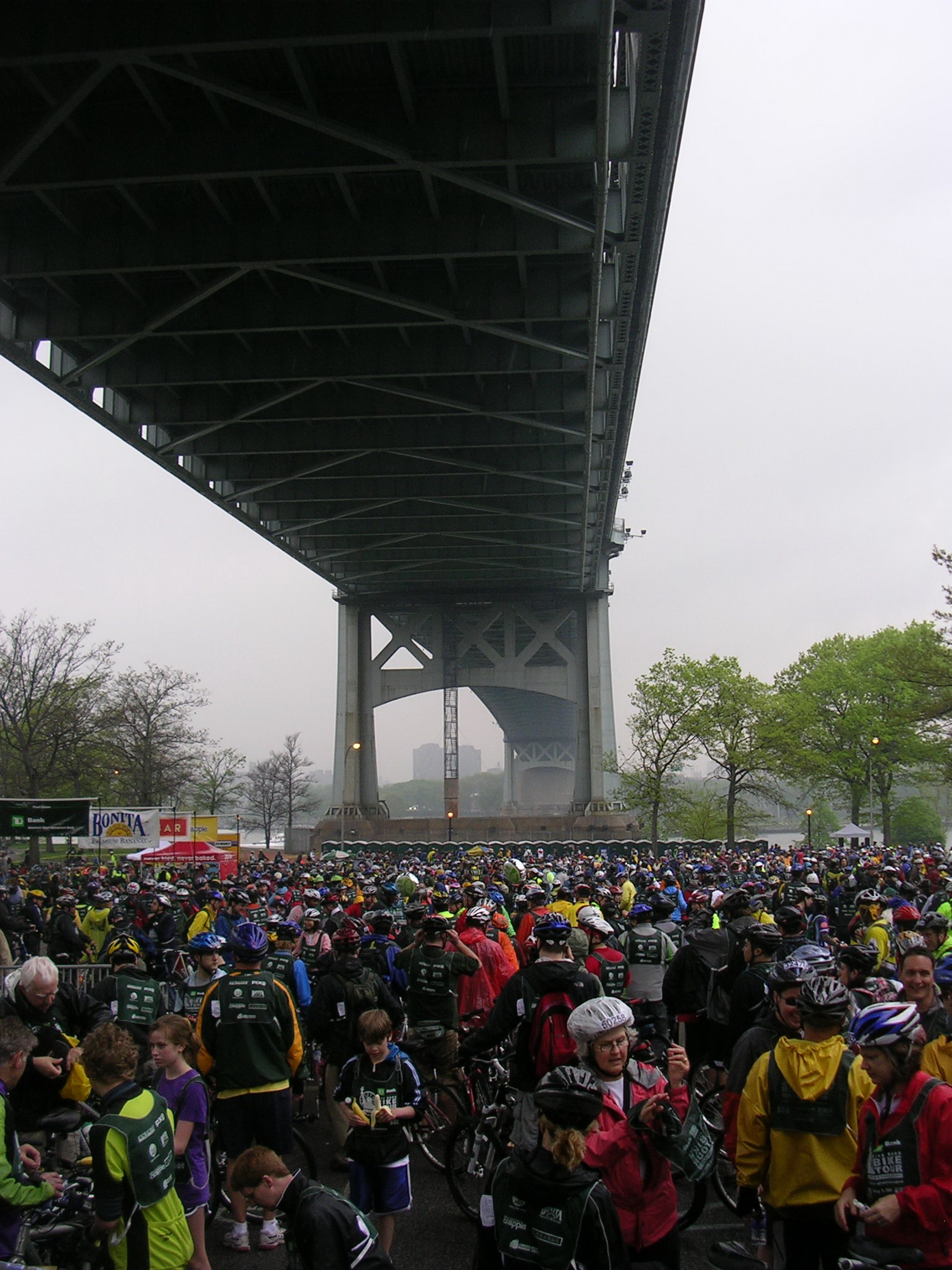
Oh, the humanity! Bikers take cover under the RFK Bridge in Astoria Park during the TD Bank Five Boro Bike Tour.
In Queens we took refuge from the elements at Astoria Park under the RFK Bridge with thousands of other soaked riders. In the trendy Brooklyn neighbourhood of DUMBO (Down Under the Manhattan Bridge Overpass) at Kilometre 43 we fell inside a busy Starbucks for a family meeting to answer the following:
Quit the tour here and shortcut to our hotel for hot showers and hot food, or slog on through the deluge to the Verrazano Narrows Bridge and the finish with everyone else at Staten Island?
“We’re going to come last if we stay in here all day,” said Emma, who clearly had decided on behalf of the family, much to her brother Ryan’s irritation.
So it was with some pride the Judd parents watched their kids high-five each other at mid-span of the Verrazano, once the world’s largest suspension bridge and closed to bikes on all but this day of the year.
Close ahead and all downhill was the finish at Staten Island.
Seven hours earlier, back in Manhattan and still half asleep, we’d cycled down Broadway and through Times Square (on a designated bike lane, no less!) to the starting line at Battery Park.
From here on the Verrazano, the city’s said to look spectacular on a clear day. Pelted by torrential rain and surrounded by leaden clouds, the view we got was lousy.
And we didn’t care.
If you go:
Bike New York organizes the annual TD Bank Five Boro Bike Tour and has a wealth of information on its website (www.bikenewyork.org) for anyone planning to cycle in the Big Apple. While the Five Boro tour is the biggest event of its kind in the U.S., Bike New York also stages smaller rides throughout the year, details of which you’ll find on its website.
Otherwise, to plan a twowheeled adventure in New York, visit nyc.gov/dotnews and click on “Bicyclists” on the left-hand side. There you can download or order the comprehensive New York City Cycling Map. Not only does the map illustrate the routes to ride, it also lists dozens of bike rental stores throughout New York’s five boroughs.
We rented reliable adult and children’s bikes from Liberty Bicycles (libertybikesny.com or 212 757-2418) in Midtown Manhattan (9th Avenue and 55th Street).
Bike The Big Apple (bikethebigapple.com or 1 877-865-0078) offers several different guided tours throughout the week and can tailor tours to suit individual requests.
New York offers hundreds of hotel options, but hotels that accommodate bikes are harder to find. The Buckingham Hotel (888 511-1900), two blocks south of Central Park, is well located and bike friendly.

After a long, wet bike ride, nothing aids recovery quite like new sun glasses.
We found New York’s subway system to be safe, reliable and relatively affordable at $2 a trip or $7 for a day-pass.While Manhattan is a great place to walk and browse, with a little planning you can easily navigate via subway between the city’s major sights. Hop-on, hop-off double-decker bus tours operated by CitySights NY (citysightsny.com) hit the highlights for $44 (adults) or $34 (children from five to 11) for a 24-hour period.
In the same vein, New York’s CityPass (citypass.com) at $79 (adults) or $59 (youth, 13-17) will buy you entry to six main attractions, including the Empire State Building observatory. It will also get you to the front of most lineups. For detailed tourism information, including the city’s calendar of events, visit nycgo.com
 Nev Judd: Online and out there