Archive for the ‘skiing’ Category
Party on in Whistler
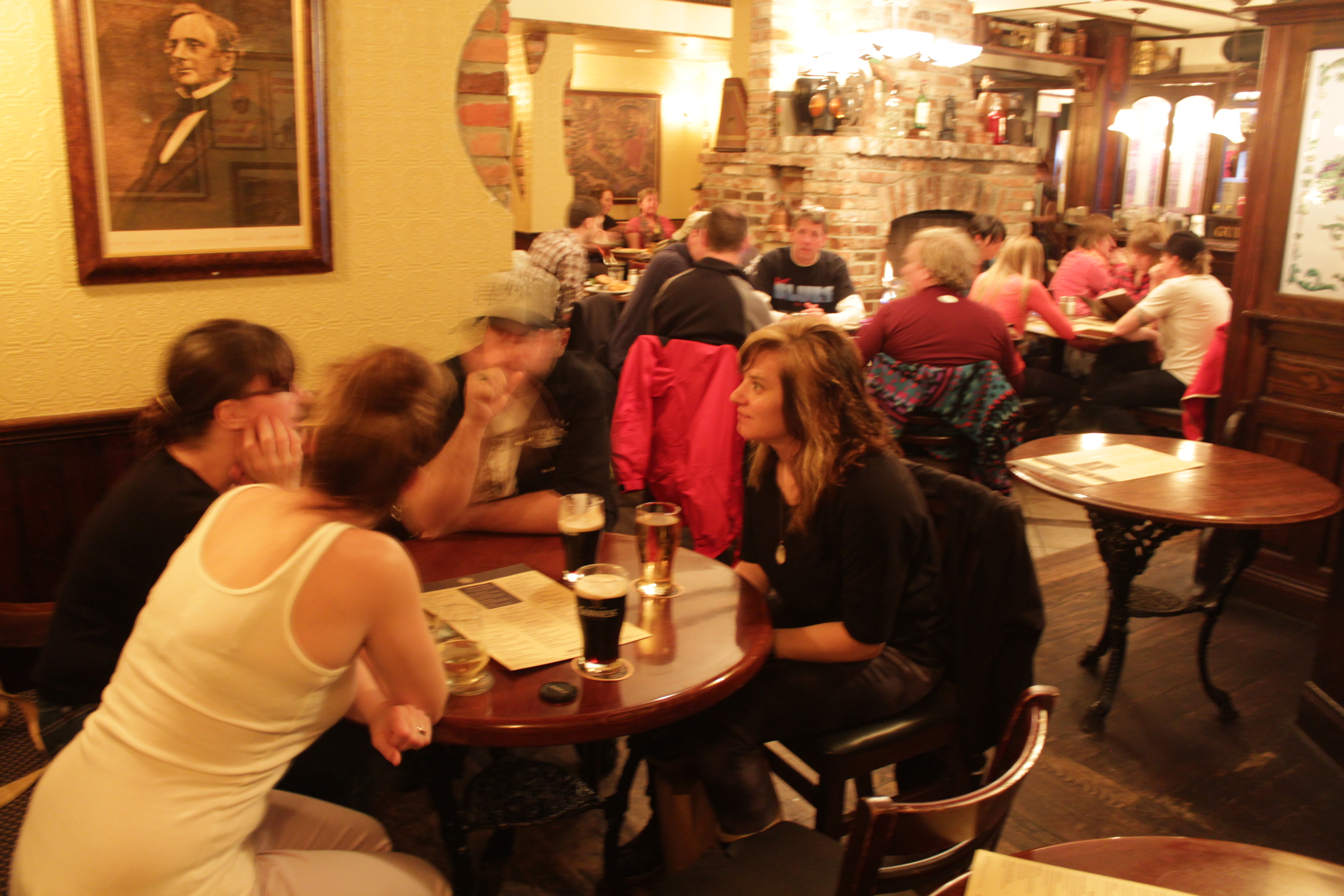
The Dubh Linn Gate begins to fill up at the World Ski and Snowboard Festival.
It’s 4:20 p.m. on 4/20 in Whistler and the aroma wafting through the village is unmistakeable: Axe body spray with just a hint of beef jerky. It smells like a high school locker room, which is probably why my 15-year-old son Ryan doesn’t seem to notice. Either that or he’s carrying too much Axe and beef jerky to notice.
The final weekend of Whistler’s ski season is also the final weekend of the World Ski and Snowboard Festival. That means all manner of free arts, music, and sports events. It also means free giveaways – Axe, beef jerky, Monster Energy drinks and yoghurt. It’s an odd combination, but a popular one among teens nonetheless.
It makes for an eclectic scene: Sweet-smelling kids amped on caffeine. (Monster drinks are for over-18s, but plenty of parents were indulging their under-18s.) Bandana-wearing dogs fresh from Whistler DogFest, mingling with toddlers and locals mingling with visitors to the beat of G. Love and Special Sauce, (they’re a band). Somehow it all works.
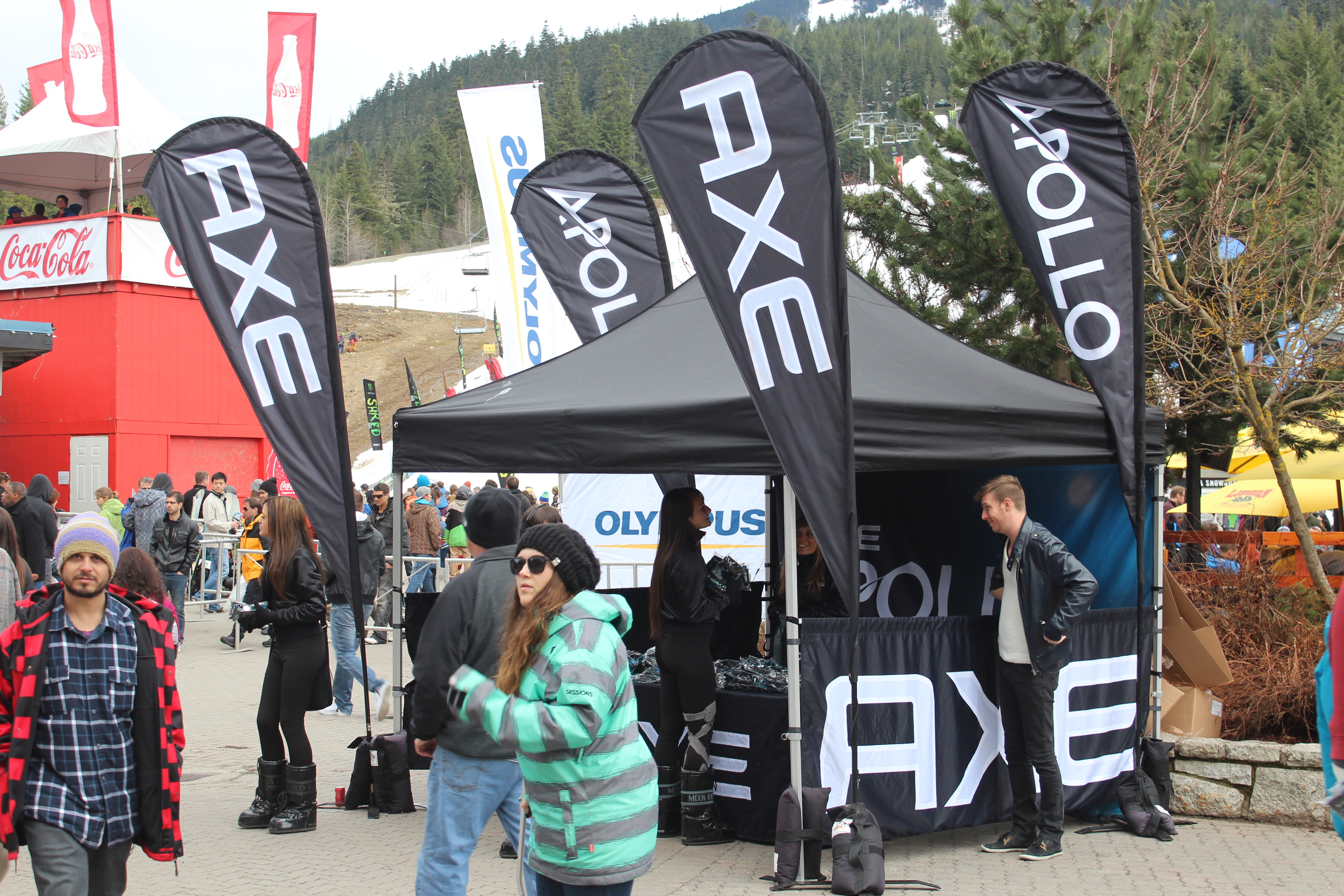
You want some Axe with that beef jerky?
We’ve skied out to the village just in time for Fashion EXPOSED, a fast-paced, high-energy show on a catwalk set up by the main stage. Macklemore’s infectious hit, Thrift Store is booming over the speakers as models come and go every few seconds. G. Love and Special Sauce, the day’s first live act, are up next and pretty soon everyone from the decks of the Garibaldi Lift Company to The Longhorn to the crowd in between are swaying to bluesy hip hop. The lead singer looks like Justin Timberlake and plays a mean harmonica.
Aside from abundant yoghurt and beef jerky, our immediate après options look sparse with lineups at almost all the bars fronting the main stage. Thank goodness for the Dubh Linn Gate where there’s room at the back. Pints of Guinness and a poutine and fries later, we’re back outside for Vancouver’s very own enduring hip hop band, the Swollen Members. They’re a more than capable warm-up act for the ever-popular Big Air event and Monster Energy Shred Show. (Try saying “Shred Show” fast! It’s easier after a Monster Energy drink.)
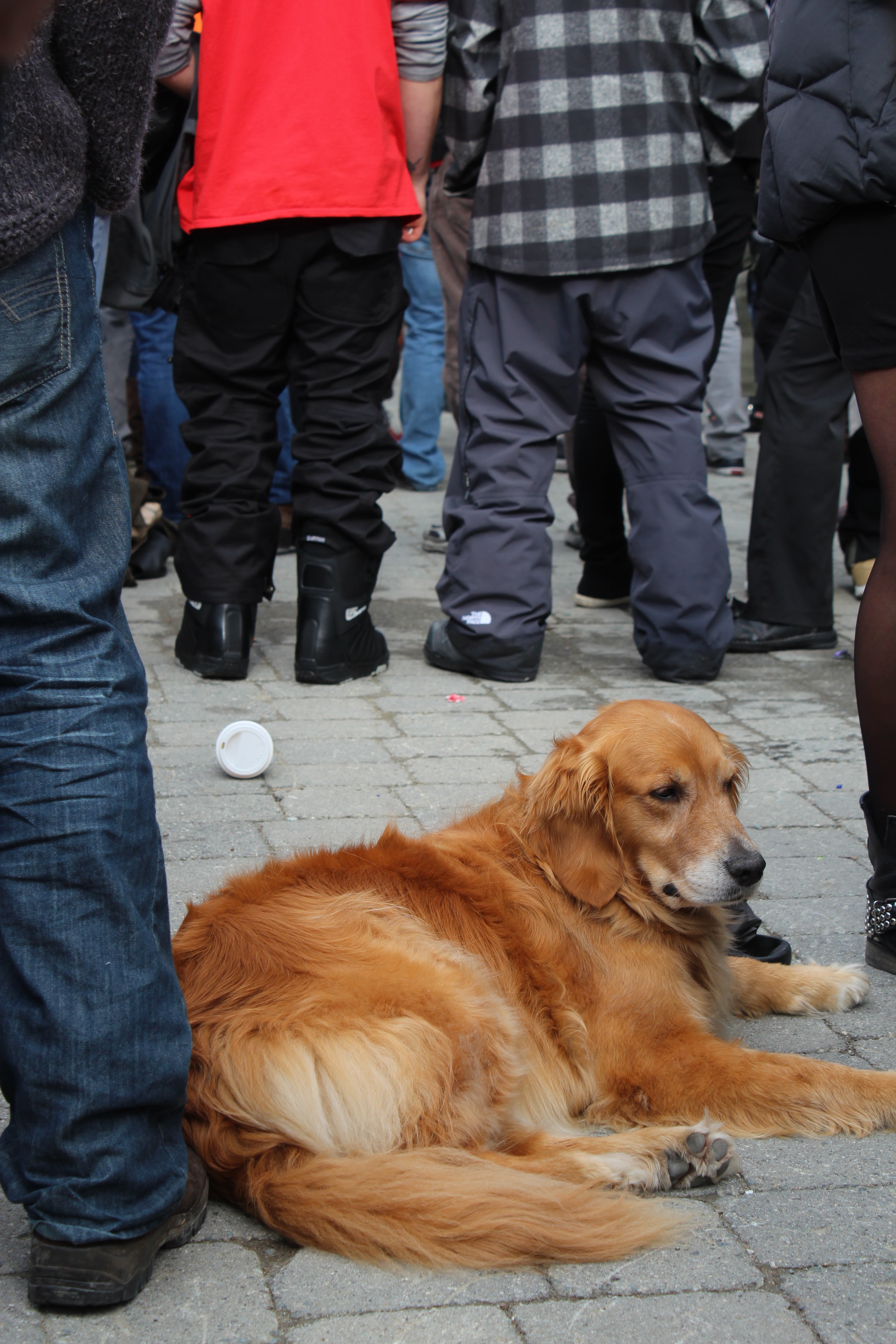
Lab chills out to G. Love and Special Sauce.
As darkness and temperatures fall, pro snowboard riders soar upwards of 70 feet in competition for a $15,000 cheque and the 2013 Big Air title. It’s an impressive finale made all the sweeter by 18-year-old Canadian Maxence Parrot landing a Triple Cork to beat a Norwegian and an American for the victory. As the lineups to the village’s bars and clubs grow ever-longer, we head back to the Fairmont Chateau Whistler and find refuge in the Fitzsimmons Pub (The Fitz, as it’s known to locals) opposite the hotel. No lineups, great food and a solid beer list. ($13.75 a pitcher!)
Telus no longer sponsors the World Ski and Snowboard Festival, but that has not diminished the event’s appeal. On the contrary, organizers expanded the WSSF’s arts and culture scene this year. Open daily at the Whistler Conference Centre, State of the Art celebrated the mountain community in a variety of media. Storytelling and improv were the themes of the Mountain Multiplicity Show and the Chairlift Revue. And Vengeance in the Valley, the resort’s inaugural roller derby bout, sold out.
Skiing on Blackcomb continues until late May. Meanwhile golf season starts May 4. Visit fairmont.com/whistler for details of Whistler golf packages, starting at $139 per person.
For everything else Whistler, visit whistlerblackcomb.com.
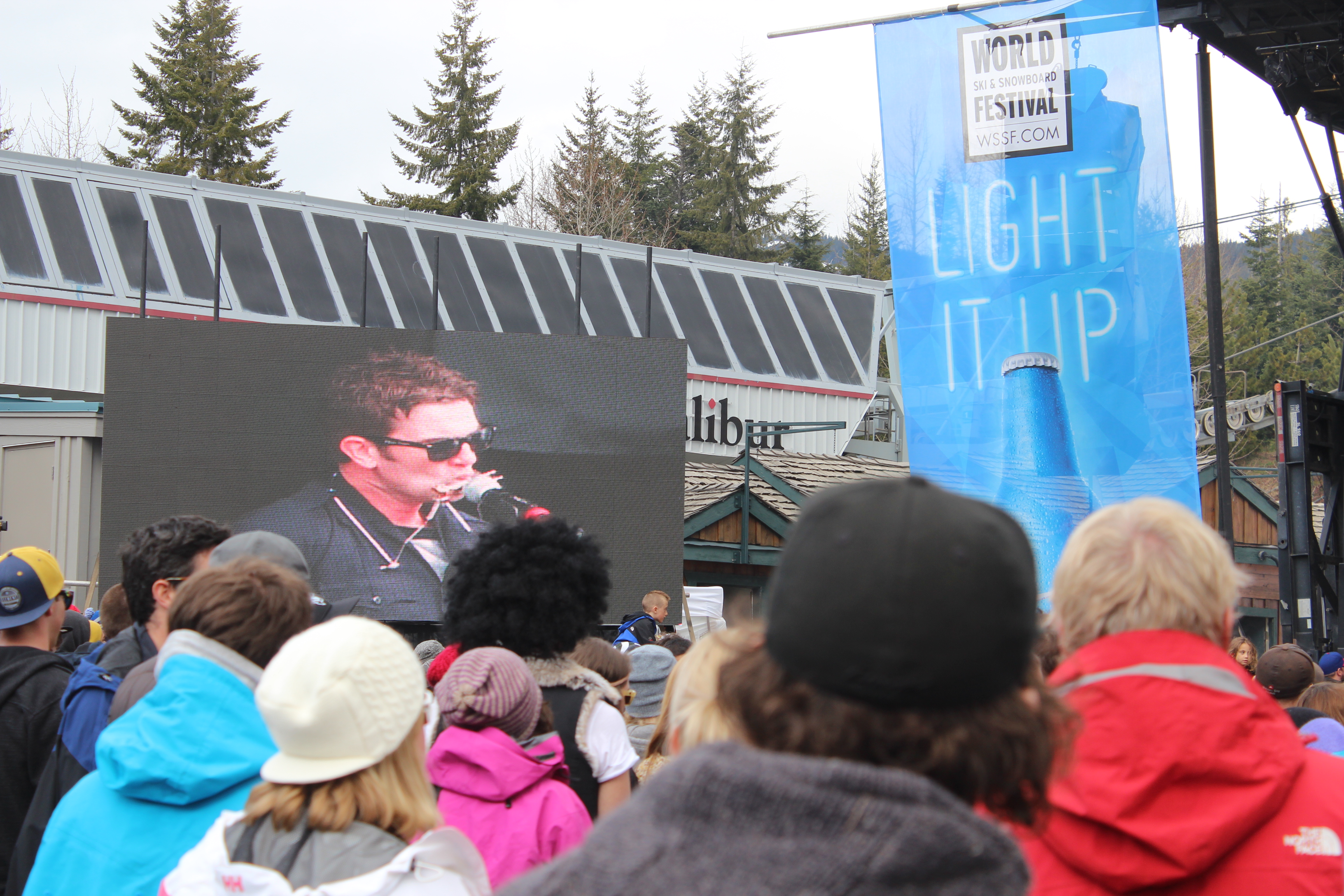
G. Love’s Garrett Dutton breaks from ‘Booty Call’ to harmonica.
Cabin fever
Snowshoers make their way to Mount Steele Cabin, one of four cabins built by the Tetrahdron Outdoor Club in 1987. Reynold Schmidt photo

“We came in by the light of the benevolent and gibbous moon waxing to near fullness. The skies were clear and the spirits were high, peeling laughter for 48 hours and sleeping for six.”
– An entry in the Bachelor Lake Cabin, Tetrahedron Provincial Park
Some people move to the Sunshine Coast to get away from it all. The Tetrahedron is where Sunshine Coasters go to get away from it all. Six thousand hectares of mountains, lakes, streams, wetlands and forest, the Tet, as it’s fondly known, has long been cherished by backcountry enthusiasts.
In 1987, a group of those enthusiasts banded together to mobilize more than 200 volunteers, 45 businesses, schools, community groups and several levels of government: their mission, to build cabins linked by a trail network.
Back then, they called themselves the Tetrahedron Ski Club. A quarter of a century later, they’re the Tetrahedron Outdoor Club, a group justifiably proud of the legacy created northeast of Sechelt. Last summer, club members marked the 25-year milestone with dances, parties, pancake breakfasts and numerous trips down memory lane.

Tannis is one of 10 beautiful lakes in Tetrahedron Provincial Park. In June, the lake was still partially frozen.
Now they’re enjoying the snow.
“Early December, after that first big dump of snow; that’s my favourite time to go,” says club president, Reynold Schmidt. “I usually go with club members, friends – before the crowds.”
It’s June when Reynold and I visit Bachelor Lake Cabin, a one-hour hike from the trailhead up Grey Creek Forest Service Road. With snow more than a metre deep in places, I’m grateful for snowshoes. Partially frozen Tannis Lake is a testament to the cold, wet spring endured down at sea level, 1,100 metres below. At least the mosquitoes are still asleep.
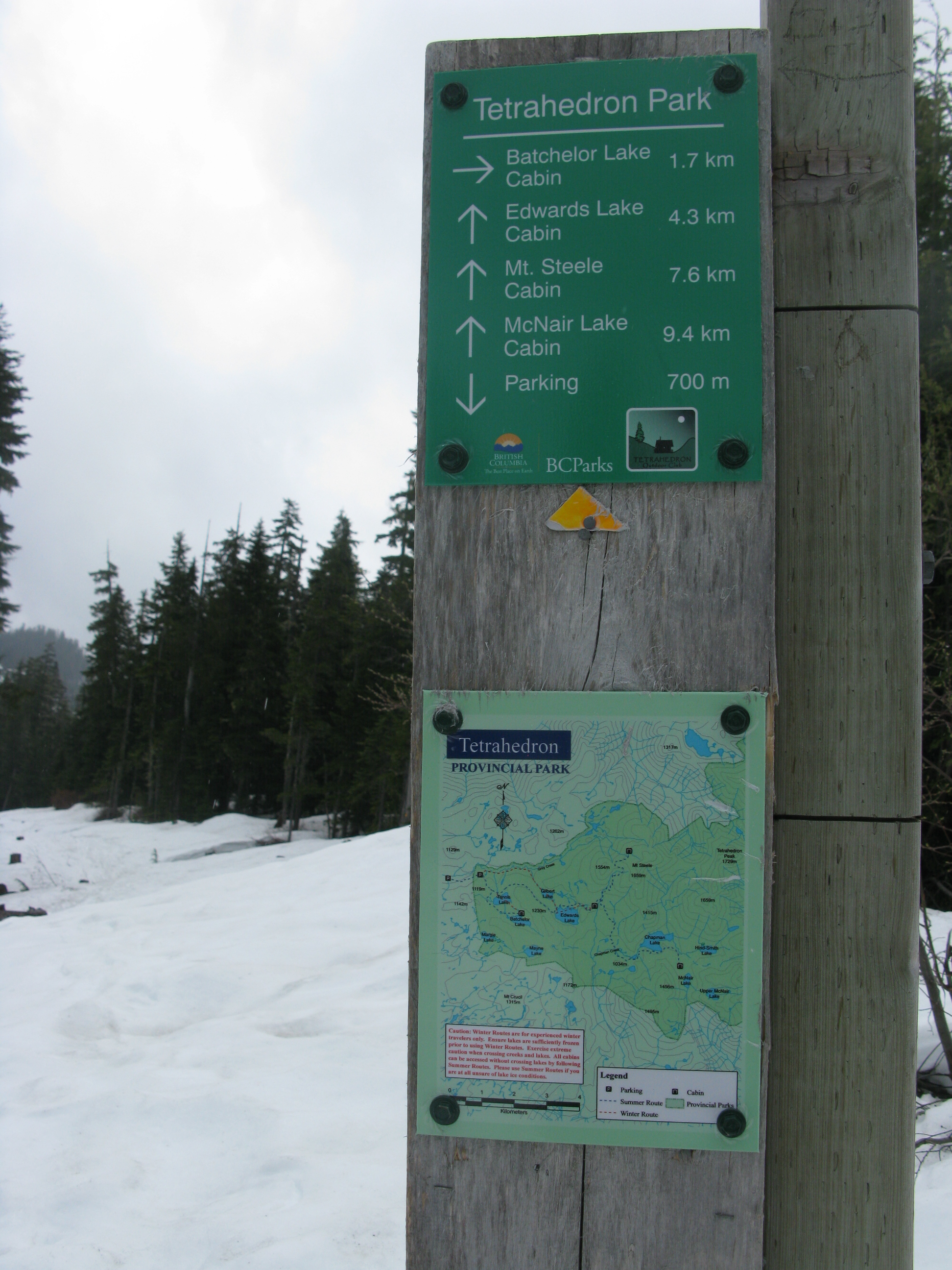
Tannis is one of 10 beautiful lakes in Tetrahedron Provincial Park. There are three mountain peaks – Panther, Steele and Tetrahedron – and some of the oldest trees in the country. Amabilis fir, mountain and western hemlock, yellow cedar and white pine can all be found here. So, too, can the club’s four rustic, two-storey cabins each built to accommodate 16 people – first-come, first serve. They can be reached via a 25-kilometre trail network and are located at Bachelor Lake, above Edwards Lake, between McNair and Chapman Lakes, and below the summit of Mt. Steele.
A 25-kilometre trail network links the cabins in Tetrahedron Provincial Park. BC Parks photo
Inside Bachelor Cabin, we stop for lunch, seated on a long wooden bench at a metal table. There’s a wood stove and firewood. Above us is a sleeping loft with foam mattresses. From the kitchen window, looking across frozen Bachelor Lake, it’s hard to imagine “crowds”. We haven’t seen a soul all day. But weekend and holidays during the winter can be busy at the cabins, confirms Reynold, a natural resource officer with B.C. Ministry of Forests, Lands and Natural Resource Operations.
“We’ve had our problems with vandalism over the years, people coming just to party and not cleaning up after themselves,” he says. “There has been a lot of debate within the club to create a reservation system, but some members are adamant the cabins remain for everyone’s use.”
This year, the club has appointed stewards, two people per cabin, responsible for maintenance and regular monitoring. “They’re regular backcountry users who get to use the lockboxes to store their gear, so they don’t have to carry stuff in each time,” says Reynold.
“It helps dispel the sense that these are party cabins,” he adds.
Naturally, the cabins are there to be enjoyed. How they came to be there is a different story, far removed from pristine mountain air – below sea level in fact!
A basement in Franklin Road, Gibsons, is where George Smith pitched his idea for a cabin and trail network. In 1985, George had skied Mount Steele with his friend Ian McConnell on June 1 weekend. He was struck by the quality of the snow and the potential of backcountry recreation in the area.

Bachelor Cabin, the closest of the four cabins to the trail head.
“The Sunshine Coast was in the midst of an economic depression,” recalls George. “People weren’t exactly light and breezy, but I thought this idea made sense.”
George approached his Franklin Road neighbor, Wayne Greggain, the titular head of the Tetrahedron Ski Club. After a heyday in the late 1960s and 70s, mostly skiing Mount Elphinstone courtesy of a Tucker Snow Cat and 600-foot lift purchased from Hollyburn Mountain, the ski club was all-but defunct by 1985. Wayne agreed to host a meeting of ski enthusiasts in his basement where George explained his vision.
The prevailing mood, recalls George, was: “We don’t know how good an idea this is, but if we don’t do it, someone else might and they won’t do it right.”
The group agreed that if George could secure funding for the project, the ski club would run it as a non-profit. By the fall of 1986, George – then a sometimes reporter with the former Coast News – had secured more than $150,000 in federal funding and another $20,000 from the province.
Yet another Franklin Road resident, Paul Anslow, was contracted to build the cabins at Sechelt airport. The cabins would then be disassembled and flown by helicopter to be reassembled on site. Forestry company, Canfor, and the Sunshine Coast Regional District donated timber, Sechelt Creek Contracting provided logging service, Airspan donated some air time, Gibsons Building Supplies provided crane trucks and the Outdoor Recreation Council pitched in with chainsaws.
A small army of volunteers mobilized to clear trails while 18 people during the course of the project worked on the cabins.
George describes former club president and long-time member, Victor Bonaguro, “a force of nature” who could “build anything”.
“Part of the reason we were able to get funding was because we created an 11-point education plan for the workers, so they would have the tools to go out and find work afterwards,” says George. Aside from cabin-building, workers learned valuable lessons in surveying and industrial and wilderness first aid, thanks to time donated by local experts.
By the time the cabins opened to the public in 1987, the club had raised more than $300,000 for the project. But perhaps more importantly, one great idea had united governments, businesses, and local volunteers in the midst of a recession, no less.
The Tetrahedron was declared a Class A provincial park in 1995. And in 2004, recognizing the year-round activities of its members, the ski club changed its name to the Tetrahedron Outdoor Club.”
“This resource is at least as good today as when it was first built,” says George, who’s still in love with the Tetrahedron.
“I feel lucky. When you walk in a forest that’s never been logged, it just feels different. It’s wonderful to be there.”
- For more information about the Tetrahedron Outdoor Club, visit www.tetoutdoor.ca
- Four-wheel drive and chains are essential for visiting the Tetrahedron. For more information about the park, visit www.env.gov.bc.ca/bcparks
- For an armchair view of the Tetrahedron, visit Coast adventurer Quinn Barabash’s website at captainquinn.com and see his video at captainquinn.com/adventure-video-blog/
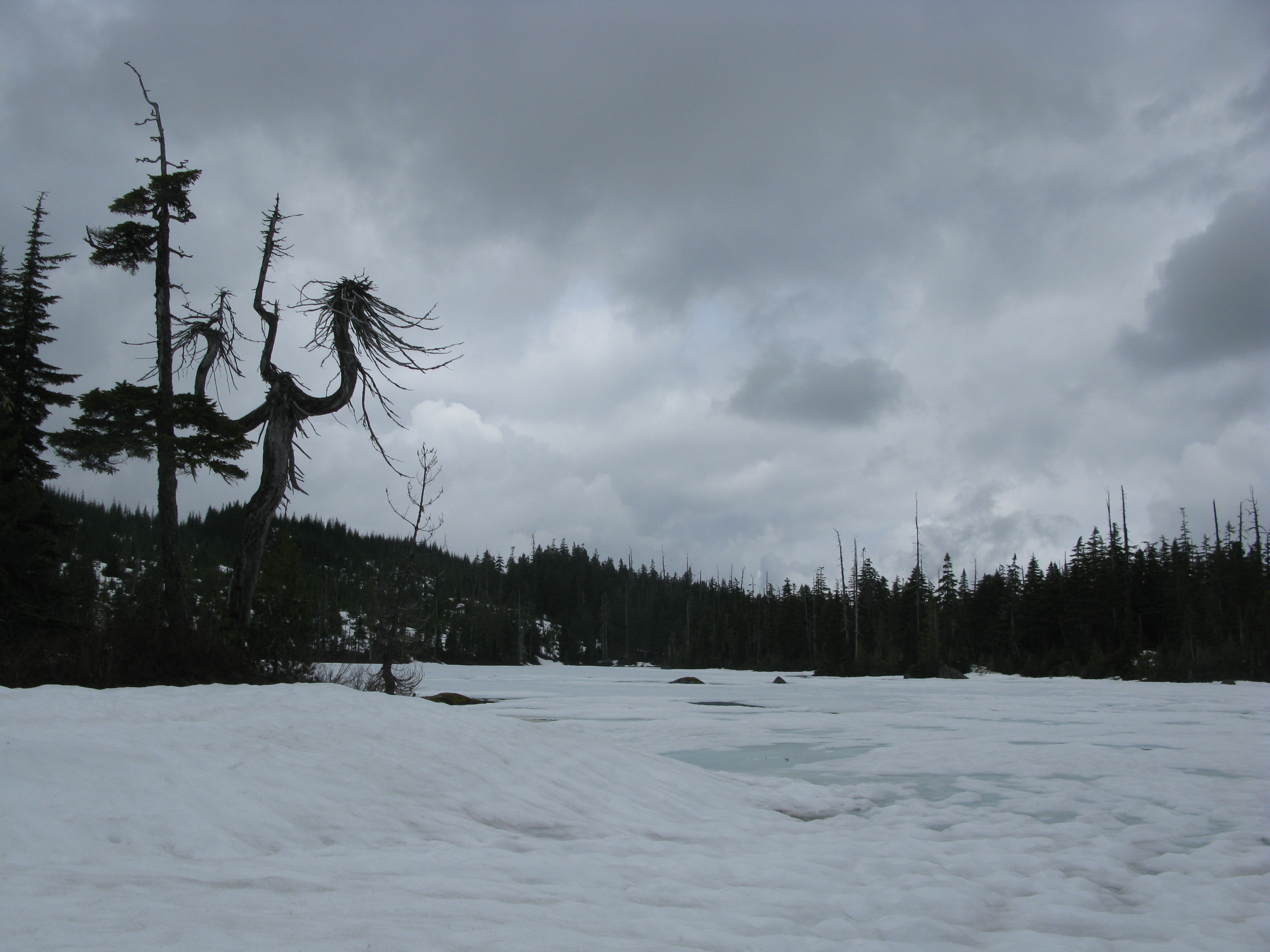
Summer comes late to Bachelor Lake, pictured here in June.
Whistler spring break for parents: Kids optional
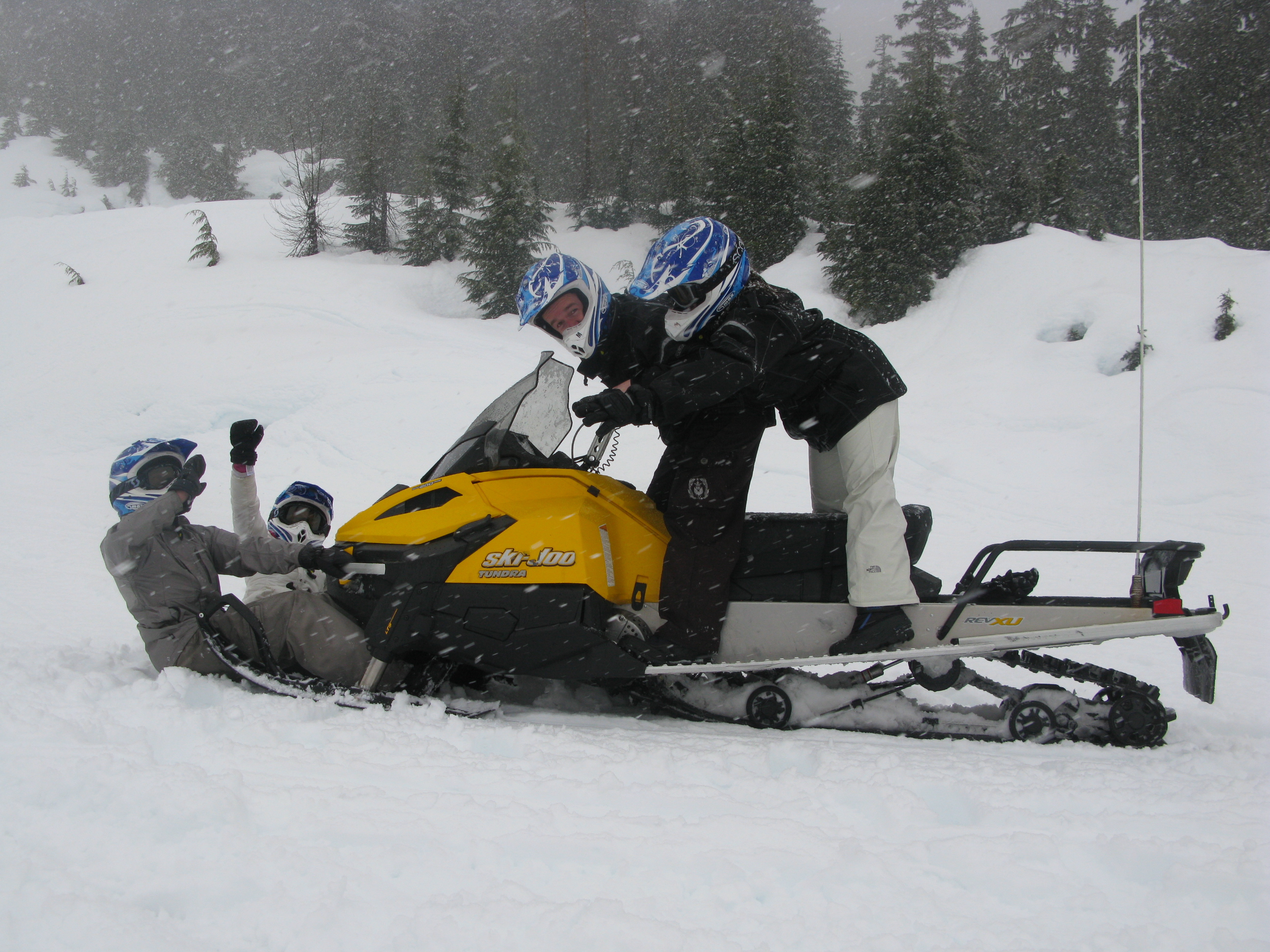
No child was harmed during the creation of this obviously staged photo. (Really.)
What to do with your kids? It’s the theme of every spring break travel story. We all love our kids, but let’s face it, they cramp our style sometimes.
So how about spring break for parents? Have we not earned a little indulgence?
From the poolside hammocks at the Scandinave Spa in Whistler, yes. From the tranquil cross-country ski trails of Callaghan Valley, certainly. From the excitement found atop a throbbing 4-stroke Bombardier snowmobile, hell yeah!
The best part of a trip can be in the planning, but sometimes it’s easier to leave it to experts. Enjoy Whistler offers personalized service to ensure travellers strapped for time can still enjoy a memorable visit, with or without children. In 72 hours, I drove fast, fired rifles, relaxed in a spa and skied till I dropped. I think I may have even had a better time than my kids.
Some of it was hard work though. Take the Biathlon Experience, for example, a two-hour immersion into the oldest winter sport of them all. At the Whistler Olympic Park in Callaghan Valley, adults can try the sport, a combination of cross-country skiing and rifle marksmanship. Aside from one regrettable hunting trip in Ireland 20 years ago (the rabbit got away), I’ve never done either. That was soon apparent to my instructor Antoine, who gently coached me through the finer points of skate skiing. In contrast to classic cross-country skis, skate skis are thinner, trickier, and faster.
“Tougher to learn, but easier to master,” said Antoine, who should know. He started 30 years ago, when he was 22 months old.
After some advice on balancing and edging, I began shifting my weight from side to side, achieving a clumsy version of V-skating – no poles, just pushing off with one ski and repeating with the other. We moved on to the classic diagonal stride, coordinating a forward poling arm with the opposite driving leg. Antoine made it look like ballet, all grace and elegance. I looked like Bambi with haemorrhoids.
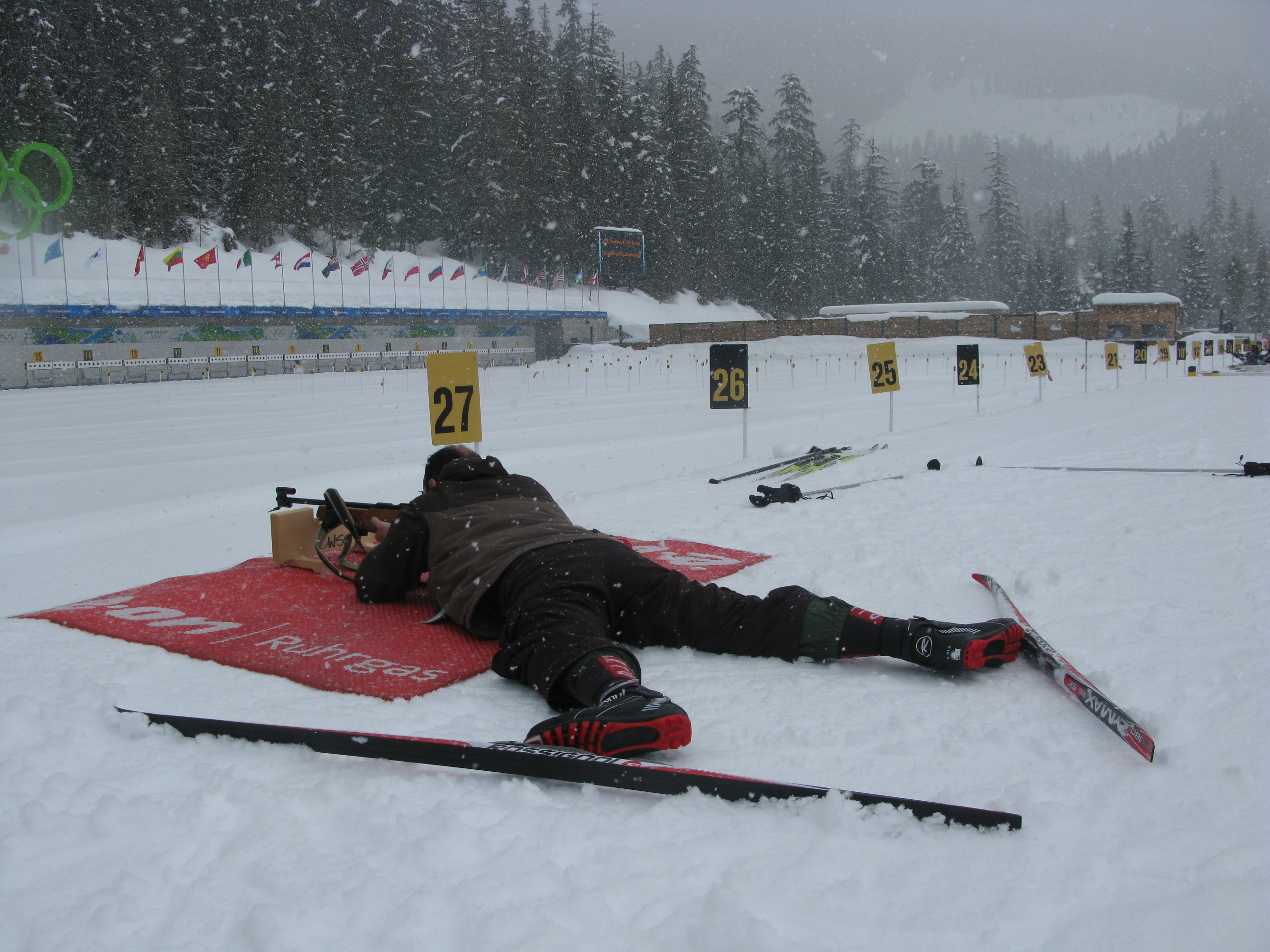
Ignore the snow, gusty winds, racing heartbeat and the burrito you ate for lunch, and just focus on the grapefruit-size target 50 metres away.
I was exhausted by the time we reached the Biathlon Range, where I at least got to lie down. It was the part I’d been waiting for: Firing a 22-calibre rifle.
Antoine demonstrated, telling me to focus on my breathing, and pointing out that with snow and gusty winds, a racing heartbeat won’t improve my chances of hitting a grapefruit-size target, 50 metres away. I hit five out of five. Would the Whistler Olympic Park really go to such lengths to make me feel good?
“The size of grapefruits, you say?” my wife whispered to me later that evening through the mist of a eucalyptus steam bath at Whistler’s Scandinave Spa. It wasn’t a whisper of hushed reverence; in fact I detected a hint of sarcasm. Talking among guests is strongly discouraged at Scandinave, which offers hydrotherapy and massage packages. The hydrotherapy comprises outdoor baths – some hot, some cold – with a sauna, steam room and solarium.
We followed the hot-cold relaxation sequence three or four times, and aside from the occasional gasp in the Nordic plunge pools, we observed the spa’s code of silence. There was plenty of time to talk, back at the Fairmont Chateau Whistler. Our kids were making the most of the hotel’s pools and hot tubs, where silence is discouraged. The hotel is more progressive than most when it comes to children. Not only do its chefs offer a children’s menu that is actually healthy (and delicious), its gym offers guided fitness training for seven to 17-year-olds.

"Yeah, it's Ryan ... wait a second, my dad's taking a picture."
On Blackcomb the next day, my son Ryan explained to me Whistler Blackcomb Live, the new Telus Mobile app. Track your runs using GPS, clock distances travelled, vertical shredded and maximum speeds. As if further proof were needed that Ryan’s cool and I’m not, the app is available on his iPhone, but not on my Blackberry. I was stressed to learn that the app logged Ryan’s fastest speed at almost 80 km/h. But then I’m a 44-year-old dad who skis: As long as Ryan’s mum doesn’t find out, he’ll be fine.
Not that any of us were slowing down the following day. The biggest adrenaline rush of the weekend came courtesy of Canadian Snowmobile Adventures’ Callaghan Cruiser tour. After getting geared up in helmets, gloves and heavy waterproof jackets, our guide Morgan gave us a detailed safety talk about the Bombardier snowmobiles and the conditions ahead. The engine sparked to life, and I was actually a little nervous until Ryan leaned into my ear and told me to step on it.
The Callaghan Cruiser tour may be billed as ‘family friendly’, but I still felt just slightly rebellious whizzing around wide and winding trails in a blizzard. We followed our guide Morgan to a frozen lake near Northair, a former gold mine, where we could really let loose on the wide-open flat.
The snow fell as thick as the traffic we encountered on the drive back to Horseshoe Bay. The backcountry snowmobile route might have been quicker. Not to mention more fun!
- Enjoy Whistler specializes in planning and booking the perfect Whistler vacation. Find a lower price within 72 hours of booking your reservation and Enjoy Whistler will match it and refund the difference, or cancel your reservation without penalty. Call 1 888 882-8858 or visit www.enjoywhistler.com
- For more details about spring-ski packages at Fairmont Chateau Whistler, visit www.fairmont.com/whistler
White and wild on Dakota Ridge

If cross-country skiing is a little slow for you, tobogganing should get your adrenaline racing on Dakota Ridge.
Forty minutes ferry-ride from West Vancouver, the Sunshine Coast is better known for The Beachcombers, scout camps and verdant shorelines. People don’t typically associate this 140-kilometre peninsula with snow. But there it is, several feet of the stuff, just waiting to be played in.
You just have to look up.

There's cross-country skiing for all ages on Dakota Ridge.
Poking through the clouds about 1,200 metres above the beaches and pretty parks is Dakota Ridge, one of the best cross-country ski destinations in the last place you’d expect to find it. Between November and March, if it’s raining at sea level, there’s a good chance it’s snowing up there.
And it’s only a 20-minute drive from sea level.
“You can come up for a couple of hours and be in a completely different world,” says Craig Moore, a cross-country skier and long-time member of the Dakota Ridge Winter Recreation Society, a non-profit group working to promote the area. “For cross-country skiing it beats anywhere on the west coast.”
It’s pretty good for tobogganing and snowshoeing, too.
A 620-hectare (1,532 acres) plateau atop a working watershed, Dakota Ridge offers a rolling landscape of stunted old growth hemlock and yellow cedar. On a clear day you can see the North Shore mountains, the Gulf Islands and Vancouver Island beyond – even Mount Baker down in Washington State.
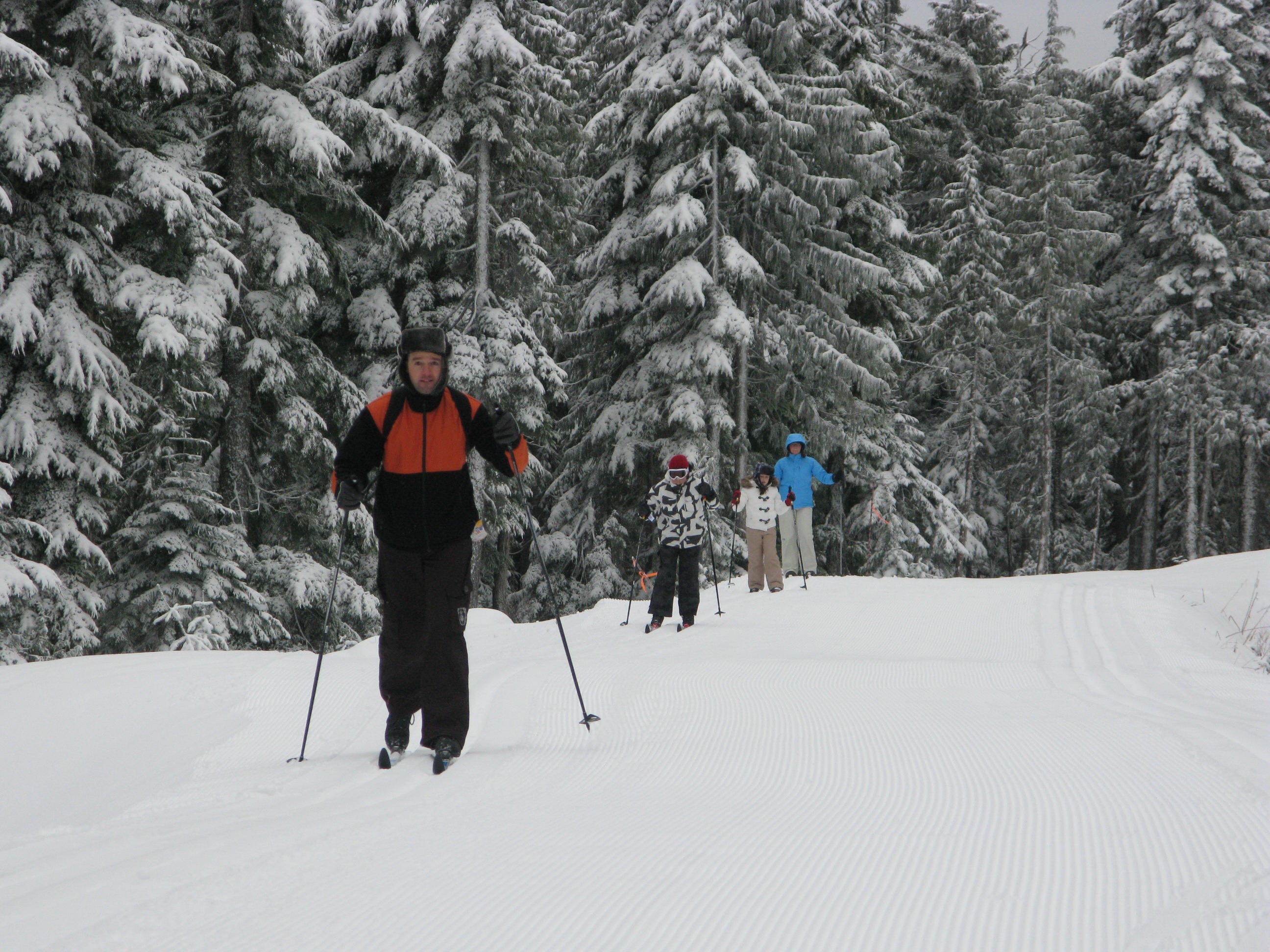
There are 13 kilometres of groomed trails for cross-country skiers on Dakota Ridge.
Cross-country skiers will find 13 kilometres of groomed Nordic trails, all of them signposted and colour-coded according to degree of difficulty. Professional engineer Reidar Zapf-Gilje, who prepared Callaghan Valley’s 2010 Nordic Olympic course, designed Dakota Ridge’s trail network.
“In many cross-country skiing areas you’re skiing through woods and you don’t see too much,” says Zapf-Gilje.
“Dakota Ridge is way up there in terms of esthetics. Its real strength is its potential for recreation and citizen [cross-country] races.”
Jamie Mani hopes that potential will be realized. Mani owns Alpha Adventures, a Wilson Creek outdoor-adventure store specializing in guided snowshoe and cross-country ski touring on the Ridge.
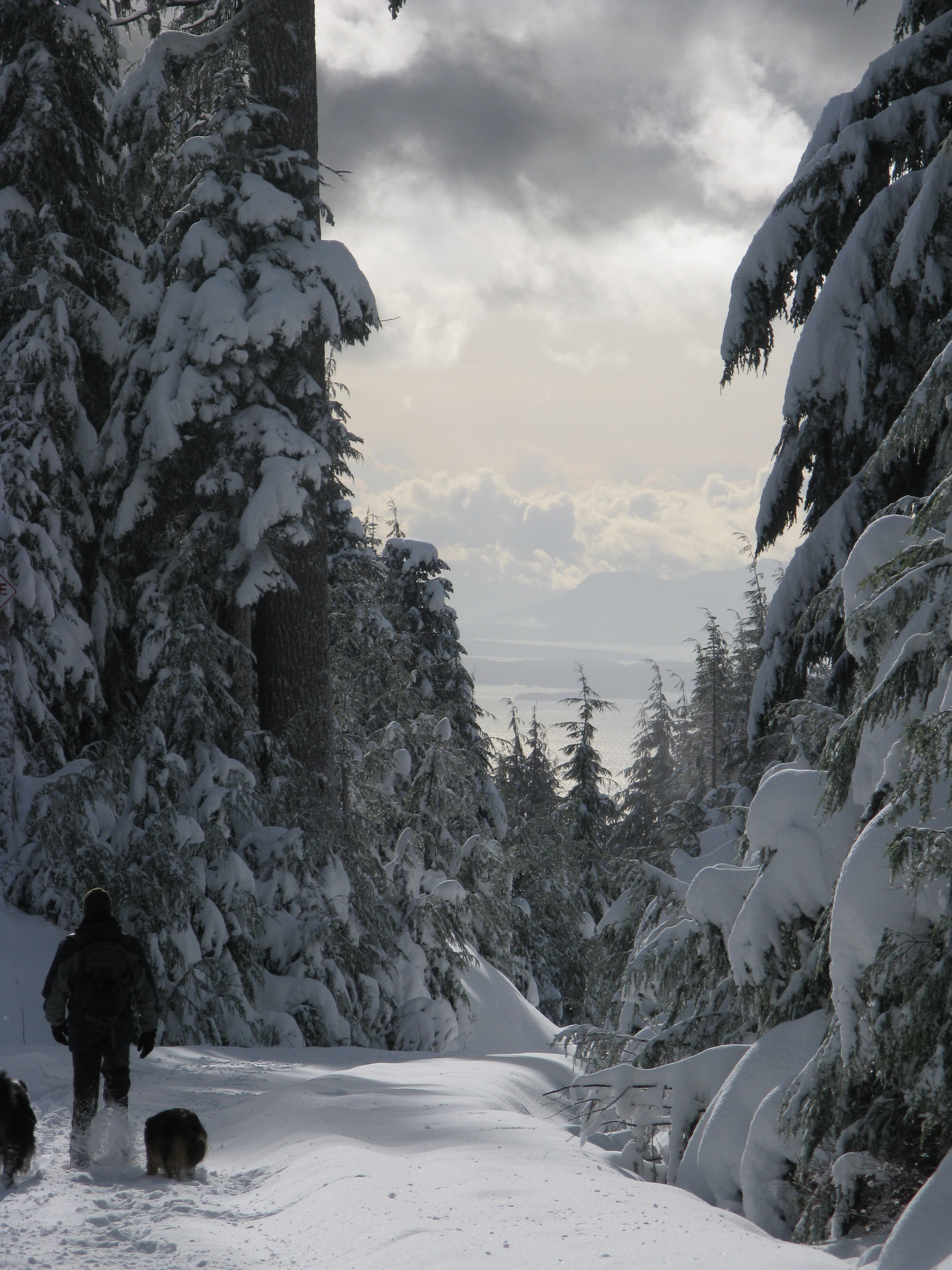
When it's not snowing, the views from Dakota Ridge can be spectacular.
“One of the great things about this place is its proximity to so many other activities,” says Mani. “Someone can literally be out snowshoeing in the morning up in the mountains and then golfing or kayaking in the afternoon.
“And for Nordic skiing we have excellent potential because of great snowfall and a blend of flat and rolling trails. We have been skiing on the Ridge as late as May in previous years.”
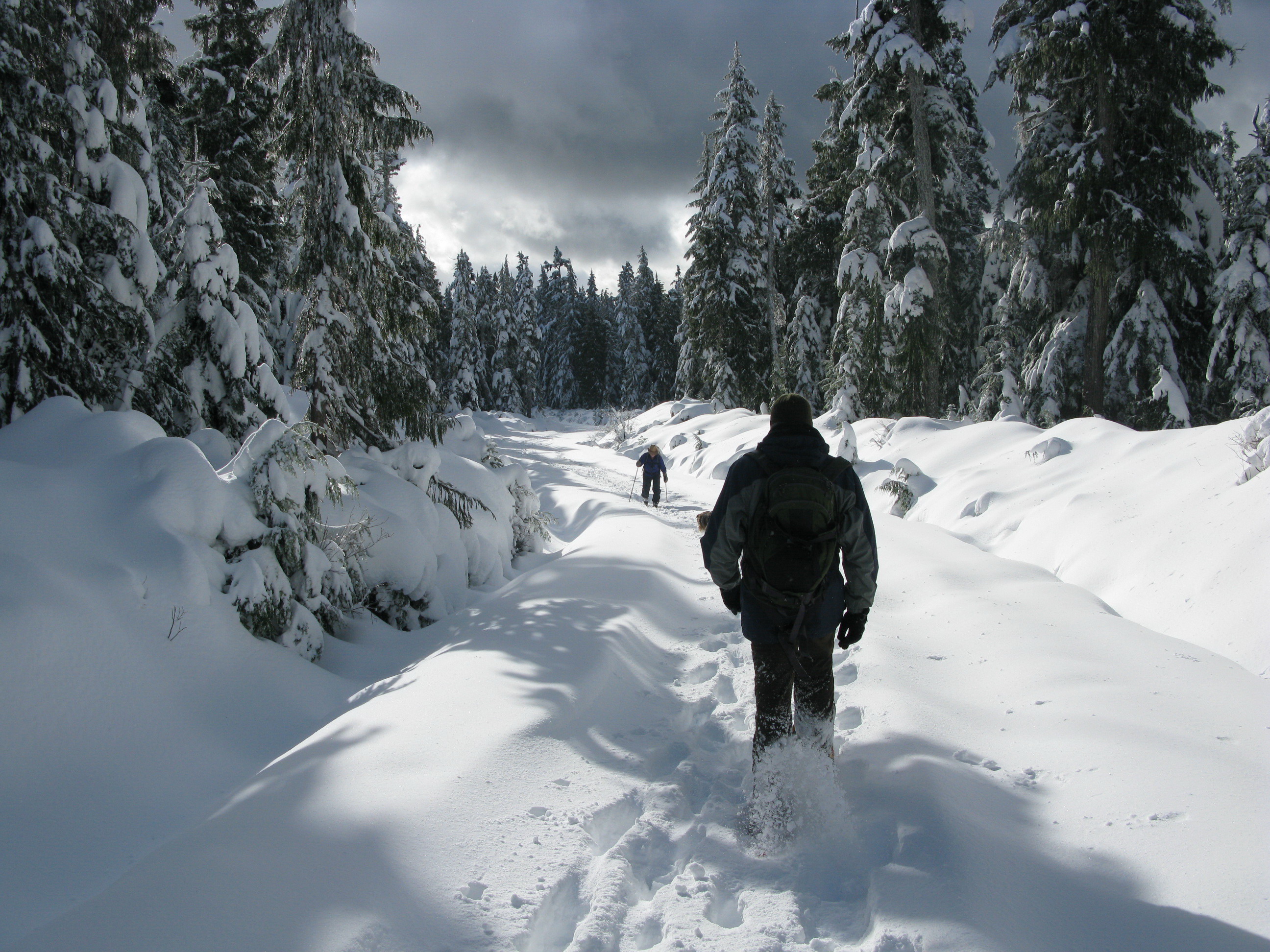
Snowshoers will find their own trails and there’s plenty of room for hiking and tobogganing. You’ll find a parking lot, warming hunt and toilet at the trailhead.
The turnoff for Dakota Ridge is at the top of Field Road in Wilson Creek, about half way between Gibsons and Sechelt, and 20 kilometres drive from BC Ferries’ Langdale terminal. For many years, the unplowed access road to Dakota’s trailhead made it a ridge too far for some. In recent years the 11-kilometre road has been upgraded to allow for regular plowing, but four-wheel drive vehicles equipped with chains are still the way to go.
Or take advantage of Alpha Adventure’s shuttle service.
- To learn more about Dakota Ridge, visit http://www.scrd.ca/Dakota-Ridge
- For road updates and snow conditions on the Ridge, visit www.suncoastcentral.com/outdoor-reports.asp.
- To book cross-country ski lessons, a guided tour, equipment rentals or shuttle service up to Dakota Ridge, call Alpha Adventures at 1 604 885-8838 or visit www.outdooradventurestore.ca
Faster, higher, longer: Riding Whistler’s Peak 2 Peak Gondola

The girls aren't too bothered about dangling by a steel thread 436m above Fitzsimmons Creek.
Confined within a steel and glass capsule, suspended by a galvanized thread 436 metres above Fitzsimmons Creek, Whistler’s Peak 2 Peak Gondola is no place for acrophobics. Fortunately, a fear of heights tends not to afflict skiers and boarders, who’d otherwise be stuck on the bunny hills forever.
In fact, judging by the hum of conversation in the cabin, our cruising altitude of 2,000-plus metres above sea level appears to concern no one.
“I’m gonna have a burrito for lunch,” says the 20-something Aussie woman in front of me. “What’s in that then?” replies her male English friend.
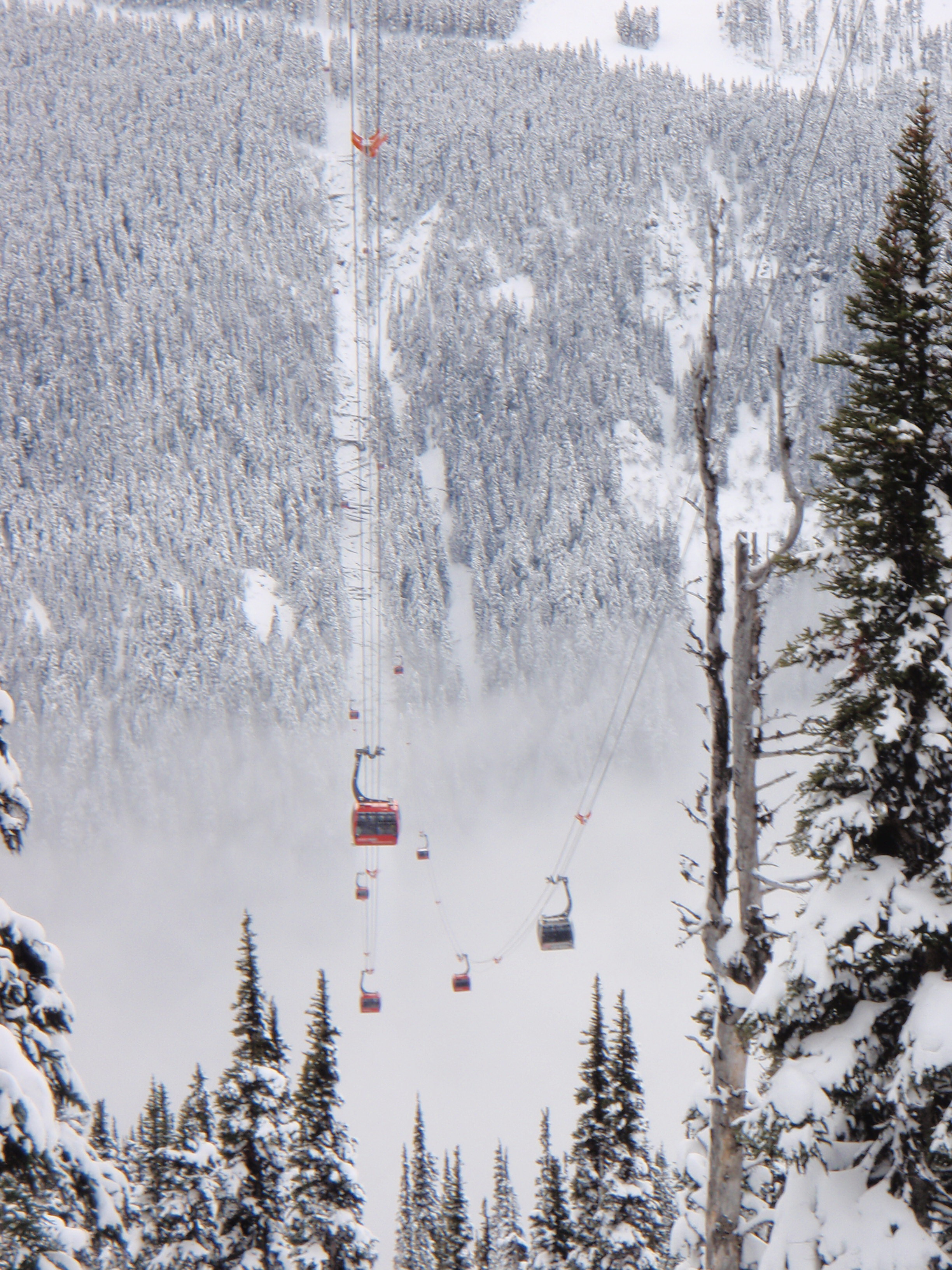
Grounded by just four towers, the Peak 2 Peak Gondola connects the top of Whistler to the top of Blackcomb — a distance of 4.4 kilometres.
A man from Pemberton, sitting across from my wife, is showing off his $600 goggles, which came with prescription lenses and a de-misting fan. “You’ll never need to buy another pair,” he tells her. I do the math and realize his goggles cost more than my family of four’s second-hand skis, poles, board, boots and goggles combined.
The kids on board are discussing their best wipeouts of the morning. (Funny how parents never do that.)
The miracle of engineering that put us here is the last thing on anyone’s minds and most passengers do not immediately appreciate the view. That could be because the journey’s so smooth, it feels a bit like we’re floating.
It’s more mellow glide than thrill ride.
Grounded by just four towers, the Peak 2 Peak Gondola connects the top of Whistler to the top of Blackcomb — a distance of 4.4 kilometres. Three kilometres of that distance dangles between two of the towers, making this the world’s longest unsupported span for a lift of this kind. It’s also the highest.
“It’s iconic,” says former Intrawest vice-president, Hugh Smythe, who started as a ski patroller in Whistler back in 1966. “It truly differentiates Whistler as unique.”
Smythe was skiing in Zermatt, Switzerland, in February 1997. An idea took shape while looking down at the vast expanses between peaks as he flew above the resort in a helicopter.
“I said, ‘Gee, we could connect Whistler to Blackcomb,” recalls Smythe.
It has been 10,000 years since the Overlord glacier that once connected the two peaks retreated to leave Fitzsimmons Creek on the valley floor. It only took 11 years for Smythe’s idea to be realized and for the mountains to be connected again. (Albeit by a cable 2 cms in diameter.)
In 11 minutes, the Peak 2 Peak does what used to take skiers like me half a day to do.
When the $52-million Doppelmayr-type lift opened two years ago, I wasn’t initially thrilled.
I’d always been fond of clumsily working my way down Whiskey Jack and Olympic runs from Whistler’s Roundhouse to ride Excalibur and Excelerator up Blackcomb. Admittedly, I’m the kind of person who longs for the days when keys, not swipe cards, opened hotel room doors, and when people raked leaves instead of blowing them, but really, must everything be sacrificed for the sake of time and convenience?
Then, on our first evening in Whistler earlier this month, I got talking to Stu from Utah in the hotel hot tub.
“I rode the Peak 2 Peak today,” he told me. “Whistler was socked in, but it was sunny on Blackcomb so we scooted over.”
Funny, I thought to myself. I’d never considered that.
Other unexpected benefits became obvious the next day when we finally boarded the Peak 2 Peak on Whistler.
Our modest party of 14, including six children, had spent much of the morning arranging meeting points by cell phone after becoming split up on runs or in lineups for chairlifts. After finally assembling at The Roundhouse Lodge, we moved next door to the Peak 2 Peak Gondola.
The lift’s 28 cabins each hold 28 people (24 seated and four standing). Two cabins are built with glass bottoms, reducing capacity. Fitting 14 people isn’t exactly a squeeze, and with a cabin departing every 49 seconds, lineups are minimal.

Each of the lift’s 28 cabins have room for 28 people to get cozy (24 seated and four standing).
The day we first boarded, it was Whistler village that was socked in, leaving us to glide across a valley floor coated in cotton candy-like mist. To the east soared the peaks and bowls of Garibaldi Provincial Park.
Below, the meandering black streak of Fitzsimmons Creek was just visible through the cloud.
And then skiers and boarders on Blackcomb’s upper runs came into view.
“Look at the ants, Dad, look at the ants,” said my daughter Emma, excitedly. Navigating black runs and occasionally dropping off into the trees, they might have been pine beetles on planks from where we watched.
Disembarking on Blackcomb, we paused to take group photos by the lift station before, inevitably, getting split up during the descent of Blackcomb.
The next day, I was back taking advantage of the fast track in the sky. The lower slopes were icy and fogged in. From mid-station up blue skies heralded an inversion that blessed both peaks with temperatures well above freezing.
But which peak to choose?
It only took 11 minutes to figure out.
 Nev Judd: Online and out there