Archive for the ‘family travel’ Category
The Missing Link: Connecting the Coast to Squamish
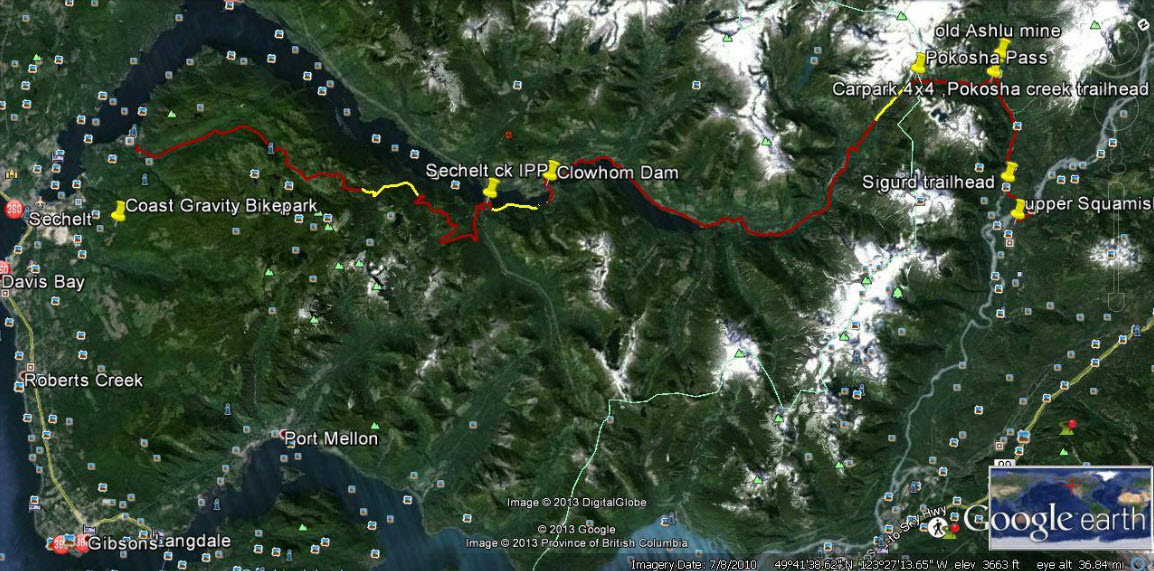
Yellow sections on this Google Earth map indicate about 10 kilometres of work needed to complete a trail connecting Sechelt with Squamish.
The map looks straightforward at first. As the crow flies, little more than 50 kilometres separate Sechelt and Squamish. Then you notice contour lines, crammed together like intense low-pressure systems, numerous splashes of white, indicating icy peaks, and deep blue streaks showing alpine lakes and ocean inlets. In between are green valleys that never seem to quite connect. Old logging roads, new hydroelectric projects, powerlines and pipelines present an extra layer of complexity revealed by Google Earth.
A cursory Internet search turns up more than 100 years of failed attempts to build a road system between the Sunshine Coast and “the mainland”.
So when Geoff Breckner tells me he’s about 10 kilometres away from completing a 75-kilometre trail connector, I’m interested.
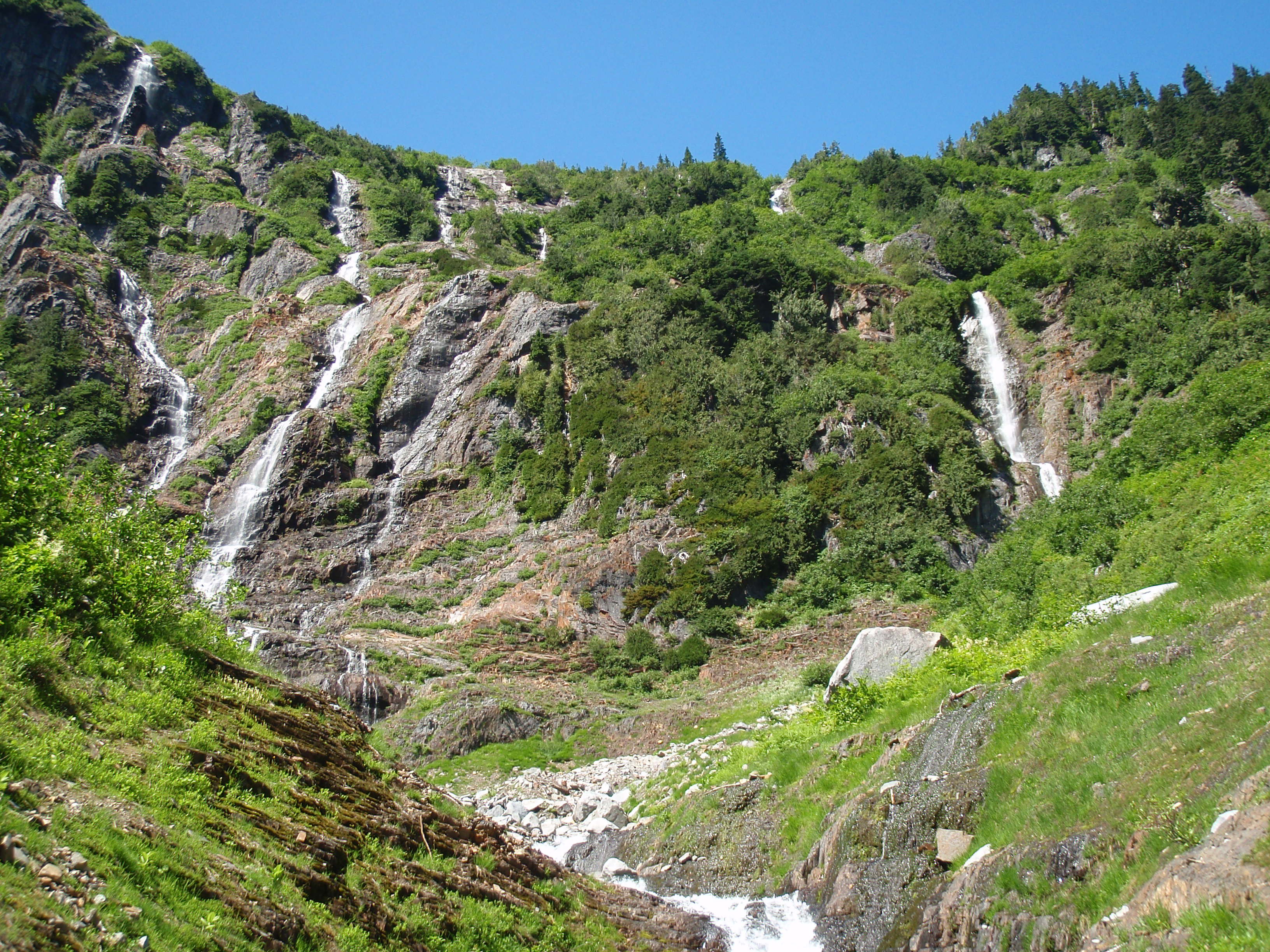
If successful, the trail would reveal a side of the Sunshine Coast unfamiliar to most residents, including a series of spectacular waterfalls between Pokosha Pass and Clowhom Valley. All photos courtesy Geoff Breckner
“With 10 capable guys and permission it could be finished in a week or two,” Breckner tells me by phone from Squamish. “But there are channels to go through, rules to be followed … funding.”
Breckner is recovering from major back surgery. When his doctor advised him to exercise he began hiking into the backcountry near his home in Squamish. The 53-year-old estimates he spent 200 hours during the last two summers working on the Squamish end of the trail.
A self-described “mountainbiking nut,” and “bush rat,” Breckner grew up in Deep Cove when the sport was still a novelty. He opened Pemberton’s first bike store, High Line Cycles, in 1994. A trail connecting Squamish with the Sunshine Coast makes a lot of sense, he says.
“I thought this was a great place for a bike trail. I knew there were logging roads up there and I researched as much as I could, checking out the feasibility of a route to Sechelt.”

Geoff Breckner’s tent at the south side of Pokosha Pass, near Mount Jimmy Jimmy.
Visit Breckner’s Facebook site ‘Squamish to Sechelt Trail’ and you’ll see a Google Earth image of the proposed route. From Upper Squamish and the Ashlu River Road, the route first heads north over existing trail through 4,000-foot Pokosha Pass before heading south, then due west following Clowhom Lake to Salmon Inlet, skirting the Tetrahedron Provincial Park, and on towards Sechelt via the Coast Gravity Bike Park.
About 55 kilometres of double track roads, and 20 kilometres of single track trails make up the route, says Breckner. The 10 kilometres still to be cleared comprise three sections of one kilometer, four kilometres and five kilometres.
“Once complete, it would be a long ride – two days for most people, but I hope to have a hut or shelter so people don’t need a tent and can travel light,” says Breckner. “The main problem would be lack of use, rather than overuse. The more use the better, to keep trail maintained and established.”
Breckner has received numerous offers of help from this side of the divide. Doug Feniak of Tillicum Bay is among those pledging assistance.

A self-described mountainbiking nut, Geoff Breckner rarely goes anywhere without his ride.
Feniak grew up riding with Breckner in Deep Cove. “It was a dream of ours when we were young, to be able to ride from Squamish to the Coast,” says Feniak. “We hiked into the Tetrahedron in August, looking for the best way. It’s super steep into Thornhill Creek but it shouldn’t be too bad after that because it’s old roads covered with Alders.”
Trails are in the Feniak family’s blood. Wife Jessica Huntington and son Linden both build trails, the latter professionally. Daughter, Holly, was 2012 downhill mountainbike Junior World Champion.
Doug says he expects to have a group working on this end of the trail in the fall.
“It would certainly be good for tourism here and I could see the B.C. Bike Race using it,” says Feniak.
Long-time local trailbuilder, Richard Culbert, says a trail to Squamish is “common sense”.
Culbert built the trail to the summit of Mt. Elphinstone, opening it on his 70th birthday. Now at 75, he’s busy clearing a trail up 4,700-foot Polytope Peak, which connects with Rainy River Road and Port Mellon due south. He believes that a trail from Squamish stands a better chance of completion if it veers south to Port Mellon, rather than to Sechelt.

Salmon Inlet from the top of Gray Creek Forest Service Road, looking north across Thornhill towards Clowhom valley. It’s about 60km from here to upper Squamish.
“The trail I’m working on is about a kilometer from a logging road, which appears to connect with this route,” says Culbert pointing at a printed version of Breckner’s route. “It also avoids Thornhill Creek [near Salmon Inlet] where the road is covered in alders.”
Warren Hansen concurs. “That gap after Salmon Inlet is some of the most rugged terrain I’ve ever walked in,” says Hansen, forester/area manager for Chartwell Consultants and an avid trailbuilder. “A lot of that area was logged in the 60s and 70s, so we’re talking about logging roads half a century old – many of which have been heavily deactivated and are covered in alder.
“I admire following an idea, but I worry about the sustainability of it,” adds Hansen. “The skeptical side of me thinks that there won’t be enough people using it. It will need to be on a lot of people’s bucket lists to make it sustainable.”
Hansen identifies with Breckner on one level.
“I believe in unfettered access to crown land. You live in the city, you can’t do this and that, but you have spoon-fed amenities. In a rural environment you don’t have those amenities, but you do have unfettered access to crown land. You can hike it, bike it, pick mushrooms in it, build trails. So you use it as you see fit, knowing that one day, it might be logged.”
Perhaps the person most excited about a possible connection is Bjorn Enga. The Granthams Landing-based filmmaker is the founder of Kranked, an online store for electric-assisted mountainbikes. They may upset purists, but bikes capable of climbing mountains in minutes, as opposed to hours, are catching on, says Enga.
“I’ve been riding on the Coast since 2000, and it’s an amazing coastline,” he says. “Suddenly, I’m thinking how much more I can see up there riding an e-bike. Imagine how phenomenal it would be to offer overnight tours with a fully charged battery for the next day.
“The Sea-to-Sky Corridor could become the e-bike capital of the world.”
Enga is helping Breckner with route planning and believes that trail completion is a matter of when, not if.
“Geoff goes way back to the start of mountainbike culture, before the glamour of the parks,” says Enga. “He’s done the hard part and one way or another, the trail will happen.”
In the meantime, some adventurers will continue to blaze their own trails. It seems as though everyone on the Sunshine Coast knows “a guy” who knows a route to Squamish. But their identity can be as elusive as the route.

More falls in the backcountry between Squamish and the Sunshine Coast.
Not so, Todd Lawson and friends, whose epic three-day trek from Lake Lovely Water, Squamish, to Sechelt via Clowhom Lake and Salmon Inlet, was featured in a 2014 issue of Mountain Life magazine. The trio packed inflatable stand-up paddleboards for the trip, which featured untold hours of bushwhacking through endless alder roots and Devil’s Club – an experience Lawson described in the story as “torture”. (He also wrote of the route, “It looked good on a laptop.”)
A different hazard awaited Denis Rogers of Sechelt, and fellow Coasters Mark Guignard and Al Jenkins, who hiked to Squamish in 2004 after being dropped by boat at the head of Narrows Inlet.
“It took us five days,” says Rogers, whose group followed a route from the head of Tzoonie Valley to a 4,800-foot pass, and then down to Falk Creek and a logging road leading to the Ashlu River and Squamish beyond.
“The third day was an interesting one,” recalls Rogers. “I fell in a lake and broke my watch, and Mark, the only one of us who didn’t bring bear spray, had an encounter with a black bear. Mark was about 20 yards ahead of us, picking his way through the boulders, when we shouted to him that a bear was taking an interest in him.
“The bear started down towards him, but then turned back. We suggested that perhaps the bear had been deterred by an offensive smell.”
Some hazards you won’t find on any map.
- To contact Geoff Breckner, email capnbreak@yahoo.ca or visit his Facebook site, Squamish to Sechelt Trail.
Exploring Edmonton
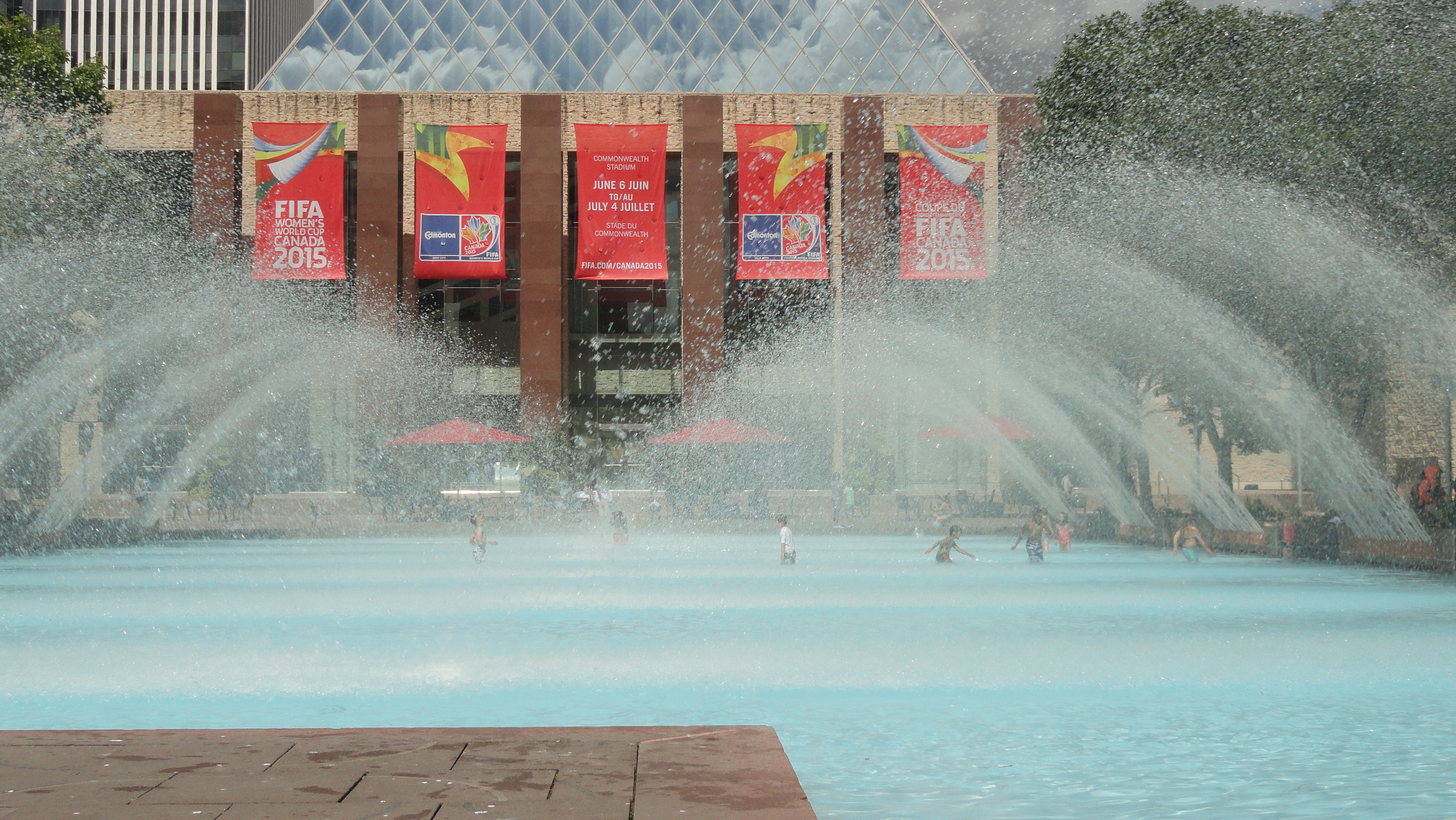
Keeping cool in Edmonton’s hot summer means a trip to the Legislature’s fountains for some families.
Guest blog by Leah Judd
The guidelines were simple enough: find a destination within a 24 hour train ride that didn’t involve many transfers, somewhere safe, warm and relatively cheap. After eliminating San Francisco (Comfort Inn $350USD/night), and Eugene (three transfers) my friend Signy and I narrowed down the choices to Edmonton. But did Edmonton have any kind of cool factor, something you could brag about on Facebook? Apparently not, as many friends thought we were being sent to Edmonton as a punishment of some kind. Even Edmontonians were surprised that Edmonton was our destination, rather than just a layover.
Via Rail offers a spectacular and affordable service through the Rockies into Edmonton. Departing Vancouver early Sunday evening, the view along the Fraser River was so different than the one from a car window. Close to the water, we chugged through suburbs and industrial parks where the tracks lay hidden. Our beds for the night were a couple of upper bunks, with more than enough room to spread out and thick privacy curtains. Our “Sleeper Plus” fare included three meals in the dining car, and each meal was a treat. Booking the last sitting for each meal meant we had extra time to enjoy the food and take in the scenery. The dome car had seats available most of the day, making it easier to spot the moose and the Big Horn sheep alongside the tracks. We also had an hour to explore Jasper while other passengers unloaded for their visit to the Rockies. Jasper tourism didn’t seem to take advantage of our layover – short term bike rentals, a quick taxi tour or a guided walk would have helped make the most of our time in Jasper. Instead we wandered around, admiring the Fifties architecture of the shops and wondering about the history of the town.
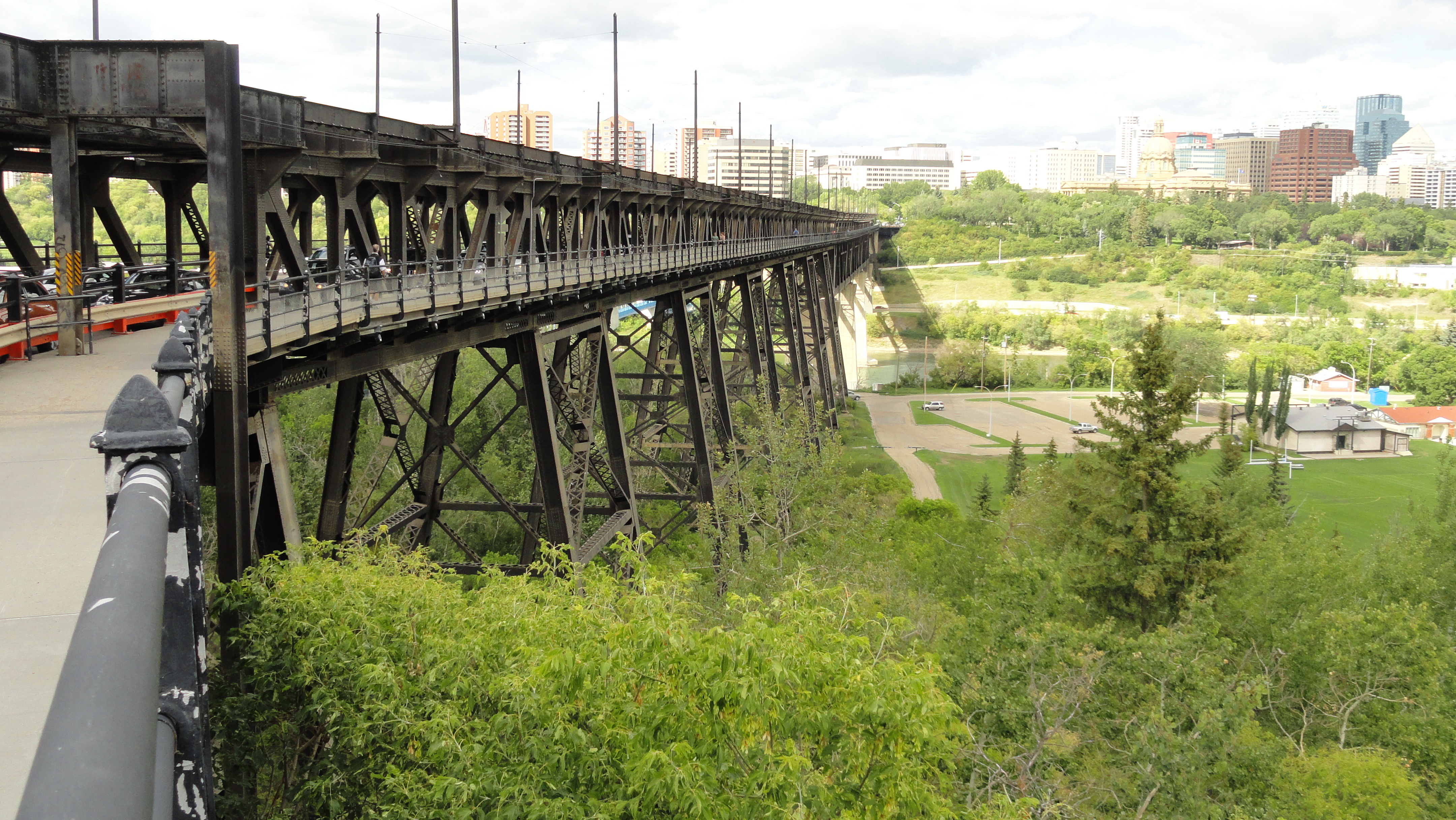
Edmonton’s High Level Bridge offers a great perspective of the city.
After 27 wonderful hours on Via Rail from Vancouver, Edmonton was the perfect summer destination. We stayed in Old Strathcona – south of downtown across the North Saskatchewan River – which certainly amped up the cool factor. Bearded and bespectacled gentlemen serving coffee and selling used books convinced us that we had hit Edmonton’s hipster ‘hood. With an original Army and Navy department store and few chain stores, Whyte Avenue had plenty of shops to browse for locals and tourists escaping the heat. An hour spent at the Wee Book Inn meant my hand luggage was overweight on the return flight!
Walking across the High Level Bridge gave us a great perspective of the city. The Legislature Building sits beautifully surrounded by 56 acres of manicured trees, lawns and gardens. A free tour of the “Ledge” provided great anecdotes from Alberta’s history, but the origins of the palm trees growing in the main dome of the building remain a mystery! Most impressive was the mirror pool in front of the Legislative Building. Coming from drought ridden BC it was surprising to see kids swimming in the fountains in front of the Government buildings. Not just one or two families letting their kids cool their feet in the pool, but rather whole groups of summer campers enjoying a dip and spraying water guns to boost the fun factor. Everywhere we went in Edmonton locals were swimming in fountains and making the most of summer in the city.

Serenity now at the Mirror Pond outside the Alberta ‘Ledge’.
Teaching Canadian history was my excuse for dragging Signy to Fort Edmonton. Once located in view of the Legislature Building and downtown Edmonton, many of the buildings were reconstructed further down the South bank of the North Saskatchewan River. Fort Edmonton now houses a replica HBC fur trading fort circa 1846, as well as three community streets from Edmonton’s past: 1885 Street, 1905 Street, and 1920 Street. Costumed performers and staff are found in many of the buildings and happily answer questions and share stories from Edmonton’s history. If taking Via Rail from BC wasn’t enough to quench our thirst for rail travel, a steam train transports visitors around Fort Edmonton. It could’ve felt a little hokey, but the Fort did a great job in providing visual insights of how Europeans settled into Canada’s wilderness.
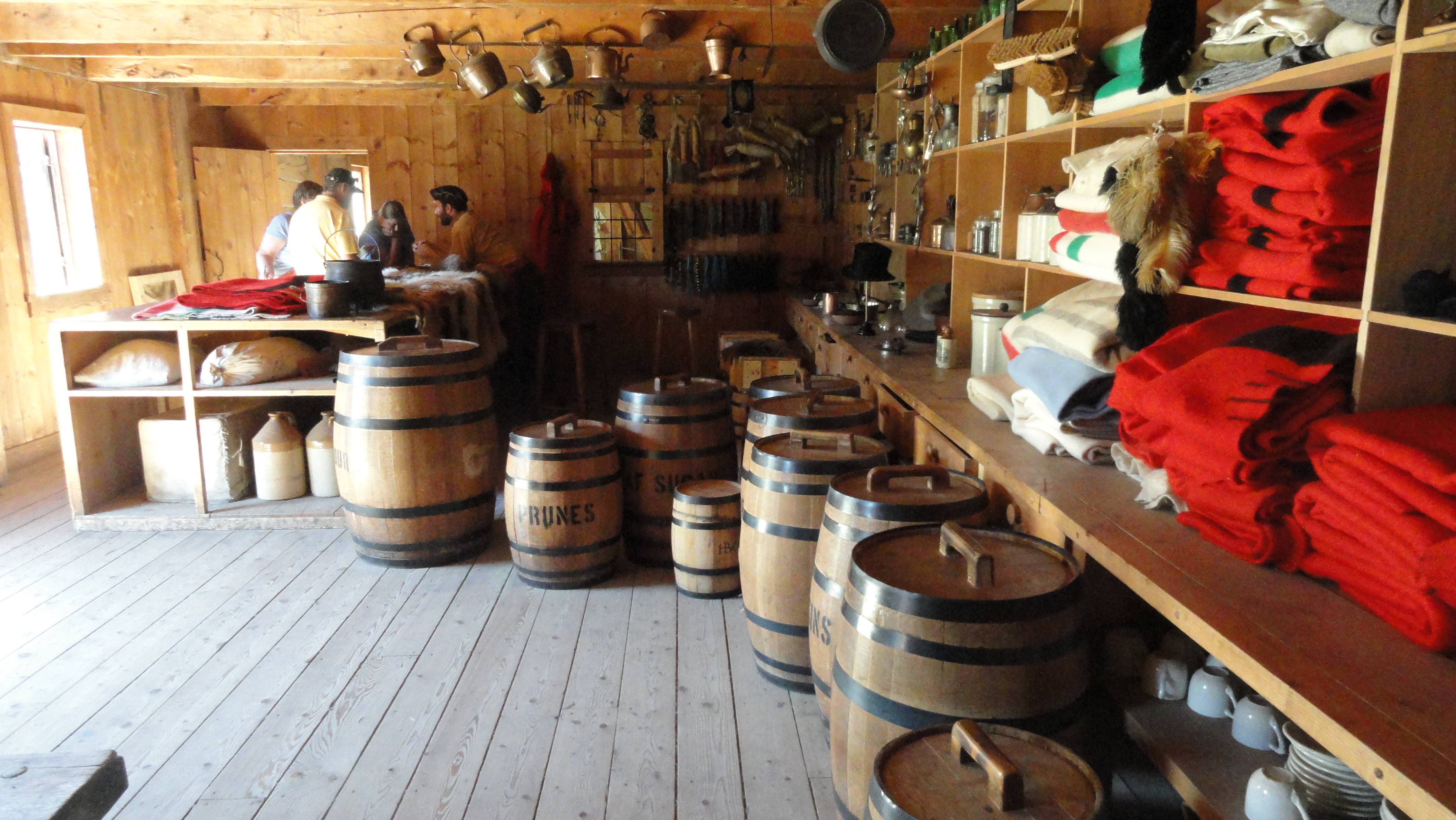
Inside Fort Edmonton.
Despite being known as “Festival City” Signy and I managed to hit Edmonton in the one week of summer without a festival. But we found some local musical talent in El Cortez Mexican Kitchen and Tequila Bar, and a John A. Macdonald doppelganger in the Confederation Lounge of the Fairmont Macdonald. Chasing instagram suggestions led us to The Common, a lounge with an attitude. Featuring DJs, locally sourced food and a dance floor, The Common felt like we found Edmonton’s edge, where suits mix with denim.
Travelling with Via Rail allowed us four nights in Edmonton, before The Canadian made its way back from Toronto to Vancouver. Checking in with Via Rail the night before our return trip we found our departure was to be delayed between 12 – 16 hours, a day more than our budget allowed. So after an hour and thirteen minutes in the air and over 1,100km of train track below us, we returned to Vancouver, already missing Edmonton’s joie de vivre.
If you go
For all matters tourism, visit Explore Edmonton.
For the latest train details and deals, visit Via Rail.
For a trip back in time, visit Fort Edmonton.
L.A. on two wheels
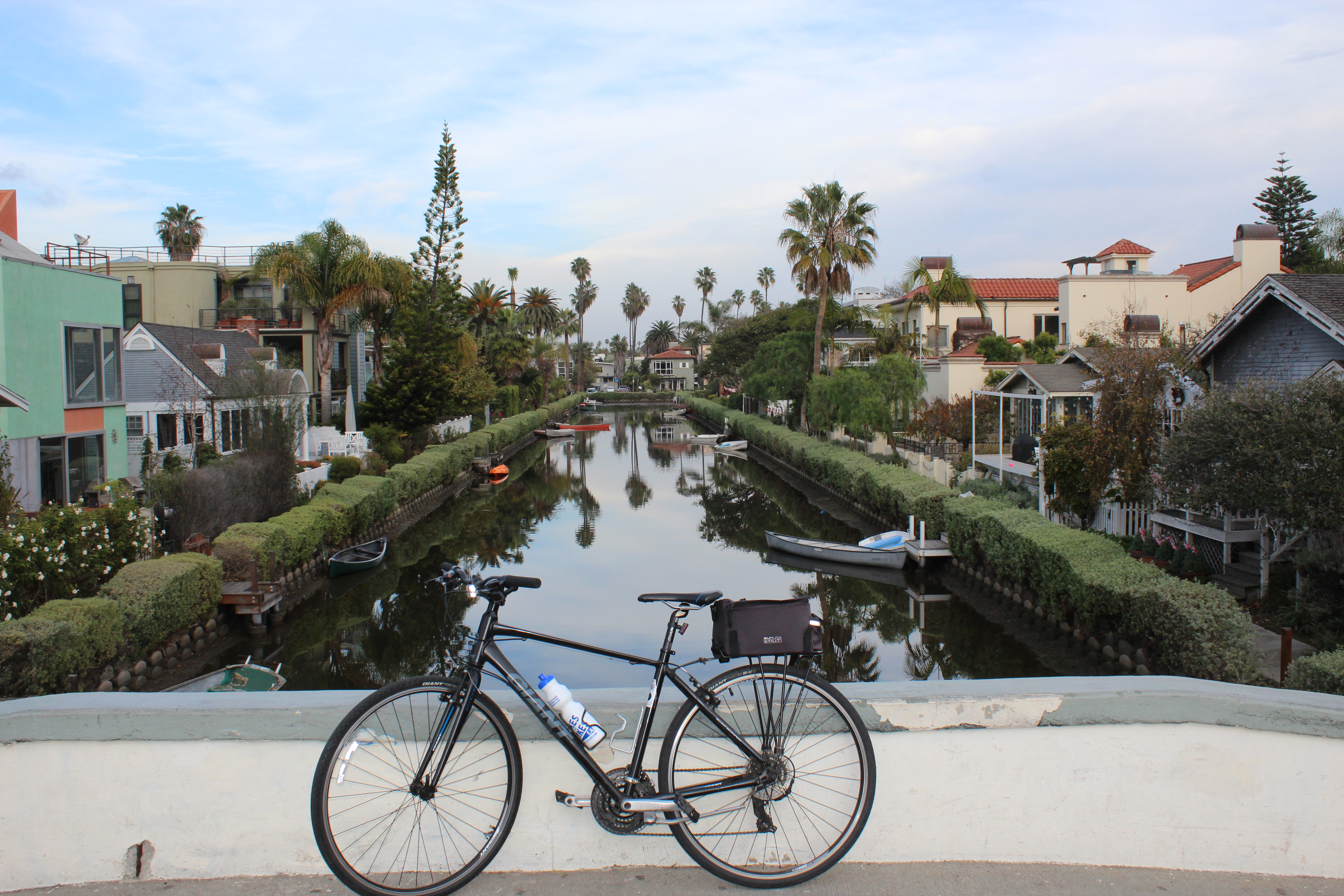
Developer Abbot Kinney built the canals of Little Venice in 1905. A few of the canals survive today and restoration work in the 90s made Little Venice one of L.A.’s most desirable neighbourhoods.
At the corner of Cynthia Street and North Doheny Drive in Los Angeles stands a bland-looking triplex. With so much architectural extravagance across the road in Beverly Hills, the gated compound at 882 North Doheny is on the West Hollywood side of the street and barely warrants a second look.
Until Erick Martinez tells us to take a second look.
We dismount our bikes and catch our breath. We’ve been following our guide, Erick, mostly uphill from Bikes and Hikes L.A.’s store on Santa Monica Boulevard.
“In 1952, this used to be a five-unit apartment complex with a very famous resident in apartment 3,” says Erick. “Any guesses?”
The Judd family is still catching its collective breath.
“James Dean?” I offer between gasps. “Bette Davis?” guesses my wife, Leah.
“None other than Marilyn Monroe lived here,” says Erick. Turns out she wasn’t the only famous resident because Frank Sinatra lived next door.
Today, the building is on the market for $4.2 million, a modest amount compared to the Carolwood Estate up the road in Holmby Hills. Once owned by Walt Disney, it’s now selling for $92 million.
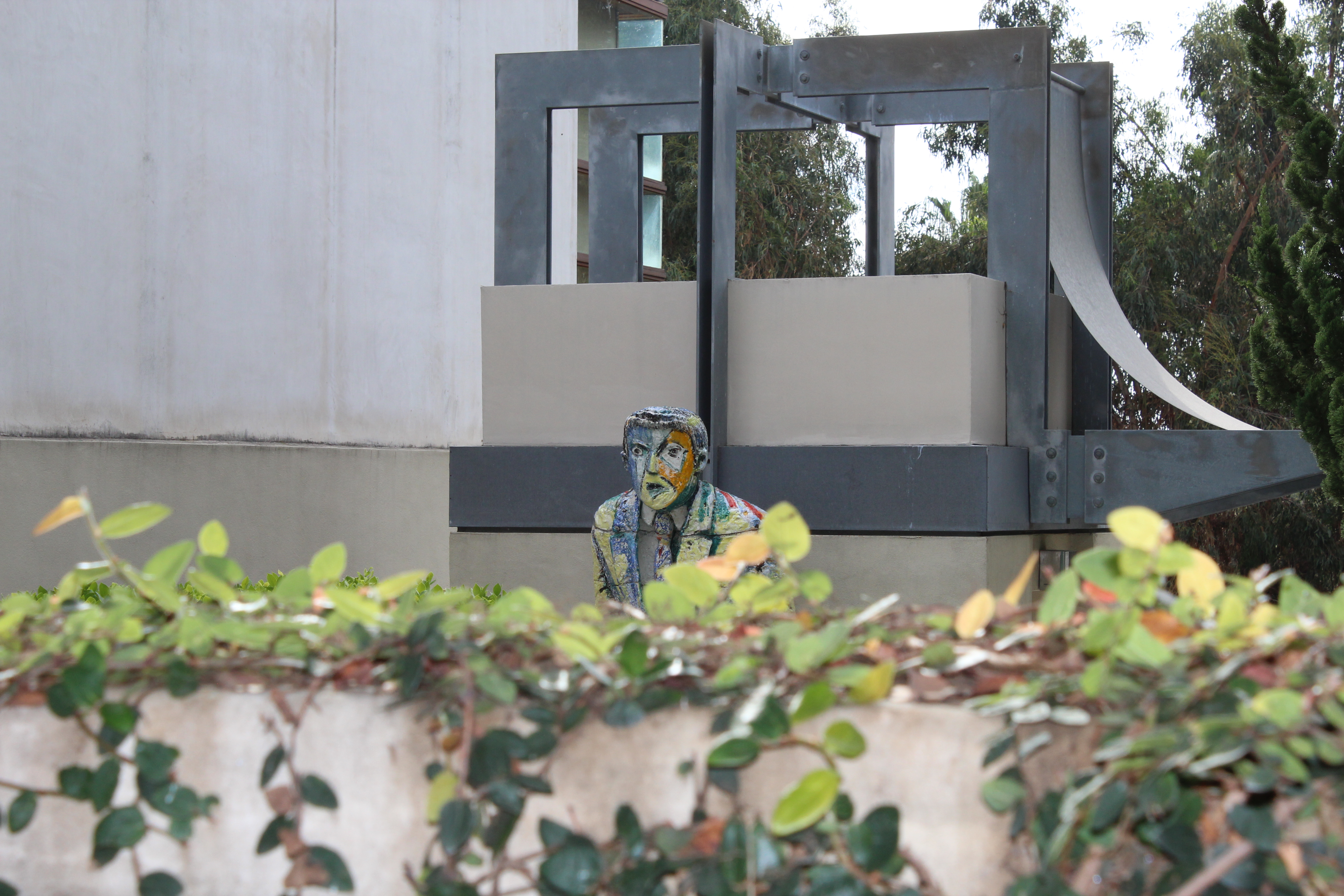
Bel Air residents don’t get angry at intruders, their sculptures do.
On a 32-mile (51 kilometres) bicycle tour of Los Angeles, you quickly realize that everything is relative. And everything has a price.
Unsurprisingly for a city synonymous with smog and freeways, L.A. is not known for cycling. One magazine has described it as “a pathologically unfriendly bike city”. My friend Lars, a long-time L.A. resident now living in Canada, offered to rent us a car when he heard of our bike plans. He also wondered whether we were crazy.
But then getting somewhere wasn’t the point. We were on vacation and with just four full days in the city, we were more interested in the journey rather than the destination. Which in L.A. is just as well: several times during our seven-hour ride, we passed gridlocked motorists.
We crossed Sunset Boulevard, stopping briefly to look east at the Whisky a Go Go nightclub, where The Doors, Motley Crüe, and Guns ‘n Roses got their start. A block farther east is the Viper Room, where actor River Phoenix died of drug-induced heart failure in 1993. We cycled west, passing the 31-storey Sierra Towers, where Lindsay Lohan lived for a while after being kicked out of the venerable Chateau Marmont for partying too hard. At least she got out. The Chateau Marmont, built on Sunset Boulevard in 1929, is where actor John Belushi partied even harder and died of a drug overdose in 1982.
You don’t have to scratch L.A.’s surface too hard to find its seedy underbelly, which delivers titillating fodder for Erick’s tour. Even the handsome-looking Greystone Mansion – 55 rooms behind a mock Tudor façade, amid 16 acres of exquisitely manicured gardens – has a scandalous past.

Greystone Mansion – 55 rooms and a murky past.
Oil tycoon Edward Doheny paid $3 million to have Greystone built for his son Ned in 1928, making it California’s most expensive home at the time. In 1929, four months after he and his family moved in, Ned died in a murder-suicide with his secretary, Hugh Plunket. There are plenty of theories for the tragedy and Erick knows all of them. More memorable for me though was a different tale about a large spotlight mounted on Greystone’s roof. So concerned with security was Ned’s widow Lucy, she had the spotlight mounted as a means to alert Beverly Hills police down the hill in case of intruders. According to Erick, the spotlight later inspired the Bat-Signal used by the Gotham City Police Department.
Today, Greystone is owned by the City of Beverly Hills and is maintained as a park. It’s a glorious place to dismount a bike and wander the grounds, and it’s no surprise to learn that the location appears in dozens of movies, including The Big Lebowski, The Bodyguard, X-Men, and The Social Network.
Erick led us west, stopping briefly to look at homes once owned by Tom Cruise, David Beckham and Lucille Ball, who used to personally answer trick or treaters at the door every Halloween. We cycled past the Bel Air Golf Club, where membership hinges on a tidy $2.1-million fee and approval by the board, and then past UCLA, built in 1919.
Beverly Hills, Bel Air, Brentwood and Westwood all have their share of climbs, but they are quiet, bike-friendly neighbourhoods. And even back on Santa Monica Boulevard, where we headed west to the coast, a dedicated bike lane made for smooth passage.
More hair-raising was cycling the beach path from Santa Monica Pier to Venice Beach (think Stanley Park seawall in summer and directionally challenged pedestrians) where we stopped for a picnic and watched boarders defy gravity in the skateboard park. Inland a few blocks, we lingered at Venice Canals, my favourite part of the tour.
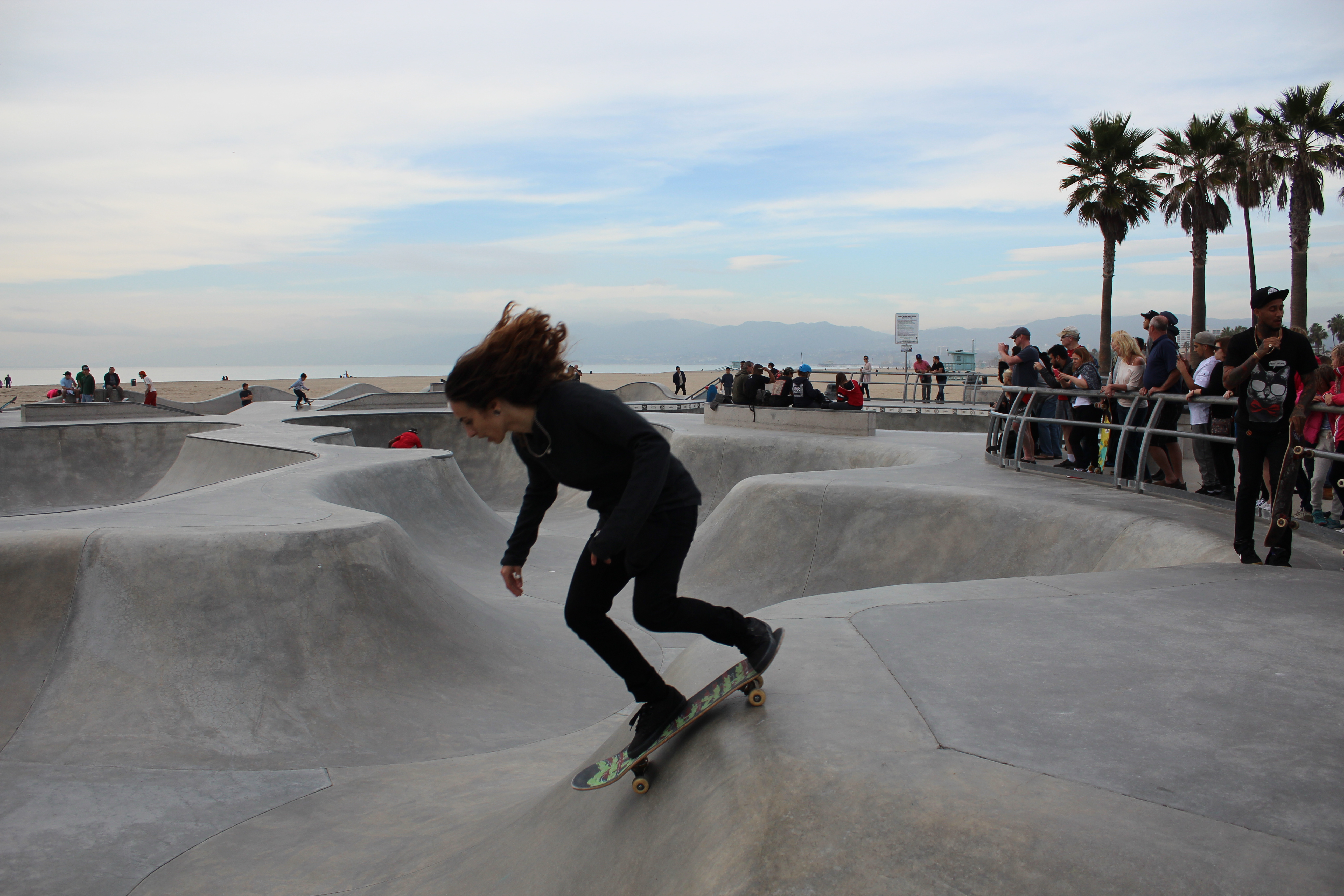
Big hair at the skate park in Venice Beach.
To me, the audacity of attempting to recreating Venice, Italy, almost 10,000 kilometres away in Los Angeles, California, epitomizes the American dream at its eccentric best. Developer Abbot Kinney built the canals in 1905, complete with decorative lights, gondoliers and arched bridges. Promoted at the time as “America’s most unique attraction,” Kinney’s vision of a cultural mecca failed to materialize. Amusement parks and freak shows proved more popular with the locals and the advent of the automobile led to most of the canals being filled in to create roads. The canals are a fraction of their former size, but restoration work in the 1990s has since made the neighbourhood one of L.A.’s most desirable.
We circled Marina del Rey and its seemingly endless flotillas of yachts and speedboats to Ballona Creek. Now entering the seventh hour of our tour and with the December sun setting behind us, we picked up the pace on the Ballona Creek Bike Path. Like the canals of Venice, much of the Ballona Creek corridor succumbed to concrete in the 1930s, with dire results for the area’s wetlands. What’s left of the estuary has been contested by developers and environmentalists for decades. Oblivious to the numerous ongoing court battles over the area, and in spite of being surrounded by dense development, Ballona Creek still supports a wide array of wildlife, including monarch butterflies, and great horned owls.
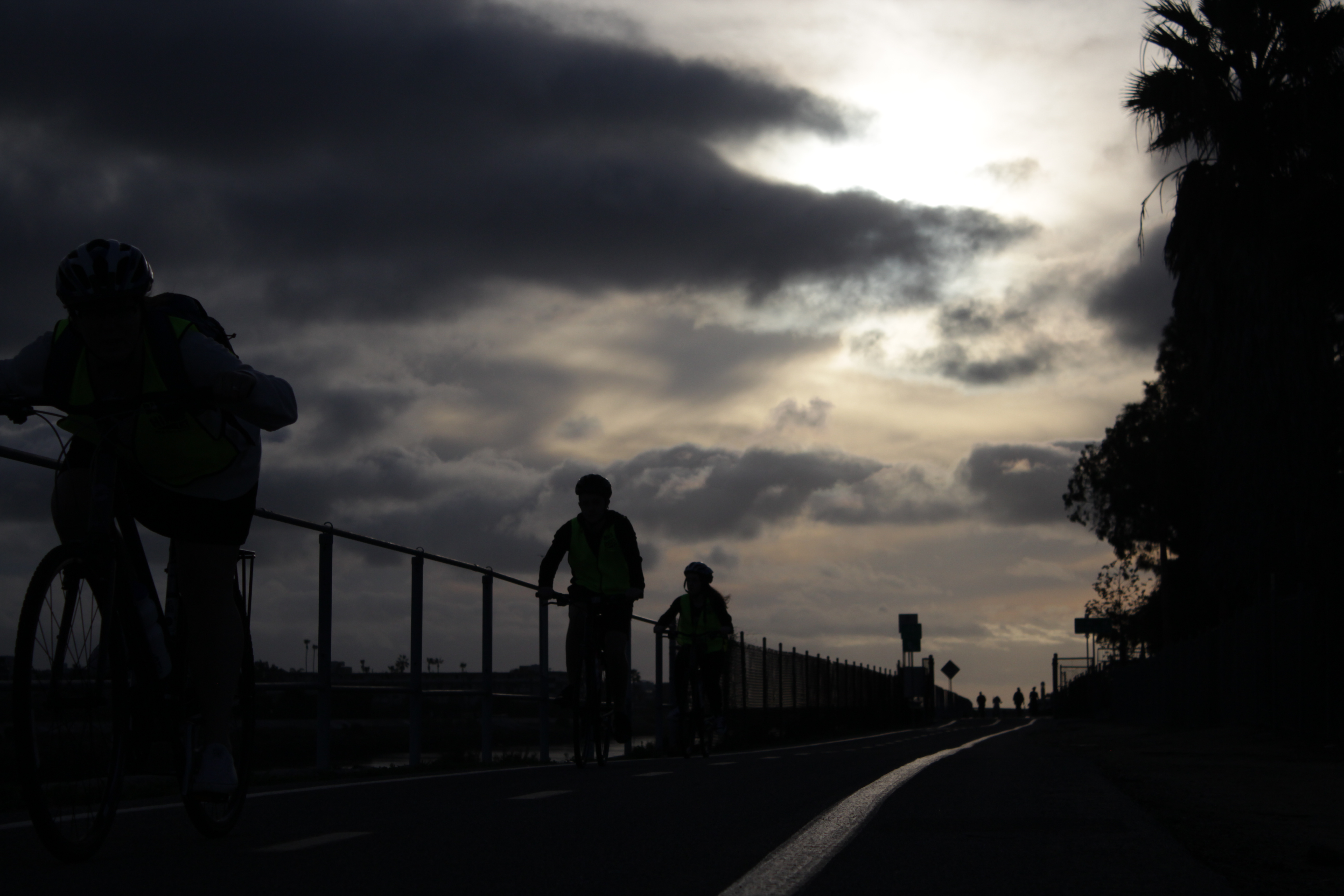
Twilight on the Ballona Creek Bike Path.
On our final leg of the tour, the indefatigable Erick continued to supply us with an impressive array of anecdotes. In Culver City we stopped at the Culver Hotel, whose six storeys made it a “skyscraper” in 1924 when it opened. Legend has it that Charlie Chaplin lost ownership of the place to John Wayne in a game of poker, while in 1939, the hotel was the scene of wild parties thrown by The Wizard of Oz cast, most notably, the Munchkins.
It was dark by the time we returned our bikes to the Bikes and Hikes outlet on Santa Monica Boulevard in West Hollywood. After nearly seven hours on and off a saddle, I felt tired but elated to have seen and learned so much. I spent weeks in this city during visits as a backpacker in the 1980s. Yet in one day on a bike, I’d discovered more of L.A. than all those trips combined.
- The L.A. in a day bike tour costs $162 per person, covers 32 miles (51 kilometres), and takes about six hours. Visit bikesandhikesla.com for more details.
Whistler from the saddle

It’s not Roman Holiday, but Green Lake, Whistler, is a good substitute for anyone on a scooter.
When brothers Adam and David Vavrik travelled from their native Czech Republic to Whistler on work visas they quickly noticed something about the mountain resort. Most adventure here requires some kind of physical effort. Five years after the Olympics, Whistler still feels like an Olympic village whatever the season. Aside from the hours between midnight and 4 a.m., people here ooze health. A culture based on outdoor pursuits will do that to visitors and residents.
But suppose your shredding days are behind you, yet you still crave a little speed? Or, like me, you can no longer keep up with your teenagers on the hill, but still want some excitement off-piste. Despite being in their 20s and heavily into snowboards and skateboarding, the Vavrik brothers asked themselves the same question.
The answer was Spitfire Scooters, a fleet of 2014 Yamaha BWs and 2013 Honda Giornos, available to rent from the Vavriks’ base at the Summit Lodge Boutique Hotel on Main Street.

49cc Honda Giornos are sleek, elegant, and run on about $6 of gas a day.
In the interests of full disclosure, I’d come for the second annual Whistler Village Beer Festival – four days of brewmaster dinners, cask showdowns, free tastings, obscenely large hangover-themed breakfasts, (thank-you Dubh Linn Gate) and a glorious Saturday afternoon festival in Whistler Olympic Plaza. Getting around to more than 150 beers from 50 breweries had seemed so exciting. But that was on Thursday. By Sunday morning I’d fallen out of love with beer, if only for a day.
The Summit Lodge offers Norco City Glide bikes for guests to borrow free. But with late-summer temperatures still in the high 20s, we were looking for wind in our hair, not sweat. So for the first time in our 40-something lives, my wife Leah and I rented scooters. Leah’s always had this thing about Audrey Hepburn in Roman Holiday, particularly the scene where she rides a Vespa with Gregory Peck through Rome. So like Audrey, she wore a dress and sunglasses. Unlike Gregory, I wore shorts and T-shirt.
With two hours to spare and David Vavrik as our guide, Whistler beyond the village awaited us. After a brief orientation, we test-drove the 49cc Honda Giornos up and down Main Street. Storage under the seats allowed plenty of room for our backpacks, and we wouldn’t be stopping for gas any time soon. You could drive this model all day for about $6, according to David.

Nothing good can come from Beer Jenga.
They’re elegant, too, with sleek curves and a cherry-red paintjob. The helmets by contrast, are decidedly un-Audrey Hepburn, but mandatory: Pity – but probably for the best. Soon we were buzzing along Blackcomb Way and up the ever-so winding Glacier Drive, past the tube park and onto the Whistler Sliding Centre. The place was deserted and we spent about 10 minutes walking the track and reminiscing about the 2010 Olympics and Jon Montgomery’s skeleton gold. Skeleton experience programs offer the public a chance to go headfirst, 100 km/h, David informed us. Not today, I thought. Riding a scooter at 50 km/h was more our style.
Riding the Sea-to-Sky Highway to our next stop, Green Lake lookout, allowed us to open up the throttle and push close to the bike’s top speed of 60 km/h. We stopped to admire the view and right on cue, a float plane took off from across the lake and into the cloudless blue sky.
I was glad to be off the highway and onto Alta Lake Road where traffic was scarcer. We passed Rainbow Park on Alta Lake and then on past Nita Lake and Alpha Lake, stopping when we felt the urge to take photos. The advantage of a scooter became more obvious with every kilometer clocked. For an afternoon or day of sightseeing beyond the village, this ride offers great freedom to see so much more of Whistler and its parks and lakes.
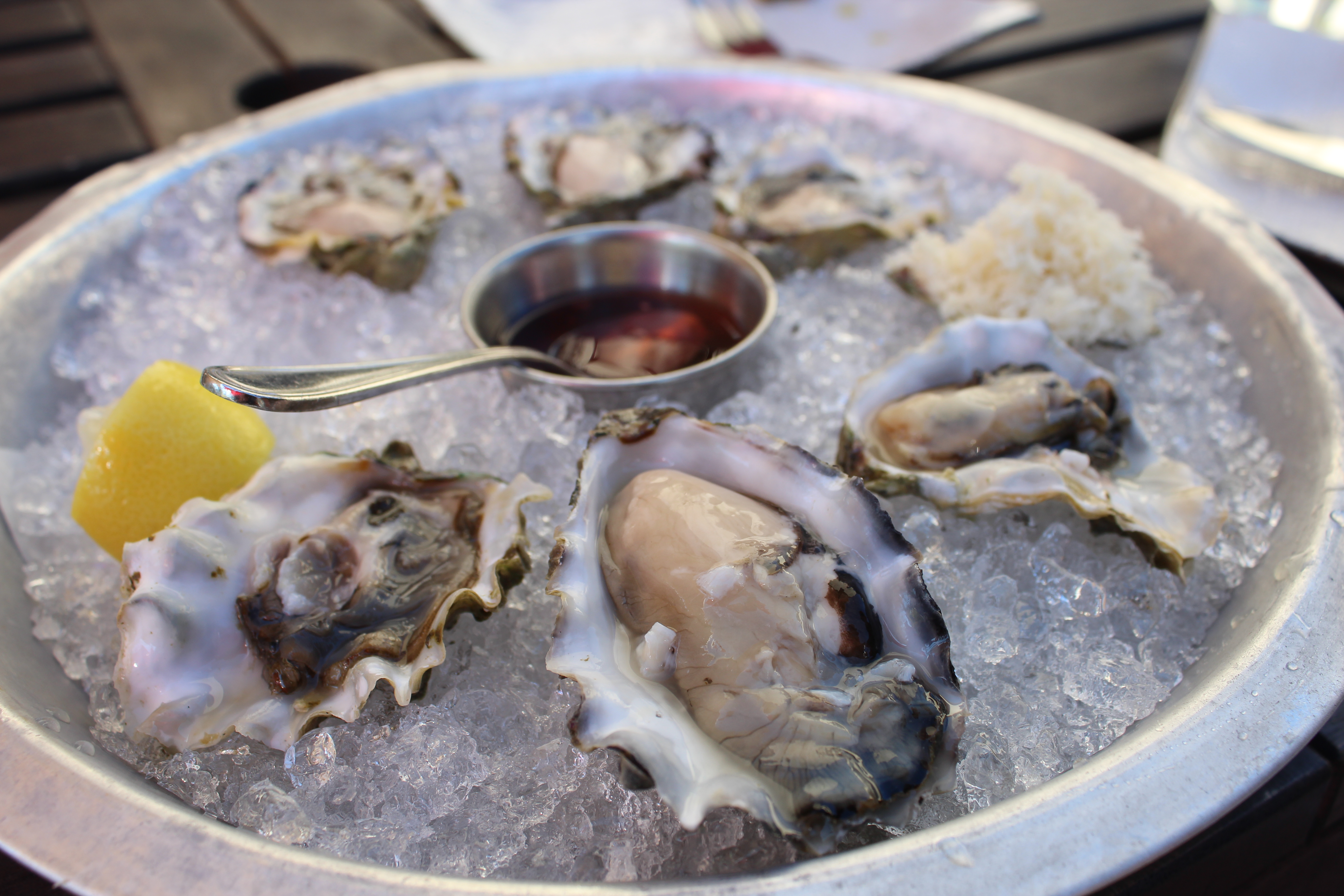
The oysters disappeared moments after this photo at Bearfoot Bistro, Whistler.
The highway with its fast-moving traffic and sketchy hard shoulder can be a little nerve-racking when you’re on a scooter. On the ride back from Alpha Lake through Whistler Creekside I realized my mid-life crisis – when it inevitably hits – will not feature a Harley Davidson. But I’d rent a scooter again in a heartbeat.
Back in the village, energized by equal parts adrenaline and fresh air, we made like Audrey and Greg and went for cocktails on the patio at the Bearfoot Bistro. A half dozen oysters led to a dozen more, accompanied by Pimm’s Royale for Audrey and a Whistler Grapefruit Ale for Greg.
Turned out Greg wasn’t through with beer after all.
If you go:
Starting May 1, Spitfire rents scooters for $25 an hour; or $120 for 24 hours. Guided tours are $120 (single), $100 (two or three riders), or $80 for four or more riders. Visit spitfirerentals.ca or call 604 938-3686.
Besides being a great, centrally located place to stay, Summit Lodge offers some handy, complimentary extras, such as snowshoes in the winter; bikes in the summer. There’s hot chocolate happy hour, plus smores and roast chestnuts by the pool. The free beer tasting in the lobby during the beer festival was most welcome, too! Visit summitlodge.com or call 1 888-913-8811.
The Bearfoot Bistro can justifiably claim to offer more than just a meal. Learn the fine art of Champagne sabering in the Bearfoot’s wine cellar surrounded by more than 20,000 bottles; brave minus 32 Celsius in a $1,400 Canada Goose, Arctic-ready parka and taste vodkas in the restaurant’s Belvedere Ice Room; or enjoy the Bearfoot’s $68 five-course menu. Details at bearfootbistro.com
This year’s Whistler Village Beer Festival will be from Sept. 17 to 20. Bookmark wvbf.ca for updates.
London on two wheels

London Bicycle Tour Company guide, Tarik de Vries, in his element at Trafalgar Square.
My first job after leaving school was a stone’s throw from St. Paul’s Cathedral. Every day, I’d herd on to British Rail with a million other commuters for the 10-mile trip to Cannon Street. Not once did it ever occur to me to ride a bike.
A lot’s changed in London since 1985. British Rail’s been replaced with private train operators and fares as confusing as they are expensive. Buses don’t accept cash: Oyster cards and credit/debit cards only. Motorists pay a daily congestion charge (about $20) for the privilege of driving in the capital. And, as I write this, London’s Tube train drivers are on strike.
Again.
No wonder cycling is so popular now, and not just with Londoners; tourists, too.
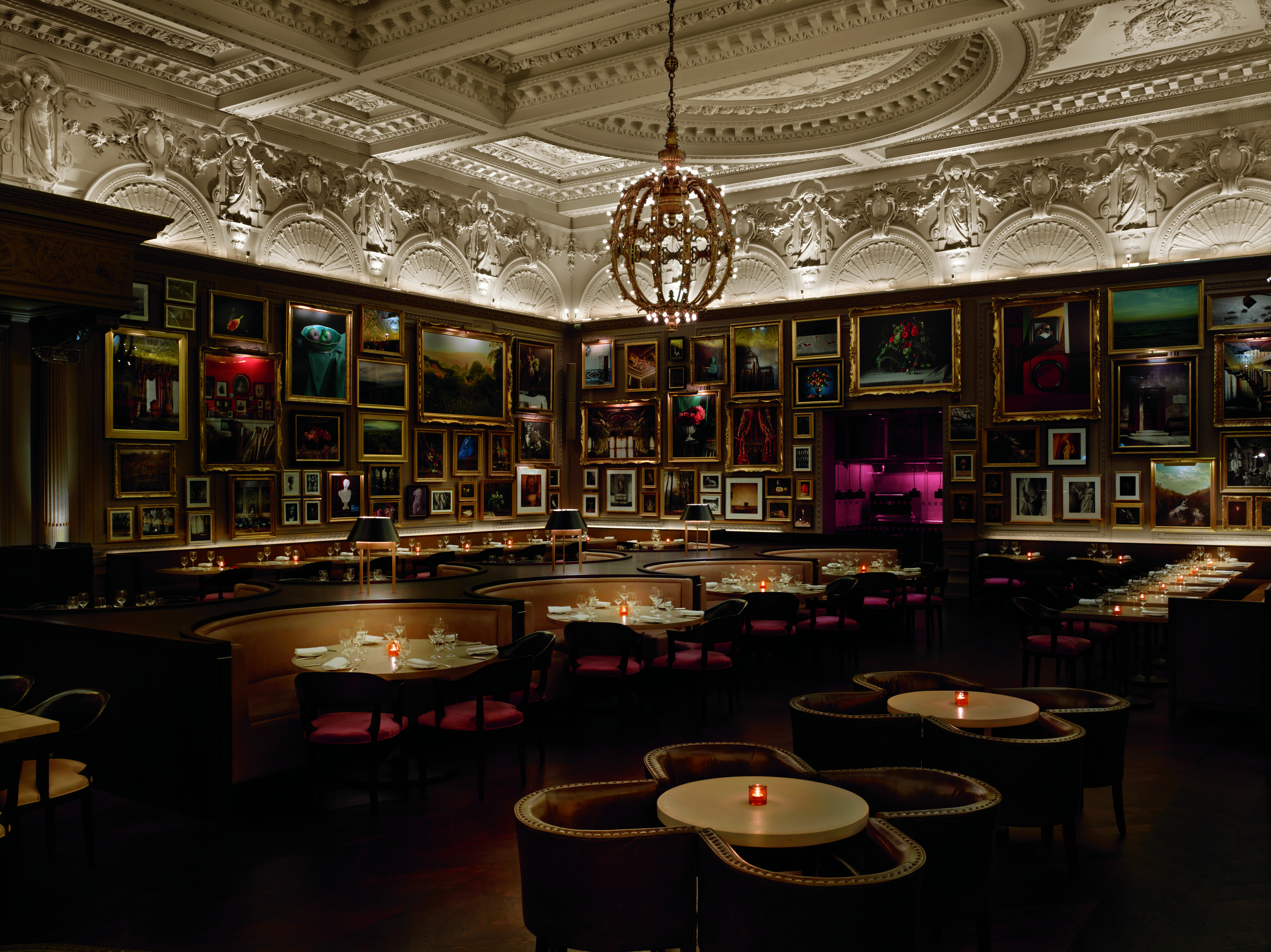
Berners Tavern, at the London Edition hotel, is the sort of place Agatha Christie might have set a mystery. Nikolas Koenig photo
Almost 30 years after that first job, I returned to my old London haunts this summer as a visitor with my family. We stayed a night at the London Edition in Fitzrovia, an artsy neighbourhood of galleries and upmarket stores. Virginia Woolf, George Bernard Shaw and Arthur Rimbaud used to call this area home back when it had a decidedly more Bohemian edge. Accommodation was probably more affordable then, too.
The Edition is pricey, but memorable. Oak floors, wood-paneled walls, and silk area rugs make the guest rooms feel like a sophisticated hunting lodge. The hotel’s restaurant, Berners Tavern, reeks of opulence with a high ornate ceiling, decadent chandeliers, low lighting and almost every square inch of wall space covered by framed art. The staff are young and beautiful. It’s the kind of place Agatha Christie might have set a mystery.
Walking the quiet backstreets of Marylebone, Fitzrovia and Soho we first noticed just how popular cycling had become in the capital. Along with numerous people riding high-saddled, three-gear road bikes with baskets on the front and panniers on the back, we saw lots of ‘Boris Bikes’ – London’s ubiquitous hire bicycles nicknamed after Mayor Boris Johnson. Similar to North America’s Bixi Bikes, London’s hire-scheme sponsored by Barclay’s Bank supplies 10,000 bikes from 720 stations around the city. The sturdy, three-gear bicycles feature puncture-resistant tires and LED lights, and can be rented by credit/debit card for 30-minute rides.
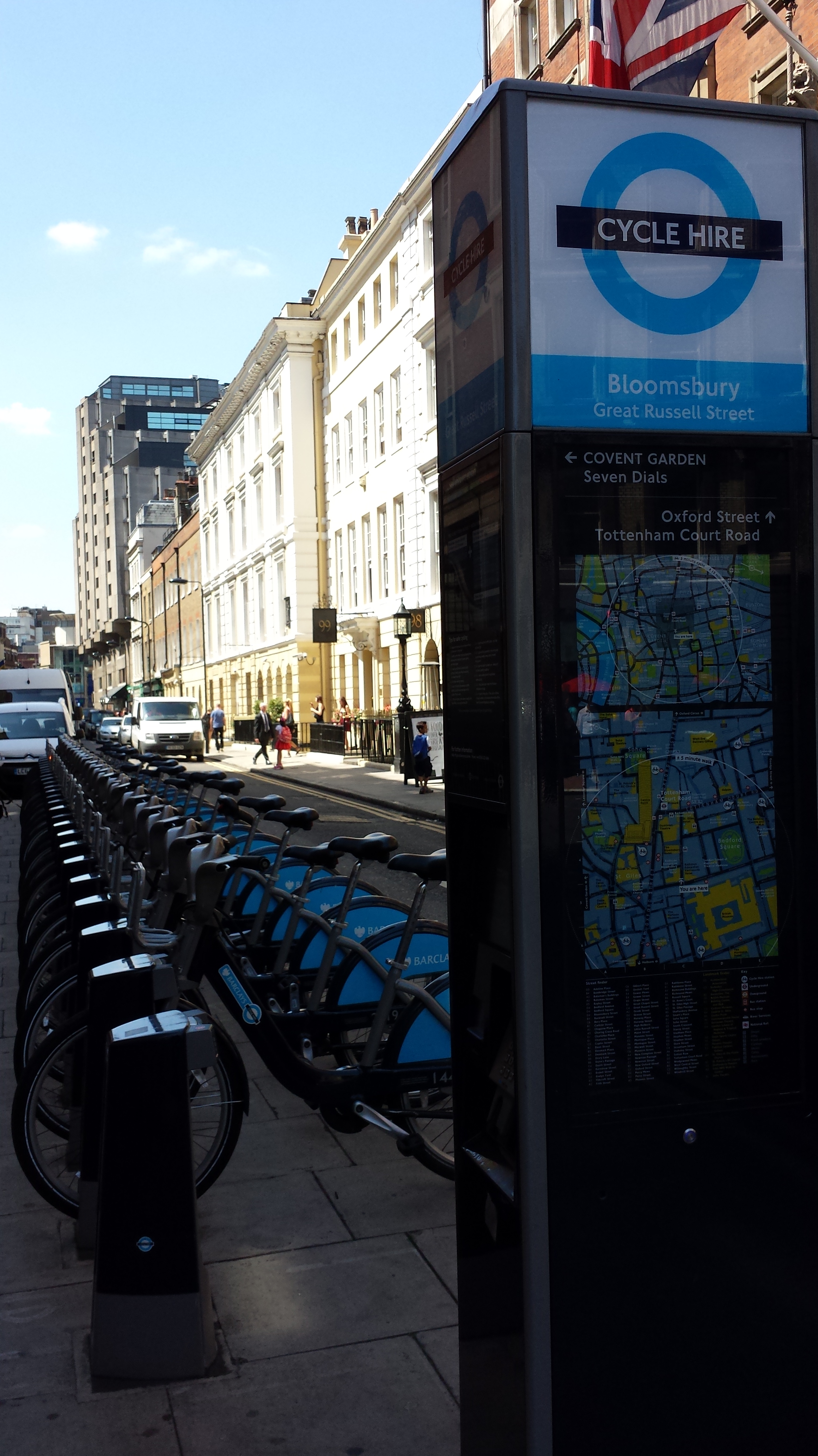
A fleet of ‘Boris Bikes’. In London, there’s usually one just around the corner.
With two days to see London, we booked two bicycle tours: the first, a Central Tour with the London Bicycle Tour Company; the second, an East End Tour with Cycle Tours of London. The Central Tour is a good place to start because it covers just about every London landmark on a tourist’s must-see list. The Houses of Parliament, Big Ben, Westminster Abbey, Trafalgar Square and St. Paul’s Cathedral are among the highlights of the Central Tour, timed perfectly by our guide Tarik de Vries so we could see the Changing of the Guard at Buckingham Palace.
While we watched soldiers in scarlet tunics and bearskin hats march down The Mall, Tarik regaled us with tales of over-zealous tourists bugging members of the Queen’s Guard. Soldiers standing all but motionless on guard are used to people posing for photos next to them. When that becomes a nuisance either because of physical contact or shouting, soldiers first stamp their feet, then issue a warning.
“When they raise their rifle, that’s considered a final warning,” said Tarik. “Next you’re detained.”
My favourite stop brought us to Westminster School, the only part of the tour I hadn’t visited before. Plenty of parks offer an escape from London’s crowds but the school, which stands in the shadow of Westminster Abbey, feels like a village. The streets are cobbled and on three sides of the green stand the school buildings, some of which date back to the 11th Century. Set back on the fourth side is Westminster Abbey, the traditional site for coronations and burials of Britain’s monarchy.
The peace and tranquility here – so remarkable in the centre of a city home to seven million people – contrasted dramatically with our ride to St. Paul’s Cathedral. Our approach from Smithfield Market (London’s central meat market with some absolutely gruesome history!) past the Old Bailey was busy enough before turning onto Ludgate Hill where traffic was so congested we cooled our heels on the equally congested sidewalk for a while. Congestion charge or not, motorists and pedestrians all appeared to have slowed down to admire Sir Christopher Wren’s masterpiece.
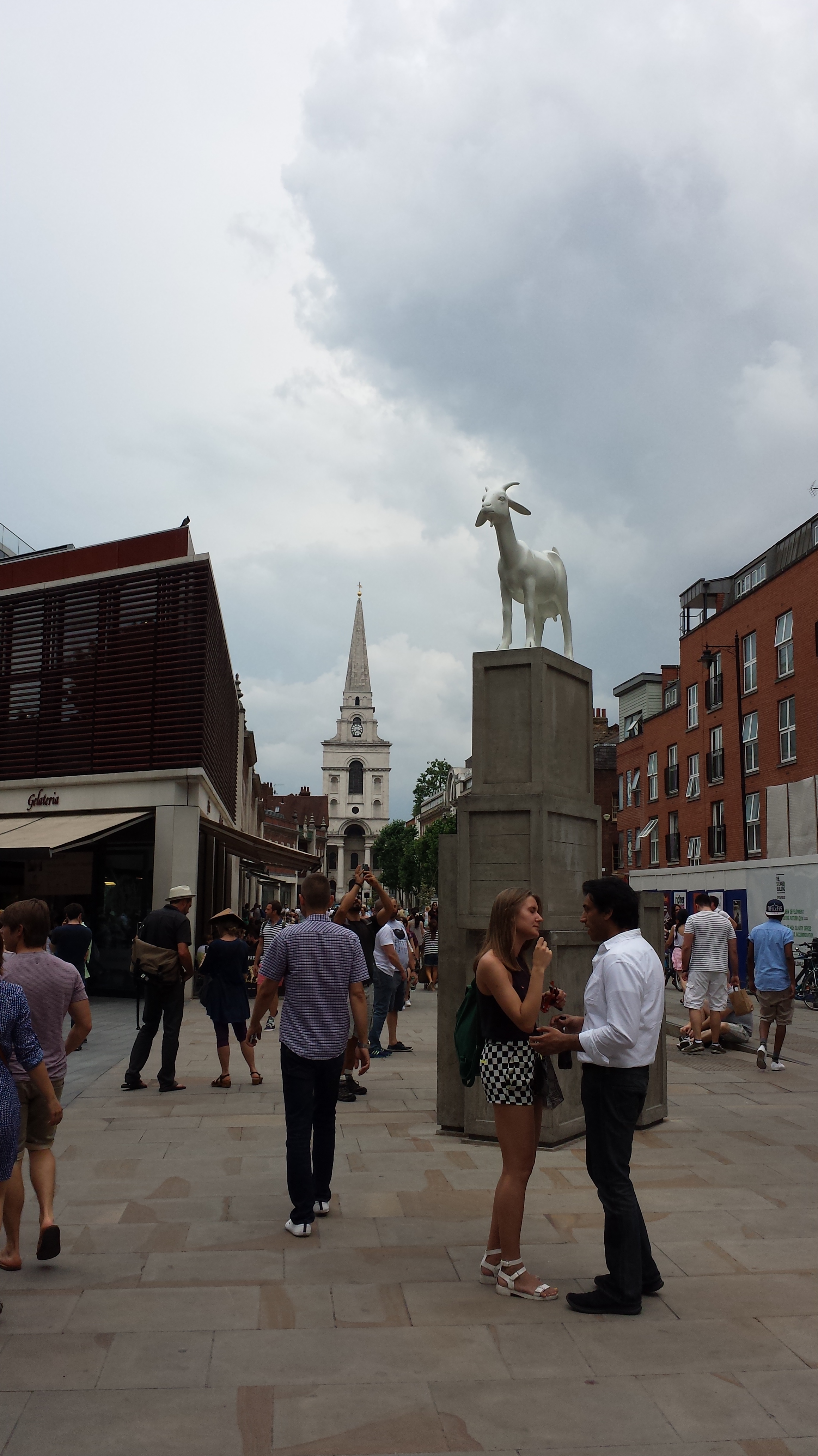
Shop, browse or chat – whatever floats your goat – at Spitalfields Market.
While Tarik covered London’s essentials, Mathew Tregaron’s East End Tour was a decidedly more offbeat excursion from a tourist’s perspective, making it all the more interesting. Tower Hamlets, so long synonymous with poverty and overcrowding, featured prominently in the tour, which also covered Shakespeare’s Globe Theatre, Southwark Cathedral and – a personal highlight – a ride across Tower Bridge.
Shortly after Tower Bridge we were at another old haunt, St. Katharine Docks. My dad, a marine engineer, used to bring the family here for boat shows and tall ships festivals. That was in the 1970s, shortly after St. Katharine’s warehouses were demolished and the area was commercially redeveloped. The stylish flats, yachting marina and pubs and restaurants are all still here. So, too, is the Tower Thistle Hotel, a corpulent, concrete monstrosity that epitomizes the worst of 1970s London architecture. But that’s just me.
In contrast to St. Katharine Docks, a failed attempt at gentrification is just a short ride away at Tobacco Dock. More than 200 years old, this abandoned brick and timber warehouse was turned into a shopping centre in 1990. Surrounding development failed to take off and dreams of creating an East End version of Covent Garden failed to materialize. The place has been abandoned for more than a decade. Yet until recently, piped music could be heard inside Tobacco Dock. A security guard still patrols the empty premises and, according to Mathew, spotless public toilets used to make this a timely stop on cycling tours.
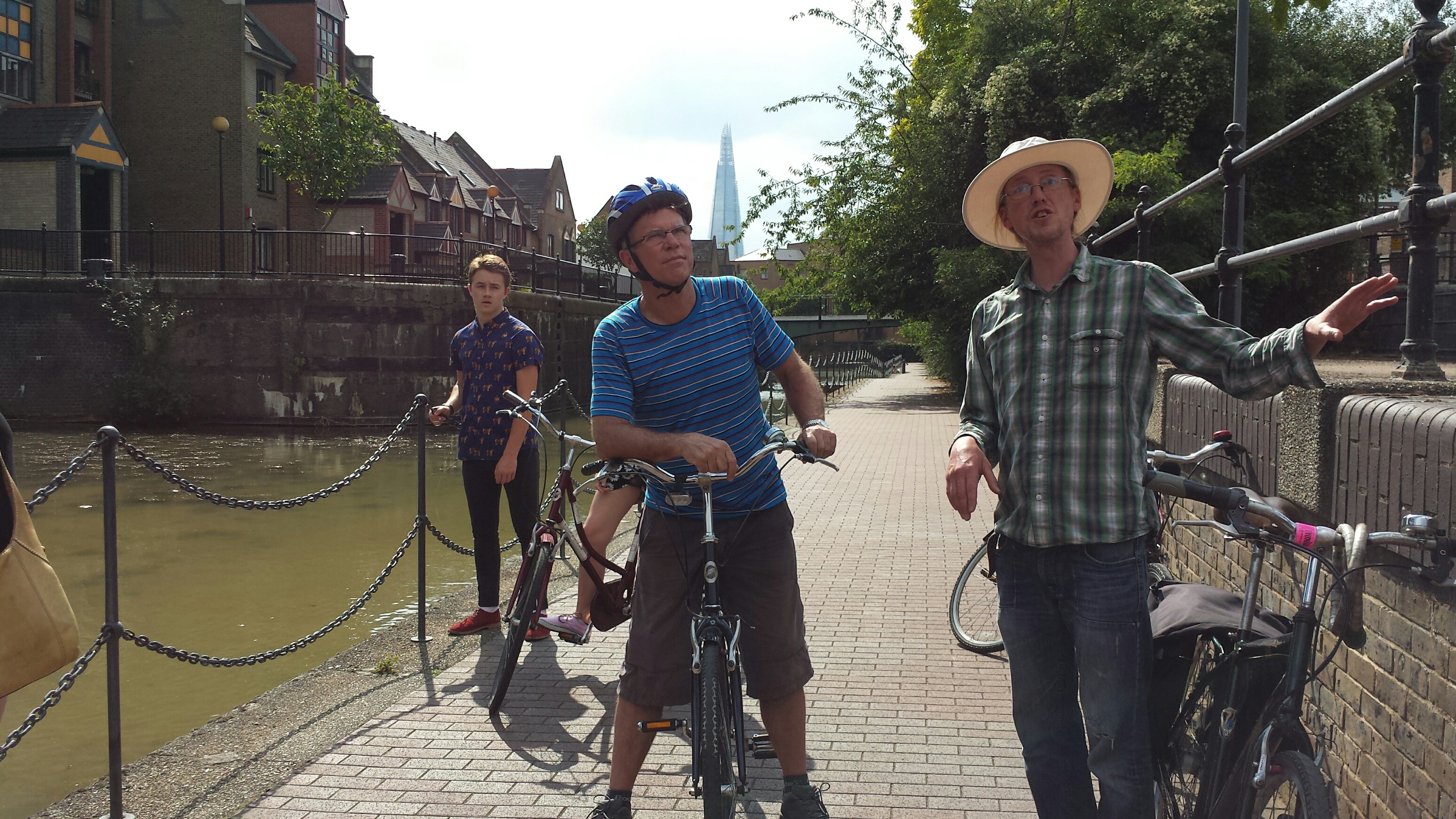
Mathew Tregaron (right) of Cycle Tours of London stops for a breather at deserted Tobacco Dock.
Infinitely more compelling is Cable Street and a mural depicting one pivotal day in London’s political history. For centuries, Tower Hamlets, with its close proximity to the city and the Thames, attracted waves of foreign immigration looking for employment. In 1936, looking for scapegoats for the country’s perceived ills, the British Union of Fascists targeted the community for a march. Despite the protection of some 6,000 police officers, the BUF’s supporters, known as Blackshirts, more than met their match. United under the rallying cry, “They shall not pass,” as estimated 300,000 residents prevented the BUF’s entry to London’s East End, but not without considerable bloodshed.
The Battle of Cable Street mural, begun in 1976 and restored in 2011, vividly depicts the violent confrontation of that Oct. 4 day. We propped up our bikes and lingered to admire the colourful tribute to this community’s resilience.
Following French Huguenots in the 17th century, Irish in the 19th century and Ashkenazi Jews into the 20th century, Bangladeshis form the main group of immigrants living here today. On nearby Brick Lane, clubs, pubs, markets, and some of the best curry restaurants in the UK compete for space. On weekends it’s packed. On a quiet Tuesday afternoon we cycled down the middle of Brick Lane just wishing we could stop for a chicken tikka masala.
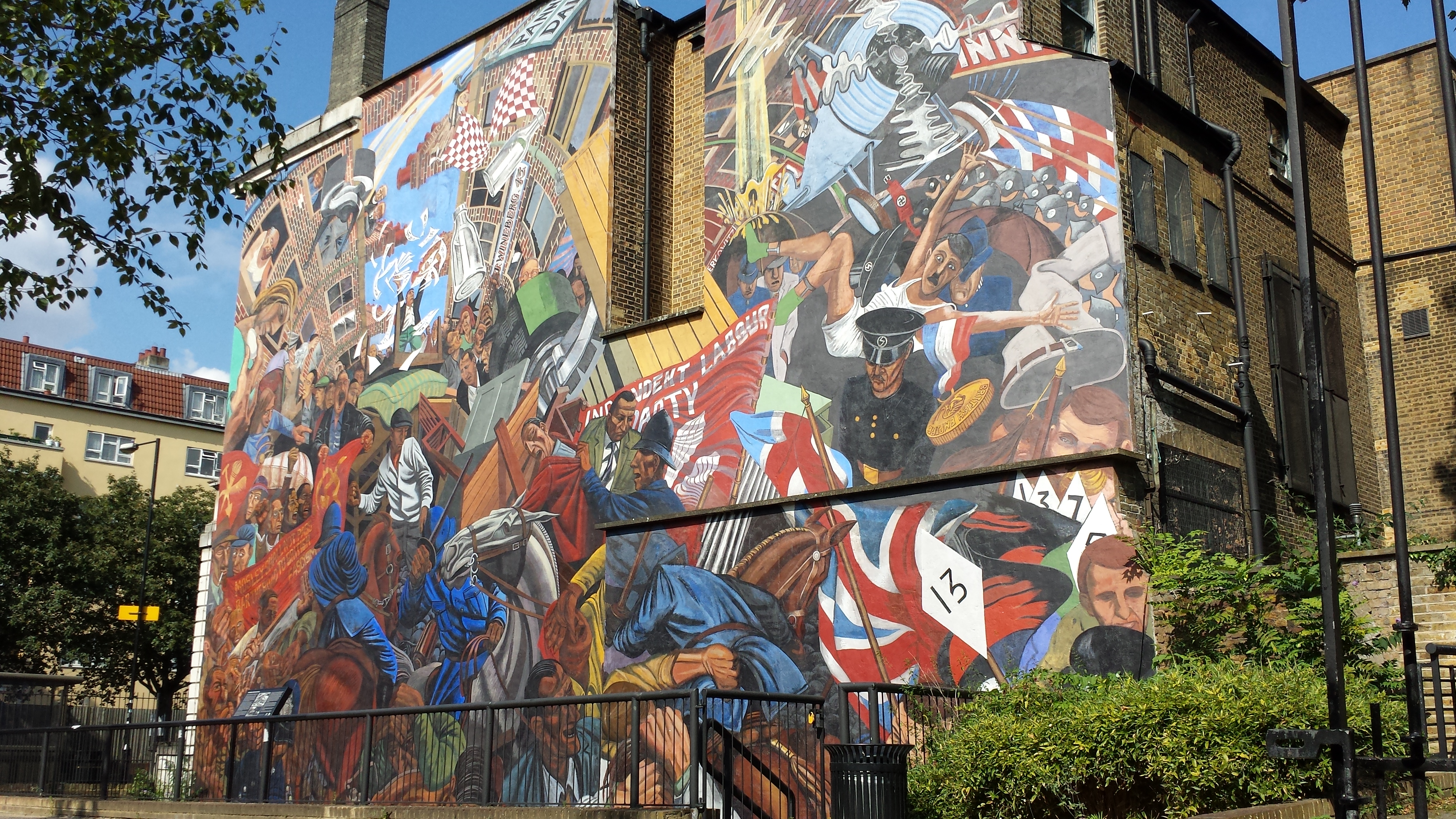
A pivotal day in London’s political history is vividly depicted in the Battle of Cable Street mural.
Before we returned to Mathew’s bike store on Shoe Lane, we stopped at Postman’s Park, once a popular spot for General Post Office workers. In 1900 it became home to the Watts Memorial to Heroic Self Sacrifice. Thirteen years earlier, an ardent socialist named George Frederick Watts had first proposed a park commemorating otherwise ordinary people who’d given their lives attempting to save others. Fire, drowning and train accidents dominate the brief but brave stories documented on glazed Doulton tablets.
Like so many of the stops on Mathew’s tour, Postman’s Park felt like a refuge from London’s bustle. It was only as we left I realized that first job of mine was just a few streets away. I might have found it sooner with a bike.
If you go:
- The London Edition recently launched a family package, featuring a loft or loft suite plus complimentary connecting room, with “big kid/little kid” treats, including a movie night and a London-inspired in-room tent. Rates start at $920 a night. For details of this and other packages visit edition-hotels.marriott.com/London
- Cycle Tours of London’s East End Tour takes about three and a half hours and costs about $35. Details of this and other tours at biketoursoflondon.com
- The London Bicycle Tour Company’s Central Tour takes three hours and costs about $43. For details of this and other tours, visit londonbicycle.com
- For more information about cycling in London, check out visitlondon.com
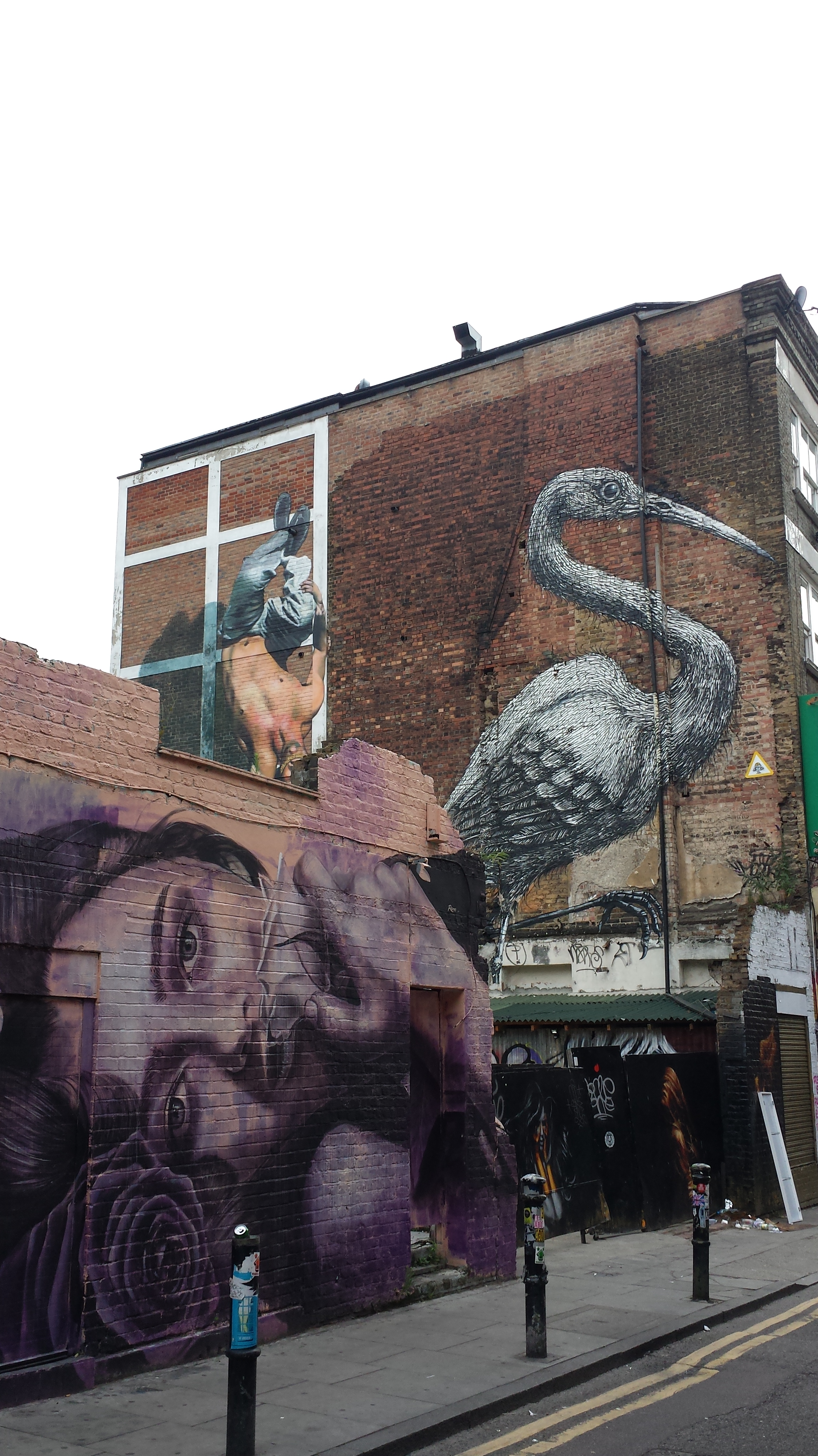
Street art pervades Brick Lane and adjoining streets like Hanbury Street, where the giant crane by Belgian artist ROA is hard to miss. Community uproar dissuaded Tower Hamlets council from covering it with a banner before the 2012 Olympics.
Summer in Whistler begins at the lake
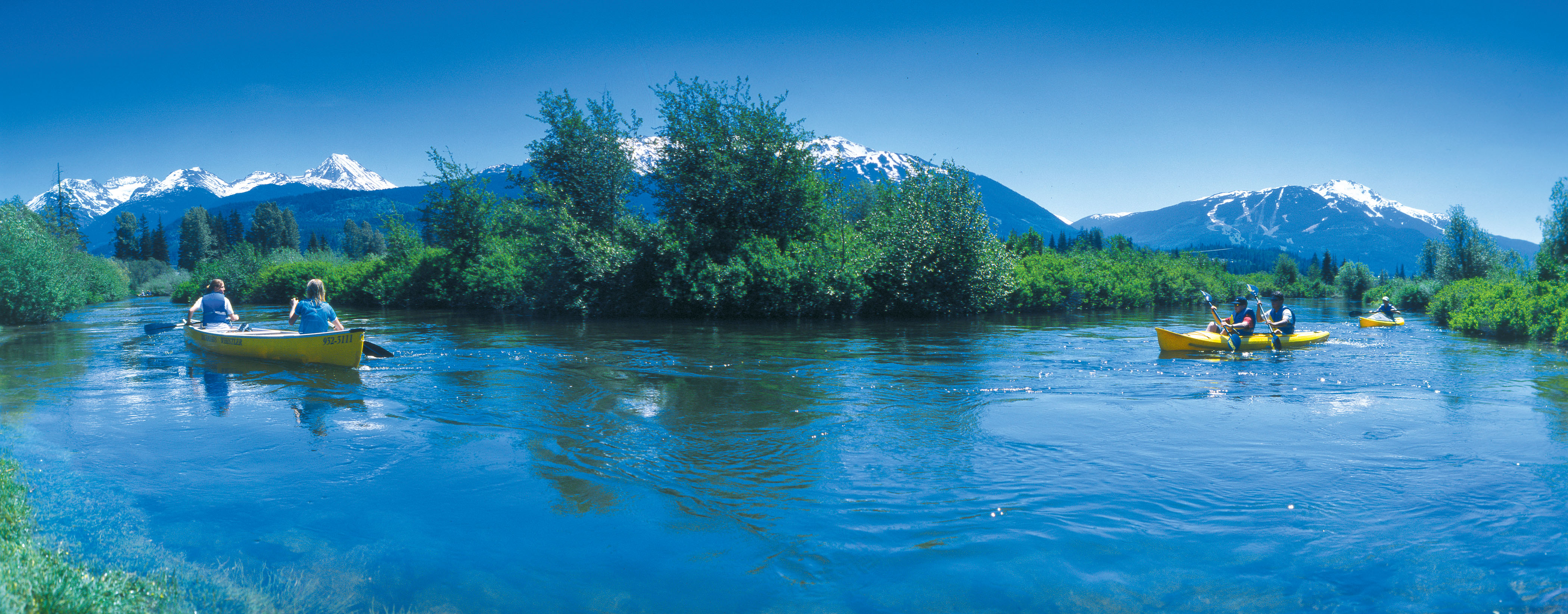
The River of Golden Dreams is an idyllic waterway for a quiet paddle … unless you find yourself in the middle of Whistler’s annual Go Fest and the Great Snow-Earth-Water Race. riverofgoldendreams.com photo
A quiet meander down the River of Golden Dreams, I’d promised my wife. After 36 hours of skiing, cycling, trail running, stand-up paddle boarding, dancing, eating and drinking, this would be a relaxing canoe cruise in the sunshine, a chance to mellow ourselves from weekend warriors to weekend wanderers.
It didn’t work out that way.
We’d come for Whistler’s Great Outdoors Festival, aka GO Fest. Held on the Victoria Day long weekend, GO Fest was the chance to cram an entire Whistler summer of activities into four days. A packed schedule had offered everything from fly-fishing to disc golf, river rafting to yoga, and much in between that involved wearing a silly costume.
By Sunday, my legs were aching from Saturday-night’s AlpenGlow Fun Run, a six-kilometre jog around Lost Lake, while wearing glow sticks. Or they might have ached from skiing Blackcomb’s Seventh Heaven all day; or from jumping up and down to The Sheepdogs during Friday night’s concert in the village.

The River of Golden Dreams connects Alta Lake and Green Lake. riverofgoldendreams.com photo
Cycling Whistler’s Valley Trail on Sunday morning, we stopped at Lakeside Park where we met Eric White of Backroads Whistler. When he told us about paddling the River of Golden Dreams, the timing seemed perfect: No pressure to perform; tranquility now. Backroads Whistler even picks you up at the end of the two- to three-hour paddle.
“People were coming here for the lakes long before the skiing,” Eric pointed out. “I think you’ll really enjoy it.”
To get our sea legs we warmed up with a stand-up paddle boarding session. Stand-up paddle boarding, or SUP, has taken off in recent years and it’s easy to see why. Not unlike snowshoeing, SUP offers a short learning curve and gets you closer to the elements. It can be as relaxing or as strenuous as you want. Eric gave us a quick tutorial on the dock and we were off.

Pasty Englishman attempts balance feat on stand-up paddle board!
The Kahuna boards designed by Whistler local, Steve Legge, were exceptionally stable, despite my initial fears of falling. (The lake ice broke just a month before!) It only took a couple of lengths between Lakeside’s docks for it to begin to feel like a core workout.
Now acclimatized to the occasional gusts picking up on Alta Lake, we paddled to shore for a new vessel.
Backroads offers kayaks and double kayaks but we opted for a two-person canoe. The canoe requires smooth communication between paddlers to navigate the notoriously tight corners of the River of Golden Dreams.
It’s also known as “The Divorce Boat,” according to Eric.
“We’ve only been married 23 years, what could possibly go wrong?” I asked my wife.
The River of Golden Dreams connects Alta Lake with Green Lake about three kilometres north. Because of its stubborn refusal to follow a straight line, the river’s full length is closer to five kilometres. In places, the river is barely wider than a canoe and portaging is sometimes necessary, depending on water levels, which can fluctuate rapidly depending on rain and snow melt.
After a quick paddling tutorial, we donned our lifejackets and set sail. Within 15 minutes we’d crossed Alta Lake and were nearing the mouth of the river. That’s when I noticed people waving at us from a bridge. Seconds later we heard a siren – the kind that’s normally accompanied by a loud voice shouting “release the hounds”.
“Why are those people waving at us?” asked my wife from the bow.

riverofgoldendreams.com photo
The answer appeared over our left shoulders: canoeists, two to a boat and wearing helmets and numbered pinnies, launching from a nearby beach and paddling straight for us. Unsure whether the people on the bridge were waving us in or away, we opted to paddle for the river, full steam ahead.
At the bridge we made two discoveries. The first was that we’d need to portage a few yards because we’d arrived at a weir. The second was that we’d unwittingly joined a pivotal leg in GO Fest’s Great Snow-Earth-Water Race – a grueling six-stage competition involving skiing, biking, running and canoeing.
“We’re expecting two dozen canoes through here,” a young man with a radio told us. “You might want to sit out and let them through.”
It occurred to me that on a narrow, winding river with few passing lanes and a head start, we could actually try and win the race. Then my wife reminded me that this was supposed to be a cruise. She also said something about ethics.
So for 20 minutes we perched at a picnic table and watched contestants portage their canoes around the weir and back into the river, cheered on by locals. When everyone had passed us, we re-launched and quickly learned to adapt to the river’s ever-changing moods: turn too tightly and fast eddies would pull us into the reeds; lose concentration and we’d find ourselves turning sideways to the current.
But the lush wetlands and snowy peaks beyond the banks made up for the occasional brushes with low branches. Better yet, during the course of our 90-minute paddle we became minor celebrities to those who had turned out to cheer on the racers. Everyone loves plucky losers and despite not wearing race pinnies, we were assumed by many to be the last-place finishers in the canoe stage of the Great Snow-Earth-Water Race.
I still think we probably could have won it!
The River of Golden of Golden Dreams (Backroads Whistler – riverofgoldendreams.com or 604 932-3111) is just one of a multitude of adventures awaiting visitors to Whistler this summer. Here are five more.

Several runs atop Blackcomb and the Horstman Glacier are open for skiing and boarding until late July.
Hit the Valley Trail: For a better perspective on Whistler’s surroundings get out of the village and onto the Whistler Valley Trail. More than 40 kilometres of paved trail and boardwalks connect Whistler’s lakes, parks and neighbourhoods. The trail is suitable for bikes, rollerbladers, joggers, walkers and well-behaved pets. Whistler.com offers more information on making the most of the Valley Trail, including a blog on the trail’s “six perfect spots”.
Shred the Park: Valley Trail offers a benign cycling experience and cross-country cyclists will find more than 500 kilometres miles of single track around Whistler. The Whistler Bike Park though condenses the best of Whistler’s downhill for all levels of mountain biker. Ride the lift up and take your pick of alpine view trails, banked cruisers through the forest, tight, winding single track and – for the experts – steep rock faces. Whistler Bike Park offers numerous ticket deals, including some with rentals, and accommodation packages. More information is at whistlerblackcomb.com.

Buckle up and ride the Elaho! Eric Beckstead photo
Ride the river(s): If paddling the River of Golden Dreams is too tame for you, consider whitewater rafting either of the Green, Lower Cheakamus, Elaho or Squamish rivers. A range of half-day and full-day tours are available from Whistler, (whistler.com/rafting) or from the Sunwolf Centre in Brackendale near Squamish (sunwolf.net/rafting).
Fly by the seat of your pants! The most exciting thing I’ve ever done in Whistler is ziplining at Cougar Mountain, just north of Whistler. Superfly Ziplines (superflyziplines.com) runs Canada’s longest, fastest, highest ziplines where speeds of more than 100 km/h are made possible by runs well over a kilometer long, 200 metres off the ground. Strap into a paragliding-style harness, attach to half an inch of galvanized steel with a trolley rig and prepare to fly! Ziptrek Ecotours (ziptrek.com) combines similar thrills above Fitzsimmons Creek with a strong environmental ethos.

Ziplining at Cougar Mountain, just north of Whistler.
Ski in a T-shirt: For all the great winter skiing at Whistler, the novelty of descending Horstman Glacier while wearing a T-shirt in July is hard to beat. Until late July, two or three runs, plus the terrain park remain open atop Blackcomb where lunch on the deck of the Horstman Hut is a must.
* For details of summer accommodation packages, visit fourseasonswhistler.com

Las Vegas: The beaten track and the single track
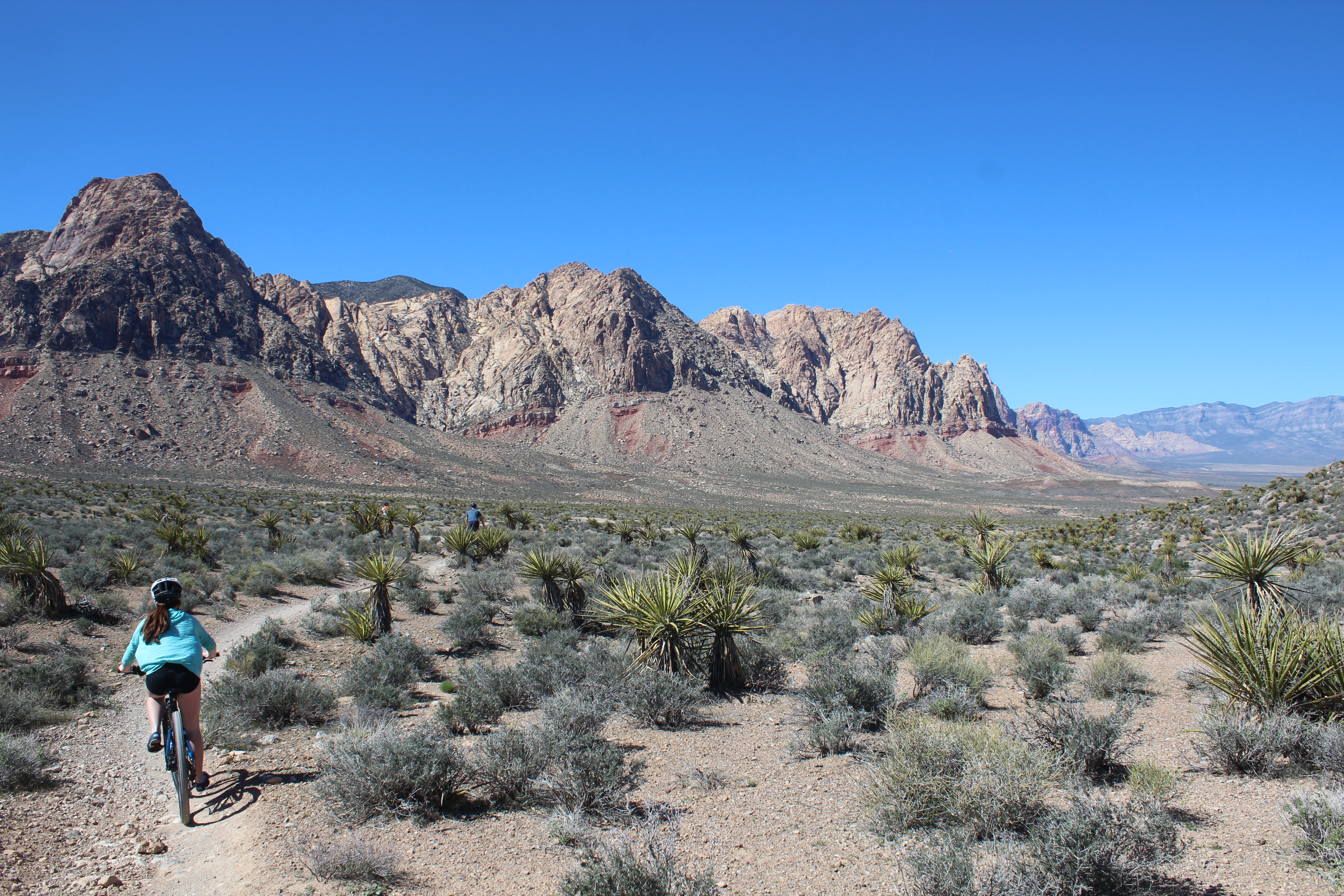
For a city synonymous with late nights, Late Night Trailhead just outside of Las Vegas is decidedly different. There are no buildings besides an outhouse, no meandering pedestrians or neon, and certainly no noise. Instead you’ll find about 200,000 acres of desert known as Red Rock Canyon, home to tarantulas, rattlesnakes, burros, bunnies and wild vegetation that can either harm or cure you.
More than 80 miles of trails lure another desert creature, namely the mountain biker – about 2,000 of them locally, according to Brandon Brizzolara. Brizzolara is a guide and mountain bike specialist for Escape Adventures and Las Vegas Cyclery. He grew up in Vegas and fondly remembers when even The Strip had its own biking scene.
“From Tropicana to Fremont we’d have BMX sessions on The Strip like it was a skate park in the 90s,” he says. “Vegas is a pretty active community, it’s just The Strip that’s a little out of shape.”
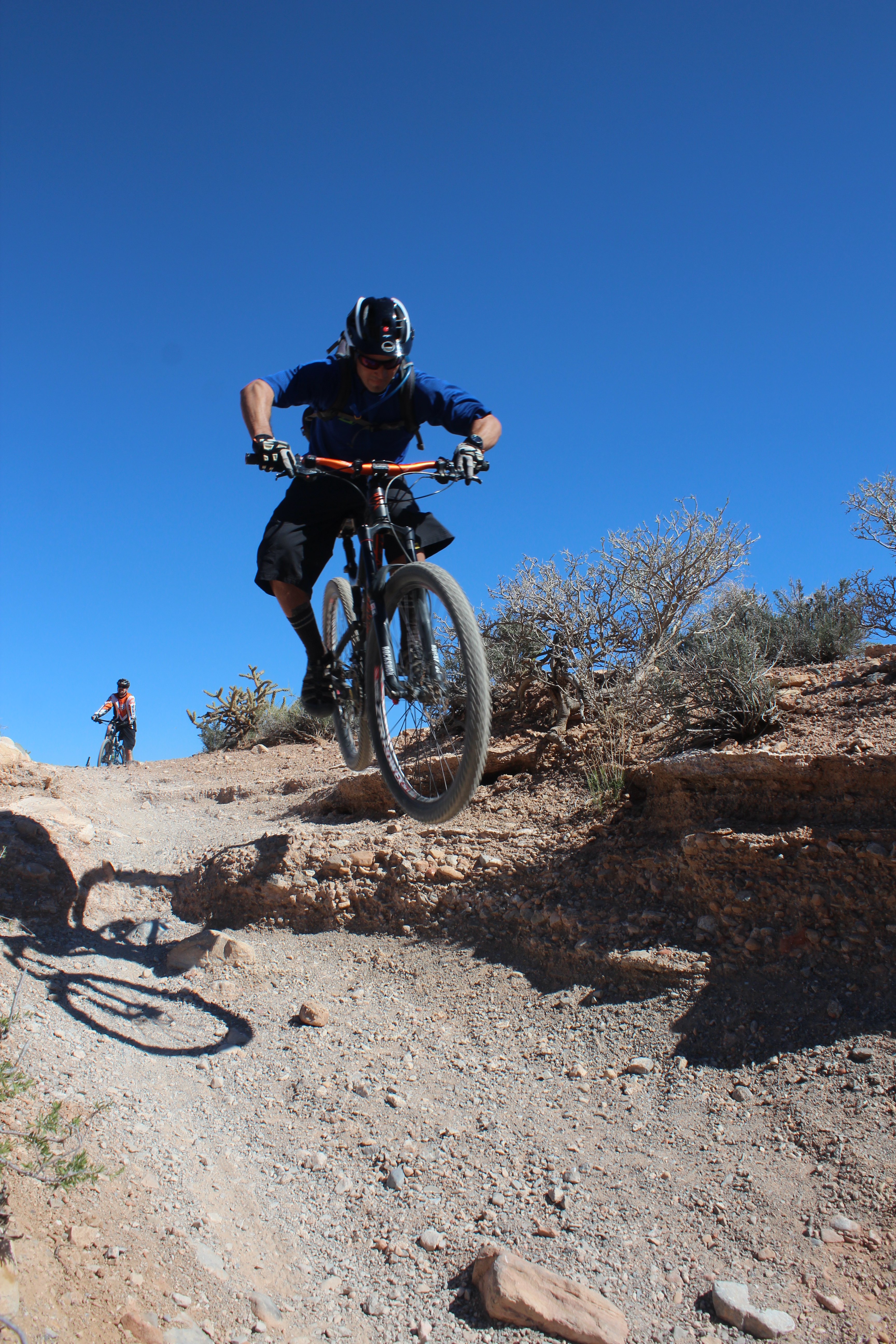
Brandon Brizzolara, guide and mountain bike specialist for Escape Adventures and Las Vegas Cyclery.
We’re here for The Strip and the desert – the beaten track and the single track: Neville and Leah and their teenagers, Ryan and Emma, all of us with contrasting wishes and expectations for our three-night stay in Las Vegas.
Shopping had been my kids’ idea. For hours we’d lost ourselves in high-octane consumerism at Miracle Mile Shops at Planet Hollywood Resort and Casino, a consumers’ paradise with 170 stores, 15 restaurants and several entertainment venues. Britney Spears has her own store here where Britney merchandise exhorts shoppers to “Work it, Bitch”.
It’s a legitimate vice in Sin City, but shopping – and Britney Spears – make me uncomfortable so I stood with a crowd and watched a guy get his belly tattooed at Club Tattoo. Leah got a manicure at Original Diva and had nails “to die for” long after returning home. Ryan and Emma blew their entire budget.
On all of our wish-lists was a Vegas show. Britney had taken March off so we chose Cirque du Soleil’s Zarkana, a celebration of circus traditions set in an abandoned theatre (but in reality at the Aria Resort and Casino). The show blends anarchic humour with the precision and grace of aerialists, acrobats, jugglers, high-wire and trapeze artists. The clowns made Ryan uncomfortable but he’s only 16; otherwise we left well entertained.
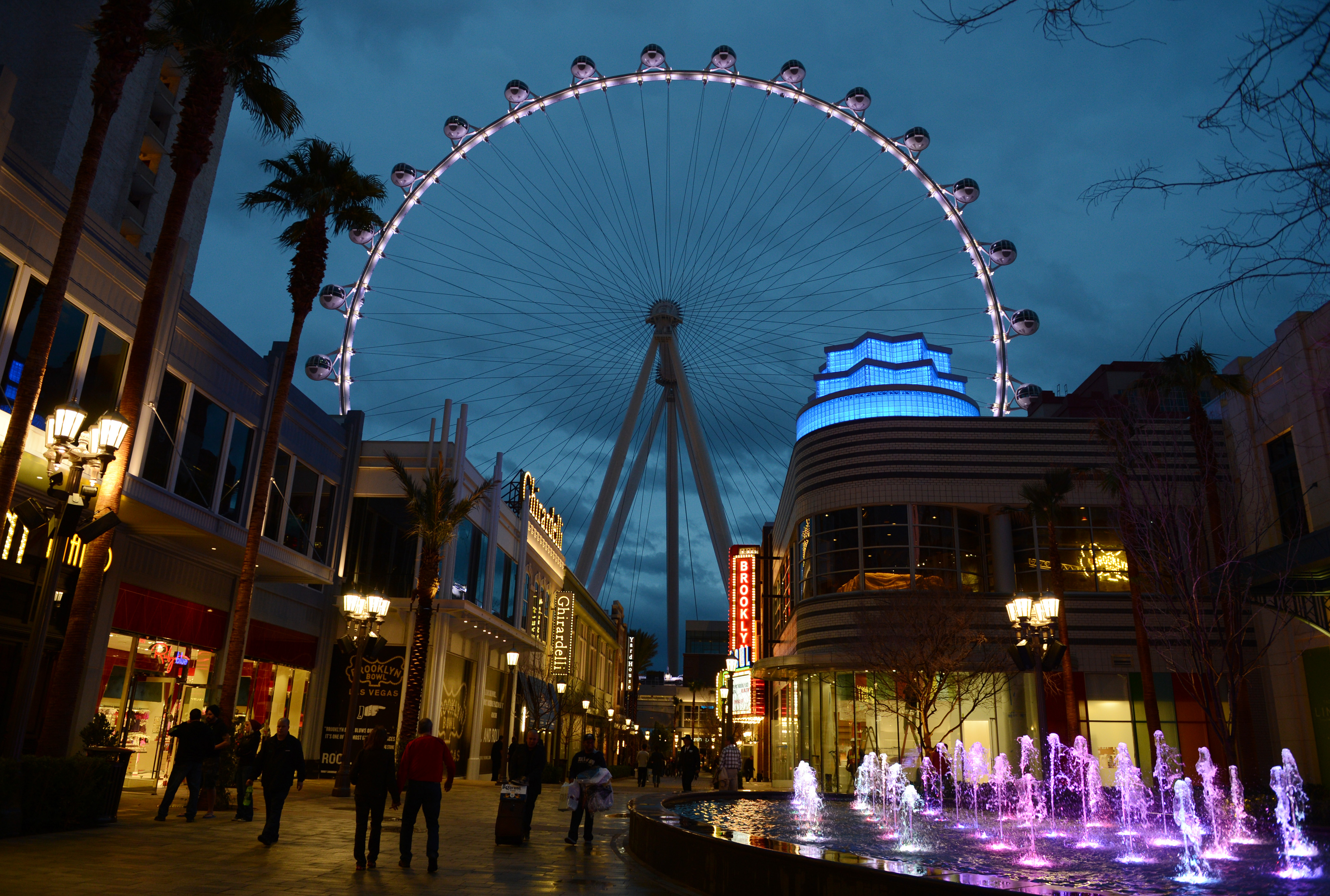
At 550 feet tall, the High Roller is the crown jewel in Caesars Entertainment Corporation’s LINQ development, a pedestrian-friendly neighbourhood on The Strip. The High Roller opened March 31. Denise Truscello photo
The spa treatment was Leah’s idea, but I was happy to tag along. For the Vegas rookie it can be tricky finding places on foot and ESPA at the Vdara Hotel was no exception. We could see it set back off The Strip, but The Strip has a way of keeping pedestrians on The Strip. We eventually got there by walking through another hotel, The Cosmopolitan. Any stress I might have felt at being late for a spa treatment soon melted away under the sensuous heat of volcanic stones, body brushing, exfoliation and a scalp massage. Beats shopping any day of the week!
Great food was on everyone’s list and the following three restaurants more than delivered. The Yard House enjoys an enviable location just a few feet from the High Roller, the world’s biggest observation wheel. At 550 feet tall, the High Roller is the crown jewel in Caesars Entertainment Corporation’s LINQ development, a pedestrian-friendly (hallelujah!) retail, dining and entertainment neighbourhood on The Strip. The High Roller opened March 31, two weeks after our visit, but we were content to admire it illuminated in green for St. Patrick’s Day from the deck of the Yard House. The beer list alone would entice me back to the Yard House, but the St. Louis-style ribs and truffle fries had me at hello.
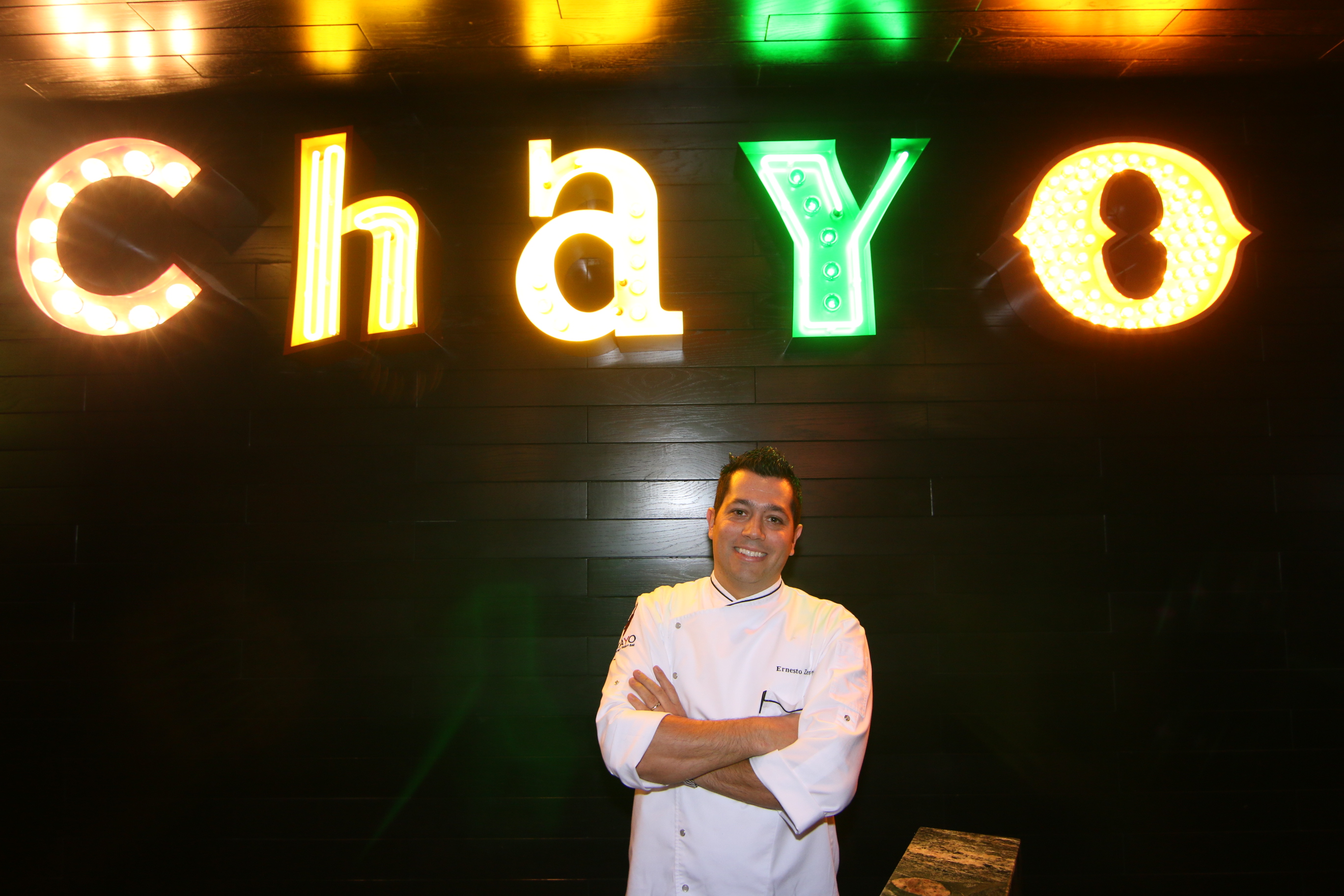
Chayo chef, Ernesto Zendejas.
Just a short stroll through the LINQ brings you to Chayo Mexican Kitchen and Tequila Bar, a two-storey fiesta in the making, anchored by a mechanical bull. Mexico City-born chef, Ernesto Zendejas, draws upon classical training in France to present an exquisite mix of flavours: Lobster tacos, bass ceviche, cilantro cream soup, shrimp fajitas – it’s tough to pick a favourite, but none of us were lining up to ride the bull afterwards. (Portions are decidedly North American – not French!)
Plates are meant to be shared at Crush, one of many dining options at the MGM Grand, but our family came close to making a scene over the sea scallop benny, comprising sunny-side quail egg, chorizo and chipotle hollandaise. Some meals are too good to be shared. The shrimp risotto and lamb sirloin with bacon brussels sprouts also didn’t last long.
Between the shopping, the show, the spa and the dining, we savoured afternoon pool time. In downtown Las Vegas, we mingled with celebrity lookalikes and body-painted models at the Fremont Street Experience, five city blocks of high-tech wizardry featuring a 550,000-watt sound system and a music and light show broadcast from an LED canopy 90 feet above the ground.

Sea scallop benny at Crush, MGM Grand. Don’t even think about sharing.
And we ventured a little off downtown’s beaten track. Further down Fremont Street, past El Cortez, the city’s first casino, we found The Beat Coffeehouse and Records, the hippest little joint for breakfast and heaven to a 16-year-old who’s just discovered vinyl.
Nowhere though seems quite so off the beaten track as the Mojave Desert and the single track of Red Rock Canyon. The mountain biking had been my idea. Only 17 miles west of Las Vegas Boulevard, Red Rock’s Mustang Trails might have been on another planet, such is the contrast with The Strip.
For two hours we mostly coast on easy trails, stopping occasionally for impromptu descriptions of the vegetation. Brizzolara says he hasn’t taken a pill in more than 10 years, and why would he with nature’s pharmacy on his doorstep? There are seemingly cures for all ailments in the numerous sage bushes and plants like Mormon’s Tea, a species of Ephedra, which is traditionally used to treat asthma, hay fever and the common cold.

Ryan Judd in his element at Red Rock Canyon.
If inducement to remain on the bike were needed, there are no shortage of plants that could make for a painful landing: cacti, whose barbs expand after piercing skin, and the Joshua Tree, whose bayonet-shaped leaves feature serrated edges – handy for cutting barbecue wieners, according to Brizzolara. We stay on our bikes. My daughter, Emma, who’s never mountain biked, struggles gamely and mostly ignores her dad telling her to relax.
It’s the same advice she gave me at the Britney Spears store.
If you go:
- Las Vegas Cyclery (lasvegascyclery.com) and Escape Adventures (escapeadventures.com) offer year-round tours (half day and full day) for mountain bikers and road cyclists, as well as hiking tours. If mountain biking, you’ll ride full suspension Santa Cruz 29ers and tours start at $129. Call 1 800-596-2953
 1 800-596-2953.
 - We divided our accommodation between the Downtown Grand Las Vegas (downtowngrand.com) and the MGM Grand (mgmgrand.com). Formerly the Lady Luck, the Grand recently reopened after a $100-million renovation. It’s steps away from the Fremont Street Experience and features PICNIC, a wonderful rooftop pool. The MGM Grand more than holds its own on the pool front with four to choose from and a lazy river. It also offers Stay Well rooms, which comprise more than a dozen health and wellness features, including aromatherapy, wake-up light therapy and Vitamin C-infused shower water.
- For more on ESPA at Vdara, visit Vdara Hotel and Spa.
- For more on Las Vegas, visit vegas.com

-
- Guide Brandon Brizzolara points out the good, bad and ugly of desert flora and fauna.
-
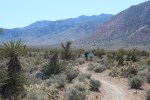
- The Las Vegas mountain bike community numbers 2,000-plus. Fortunately there’s lots of room for them all.
-

- Easy riders at Red Rock Canyon.
-
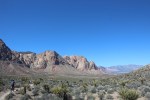
- All those trails with no rainforest in the way!
-

- High Roller at The LINQ. Denise Truscello photo
-

- Chayo cilantro cream soup.
-

- Chayo lobster tacos.
-
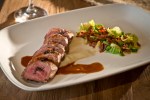
- Crush sliced sirloin.
-

- Sprinkles at The LINQ actually features a cup-cake ATM!
Urine Review

It’s fair to say that the coffee kicked in early on the Pemberton slow food cycle this summer.
Twas a month before Christmas
When Leah turned and said
“Here are the cards for your poem
Now I’m off to bed”
-

- Senator Mike Duffy, in happier times.
-

- Mayor Rob Ford: Never met a microphone he didn’t like.
So I searched for a highlight
Picking just one is a toughie
Like hugging Rob Ford
Or trusting Mike Duffy

Good kids, all of them.
Our year was terrific
With adventures galore
Life by the Pacific
Is exciting for sure
Ryan turned 16
And started to drive
Each night we thank God
We’re all still alive



Emma hit 14
An important milestone
Becoming the last teen on Earth
To own an iPhone


In the summer we cycled
In Canada Back East
The sights were amazing
The heat was a beast
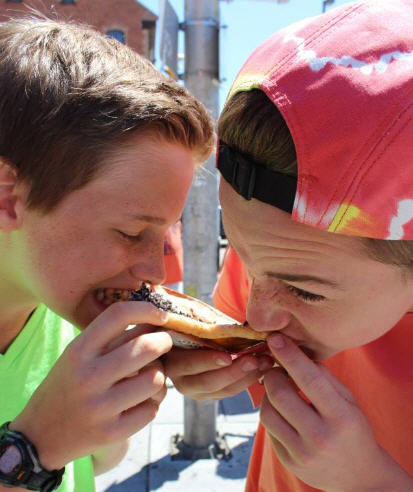
Ryan and Jordan … on a budget.
We visited the Marshalls
In Hunstville so scenic
And confirmed that they’re still
Irritatingly photogenic

Sickeningly photogenic. Again.
Through Quebec City we pedalled
Up hills steep and cobbled
The sweat was intense
My groin somewhat troubled
Toronto was flatter
Cycling old railway track
It’s a cosmopolitan city
Except for the mayor, who smokes crack

Good kids … all of them.
Ziplining above Whistler
In fear and in dread
Is how Leah and I marked
22 years wed

You wouldn’t believe how hard it is to photograph this on self-timer.
We had visitors, too
Cousin Steve and his clan
We all hit the beach
And worked on our tan

Turns out there’s another Leah!
Brother Keith arrived next
So nice he could stay
I leant him my coat
Cos it rained every day
We went to Osoyoos
And drank lots of wine
The rain turned to snow
But we got home on time

Queasy riders.
Nan and Grandad came to visit
For three weeks this Fall
With cards we slipped pressies
In Grandad’s holdall

HE’S GOT A KNIFE!
And now we look forward
To a promising New Year
England in Rio
And Three Lions to cheer

God bless Wayne.
I wish you the best
For a year full of light
God Bless Wayne Rooney
And to all a good night




Toronto on two wheels
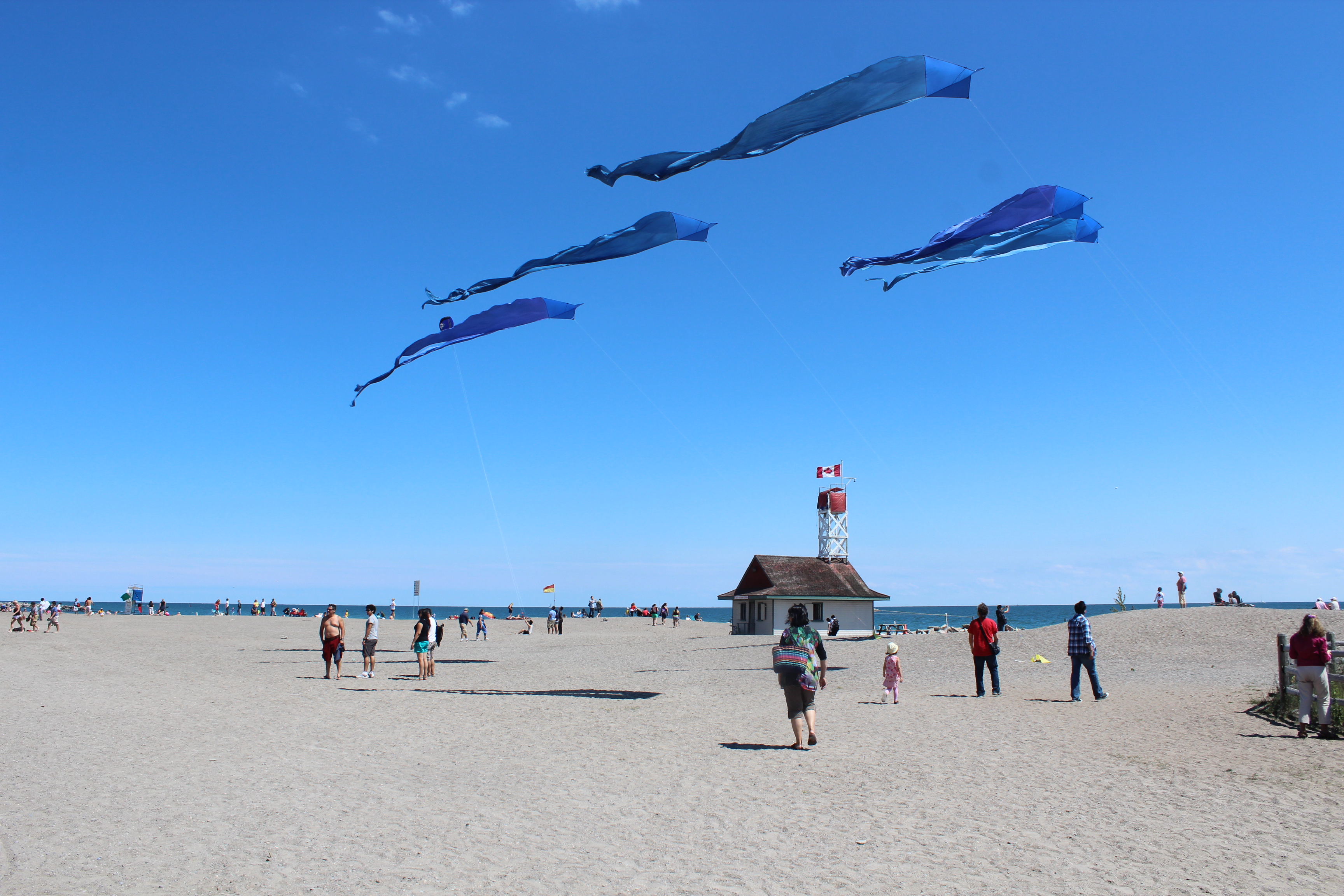
The Beaches neighbourhood in eastern Toronto is a rarity: homes, not a freeway, still line the lakeshore.
I can remember the moment Toronto began to win me over. It was at BMO Field, an hour after arriving in the city, in the waning minutes of Toronto FC’s MLS game versus the Columbus Crew.
Losing 1-0, many Toronto fans upped and left when a storm swept in from Lake Ontario. Soaked to the skin, my son and I took advantage of space behind the Columbus goal just as Toronto equalized.
We’d barely finished high-fiving the locals when Toronto scored the winner in injury time, sparking more sodden pandemonium. We saw ourselves on TV highlights that night. Just as well we hadn’t worn our Whitecaps jerseys!
Like many west coasters, I harbored some instinctive disdain for Canada’s biggest city. I’d heard about its swagger, its summer humidity, and, of course, the Maple Leafs. Yet riding the bus full of fans back to the Fairmont Royal York, past the CN Tower and Rogers Centre (aka SkyDome), I was warming to Toronto.
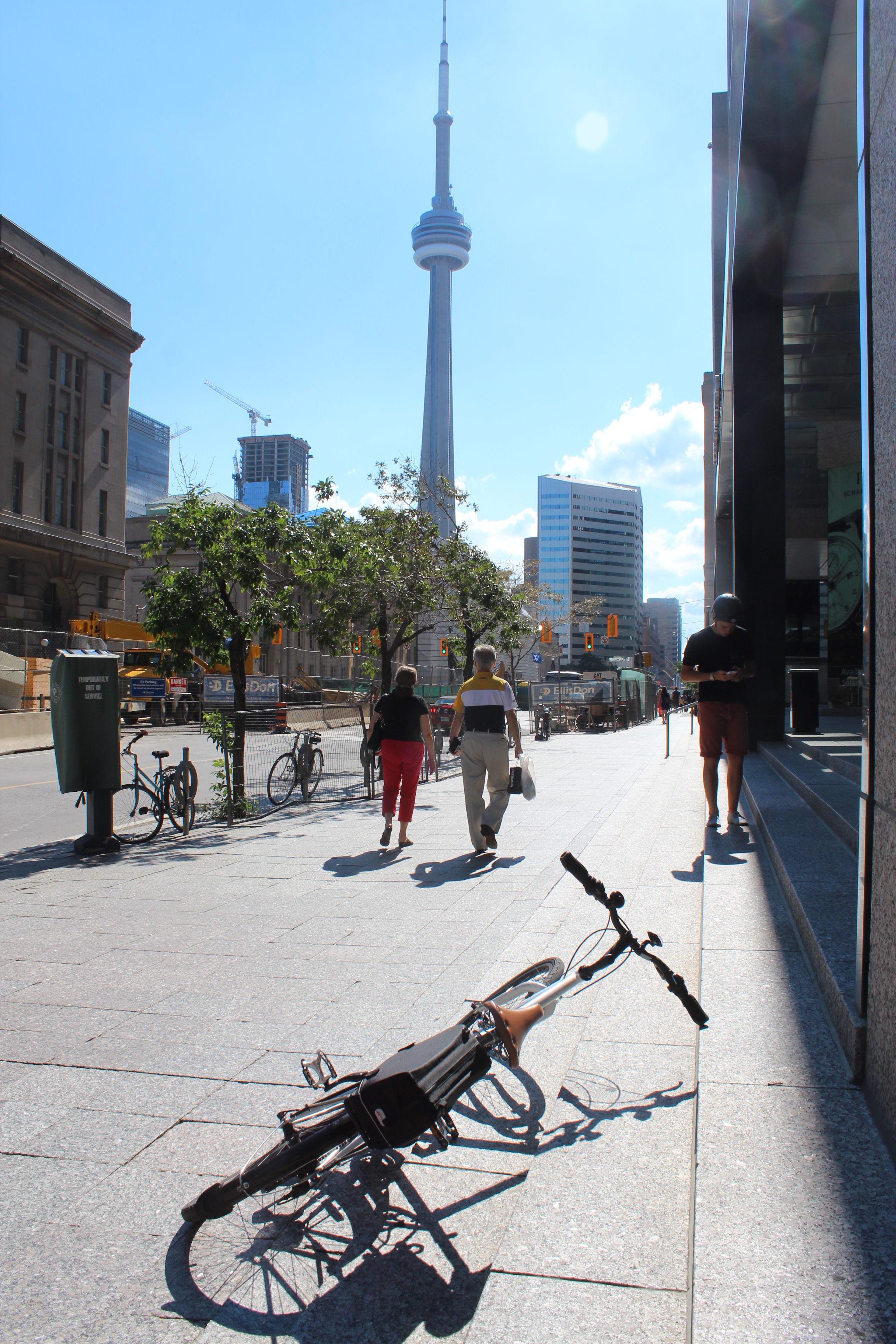
No cyclists were hurt while taking this photo.
Some of that big-city swagger must surely have originated in the Fairmont Royal York, once the biggest hotel in the British Empire and still oozing opulence from every one of its 1,600 rooms. The hotel of choice for royalty and rock stars is down to earth enough to grow its own herbs, vegetables and flowers on a rooftop terrace, as well as maintain three beehives.
The hotel will also store your bikes for you, a bonus in a city that’s expanding its bike lane network. With only two days in Toronto, we rented bikes at Segway Ontario, a short tram ride away in the Distillery District. The endless roadworks and construction across downtown made us glad of the two-wheeled escape.
Once home to the Gooderham and Worts Distillery (said to be the world’s largest distillery by the mid-19th century) the Distillery District today is a well preserved pedestrian village. Upmarket stores, bars and restaurants have taken up residence in the red-brick Victorian buildings and Vancouverites might see some similarities with parts of Yaletown and Gastown. The Mill Street Brew Pub is a great spot for local beers and great food – especially when you’re finished bike riding for the day.
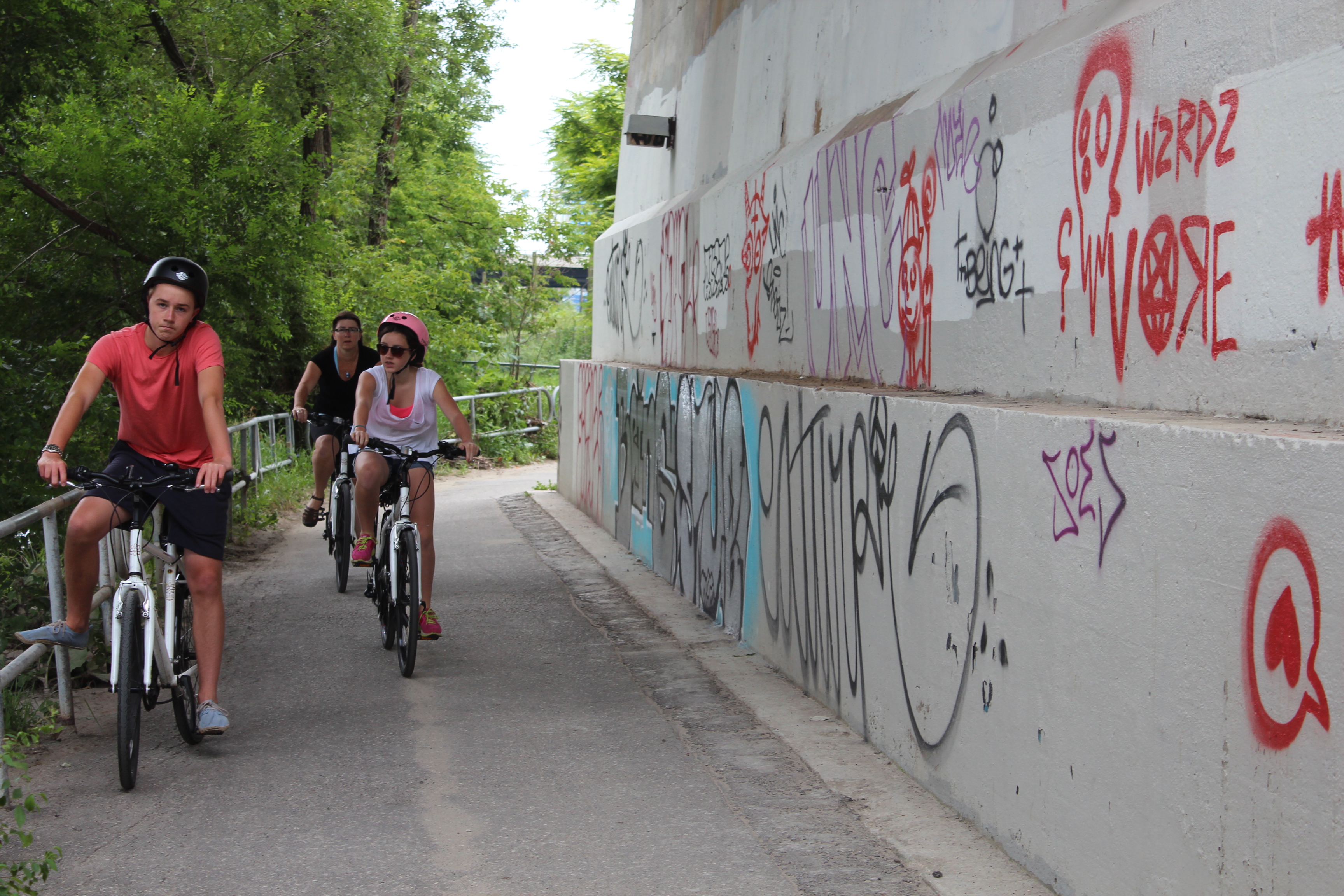
The Lower Don Trail, where graffiti is prolific as wildflowers.
We left the Distillery District’s cobblestones behind and headed for Toronto’s Waterfront Trail. The trail is part of a series of bike and pedestrian paths that connect 31 communities along Lake Ontario’s shores. About 450 kilometers of the trail is signposted and the few kilometers we biked transported us to beaches seemingly a million miles removed from downtown Toronto.
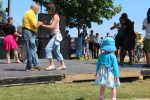
Known as The Beaches, this eastern Toronto neighbourhood is a rarity in that homes and not a freeway still line the lakeshore. The feeling of community is palpable at the beach where seniors and toddlers were dancing to a live Cuban salsa band and dozens of beach volleyball games were in progress. Just a week before, Toronto had sweltered in the upper 30s. Now in the mid-20s it seemed that every dog-walker, kite-flyer, roller-blader and cyclist in the city had descended on The Beaches and its boardwalk. Like proper tourists, we dismounted, bought ice creams and watched the world go by.
Toronto’s weather gods weren’t quite so kind the following day. Under leaden skies and with drizzle in the air, we headed inland on the Lower Don Trail. Whereas much of the cycling in Toronto is on routes shared with cars, the Lower Don Trail is blissfully free of vehicle traffic. More than that, it’s a slice of downtown Toronto far removed from the city’s more popular tourist attractions.
The Lower Don River is only about eight kilometers long but it flows through one of the most densely populated communities in Canada. So it’s odd to cycle by rusting and abandoned footbridges, beneath concrete express ramps, and yet still spot a heron presiding over a river bank that resembles a healthy wetland. In places the graffiti is as dense as the wildflowers and the proliferation of the latter is due in part to the efforts of volunteer groups.
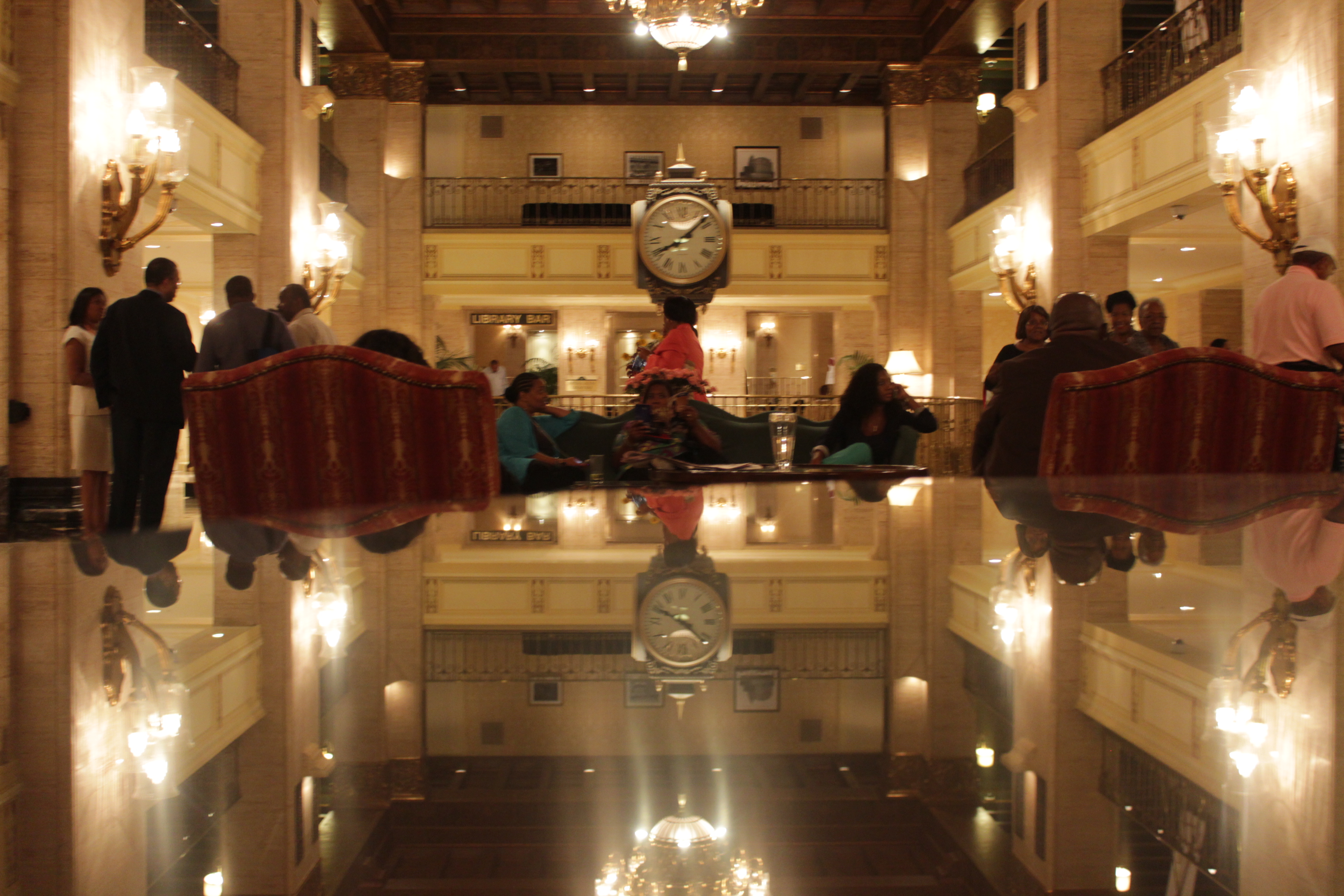
The Fairmont Royal York, once the biggest hotel in the British Empire and still oozing opulence from every one of its 1,600 rooms. The lobby’s nice, too.
We dried off from the rain at the Evergreen Brick Works, known for almost a century as the Don Valley Brick Works. Evergreen is a national charity and one of the groups involved in reviving the Lower Don. It runs the brick works as a community environmental centre, nurturing the disused quarry as a park, naturalizing ponds and restoring the brick works’ old buildings. On any given day you’ll find a farmers’ market, cooking workshops and family pizza nights at the site which once supplied the bricks for most of Toronto’s major landmarks.
From Evergreen Brick Works we cycled through Beltline Trail and the racy-sounding Milkman’s Run (Couldn’t help thinking of Benny Hill) before zig-zagging our way through quiet residential streets to Sherbourne Street. Sherbourne was the first of Toronto’s separated bike lanes and from Bloor Street to King Street, biking is a breeze.
Even after we’d returned our rental bikes we noticed signs of cycling’s growing popularity in Toronto. After ascending the CN Tower on our last night we walked across historic Roundhouse Park to Steam Whistle Brewing. There outside the brewery on Bremner Boulevard, not far from a BIXI bike-sharing stand, was an urban bike repair station complete with pump and tethered bike tools: free for anyone wanting a tune-up!
nevjudd.com
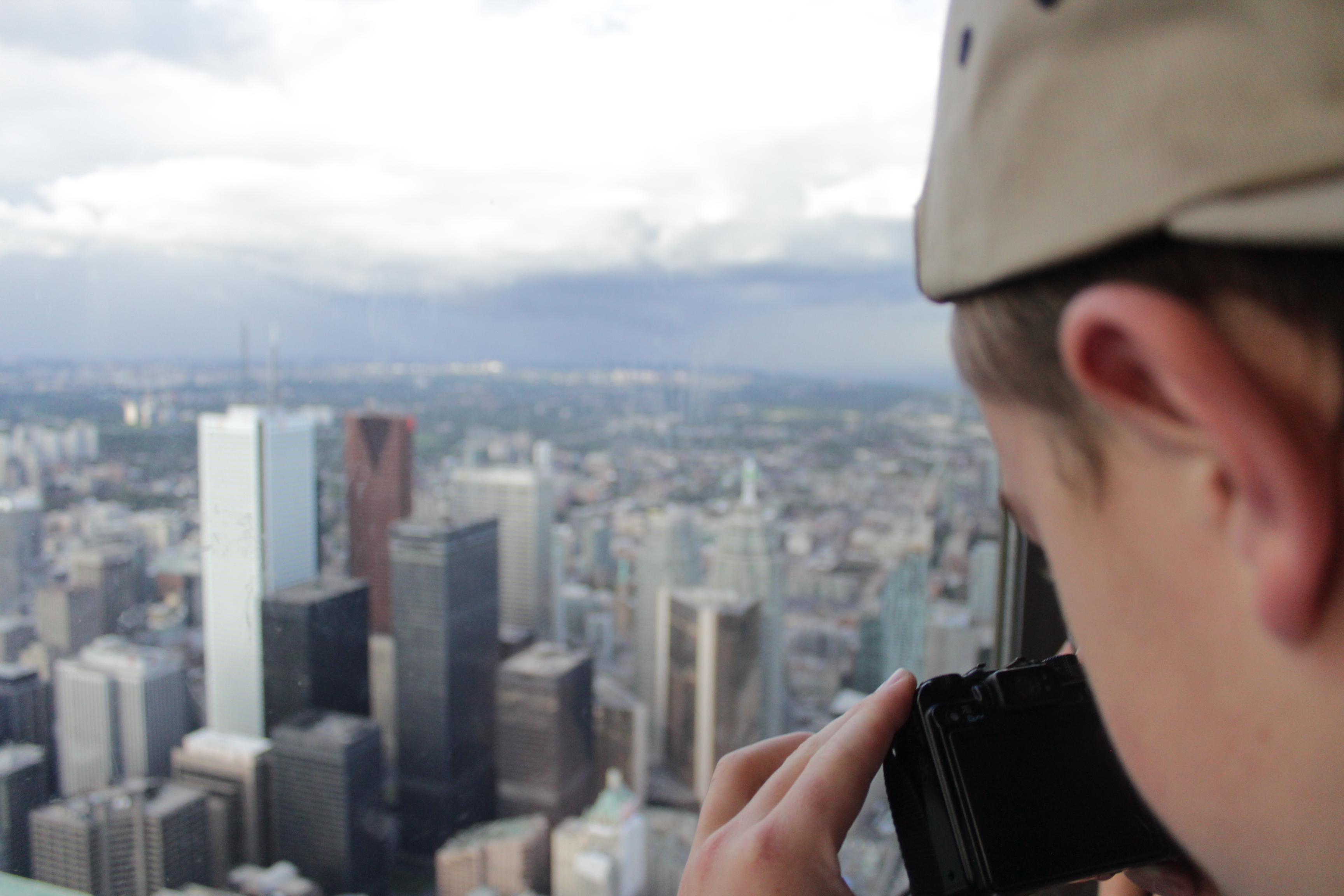
On a clear day you can see Saskatchewan.
If you go:
Segway Ontario in Toronto’s Distillery District rents a wide variety of bicycles for $35 a day, as well as offering walking and Segway tours. Visit segwayofontario.com
Toronto grew up around the historic Fairmont Royal York, which features several bars and restaurants and offers numerous accommodation packages. They will also store your bikes. Visit fairmont.com/royal-york-toronto
Evergreen Brick Works is a hive of activity, combining history, education, and environmental activism. It also serves great food! Visit ebw.evergreen.ca
For all other travel matters Toronto, visit seetorontonow.com
-

- Whitecaps in the house!
-
- Then came the storm.
-
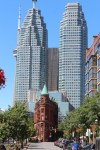
- Old and new.
-

- Pedal power.
-
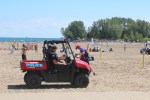
- Beach volleyball patrol. Tough assignment for the OPP.
-

- Evergreen Brick Works.
-

- Photobomber strikes again.
-

- Maybe next year, Blue Jays.
-
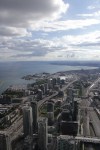
- Great lake.
-
- View from the top.
-
- Thirsty pug.
Delicious cycle
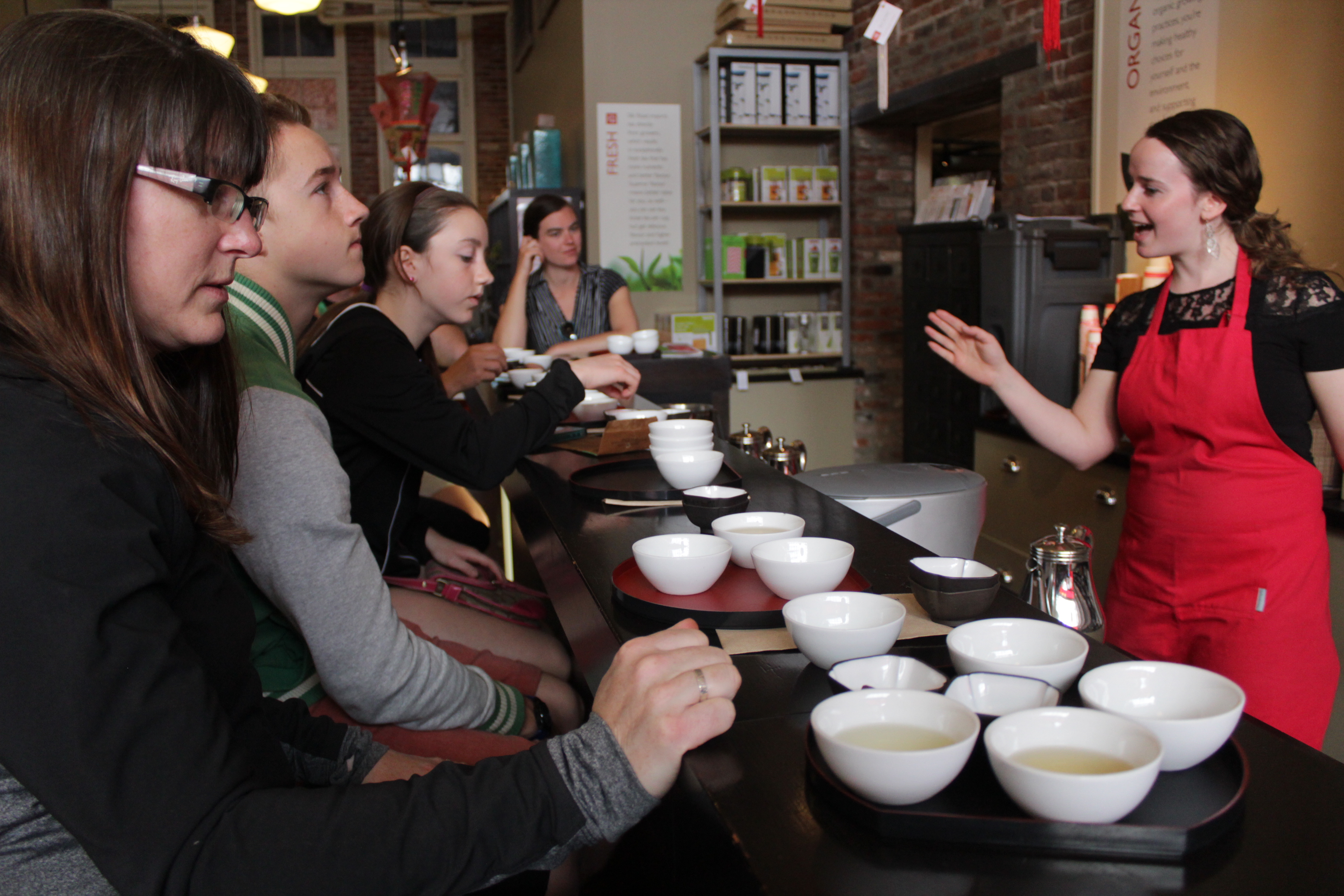
With caffeine already coursing through our veins, Emara Angus talks us through our tea and chocolate options at Silk Road, part of The Pedaler’s Beans and Bites bike tour in Victoria.
It started as a compromise. With a few hours to see Victoria, the idea of a bike tour came up. According to Stats Canada, Victoria is the cycling capital of Canada. Any beer drinker knows it’s also the craft-brewing capital of Canada. The Pedaler, a new bicycle tour-company in town, offers Hoppy Hour, a three-hour guided tour of Victoria’s best breweries and brew pubs with some tasting thrown in.
“What about the kids?” my wife asks.
Ryan and Emma are teenagers, I point out. This doesn’t seem to answer my wife’s question.
“When my parents stopped at a pub, I got a packet of crisps, my brothers and the car radio for company,” I explain. “Sometimes there was a pub garden to play in.”
Apparently times have changed.
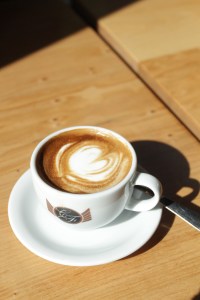
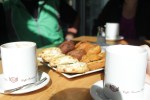
Cafe machiatto at Tre Fantastico, part of Victoria’s burgeoning coffee scene.
So we end up on The Pedaler’s Beans and Bites tour, a leisurely three-hour ride punctuated by frequent stops for great coffee, indulgent baked goods and a tea-and-chocolate tasting. As compromises go, this one turned out to be great.
We’re staying at The Parkside on Humboldt Street and walk just a few blocks to The Pedaler on Douglas. Within a few minutes of being fitted for bikes and helmets, and meeting our co-riders, we cycle right back to The Parkside. Tre Fantastico is on the ground floor of the hotel and it’s our first stop.
Coffee is very much integral to the ‘Tre’ part of the name – the other drinks being ale and wine. With floor-to-ceiling windows and salvaged wood tabletops, the décor is simple, rustic, but elegant – much like the menu, which features fresh pastas, a charcuterie board and a Red Devil ale sausage for which I’d really like to return.
I’m served a caffe macchiato and I photograph the pretty leaf design in the foam. Sitting across from me is Jazelin Maskos, a coffee aficionado and Pedaler-guide-in-training who will soon be leading the very tour we’re on. I tell her that coffee never seems to be quite hot enough for me. Pretty soon she’s taking me into uncharted coffee territory.
“Ordering an extra hot latte, along with the milk and the sugar, changes the chemical breakdown of the coffee,” she says. That can border on sacrilege if the beans happen to be Ethiopian Tchembe, which apparently has a red wine and blueberry pie aroma, or Guatemalan with its hints of chocolate and raisin.
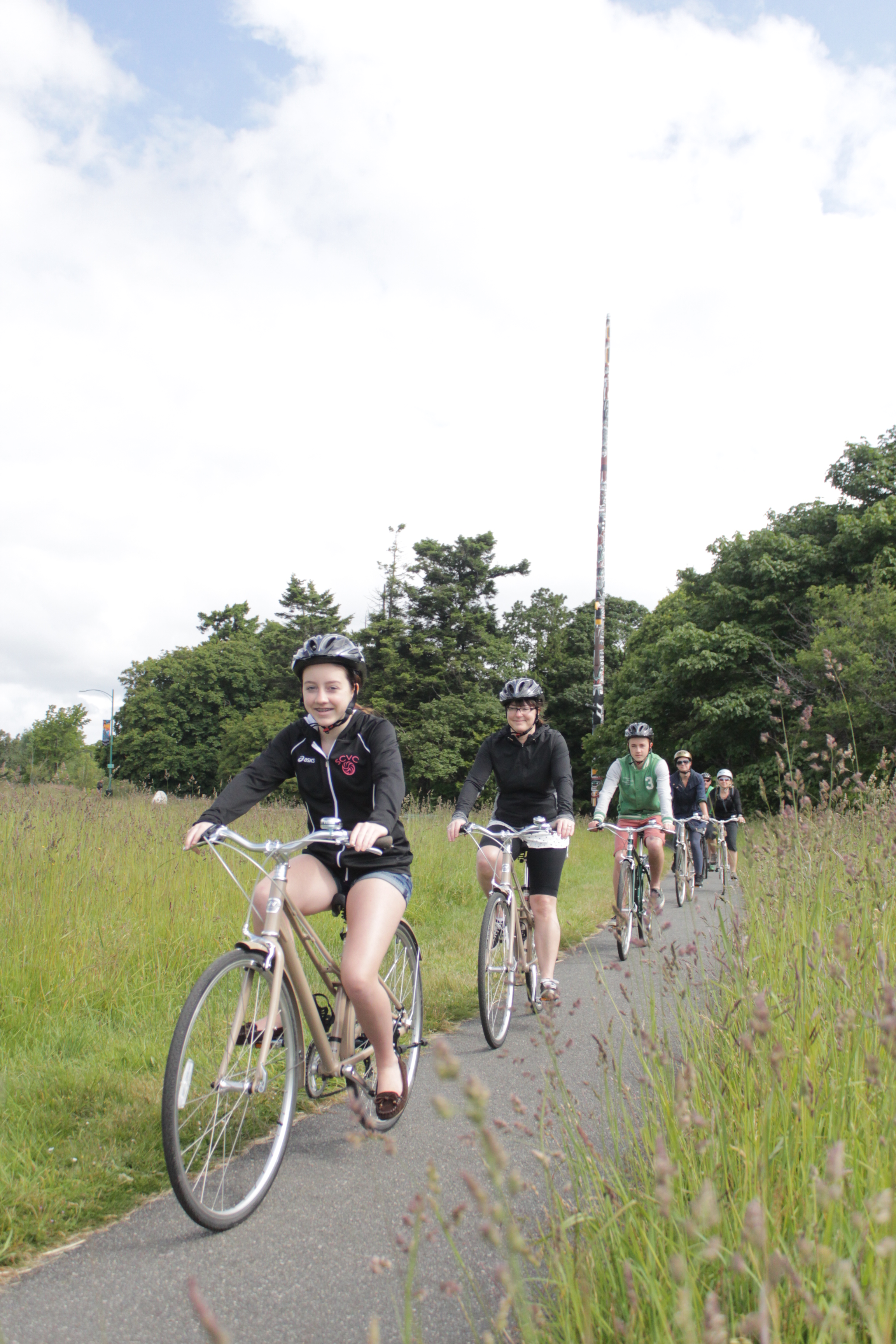
Cycling through Victoria’s Beacon Hill Park on the Beans and Bites Tour.
A trained barista, Jazelin is part of Victoria’s burgeoning coffee scene. That scene includes ‘barista throwdowns’ in which contestants must prepare espresso, latte/cappuccino art and original drinks in timed performances and be judged on everything from their knowledge and creativity to the taste of their drink.
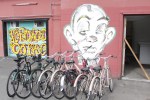
“Victoria is the best coffee city in Canada,” says Jazelin, without hesitation. For a place with such great beer, that’s fitting, I think to myself. I wolf down some of Tre Fantastico’s excellent banana bread and soon we’re back on the road, cycling through Beacon Hill Park. We briefly ride along Dallas Road and enjoy the ocean breeze before heading inland again to Fernwood. Maybe it’s the cool graffiti or the piercings and tattoos per square foot, but Fernwood feels a bit like East Vancouver’s Commercial Drive, and like Commercial Drive, excellent coffee is here.
The Fernwood Coffee Company is a small roastery and café, serving great locally-sourced food and coffees fine-tuned over numerous samplings. With bikes locked and helmets in hand, we troop into the back of the café with resident barista, Rek Feldman. Surrounded by sacks of beans from Rwanda, Ethiopia, Brazil, Colombia, Nicaragua, Honduras and Costa Rica, Rek serves us some of Fernwood’s Cold Brew. It takes eight hours to brew with ice water through a drip in a glass tower that looks like a science experiment. It tastes unlike any iced coffee I’ve had because it’s not really iced coffee – just cold. As Rek explains, most iced coffee is brewed hot first then left to cool and chilled with ice – diluting the coffee’s flavour and altering its chemical makeup.
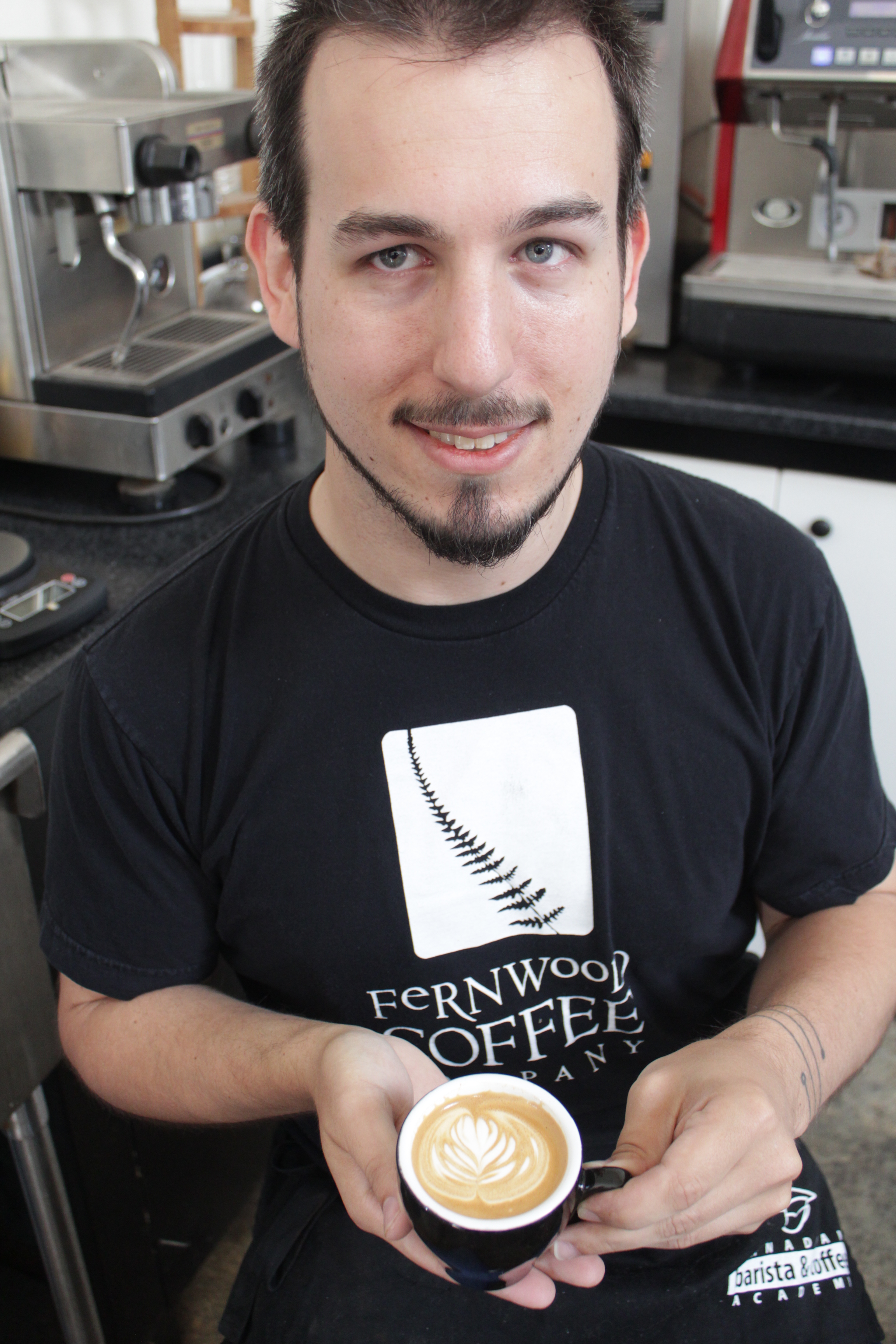
Fernwood Coffee’s Rek Feldman.
Fernwood’s Cold Brew tastes sweet even without sugar. For those who like a little bitterness, Rek adds tonic water, which completely alters the flavour and the aroma. It actually smells like lemon or green tea. We finish our visit with an espresso and now, three coffees into the tour, I feel ready to cycle to Nanaimo. Instead we head back downtown to Silk Road, a tea store on Government Street.
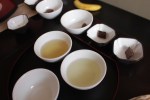
Tea expert Emara Angus has our settings arranged at the tasting bar and because there aren’t enough stimulants already coursing through our veins, there’s chocolate paired with each tea. The sight of chocolate almonds, Ecuadorian dark chocolate and Ginger Elizabeth milk chocolate thrills Ryan and Emma, for whom chocolate is an essential ingredient with any hot beverage.
Emara starts us off with Silk Road’s Angel Water tea, a blend of mint, rose, lavender and elderflower. We let it melt the milk chocolate on our tongues and there’s a chorus of “mmmmms”. That’s followed by Japanese sour cherry tea that smells so creamy and is so good with the dark chocolate from Ecuador. We finish with Vanilla Plantation from Sri Lanka, which apparently makes a great chai tea latte and certainly tastes good with chocolate almonds.
Silk Road’s teas are all organic and have won numerous awards. We cycle away with small store bags of tea swinging from our handlebars, but we don’t have far to pedal. Bon Macaron Patisserie on Broad Street is our final stop, which given the level of indulgence on offer here, is probably just as well.
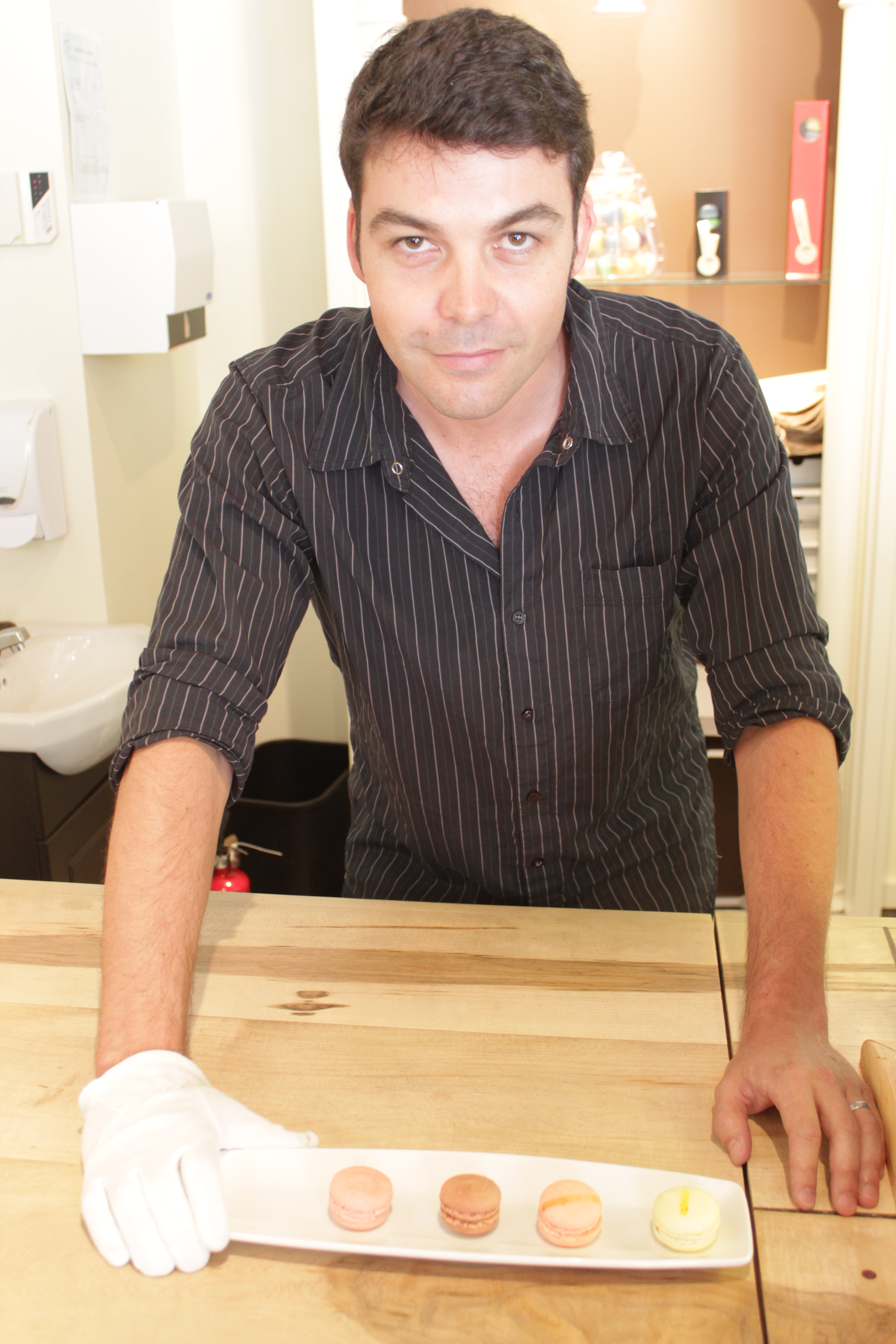
Bon Macaron Patisserie’s David Rousseau with some very versatile pastry. Resistance is futile!
David Rousseau is behind the counter and guiding us through an eclectic mix of flavours available in sweet, bite-size macaroons: curried mango chutney, white chocolate-wasabi, bacon-creamcheese and goat cheese-fig catch our eyes. Prior to this I’d only ever eaten my mum’s coconut macaroons, so I’m somewhat in a state of shock. A tiramisu-salted caramel macaroon helps me recover.
“It’s a very versatile piece of pastry,” says David, who makes about 1,000 macaroons a day and clearly enjoys inventing new flavours. (He was busy making a bacon-maple syrup batch for Father’s Day.)
Thankfully it’s a short ride back to The Pedaler and even shorter walk to The Parkside. We agree that Victoria reminds us of one of our other favourite weekend getaways – Portland, Oregon: cool people doing innovative things with food and drink in stylish settings.
Must get back for that beer tour though!
If you go:
The Beans and Bites tour leaves daily from The Pedaler on 719 Douglas St. at 9 a.m. and 1:30 p.m. It costs $79 per person. Also on offer is the Hoppy Hour guide to Victoria’s brewing scene ($79; leaves daily at 1:30 p.m.) and Castles, Hoods and Legends, a tour of Victoria’s historic neighbourhoods and landmarks. Visit www.thepedaler.ca or call 778-265-RIDE (7433).
Victoria’s Parkside Hotel and Spa is a short walk from the Royal B.C. Museum. It offers a family package from $179 a night, including family admission to the museum, two-hour rental of the hotel’s private movie theatre, plus a snack basket with pop, popcorn and candy. Call 1-866-941-4175 or visit parksidevictoria.com.
B.C. Ferries offers numerous summer package deals to Vancouver Island, including a Victoria Getaway from $109 per person, based on double occupancy. The package comprises one night at the Chateau Victoria Hotel, round-trip ferry from Vancouver for two adults and a car, plus complimentary parking. For more information on this and other deals, visit bcferries.com/vacations or call 1-888-BC FERRY.
For all other matters-Victoria, visit tourismvictoria.com
 Nev Judd: Online and out there