Toronto on two wheels
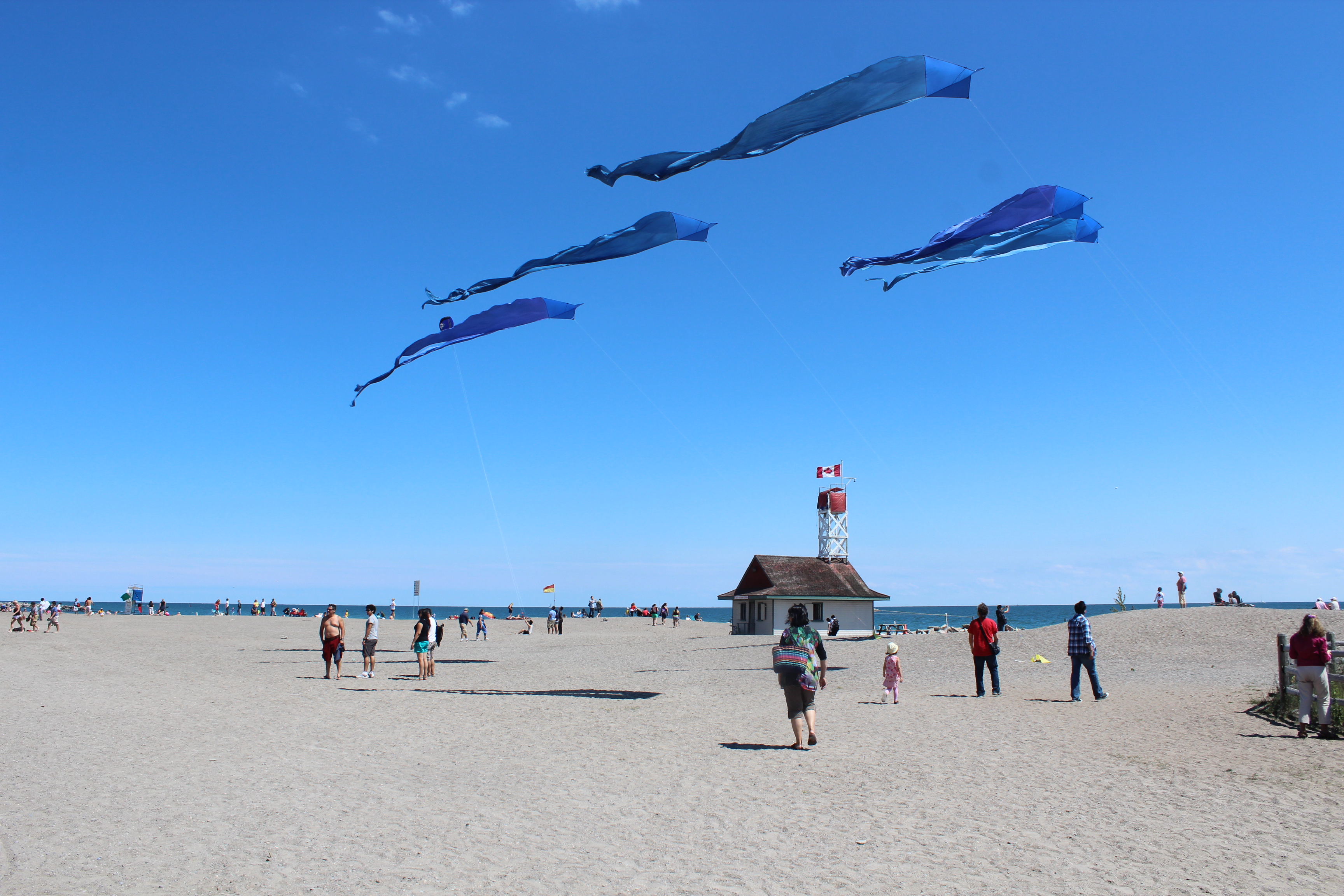
The Beaches neighbourhood in eastern Toronto is a rarity: homes, not a freeway, still line the lakeshore.
I can remember the moment Toronto began to win me over. It was at BMO Field, an hour after arriving in the city, in the waning minutes of Toronto FC’s MLS game versus the Columbus Crew.
Losing 1-0, many Toronto fans upped and left when a storm swept in from Lake Ontario. Soaked to the skin, my son and I took advantage of space behind the Columbus goal just as Toronto equalized.
We’d barely finished high-fiving the locals when Toronto scored the winner in injury time, sparking more sodden pandemonium. We saw ourselves on TV highlights that night. Just as well we hadn’t worn our Whitecaps jerseys!
Like many west coasters, I harbored some instinctive disdain for Canada’s biggest city. I’d heard about its swagger, its summer humidity, and, of course, the Maple Leafs. Yet riding the bus full of fans back to the Fairmont Royal York, past the CN Tower and Rogers Centre (aka SkyDome), I was warming to Toronto.
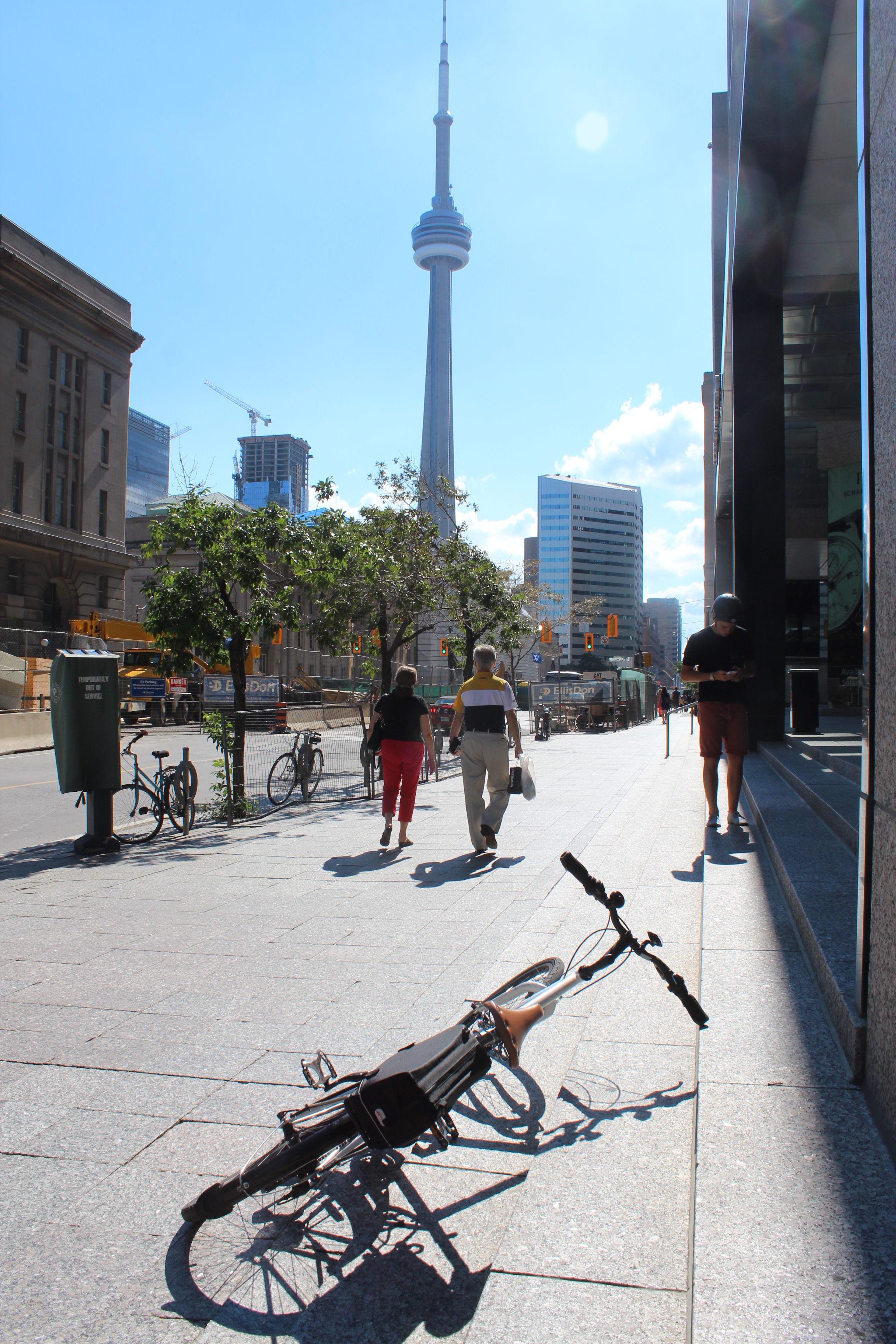
No cyclists were hurt while taking this photo.
Some of that big-city swagger must surely have originated in the Fairmont Royal York, once the biggest hotel in the British Empire and still oozing opulence from every one of its 1,600 rooms. The hotel of choice for royalty and rock stars is down to earth enough to grow its own herbs, vegetables and flowers on a rooftop terrace, as well as maintain three beehives.
The hotel will also store your bikes for you, a bonus in a city that’s expanding its bike lane network. With only two days in Toronto, we rented bikes at Segway Ontario, a short tram ride away in the Distillery District. The endless roadworks and construction across downtown made us glad of the two-wheeled escape.
Once home to the Gooderham and Worts Distillery (said to be the world’s largest distillery by the mid-19th century) the Distillery District today is a well preserved pedestrian village. Upmarket stores, bars and restaurants have taken up residence in the red-brick Victorian buildings and Vancouverites might see some similarities with parts of Yaletown and Gastown. The Mill Street Brew Pub is a great spot for local beers and great food – especially when you’re finished bike riding for the day.
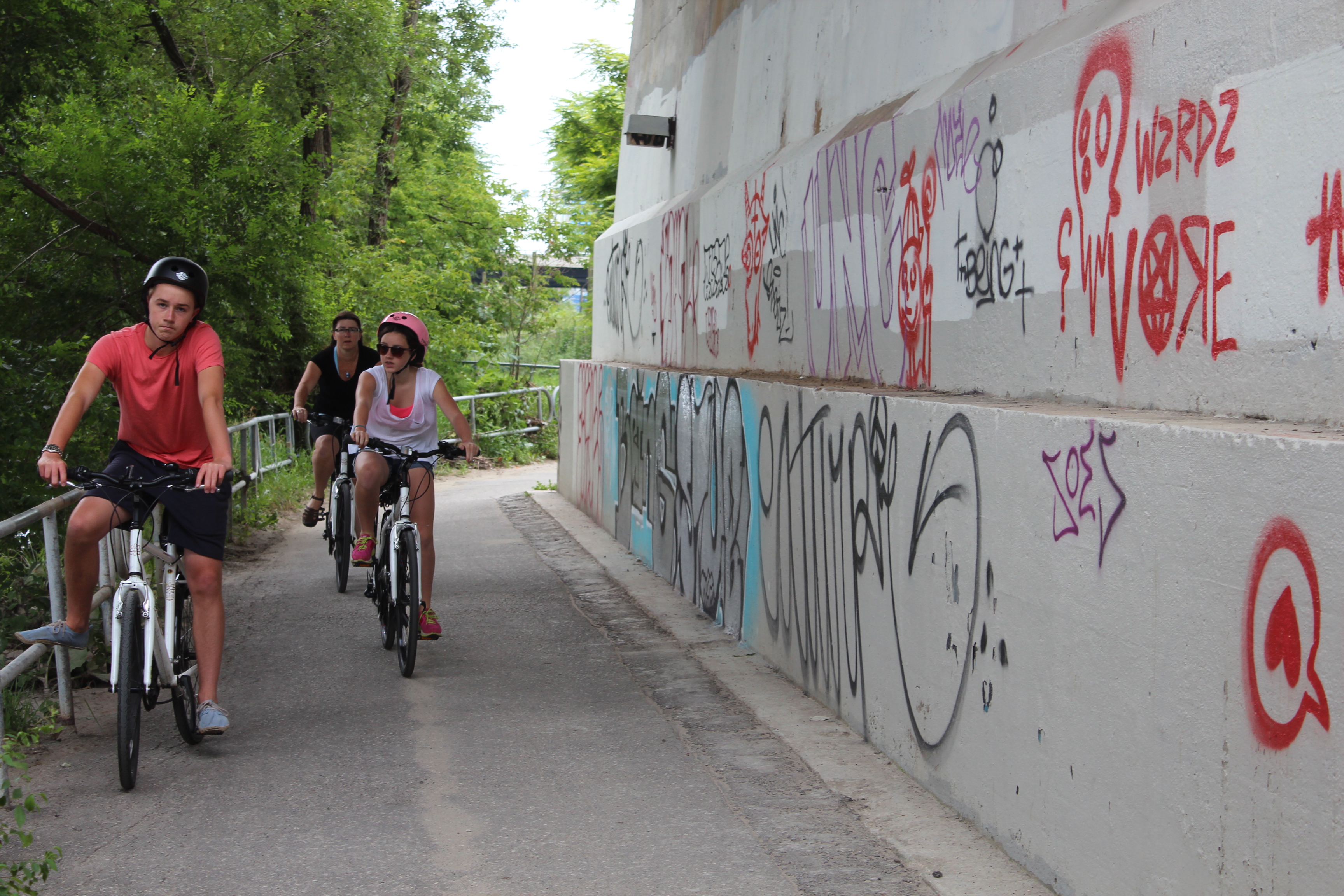
The Lower Don Trail, where graffiti is prolific as wildflowers.
We left the Distillery District’s cobblestones behind and headed for Toronto’s Waterfront Trail. The trail is part of a series of bike and pedestrian paths that connect 31 communities along Lake Ontario’s shores. About 450 kilometers of the trail is signposted and the few kilometers we biked transported us to beaches seemingly a million miles removed from downtown Toronto.
Known as The Beaches, this eastern Toronto neighbourhood is a rarity in that homes and not a freeway still line the lakeshore. The feeling of community is palpable at the beach where seniors and toddlers were dancing to a live Cuban salsa band and dozens of beach volleyball games were in progress. Just a week before, Toronto had sweltered in the upper 30s. Now in the mid-20s it seemed that every dog-walker, kite-flyer, roller-blader and cyclist in the city had descended on The Beaches and its boardwalk. Like proper tourists, we dismounted, bought ice creams and watched the world go by.
Toronto’s weather gods weren’t quite so kind the following day. Under leaden skies and with drizzle in the air, we headed inland on the Lower Don Trail. Whereas much of the cycling in Toronto is on routes shared with cars, the Lower Don Trail is blissfully free of vehicle traffic. More than that, it’s a slice of downtown Toronto far removed from the city’s more popular tourist attractions.
The Lower Don River is only about eight kilometers long but it flows through one of the most densely populated communities in Canada. So it’s odd to cycle by rusting and abandoned footbridges, beneath concrete express ramps, and yet still spot a heron presiding over a river bank that resembles a healthy wetland. In places the graffiti is as dense as the wildflowers and the proliferation of the latter is due in part to the efforts of volunteer groups.
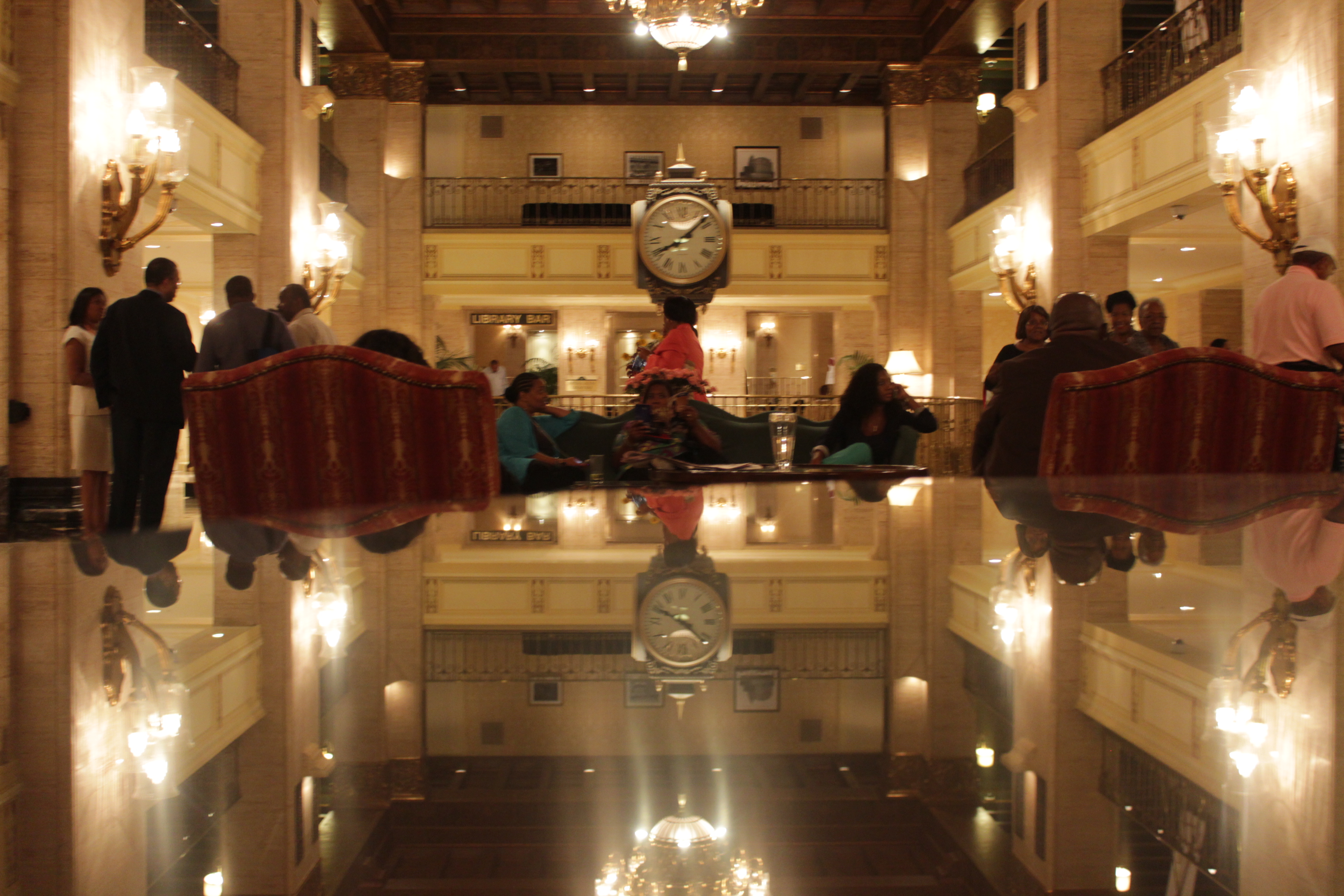
The Fairmont Royal York, once the biggest hotel in the British Empire and still oozing opulence from every one of its 1,600 rooms. The lobby’s nice, too.
We dried off from the rain at the Evergreen Brick Works, known for almost a century as the Don Valley Brick Works. Evergreen is a national charity and one of the groups involved in reviving the Lower Don. It runs the brick works as a community environmental centre, nurturing the disused quarry as a park, naturalizing ponds and restoring the brick works’ old buildings. On any given day you’ll find a farmers’ market, cooking workshops and family pizza nights at the site which once supplied the bricks for most of Toronto’s major landmarks.
From Evergreen Brick Works we cycled through Beltline Trail and the racy-sounding Milkman’s Run (Couldn’t help thinking of Benny Hill) before zig-zagging our way through quiet residential streets to Sherbourne Street. Sherbourne was the first of Toronto’s separated bike lanes and from Bloor Street to King Street, biking is a breeze.
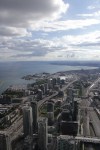
Even after we’d returned our rental bikes we noticed signs of cycling’s growing popularity in Toronto. After ascending the CN Tower on our last night we walked across historic Roundhouse Park to Steam Whistle Brewing. There outside the brewery on Bremner Boulevard, not far from a BIXI bike-sharing stand, was an urban bike repair station complete with pump and tethered bike tools: free for anyone wanting a tune-up!
nevjudd.com
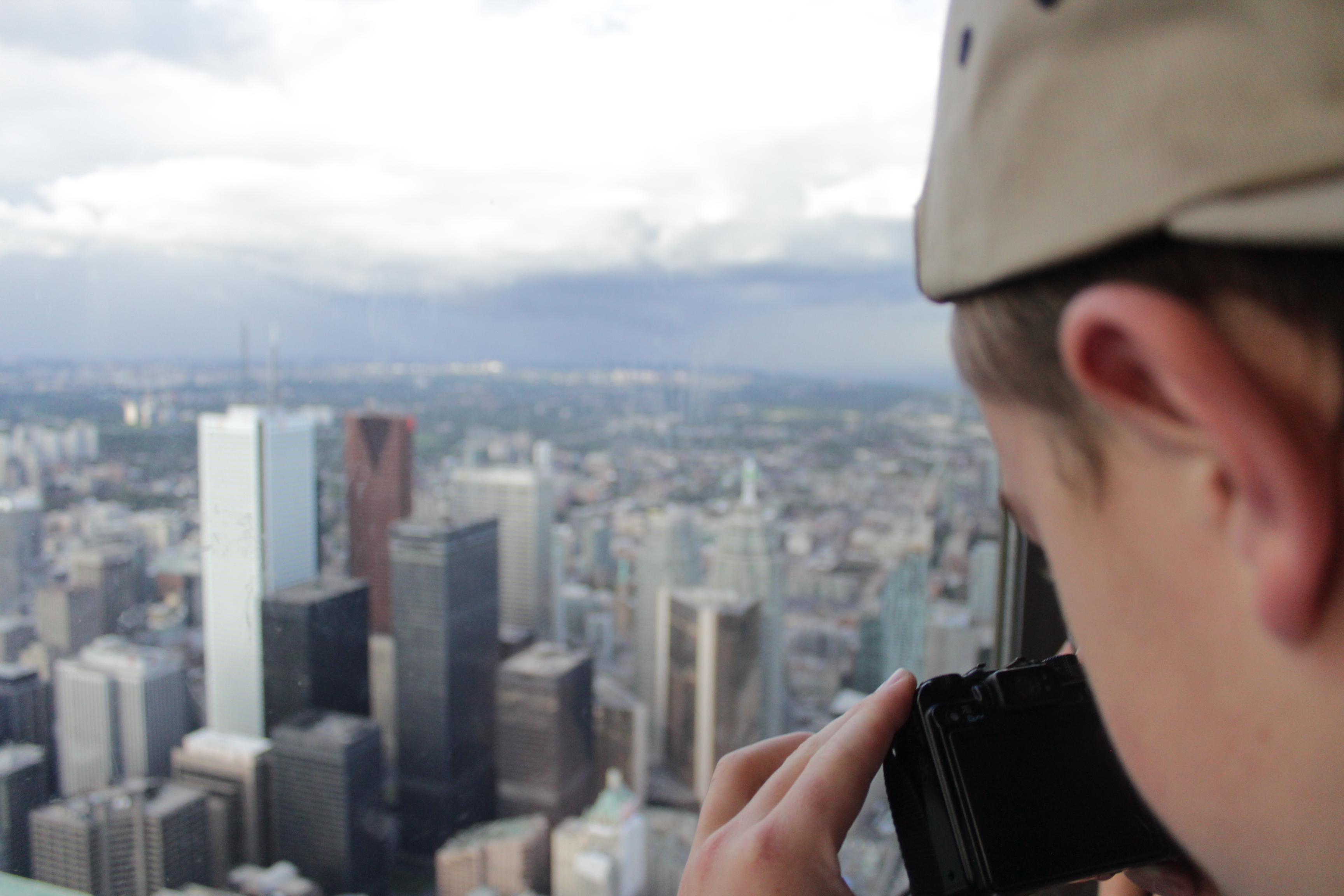
On a clear day you can see Saskatchewan.
If you go:
Segway Ontario in Toronto’s Distillery District rents a wide variety of bicycles for $35 a day, as well as offering walking and Segway tours. Visit segwayofontario.com
Toronto grew up around the historic Fairmont Royal York, which features several bars and restaurants and offers numerous accommodation packages. They will also store your bikes. Visit fairmont.com/royal-york-toronto
Evergreen Brick Works is a hive of activity, combining history, education, and environmental activism. It also serves great food! Visit ebw.evergreen.ca
For all other travel matters Toronto, visit seetorontonow.com
-

- Whitecaps in the house!
-
- Then came the storm.
-
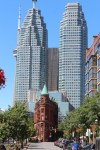
- Old and new.
-

- Pedal power.
-
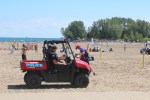
- Beach volleyball patrol. Tough assignment for the OPP.
-

- Evergreen Brick Works.
-

- Photobomber strikes again.
-

- Maybe next year, Blue Jays.
-
- Great lake.
-

- View from the top.
-
- Thirsty pug.
Quebec City by bike
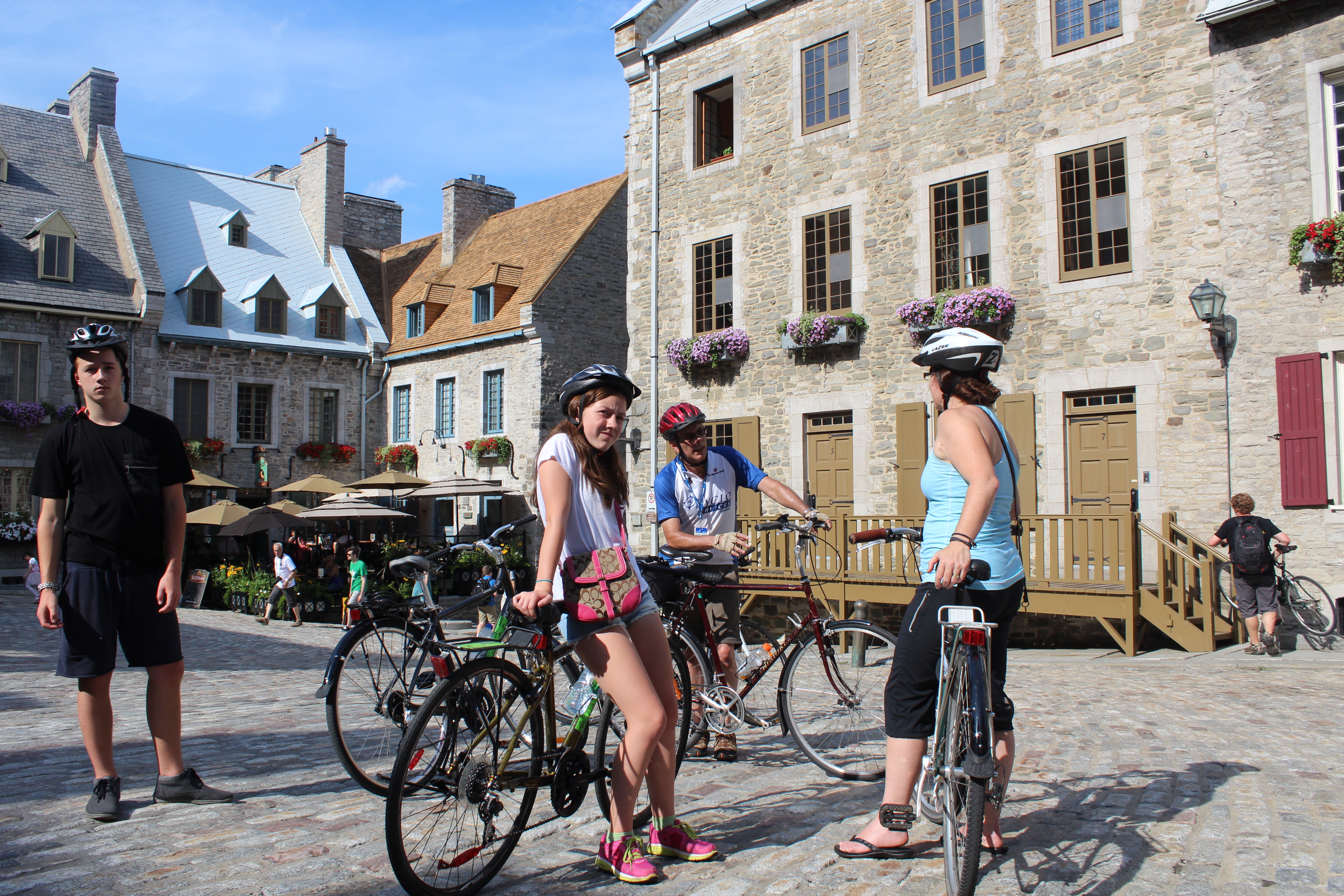
Resting in Quebec City at Place Royale, site of Samuel de Champlain’s first permanent settlement in New France.
The older my children get, the more discerning they become about holiday activities. My teenagers Ryan and Emma are not big on cycling, history or museums. And like most people they don’t like rain much either.
So there we were with our bikes in the rain, standing outside The Museum of Civilization in old Quebec City.
“Well at least it’s dry in the museum,” I reasoned.
“Can’t we just find somewhere to eat?” asked Ryan.
It wasn’t the first time Quebec had witnessed a clash of wills – what military historians might call an impasse. After a three-month siege in 1759, it took General Wolfe and the British about 15 minutes to beat Montcalm and the French in the Battle of the Plains of Abraham.
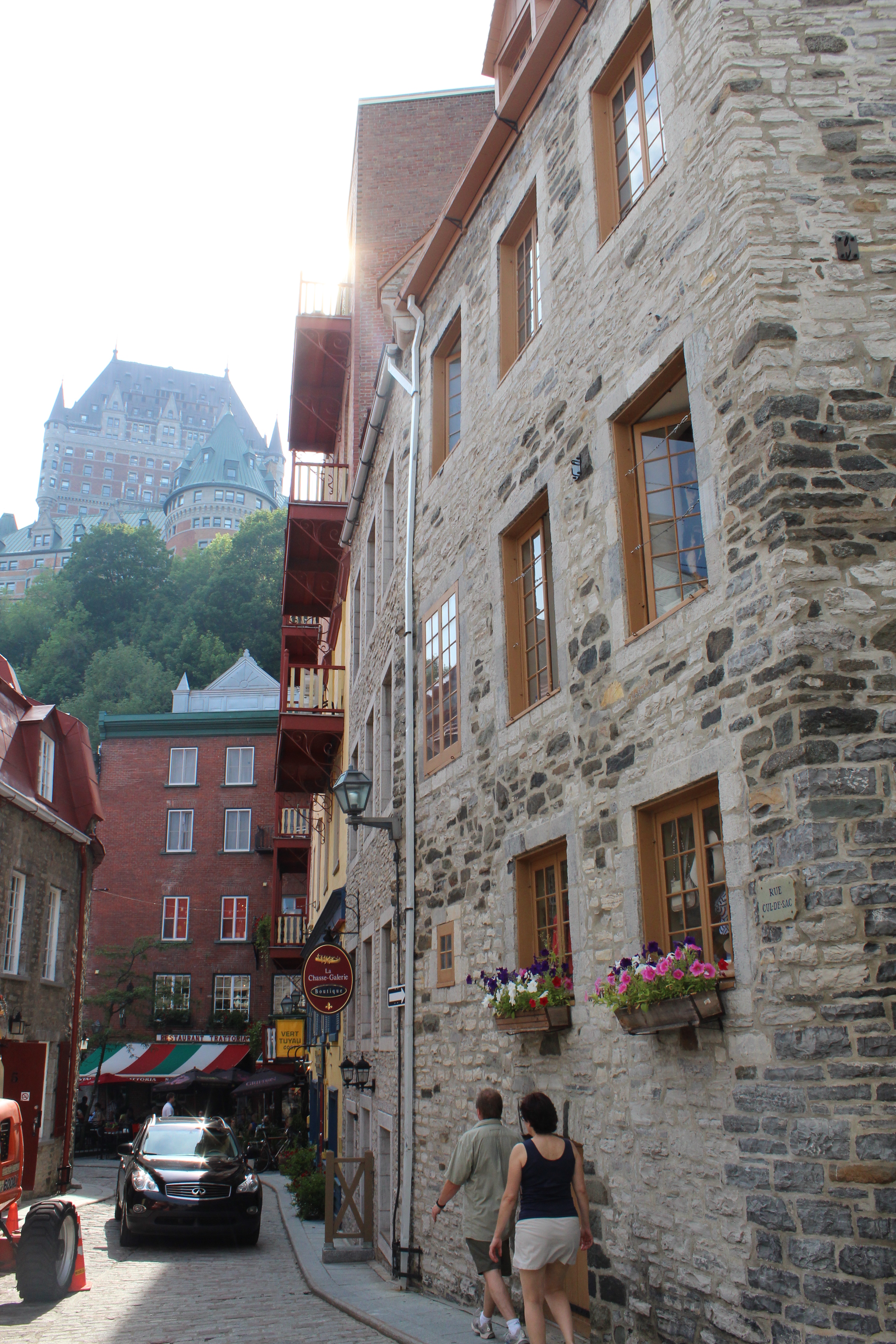
Keep your head up riding through crowds of shoppers in the narrow, cobblestoned lanes of Quartier Petit Champlain. Once a fur-trading portside village, it’s now full of boutiques, bistros and frescoes.
It took the Judds about the same time to finish arguing, lock their bikes and enter the museum. Then something remarkable happened. “Game Story, the exhibition you play,” read the sign in the lobby. Yes, besides first-rate exhibitions about Quebec history and a showcase of Paris between 1889 and 1914, The Museum of Civilization was hosting a video game exhibition, featuring 450 artifacts and 88 video games to play. Everything from World of Warcraft to Pong was available.
We were still in the museum long after the rain had stopped and the sun had returned. It was just the first of several surprising events during our two-night stay in Quebec City. That night we cycled our bikes to the Port of Quebec Agora, an amphitheatre hosting Cirque du Soleil’s Les Chemin Invisibles. Quebec City might just be the only place where Cirque du Soleil is free! Had they been charging, our floor tickets would have cost a fortune because most of the show unfolded just a few yards from where we stood.
The Harbour of Lost Souls is the fifth chapter of Les Chemin Invisibles. The employees of an old customs officer decide to put on a show for his birthday in the hopes of helping him to find purpose in his life. The show is spectacular in its conception with performers suspended from cranes just a few feet above the audience and on moving stages that spring up in the crowd.

Just across from the National Assembly is the Fountaine de Tourny, built for the city’s 400th birthday. It’s a popular spot for wedding photos and knackered cyclists.
Cirque du Soleil is a tough act to follow, but the Image Mill is timed to follow it and succeeds if only for its epic setting. A legacy of Quebec City’s 400th birthday in 2008, the Image Mill is a sound and image show projected onto massive grain silos in Quebec’s harbour. We joined the hordes lining the harbour to watch this summer’s show, a tribute to Scottish-born, Canadian filmmaker, Norman McLaren. A pioneer in synchronizing animation with music, McLaren, who died in 1987, would surely have approved of his work being presented on the biggest ‘big screen’ ever conceived.
Back at the Hotel Royal William in Quebec City’s trendy New St. Roch neighbourhood, we locked up our bikes and I ventured out for a nightcap on Boulevard Charest Est. The Mo Resto Bar had one more surprise in store for me; beer pumps at the table! The beer is metered of course (it’s not heaven) at 35 cents an ounce. But for my wife, I might still be there pouring modest amounts of Belle Gueule Blonde or Red ale.
Thanks to the success of Day 1, we sold the kids on a guided bike tour the following day.
At first glance, Quebec City doesn’t appear built for bicycles. Narrow lanes, cobblestones and hills usually look good in postcards, not from a saddle. But first impressions can be deceiving. A few bumps and the occasional grind are a small price to pay for a two-wheeled tour of North America’s only walled city and UNESCO World Heritage site. For visitors with more time, there are several hundred kilometres of bike trails to ride beyond the fortress walls.
Our guide, Marc Lupien of Cyclo Services, has been riding the same Nishiki road bike for 35 years (“I changed the brake cable once or twice – and the seat!”) and has seen the growth of bike culture here.
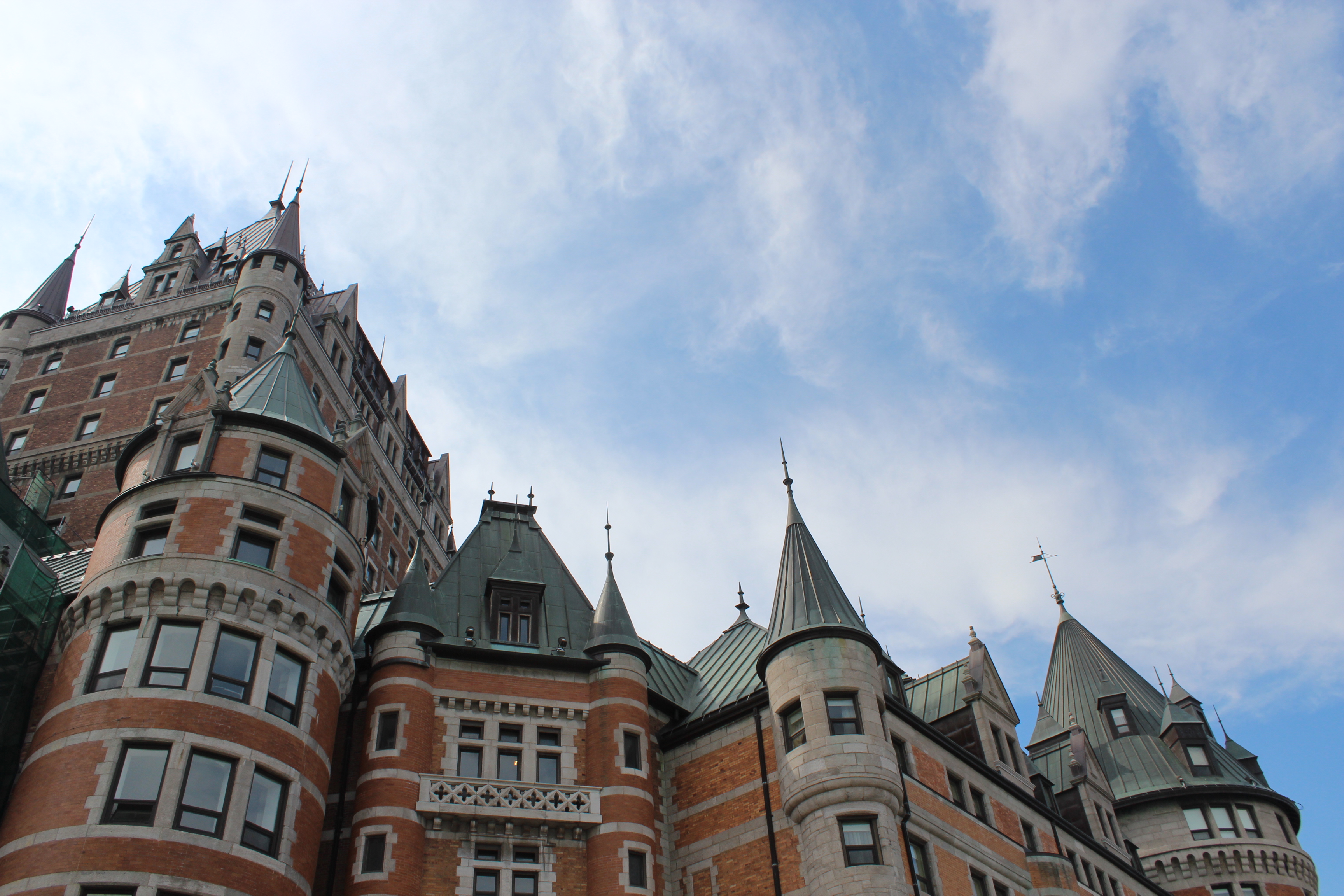
Chateau Frontenac, the most photographed hotel in the world and surely the inspiration for Hogwarts.
“It’s not uncommon to see people buying $10,000 bikes in Quebec City,” said Marc. “It’s a relatively short season, but cycling is growing faster than golf here.”
While bike lanes line the edge of the St. Lawrence River and part of the escarpment above, cycling through Vieux Quebec itself takes some improvisation. In summer the streets are busy with pedestrians preoccupied with their centuries-old surroundings. Fortunately, it’s legal to ride the sidewalk and we were soon slaloming on either side of the kerb.
Marc’s tour skirted Laval University, formerly the Seminaire de Quebec and the oldest centre of education in Canada; the Citadelle atop Cap Diamant, adjoining the Plains of Abraham; Quebec’s National Assembly and Chateau Frontenac, said to be the most photographed hotel in the world. (I’d swear it was the inspiration for Harry Potter’s Hogwarts.)
Just across from the National Assembly we stopped at the Fountaine de Tourny, built for the city’s 400th birthday and a popular spot for wedding photos. It was hard not to notice the monolithic Hilton and Delta hotels, whose desperately unimaginative architecture is in dramatic contrast to most buildings in Vieux Quebec.
We lingered in Place Royale, site of Samuel de Champlain’s first permanent settlement in New France. Grey stones mark the footings of where Champlain’s home once stood, right outside Notre Dame des Victories, the oldest stone church in North America, dating back to 1687. There are similar grey stone markers all over Old Quebec, said Marc, signalling other historic sites that would be impossible to excavate now.
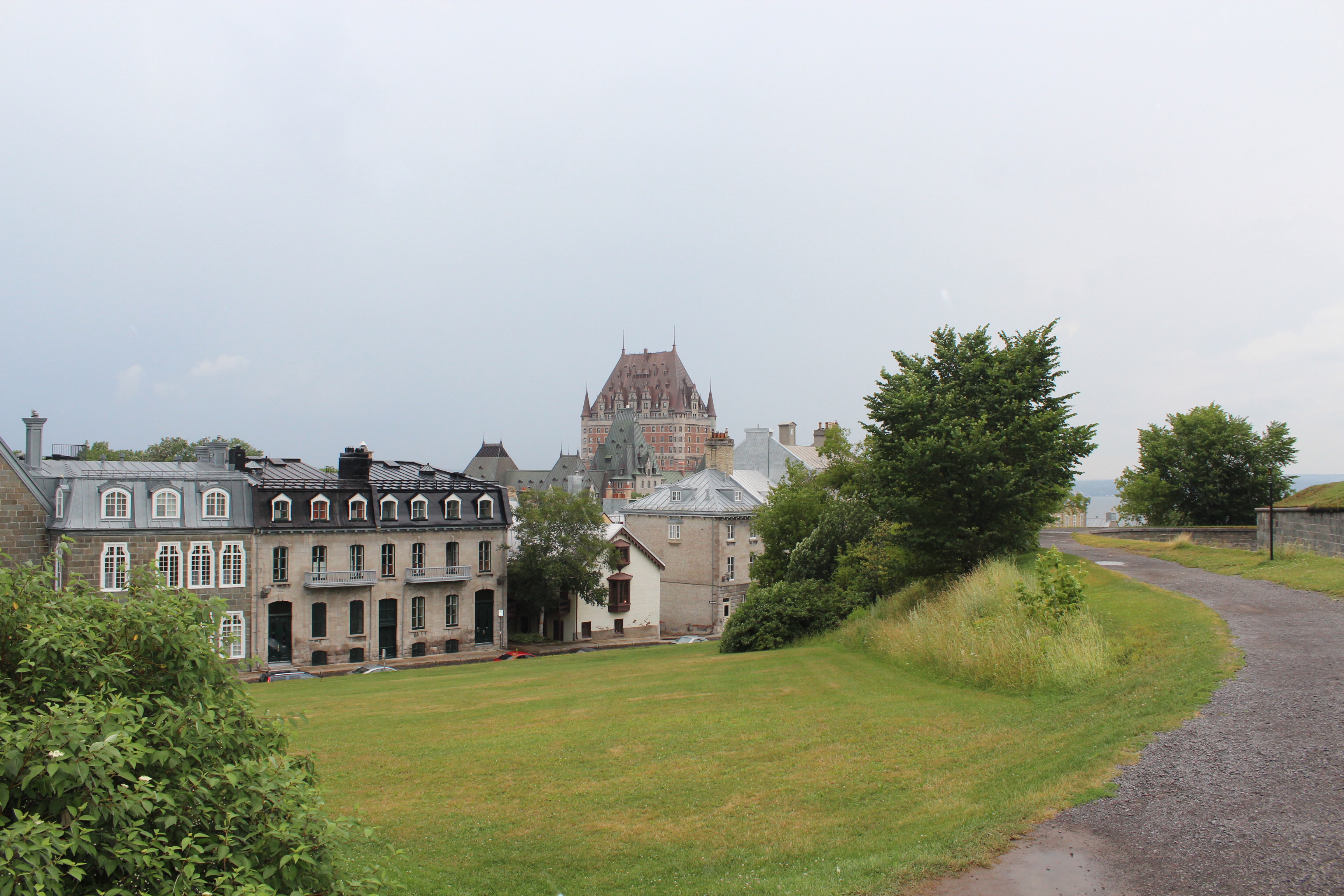
Near the Citadelle atop Cap Diamant, adjoining the Plains of Abraham.
We rode the waterfront and part of the old port of Quebec before an adventurous ride through crowds of shoppers in the narrow, cobblestoned lanes of Quartier Petit Champlain. Once a fur-trading portside village, it’s now full of boutiques, bistros and frescoes. A funicular railway connects the area to Dufferin Terrace, a beautifully landscaped boardwalk with the best view of the St. Lawrence River. It seemed like a fitting place to stop for an ice cream and consider the view Champlain enjoyed in 1608.
People had told me that Quebec would remind me of an old European city. Aside from medieval Bruges in Belgium, I don’t know of another place as beautiful as Quebec City. Even Ryan and Emma liked it!
If you go:
In the heart of old Quebec City since 1995, Cyclo Services offers bike rentals and a variety of guided bike tours. Visit http://www.cycloservices.net or call 1 877 692-4050.
The Hotel Royal William is in the heart of New St. Roch, a neighbourhood full of great bars, coffee shops, restaurants and independent stores. It’s a few minutes bike ride from the old city and the train station. Packages start at $99 per person. Visit http://www.hotelroyalwilliam.com/en/
Free shows by Cirque du Soleil and the Image Mill are known collectively as Rendezvous sous les Etoiles and run Tuesday to Saturday, concluding with a Sunday performance Sept. 1.
For more on Quebec’s Museum of Civilization, visit www.mcq.org/en/mcq
For all other travel information about Quebec City, visit www.quebecregion.com/en


Delicious cycle
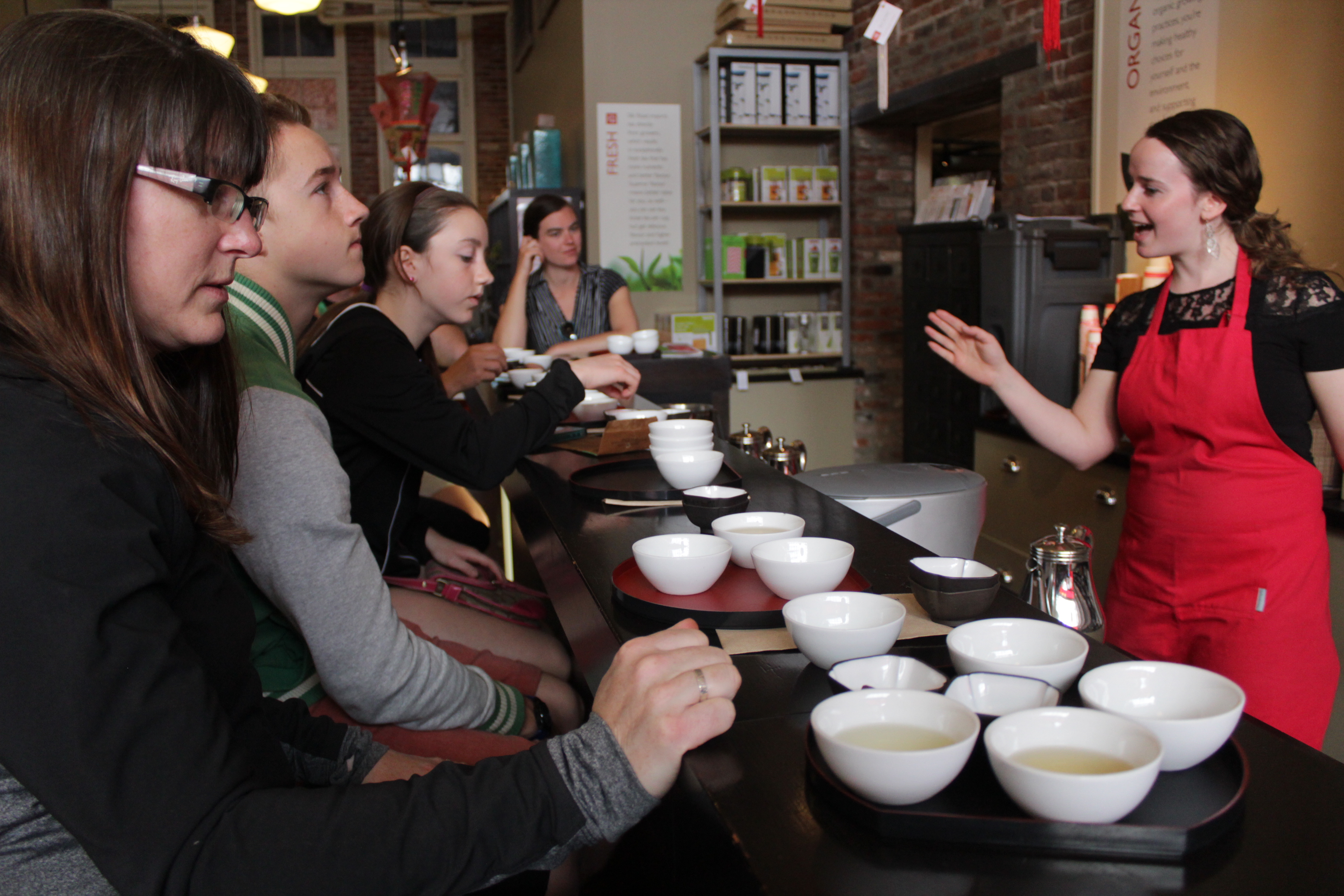
With caffeine already coursing through our veins, Emara Angus talks us through our tea and chocolate options at Silk Road, part of The Pedaler’s Beans and Bites bike tour in Victoria.
It started as a compromise. With a few hours to see Victoria, the idea of a bike tour came up. According to Stats Canada, Victoria is the cycling capital of Canada. Any beer drinker knows it’s also the craft-brewing capital of Canada. The Pedaler, a new bicycle tour-company in town, offers Hoppy Hour, a three-hour guided tour of Victoria’s best breweries and brew pubs with some tasting thrown in.
“What about the kids?” my wife asks.
Ryan and Emma are teenagers, I point out. This doesn’t seem to answer my wife’s question.
“When my parents stopped at a pub, I got a packet of crisps, my brothers and the car radio for company,” I explain. “Sometimes there was a pub garden to play in.”
Apparently times have changed.
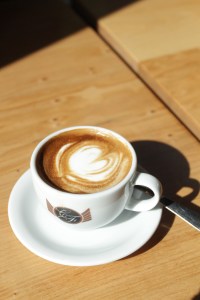
Cafe machiatto at Tre Fantastico, part of Victoria’s burgeoning coffee scene.
So we end up on The Pedaler’s Beans and Bites tour, a leisurely three-hour ride punctuated by frequent stops for great coffee, indulgent baked goods and a tea-and-chocolate tasting. As compromises go, this one turned out to be great.
We’re staying at The Parkside on Humboldt Street and walk just a few blocks to The Pedaler on Douglas. Within a few minutes of being fitted for bikes and helmets, and meeting our co-riders, we cycle right back to The Parkside. Tre Fantastico is on the ground floor of the hotel and it’s our first stop.
Coffee is very much integral to the ‘Tre’ part of the name – the other drinks being ale and wine. With floor-to-ceiling windows and salvaged wood tabletops, the décor is simple, rustic, but elegant – much like the menu, which features fresh pastas, a charcuterie board and a Red Devil ale sausage for which I’d really like to return.
I’m served a caffe macchiato and I photograph the pretty leaf design in the foam. Sitting across from me is Jazelin Maskos, a coffee aficionado and Pedaler-guide-in-training who will soon be leading the very tour we’re on. I tell her that coffee never seems to be quite hot enough for me. Pretty soon she’s taking me into uncharted coffee territory.
“Ordering an extra hot latte, along with the milk and the sugar, changes the chemical breakdown of the coffee,” she says. That can border on sacrilege if the beans happen to be Ethiopian Tchembe, which apparently has a red wine and blueberry pie aroma, or Guatemalan with its hints of chocolate and raisin.
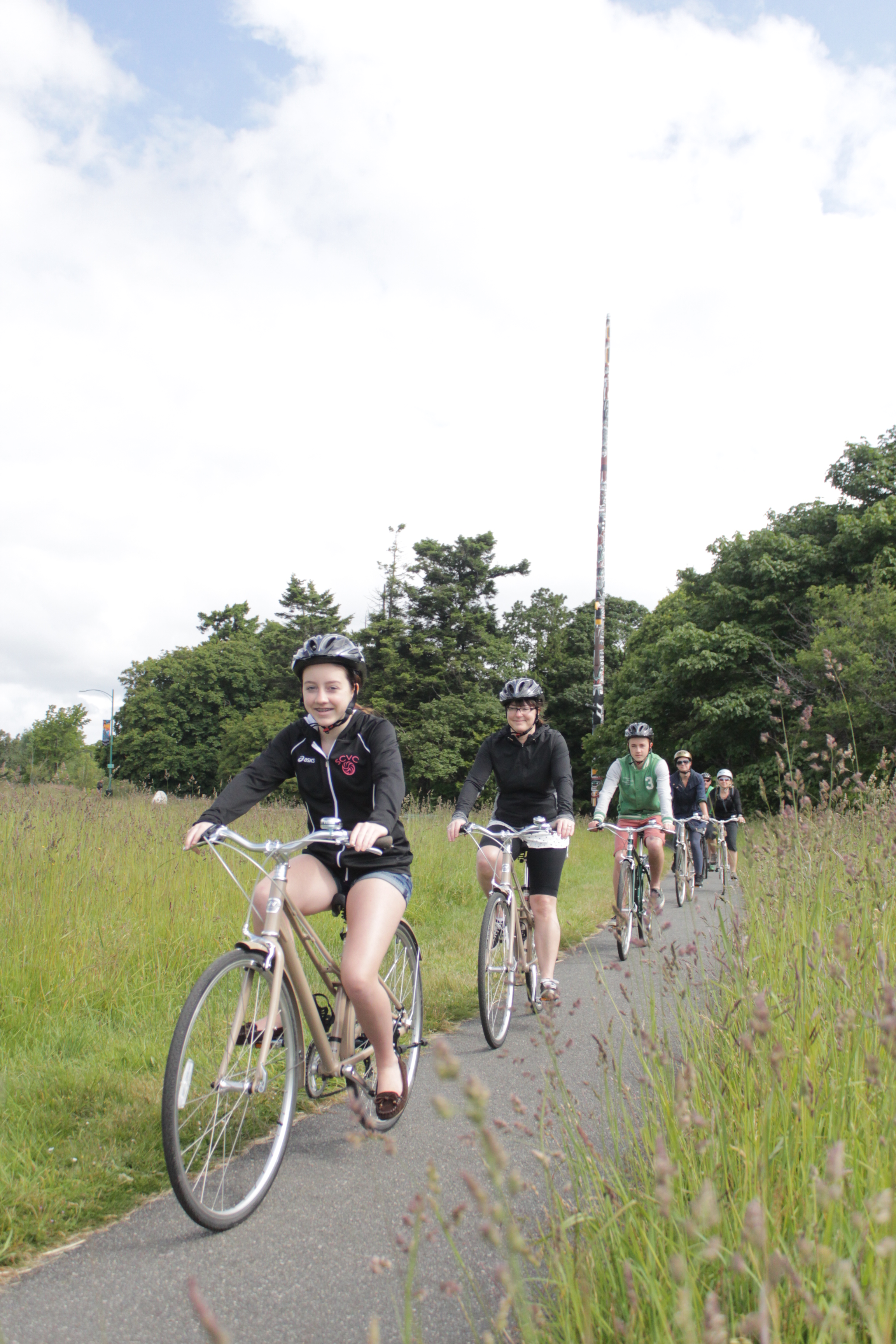
Cycling through Victoria’s Beacon Hill Park on the Beans and Bites Tour.
A trained barista, Jazelin is part of Victoria’s burgeoning coffee scene. That scene includes ‘barista throwdowns’ in which contestants must prepare espresso, latte/cappuccino art and original drinks in timed performances and be judged on everything from their knowledge and creativity to the taste of their drink.
“Victoria is the best coffee city in Canada,” says Jazelin, without hesitation. For a place with such great beer, that’s fitting, I think to myself. I wolf down some of Tre Fantastico’s excellent banana bread and soon we’re back on the road, cycling through Beacon Hill Park. We briefly ride along Dallas Road and enjoy the ocean breeze before heading inland again to Fernwood. Maybe it’s the cool graffiti or the piercings and tattoos per square foot, but Fernwood feels a bit like East Vancouver’s Commercial Drive, and like Commercial Drive, excellent coffee is here.
The Fernwood Coffee Company is a small roastery and café, serving great locally-sourced food and coffees fine-tuned over numerous samplings. With bikes locked and helmets in hand, we troop into the back of the café with resident barista, Rek Feldman. Surrounded by sacks of beans from Rwanda, Ethiopia, Brazil, Colombia, Nicaragua, Honduras and Costa Rica, Rek serves us some of Fernwood’s Cold Brew. It takes eight hours to brew with ice water through a drip in a glass tower that looks like a science experiment. It tastes unlike any iced coffee I’ve had because it’s not really iced coffee – just cold. As Rek explains, most iced coffee is brewed hot first then left to cool and chilled with ice – diluting the coffee’s flavour and altering its chemical makeup.
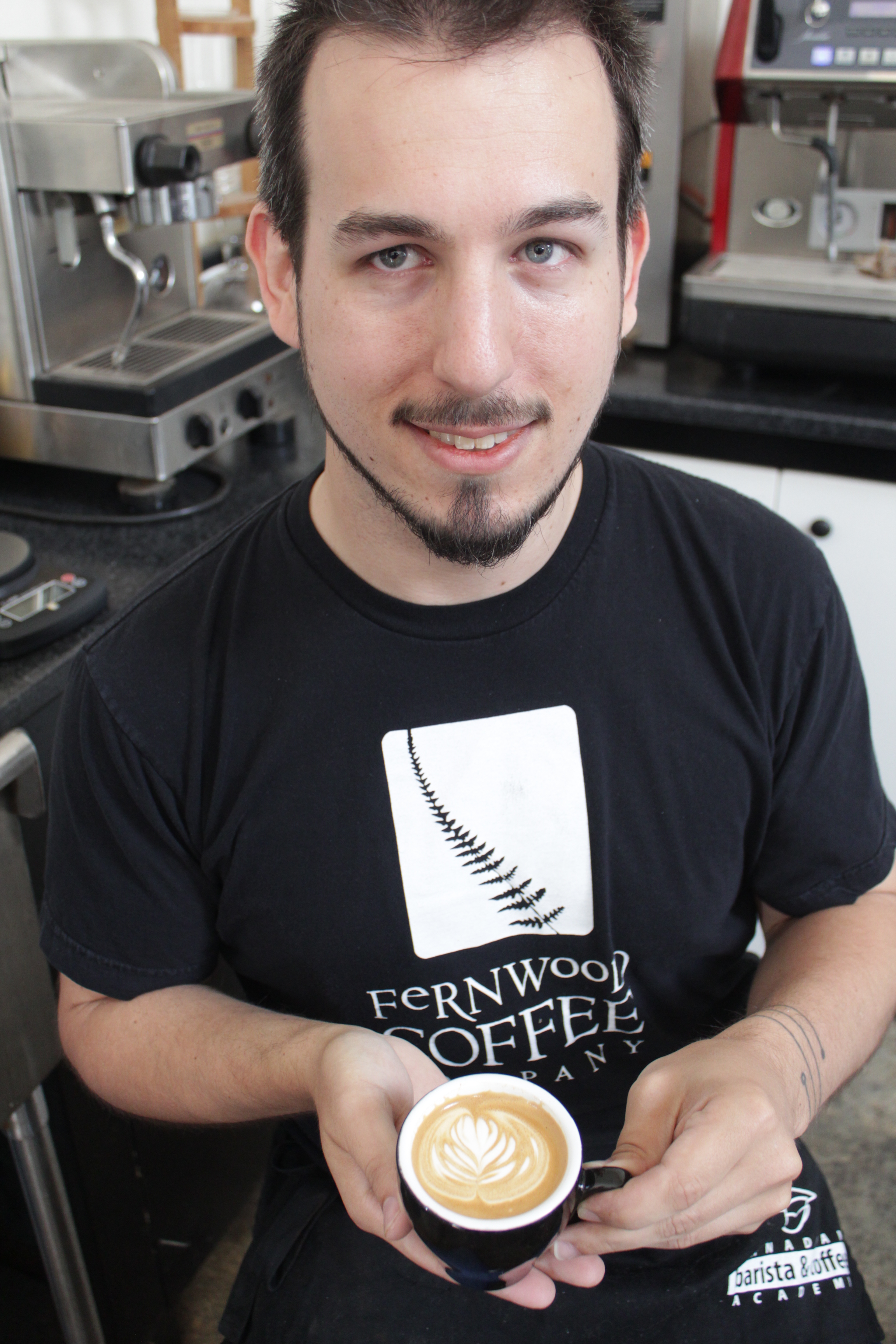
Fernwood Coffee’s Rek Feldman.
Fernwood’s Cold Brew tastes sweet even without sugar. For those who like a little bitterness, Rek adds tonic water, which completely alters the flavour and the aroma. It actually smells like lemon or green tea. We finish our visit with an espresso and now, three coffees into the tour, I feel ready to cycle to Nanaimo. Instead we head back downtown to Silk Road, a tea store on Government Street.
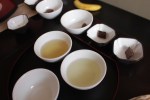
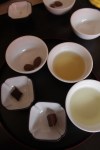
Tea expert Emara Angus has our settings arranged at the tasting bar and because there aren’t enough stimulants already coursing through our veins, there’s chocolate paired with each tea. The sight of chocolate almonds, Ecuadorian dark chocolate and Ginger Elizabeth milk chocolate thrills Ryan and Emma, for whom chocolate is an essential ingredient with any hot beverage.
Emara starts us off with Silk Road’s Angel Water tea, a blend of mint, rose, lavender and elderflower. We let it melt the milk chocolate on our tongues and there’s a chorus of “mmmmms”. That’s followed by Japanese sour cherry tea that smells so creamy and is so good with the dark chocolate from Ecuador. We finish with Vanilla Plantation from Sri Lanka, which apparently makes a great chai tea latte and certainly tastes good with chocolate almonds.
Silk Road’s teas are all organic and have won numerous awards. We cycle away with small store bags of tea swinging from our handlebars, but we don’t have far to pedal. Bon Macaron Patisserie on Broad Street is our final stop, which given the level of indulgence on offer here, is probably just as well.
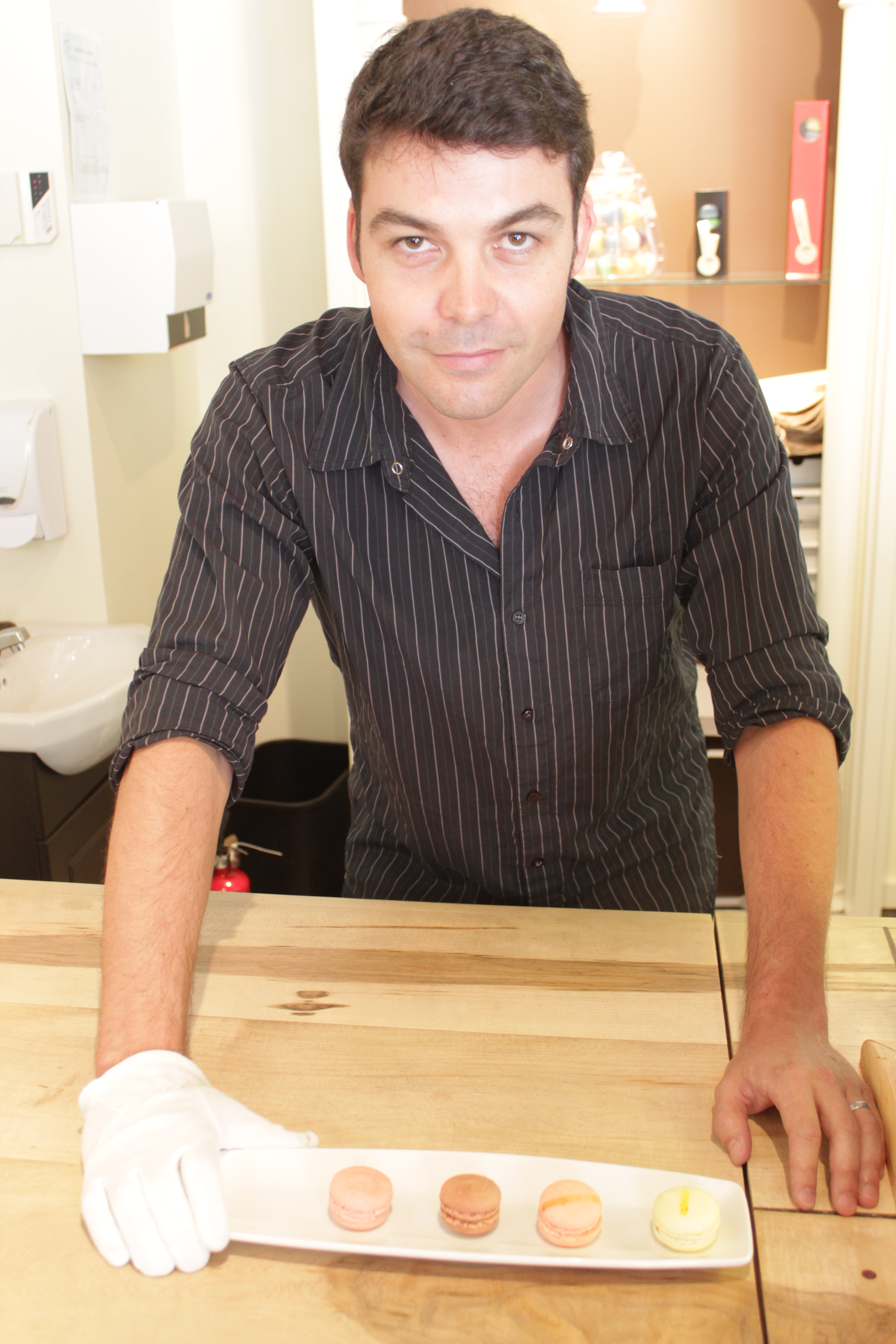
Bon Macaron Patisserie’s David Rousseau with some very versatile pastry. Resistance is futile!
David Rousseau is behind the counter and guiding us through an eclectic mix of flavours available in sweet, bite-size macaroons: curried mango chutney, white chocolate-wasabi, bacon-creamcheese and goat cheese-fig catch our eyes. Prior to this I’d only ever eaten my mum’s coconut macaroons, so I’m somewhat in a state of shock. A tiramisu-salted caramel macaroon helps me recover.
“It’s a very versatile piece of pastry,” says David, who makes about 1,000 macaroons a day and clearly enjoys inventing new flavours. (He was busy making a bacon-maple syrup batch for Father’s Day.)
Thankfully it’s a short ride back to The Pedaler and even shorter walk to The Parkside. We agree that Victoria reminds us of one of our other favourite weekend getaways – Portland, Oregon: cool people doing innovative things with food and drink in stylish settings.
Must get back for that beer tour though!
If you go:
The Beans and Bites tour leaves daily from The Pedaler on 719 Douglas St. at 9 a.m. and 1:30 p.m. It costs $79 per person. Also on offer is the Hoppy Hour guide to Victoria’s brewing scene ($79; leaves daily at 1:30 p.m.) and Castles, Hoods and Legends, a tour of Victoria’s historic neighbourhoods and landmarks. Visit www.thepedaler.ca or call 778-265-RIDE (7433).
Victoria’s Parkside Hotel and Spa is a short walk from the Royal B.C. Museum. It offers a family package from $179 a night, including family admission to the museum, two-hour rental of the hotel’s private movie theatre, plus a snack basket with pop, popcorn and candy. Call 1-866-941-4175 or visit parksidevictoria.com.
B.C. Ferries offers numerous summer package deals to Vancouver Island, including a Victoria Getaway from $109 per person, based on double occupancy. The package comprises one night at the Chateau Victoria Hotel, round-trip ferry from Vancouver for two adults and a car, plus complimentary parking. For more information on this and other deals, visit bcferries.com/vacations or call 1-888-BC FERRY.
For all other matters-Victoria, visit tourismvictoria.com

Splendor in the snow

Skiing takes on a surreal quality when it’s 28 degrees and you’re wearing a T-shirt. That’s part of the appeal when it comes to skiing Blackcomb Glacier, a time-honoured summer tradition at Whistler.
Most of the shale atop Blackcomb started as mud on the seafloor about 100 million years ago. The place still resembles a beach in July. That’s when summer skiing is in full swing and public displays of nudity are commonplace. OK, not full-on nudity like Whistler in the 60s, but there’s plenty of flesh visible 7,500 feet up on the Horstman Glacier.
I’ve never been summer skiing before and I pack with excited anticipation bordering on paranoia: neck-warmer, gloves, fleece jacket, Under Armour and longjohns compete for space in my backpack with water, emergency chocolate and a camera.
It’s too heavy so I ditch the longjohns and eat my emergency chocolate.
It’s 11 a.m. when I upload on the Wizard Express at the base of Blackcomb. The temperature in the village is about 25 degrees. (Thank goodness I ate the chocolate.)
The first thing I enjoy about glacier skiing is the journey. My skis are stowed on the chair in front; I’m wearing a T-shirt and enjoying the warm mountain breeze. Compared to the winter experience, it’s liberating.

Another tough assignment – but someone has to do it.
Above Merlin’s run I spot two deer and on Upper Main Line a solitary bear appears from the bushes. We switch to another quad chair – Solar Coaster Express. The first snow comes into view moments later above a black diamond run called Sorcerer, and there are more banks of white where the Nintendo Super Pipe used to be.
Solar Coaster takes us to the Rendezvous Lodge and the Peak 2 Peak Gondola where a bus awaits to ferry us the short ride to 7th Heaven Express and the last chairlift to the Horstman Glacier. Two T-bars, terrain parks and endless blue skies await.
At the top I find every kind of tourist: adventurous seniors hiking on the shale, international students up for lunch at the Horstman Hut, couples posing for photos at the inukshuk, and parents watching their kids play in the snow. Then there are the skiers and boarders – mostly half my age and seemingly unencumbered by back packs full of winter gear.
Undeterred, I spend the next hour skiing numerous variations of what are essentially two runs to the Horstman T-Bar. It’s where most of the skiers and boarders are funneling and the lineups are surprisingly long. But it’s warm, the views are spectacular and everyone’s happy. Not surprisingly the snow is soft and slushy in places, but I’ve skied on worse in January.
For a while I perch beside the public terrain park and photograph the jumpers whose attempts to defy gravity mostly end in wipeouts. I tell myself I’d try it, but what with the backpack and all; I don’t want to land on my camera, right?

Half-pipe or jump? Photographer Javier Carranza mulls his next move.
I stop for lunch at the Horstman Hut and lather on yet more sunscreen, putting extra under my chin and nose – the most vulnerable spots for snow-reflected sunburn. I order a beer and a deli platter of bread, meats, cheese and pickles. From the deck, Black Tusk’s ominous spire is hard to miss in the distance – it’s the kind of day photographers set aside for brochure assignments.
With some effort I step into my skis again and prepare for another run to the Horstman T-Bar. That’s when I notice the Showcase T-Bar has largely emptied. It’s normally reserved for private lessons, like the Dave Murray Ski and Snowboard Camps. With an hour of skiing left till downloading at 3 p.m., I ski across and get the green light from a liftie to ascend.

The only way is down to the Horstman T-Bar and the Showcase T-Bar.
It’s only about a 500-foot climb, but the Showcase T-Bar takes me to one of my favourite winter skiing spots, the entrance to Blackcomb Glacier. I seem to have this side of the mountain mostly to myself for the final hour and take full advantage, picking my routes beside the jumps, the half pipe and the inflatable landing spots for aerial gymnasts in training. With a bouncy castle to land on I’d almost consider attempting a jump. Almost.
I leave myself a little time to ski out on Green Line, a narrow strip of snow left among the rocks and the wildflowers beginning to bloom. Twice I almost fall while mesmerized by the epic landscape before me and it’s a relief on my legs to finally board Solar Coaster for the download. A mum and cub are basking on one of Blackcomb’s lower runs. At the bottom, a dozen horse-riders are wending their way uphill.
Within an hour I’ve revived sore muscles in the pools and hot tubs at the nearby Chateau Fairmont Whistler where – as luck would have it – the Mallard Lounge is serving $5 happy hour drinks and free appies. Somehow on reflection, those terrain park jumps don’t seem so daunting.
Maybe next time.

The thin white line. Almost time for apres!
If you go:
Weather-permitting, glacier skiing on Blackcomb is one of a multitude of summer activities on offer in Whistler. The Whistler Mountain Bike Park is in full swing and the Alpine Wonder Routes – a vast network of hiking and running routes – is becoming more accessible with every day the snow melts.
The Peak 2 Peak Viewing Gallery is a new series of videos showcasing construction of the gondola linking Whistler and Blackcomb. It’s on a raised walkway in the Peak 2 Peak Terminal on Whistler Mountain. Also new is the Alpine Theatre at the Roundhouse Lodge on Whistler Mountain. Movies with an alpine theme air every 30 minutes.
During our weekend in Whistler, I got to relive my adolescence dancing to The English Beat, part of the free Whistler Presents Concert series. Whistler Olympic Plaza hosts free weekend concerts throughout the summer.
Details of all these activities are at www.whistlerblackcomb.com/
The Fairmont Chateau Whistler is a few seconds’ walk from the Wizard Express chair and offers numerous summer accommodation packages. For more details, visit www.fairmont.com/whistler/ or call 1 800 606-8244.
The Icemen Cometh

Unlike Amundsen, who used dogs exclusively, Scott’s exploration and scientific teams usually man-hauled their heavily-laden sledges, often over great distances. Courtesy RBCM © Bettmann/CORBIS
With the benefit of a century’s hindsight, it’s clear only one man could have reached the South Pole first and made it back alive. In 1911-12, Norwegian explorer Roald Amundsen made his 1,660-mile roundtrip with 52 dogs, four sledges, five men and a single-minded focus on being first.
British Navy Captain Robert F. Scott made his final push for the Pole with 10 ponies, 22 dogs, 12 sledges, two motorized sledges, 16 men and a determination to log as much scientific data as possible. The Brits wore cotton; the Norwegians fur. The Brits brought 35,000 cigars and a pianola. The Norwegians did not.
Hindsight doesn’t diminish the enormity of what both men set out to accomplish, or the sacrifices they made. Their decisions drive the compelling tale of ‘Race to the End of the Earth,’ the feature exhibition at Victoria’s Royal B.C. Museum.
The noise of howling winds greets visitors to the exhibit, which recreates an epic story of triumph and tragedy through original artifacts, photographs, letters and authentic re-creations.
Scott’s Terra Nova Expedition had set out to be the first to reach the South Pole, a feat Scott and four companions thought they had achieved Jan. 17, 1912, only to discover that Amundsen’s team had beaten them by 33 days. Trapped in a nine-day blizzard without food or fuel, Scott and his party died on their return. The Norwegians made it back to their ship and a heroes’ welcome in Hobart, Tasmania, where their triumph was made public in March 7, 1912.

Roald Amundsen. Courtesy RBCM © AMNH Library
The exhibit is divided into seven sections, which chronologically tell the story of the men and their shared goal. Amundsen’s binoculars, chronometer, shotgun and sledge are on display, complemented with letters and photographs. A sledge pennant owned by Cecil H. Meares, Scott’s dog handler, is also among the original artifacts. True to the British tradition of Arctic exploration, sledges featured colourful silk flags to be spotted during blizzards. Meares’ pennant is one of only a few that has survived from the era and is locally significant because Meares moved to Victoria in the late 1920s.
Meares isn’t the only connection to Victoria. Scott himself visited the city in 1889/1890 as a Royal Navy Lieutenant. He developed a friendship with a local family and corresponded with them during the next 20 years. And a Canadian member of Scott’s team, decorated scientist Charles S. Wright, worked at the Pacific Naval Laboratory in Esquimalt, and at UBC and Royal Roads before retiring to Salt Spring Island. He died in Victoria in 1975.
The life-sized reconstructions of Scott’s living quarters and Amundsen’s underground workrooms are impressive. So, too, is an Emperor penguin diorama, vividly recreating ‘the worst journey in the world,’ an apt description of a five-week scientific expedition undertaken in winter by three of Scott’s men to collect Emperor penguins eggs. The three barely made it back alive.
And another of the savvy Norwegians’ decisions, that of building underground quarters out of the extreme wind and cold, is dramatically realized in a life-size re-creation
But it’s the smaller details that are memorable; the sepia photos of both men in their living quarters, on their skis and hauling sleds (the Brits felt hauling their own sleds showed strength of character); and the farewell letters written by Scott, in which he urges, “for God’s sake, take care of our people”. The British public was inspired to raise more than $75,000 ($7 million today) for those widowed and orphaned by the expedition. In 1913, King George V attended a standing-room-only memorial service for Scott’s team in St. Paul’s Cathedral.
The Royal B.C. Museum includes interactive and hands-on educational activities, allowing visitors to see how scientists live and work in Antarctica today. “Touch-this” stations are a nice addition, too, encouraging visitors to feel Reindeer fur and an Emperor penguin’s egg, among other items.
RBCM’s conservator Jana Stefan recently returned from her second visit to Antarctica, where she’s been helping to restore Scott’s expedition base camp – still standing after more than a century! Her work preserving more than 10,000 of the camp’s artifacts is presented on video. And for film on a more epic scale, IMAX Victoria in the RBCM is screening Shackleton’s Antarctic Adventure. British explorer Sir Ernest Shackleton’s 1914-1916 Antarctica Expedition is an extraordinary story of survival – beautifully filmed, and narrated by actor Kevin Spacey.
The RBCM is the only Canadian stop for Race to the End of the Earth, which runs until Oct. 14. Children’s summer camps and a lecture series featuring B.C. adventurers who have explored Antarctica are scheduled. For details, visit www.royalbcmuseum.bc.ca or call 1-888-447-7977.
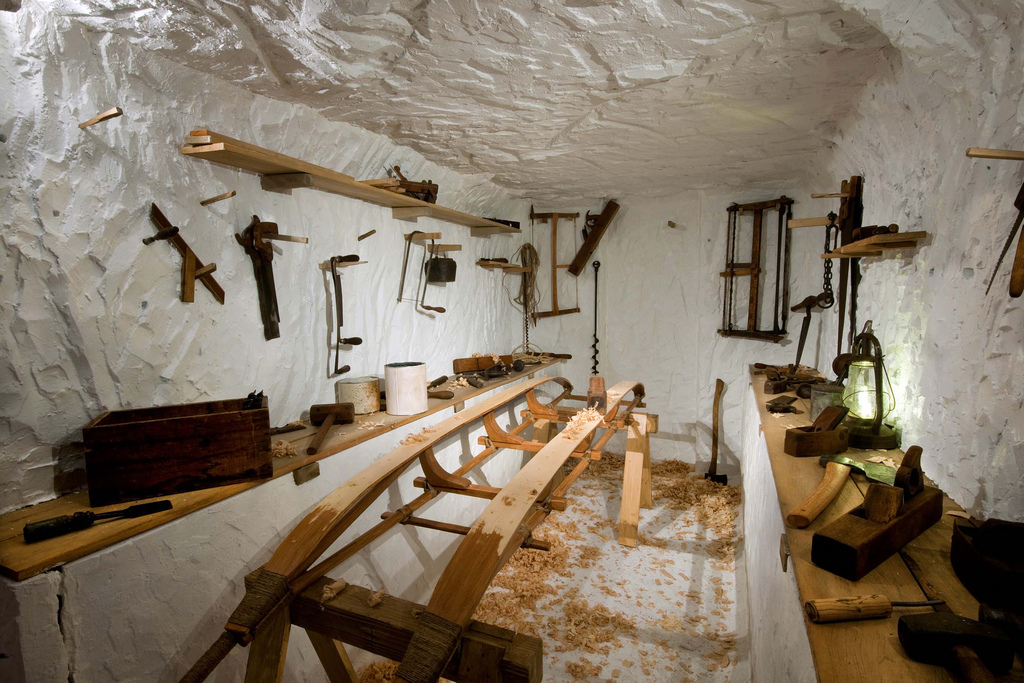
During the winter, Amundsen’s men dug an extensive network of tunnels and rooms, including a bathroom and even a sauna. This life-sized re-creation shows an underground workroom in which his crew was able to work on their expedition gear away from the extreme wind and cold outside. Courtesy RBCM © AMNH/D. Finnin
If you go:
Victoria’s Parkside Hotel and Spa is a short walk from the Royal B.C. Museum. It offers a family package from $179 a night, including family admission to the museum, two-hour rental of the hotel’s private movie theatre, plus a snack basket with pop, popcorn and candy. Call 1-866-941-4175 or visit http://www.parksidevictoria.com/.
B.C. Ferries offers numerous summer package deals to Vancouver Island, including a Victoria Getaway from $109 per person, based on double occupancy. The package comprises one night at the Chateau Victoria Hotel, round-trip ferry from Vancouver for two adults and a car, plus complimentary parking. For more information on this and other deals, visit http://www.bcferriesvacations.com/ or call 1-888-BC FERRY.
For all other matters-Victoria, visit http://www.tourismvictoria.com/.
The Trail Collector

Creator of sunshine-coast-trails.com Becky Wayte is probably the Sunshine Coast’s most avid nature bather.
You might call Becky Wayte a wanderer. Almost every day for the last 20 years, Becky has hiked or biked a trail somewhere on the Sunshine Coast. It wasn’t until a couple of years ago though, that she became a collector.
Some people collect stamps; others baseball cards. Becky collects trails, maps them with a GPS, and documents them on sunshine-coast-trails.com, a website she created for outdoor enthusiasts. The site lists hundreds of trails, from Langdale to Earl’s Cove, with descriptions, maps, difficulty ratings and useful links. She has her favourites – three of which she describes in her own words in a sidebar to this story.
In 2011, hiking three to four hours a day, almost every day, Becky managed to map almost all of the Sunshine Coast’s trails in six months. She’s been updating her collection ever since. The Coast is home to some prolific trail builders, it seems.
“I actually thought it would take me a couple of years,” she tells me. “But I quickly realized that I’m a little obsessive. When I start something, I need to see it through to the end.”
But the truth is, collecting trails never ends. New trails are always springing up and some remain well-guarded secrets. In a recent interview with pinkbike.com, local mountain-bike phenom, Holly Feniak, describes the Coast’s trails as: “Dreamy. Loamy, mossy, bouncy, incredibly green, and in the secret spots … all that and steep.”
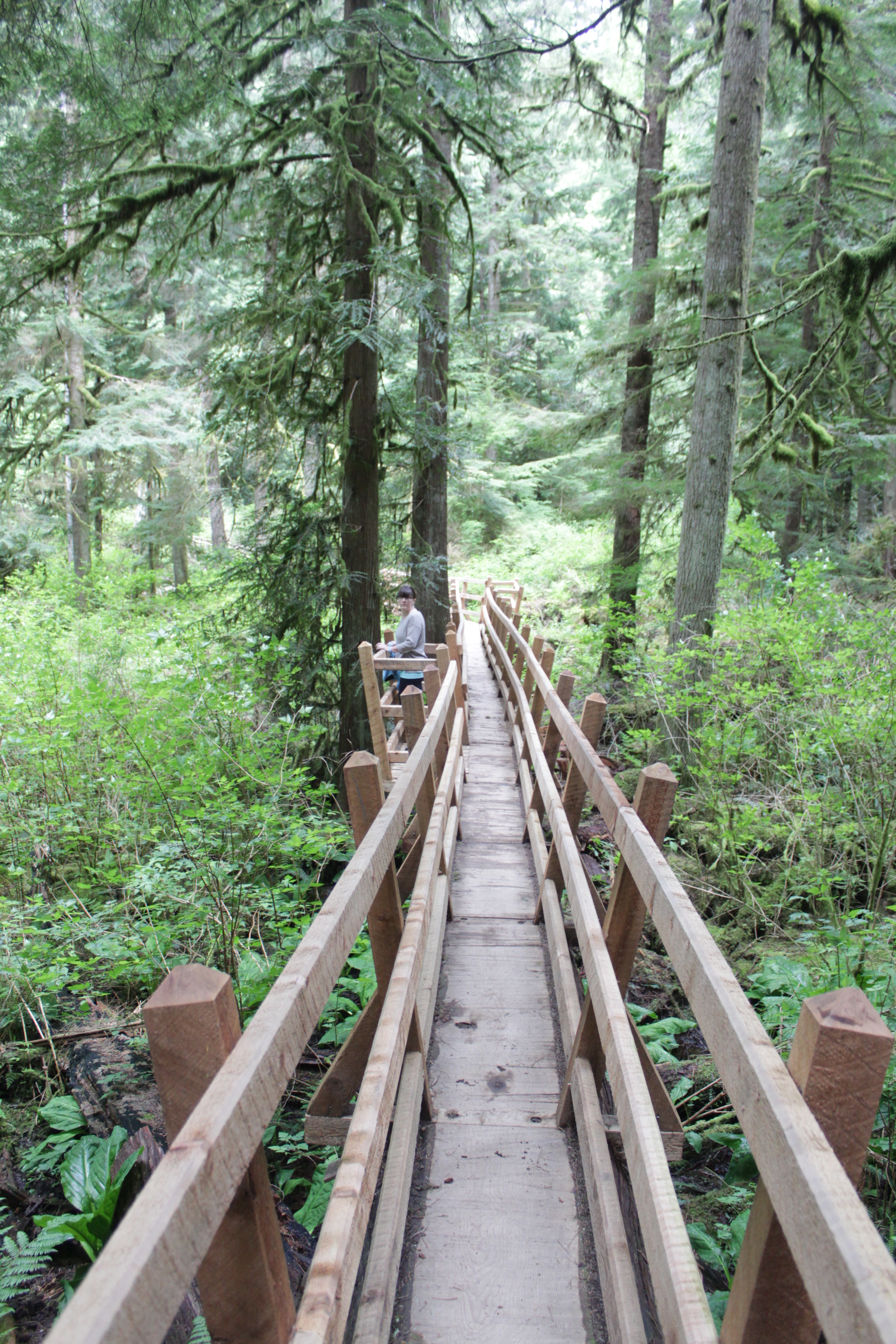
Cliff Gilker Park, Roberts Creek.
She might have added ‘never-ending’!
“For heaven’s sake, stop building trails,” Becky laughs, when I ask her about the Coast’s trail builders. “I actually love finding new trails and I admit, there might be the odd one I don’t know about. I’m always trying to keep up!”
For a moment, we think we may have found a new one. It’s an unusually hot day in May and we’re walking through a dusty trail off Field Road in Wilson Creek. We’re accompanied by Cody, a large, lovable dog from the nearby SPCA where Becky volunteers each week as a dog-walker. The path veers past someone’s back yard and into the forest.
“Let’s take a look,” says Becky, in her element. A few minutes later we come to a dead-end. Cody looks at us expectantly and we return the way we came. So what inspired Becky to take on this labour of love?
“I have three dogs and one has issues with other dogs, so I wanted to find new trails to hike where there weren’t so many people,” she says. “There were few websites, but they only featured the most popular hikes, places like Mount Daniel, so I decided I’d do it myself.”
Becky’s well qualified. Not only does she love the outdoors, but she learned to build websites through her work teaching computer courses in the Adult Basic Education Program at Capilano University in Sechelt. With the website established, Ryan Robertson, a Squamish-based app developer, who specializes in creating trail applications for iPhones and Androids, contacted Becky. Becky provided the GPS (Global Positioning System – the satellite navigation application) data and Ryan created the app. Trailmapps: Sunshine Coast costs $10 and is available at the Apple Store and Google Play.
For old-school trail lovers, she’s also created waterproof trail maps that are available in Gibsons at Spin Cycles, and in Sechelt at Source for Sports, the Sechelt Visitors’ Centre, and Off The Edge Adventure Sports.
Outdoors, technology couldn’t be further from Becky’s mind. While she’s always hiked to combat weight gain, she’s also convinced of nature’s therapeutic benefits. The Japanese have a name for it: shinrin-yoku, or forest bathing. Becky cites Japanese research, which points to the many benefits of simply being in nature – lower blood pressure, higher creative aptitude and boosted immune systems.
“I prefer the term ‘nature-bathing’ because I find just being out in nature makes me feel better. I always come home feeling better than when I left.”
Well, almost always.
Becky sheepishly recalls one particular hike that went awry, much to her husband’s despair. “I was hiking up Elphinstone and I’d let people know where I was going and what time I’d return. It took a lot longer than I’d expected though and my phone died.
“I got back around 7:45 p.m. – not the 5 p.m. I’d told my husband. He was pretty mad.”
The experience didn’t sour Becky’s love of Mount Elphinstone. In fact, the Mount Elphinstone Summit Trail ranks in her three favourite hikes and bikes. (See below.)

Kinnikinnick Park, West Sechelt.
Sidebar
My Three Favourite Hikes & Bikes, by Becky Wayte
Mount Elphinstone Summit Trail (hike only)
This is a long, fairly difficult climb, but the view at the very top is worth it. The trail to the top can be accessed from the top of Sprockids or via some feeder trails off B & K logging road in Roberts Creek. If you take your time and enjoy a picnic and rest at the top, this hike will likely take you five or six hours. Make lots of noise or wear a bell so the bears hear you coming.
Ruby Klein Traverse – Suncoaster Trail (hike or bike)
Beautiful views of Ruby Lake and a hand carved bench greet you at the highest point along the trail. Easy to make a whole day trip out of this even though the hike itself will probably only take you a couple of hours. You can visit the Iris Griffiths Centre, take a swim in Klein Lake and there is even a feeder trail down to the Ruby Lake restaurant (Trattoria Italiano).
McNeill Lake Circle Route (hike or bike)
This is one of my favourite destinations in the summer months because I always combine a bike ride with a swim. The lake itself is not that well known so often no one else is there, especially on weekdays. There are several trails that connect to create a loop around the lake, with access to the lake from a couple of spots. I park on Middlepoint Forest Service Road and take Copper Head, Dry Feet, a logging road, Old Pole Road and back to Copper Head. There is a short trail off the logging road just north of Dry Feet that takes you into the lake. This is an excellent place to ride your mountain bike if you have pre-teen kids or you just want a fairly flat ride (we don’t have many flat rides on the Coast). Hiking it probably takes about 1.5 hours and by bike about an hour, unless you stop to enjoy a swim.
For the definitive web guide to the Sunshine Coast’s trails, visit http://www.sunshine-coast-trails.com.
One night in Flin Flon
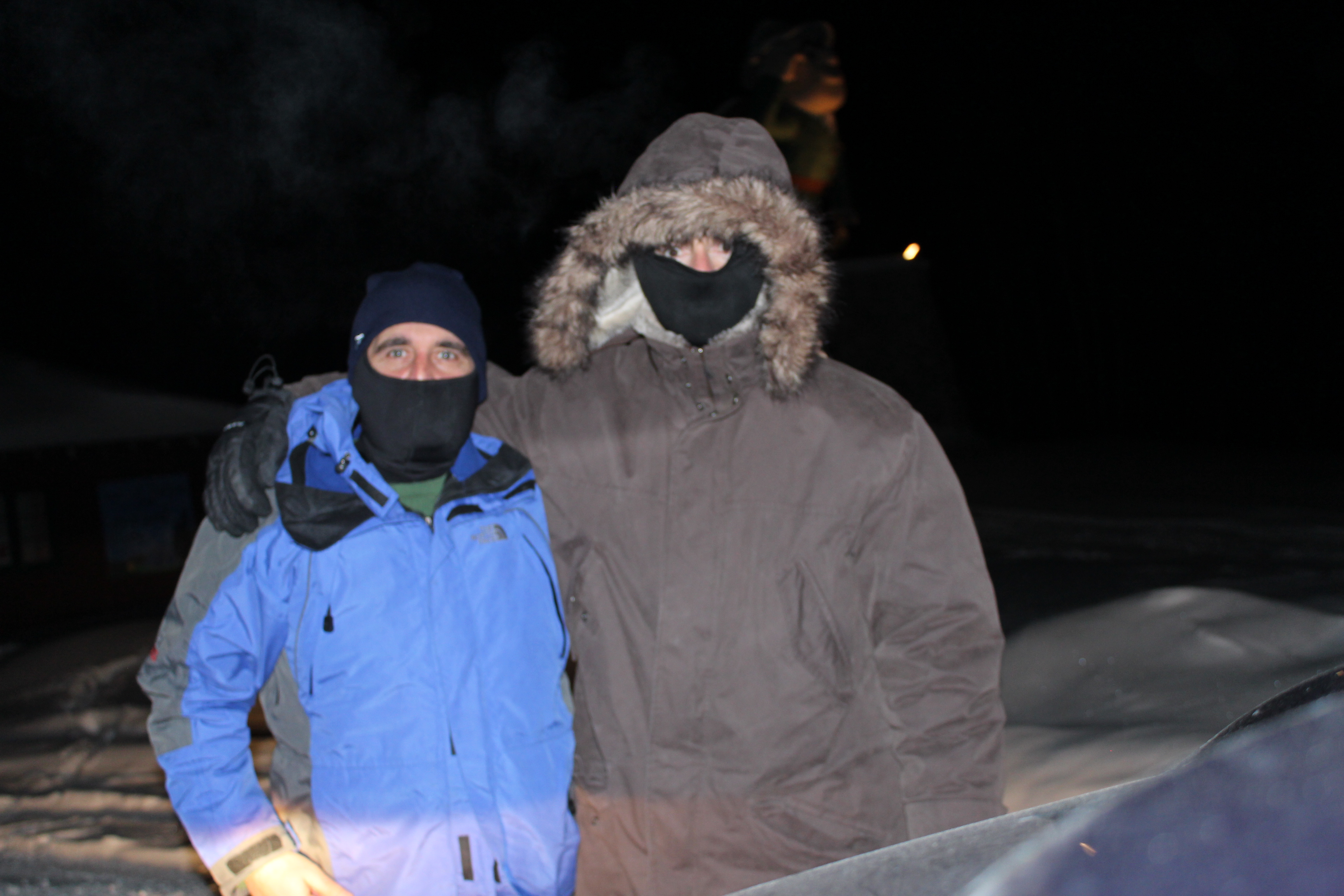
What minus 40 looks like in Flin Flon, birth place of Bobby Clarke and the phrase, “it’s a dry cold”.
They don’t sell postcards in Flin Flon, Manitoba; at least none that I found. It’s a desperately cold place most of the year.
“Chilly” is how the pilot describes it upon landing. Helen at the car rental desk confirms that, yes, it’s cold. “But tolerable without the wind.”
How cold?
Minus 39.6, according to the airport’s only baggage handler. “We’ll call it minus 40,” he says.
Celsius … Fahrenheit, it doesn’t matter. My idea of cold will never be the same. Lager’s cold. So is a dip in the sea off Margate. But February 1st in Flin Flon is worthy of its own definition of cold.
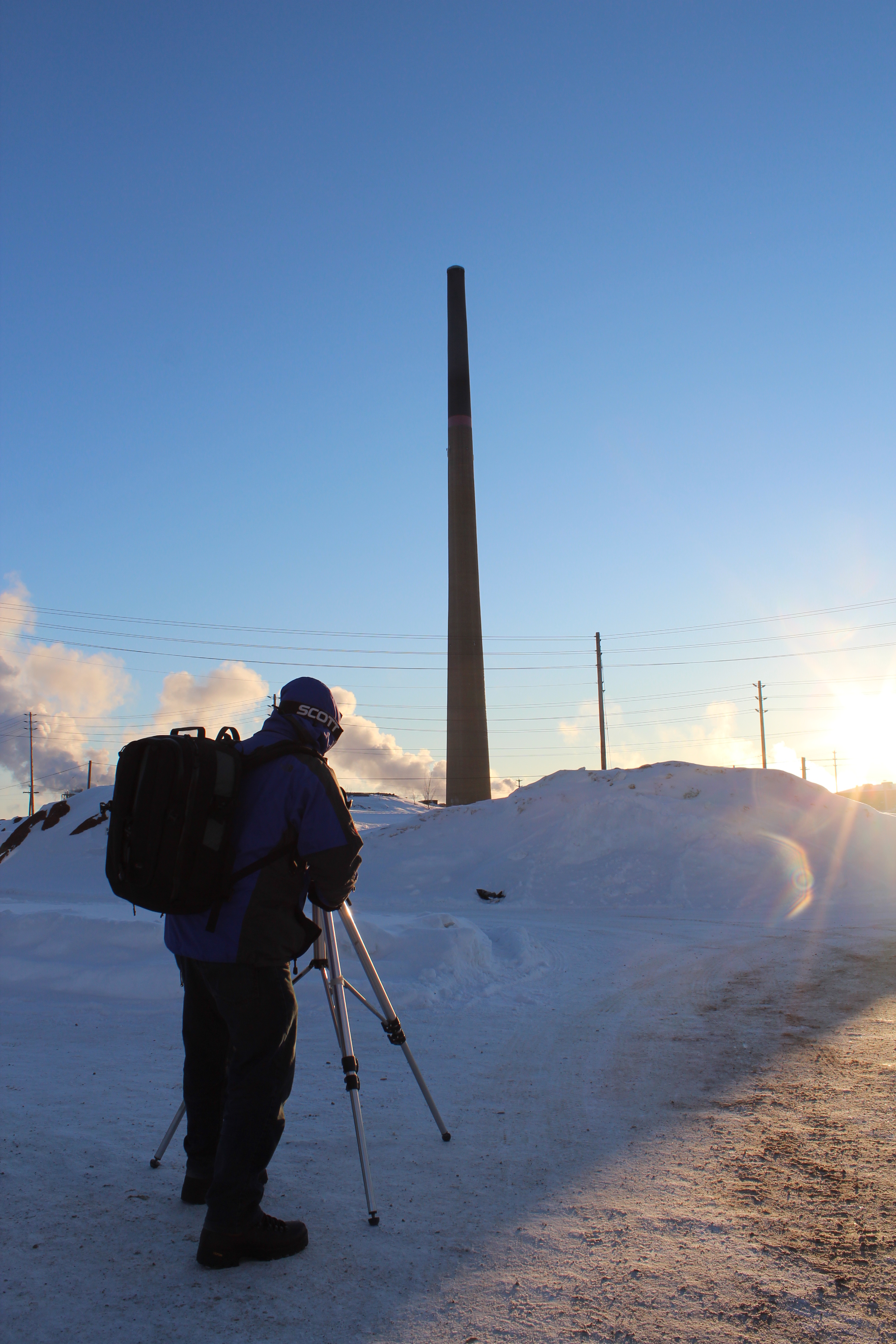
A kilometre below where Javier is standing it’s about 55 degrees warmer – which isn’t much consolation really.
My colleague Javier and I are here from Vancouver to film a video in Flin Flon’s copper mine. We try to look casual, hauling our camera gear across the car park to the rental truck. “It’s not that bad,” says Javier. “No, not so bad,” I wheeze, acutely aware of snot freezing in my nose.
The pallid sun we’d last seen during a stopover in Winnipeg has long since set and we drive in twilight to Flin Flon. Manitoba looks grainy monochrome, a stunted boreal forest dotted with lakes frozen into frigid stillness.
In Flin Flon, we plug our truck into a block heater outside the Victoria Inn. Inside, we eat perogies and drink beer. Our server tells us that minus 40 is mitigated by the fact that Flin Flon’s cold “is a dry cold”.
Her tongue is not in her cheek.
Fortified by curiosity, we drive into town, and then walk down Main Street. Most of the houses are old and wooden, with rooftops wilting under snow whipped into drifts. At the Co-op I buy myself a Flin Flon Bombers hockey jersey. I tell the cashier about a friend from Saskatchewan, who hated coming to play hockey against Flin Flon, the toughest team in the Canadian junior league.
At first she’s offended. “Why,” she demands. “Because they knew they’d have to fight,” I tell her. She smiles. “We love our Bombers,” she says.
We tread gingerly on a snowy sidewalk up the street to Flin Flon’s war memorial and a view overlooking the town. Fumes from the mine are the only thing obscuring a sky full of stars. The only other person on the street nods hello as he passes us, and calls us pussies for wearing gloves. He’s not wearing gloves.
A short drive away, we arrive at Flinty, a statue of a cartoonish-looking prospector. Gloves off, I photograph Flinty – built in tribute to Josiah Flintabbatey Flonatin. Flonatin appears in a sci-fi novel called The Sunless City. He pilots a submarine through a bottomless lake and into an underground world through a hole lined with gold. Prospector Tom Creighton had a copy of the book when he stumbled on a rich vein of copper here in 1918.
Flin Flon might be the only town named after a character in a dime-store paperback.
But that’s another story.
-

- Prepared for the worst.
-
- Flinty by day.
-
- A jumbo drill at work, a kilometre below Flin Flon.
-

- Five minutes in Winnipeg and he’s a Jets fan.
Heart of green
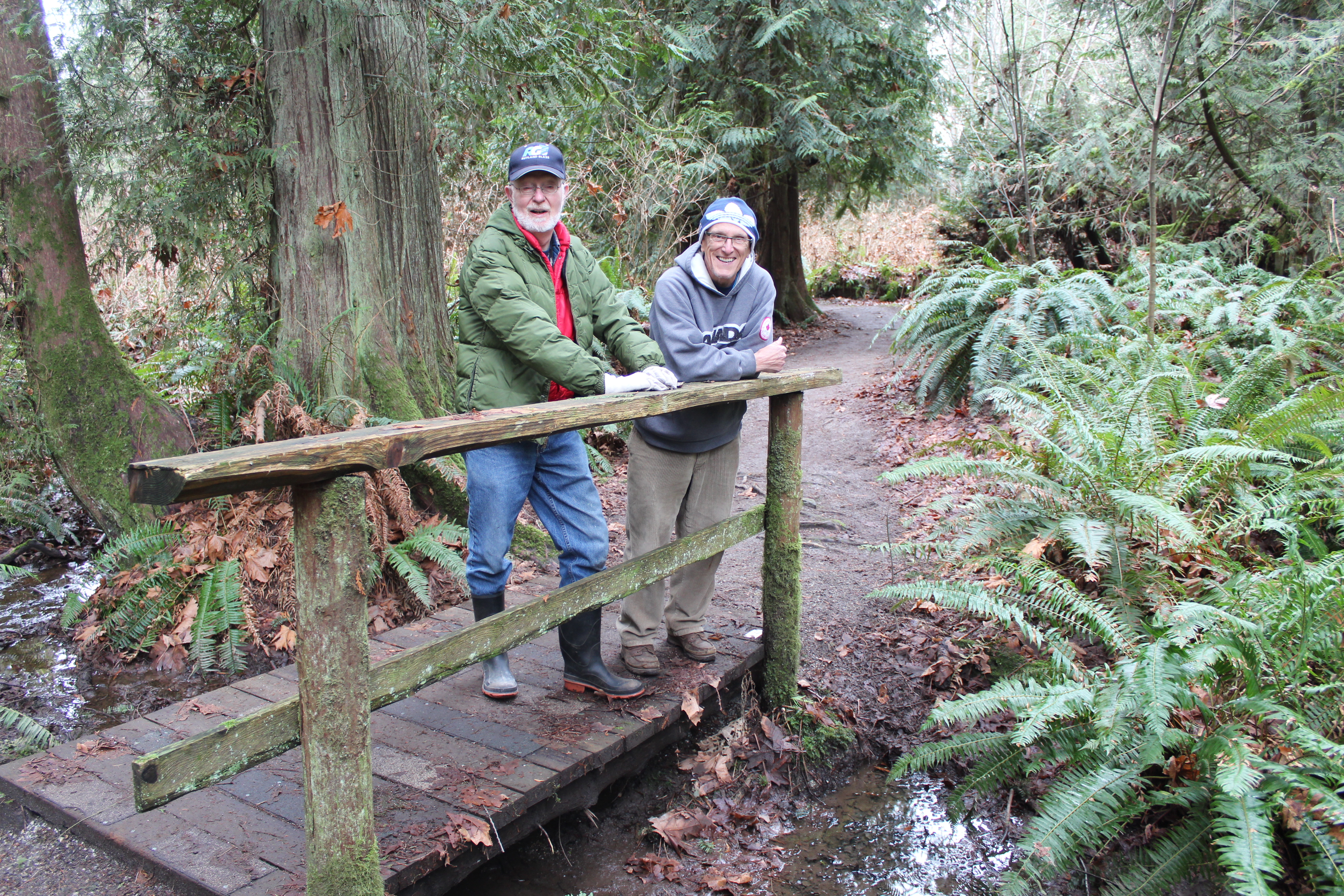
Sechelt Rotarians, Tom Pinfold (right) and Mick van Zandt on the trails of Kinnikinnick.
Shirley Macey didn’t have time to waste. When she wasn’t coaching kids, she was raising a family, working as a Gibsons RCMP dispatcher, and lobbying local government for more recreational space.
Somehow she found time every week to climb Soames Hill with a garbage bag to pick up other people’s litter.
“She was pretty amazing,” remembers her son Darin. “I didn’t think much of it growing up; now I don’t know how she did it.”
At the southern end of the Coast, 14 hectares of Soames Hill Regional Park are named after Shirley Macey. No doubt she would be proud of the soccer fields, the wheelchair-accessible playground and Frisbee golf course. Shirley – or Sam (an acronym of her full name, Shirley Amelia Macey) to her friends – was a dedicated volunteer whose legacy is by no means unique.
Shirley Macey, Maryanne West, Ted Dixon, Cliff Gilker and Hackett are – to name a few – venues so familiar to most of us that it’s easy to forget that they were also people. Ted Dixon, for example, worked tirelessly for self-government for the Sechelt Indian Band before dying in a car crash in 1981. Maryanne West was the backbone of community TV and so many volunteer projects before dying at age 90 in 2008.
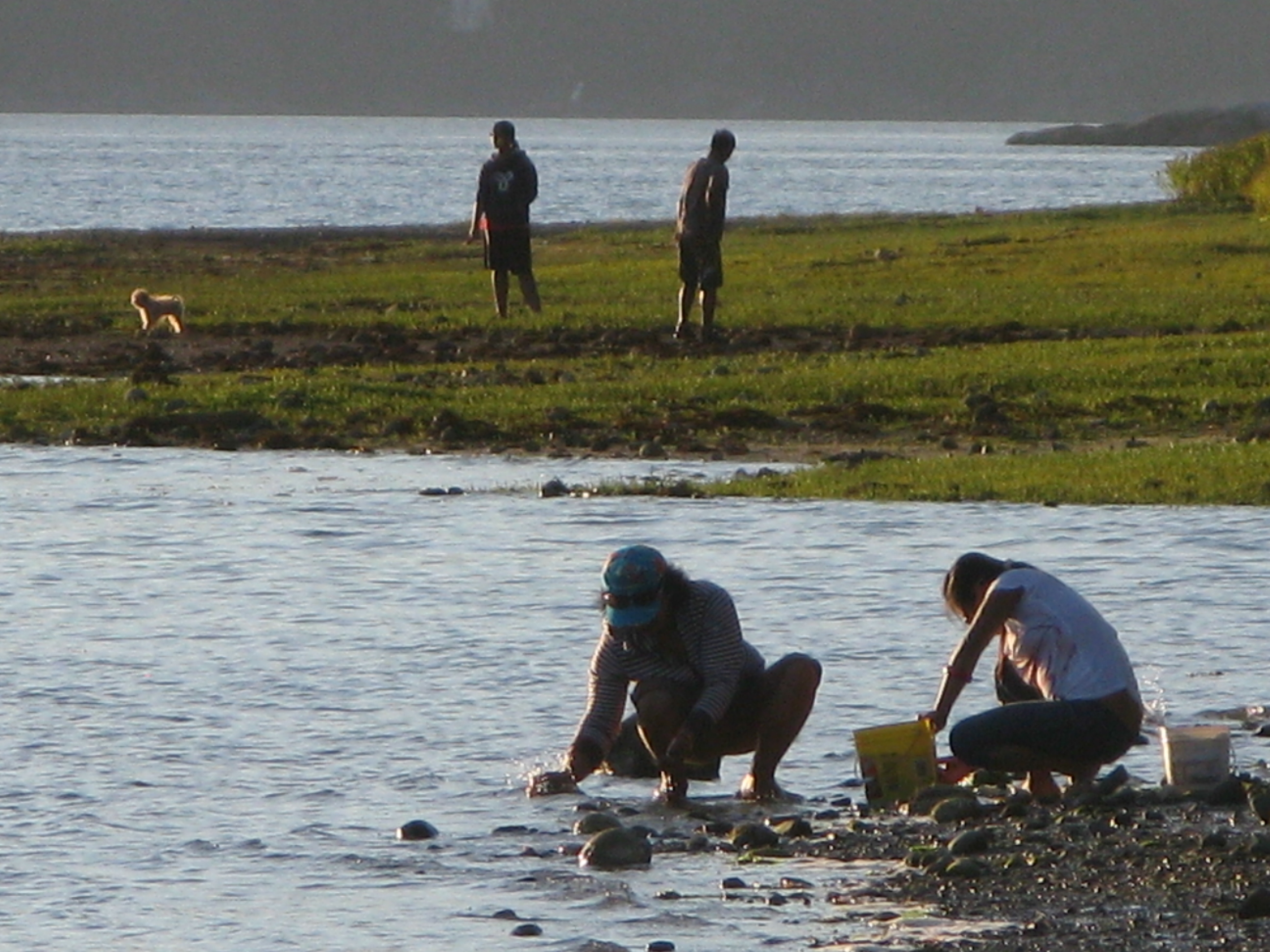
Scavenging the shoreline at Porpoise Bay. For parks and beaches, Sunshine Coasters are spoiled for choice.
And not all parks bear a family name. Brothers Memorial Park in Gibsons was named for logging contractors, Al and George Jackson who donated the land.
Today, volunteers continue to be the lifeblood of the Sunshine Coast’s parks and trails. In fact, the parks system wouldn’t work without them.
“We totally rely on volunteerism,” says Sunshine Coast Regional District parks planning coordinator, Sam Adams. “We wouldn’t be able to do what we do without it.”
For the SCRD that means mobilizing volunteer help in bigger parks like Dakota Ridge, where members of the Dakota Ridge Advisory Committee have been particularly helpful. Volunteers also help the SCRD maintain trails at Soames Hill, most recently working to improve the wooden stairs. Now the regional district is hoping to cultivate more volunteer assistance with an adopt-a-trail program.
“Part of our work plan for 2013 is to develop a more robust volunteer program,” says SCRD parks planning coordinator, Susan Mason. “We have kilometres and kilometres of trails to maintain, so people willing to document changes on a regular basis are helpful to us.”
The government-volunteer relationship is similar elsewhere on the Coast. District of Sechelt parks supervisor Perry Schmitt is grateful for the work of several trail building groups, as well as established service clubs.

Sunshine Coast Lions Club president Len Schollen at the site of the Lions’ next project, an accessible viewing deck in the corner of Mission Point Park where the beach and Chapman Creek meet.
“The Lions Club has been instrumental in making improvements to Mission Point park and the Sechelt Rotary Club has been assisting in rebuilding decks throughout Kinnikinnick forest trails,” says Schmitt. He also cites the work of the Sechelt Groves Society at the Heritage Forest trails, and the Sunshine Coast Natural History Society, which tends to Sechelt Marsh.
On a cold blustery day, Sunshine Coast Lions Club president Len Schollen shows me work completed on the Mission House deck and the next project – an accessible viewing deck in the corner of Mission Point Park where the beach and Chapman Creek meet.
“We’re basically waiting for some decent spring weather to build the viewing platform and a hard-surface ramp leading up to it,” says Schollen, surveying the footings already in place. “There’ll be a railing around it and hopefully some signs with information about the salmon run and pointing out places like Mount Arrowsmith.”
Why are Schollen and other Lions members involved in the project? “We serve, is the Lions’ motto,” says Schollen simply. “We try to make this a better place to live.”
It’s a sentiment shared by Sechelt Rotarians, Tom Pinfold and Mick van Zandt, when I meet them on the trails of Kinnikinnick park.
“We wanted to work on small projects where a few people could work for a few hours on something with lasting benefit,” says Pinfold. “We’d much prefer to let the District allocate their resources to new things instead of maintenance.”
With other Rotarians, the pair has replaced and built cedar bridges and decks throughout Kinnikinnick’s trails during the last three years. Topped with roofing tiles, the decks are essential given the drainage issues on multi-use trails in a popular park. The new bridges should be good for at least 10 years, reckons Pinfold. (Elsewhere in Kinnikinnick park and at Sprockids park in Langdale, Capilano University students hone their trail-building skills as part of the Mountain Bike Operations Certificate curriculum.)
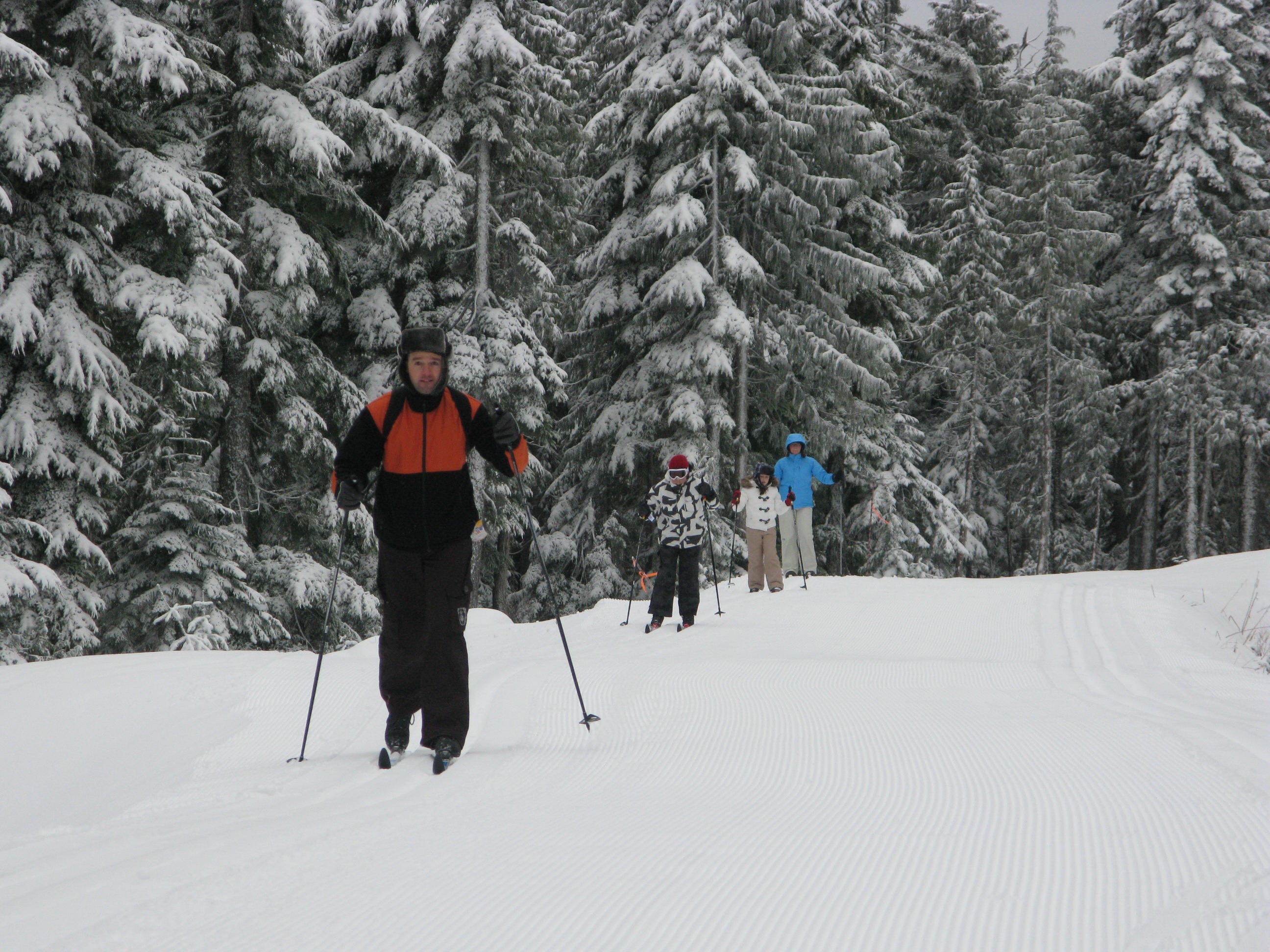
There are 13 kms of groomed trails for cross-country skiers on Dakota Ridge, yet another Coast playground.
Pinfold and van Zandt have also worked on a wheelchair accessible deck at Halfmoon Bay’s Trout Lake and a viewing platform and trail in Roberts Creek’s Cliff Gilker park.
Elsewhere, volunteers continue to make the Sunshine Coast a great place to play. If you’re searching for the heart of the Sunshine Coast you’ll find it in any park or trail. From Pender Harbour’s Lions Park (the best soccer field on the Coast) to the mountain bike trails of Sprockids Park in Langdale, outdoor recreation thrives because people care enough to make it happen.
People like Shirley Macey.
Shirley didn’t live to see the park she’d fought for named in her honour. Just months after retiring from the RCMP and paying off her mortgage, she died of cancer in 1998.
“I didn’t realize until I was older that quite a few people called her mom,” recalls Darin, who has four kids of his own now. “I met all these people I knew at her service who thought of her as a surrogate mother.
“My kids are certainly proud of the park’s name. It’s too bad she died so young.”
Trail Mix
There are numerous opportunities to get involved in outdoor volunteering. Here are a few websites where you’ll find more information.
http://secheltlionsbc.lionwap.org/
email tony@whiskeyjacknaturetours.com for the Sunshine Coast Natural History Society
Thanks to the Sechelt Community Archives and the Sunshine Coast Museum and Archives for their help in researching this feature.
Party on in Whistler
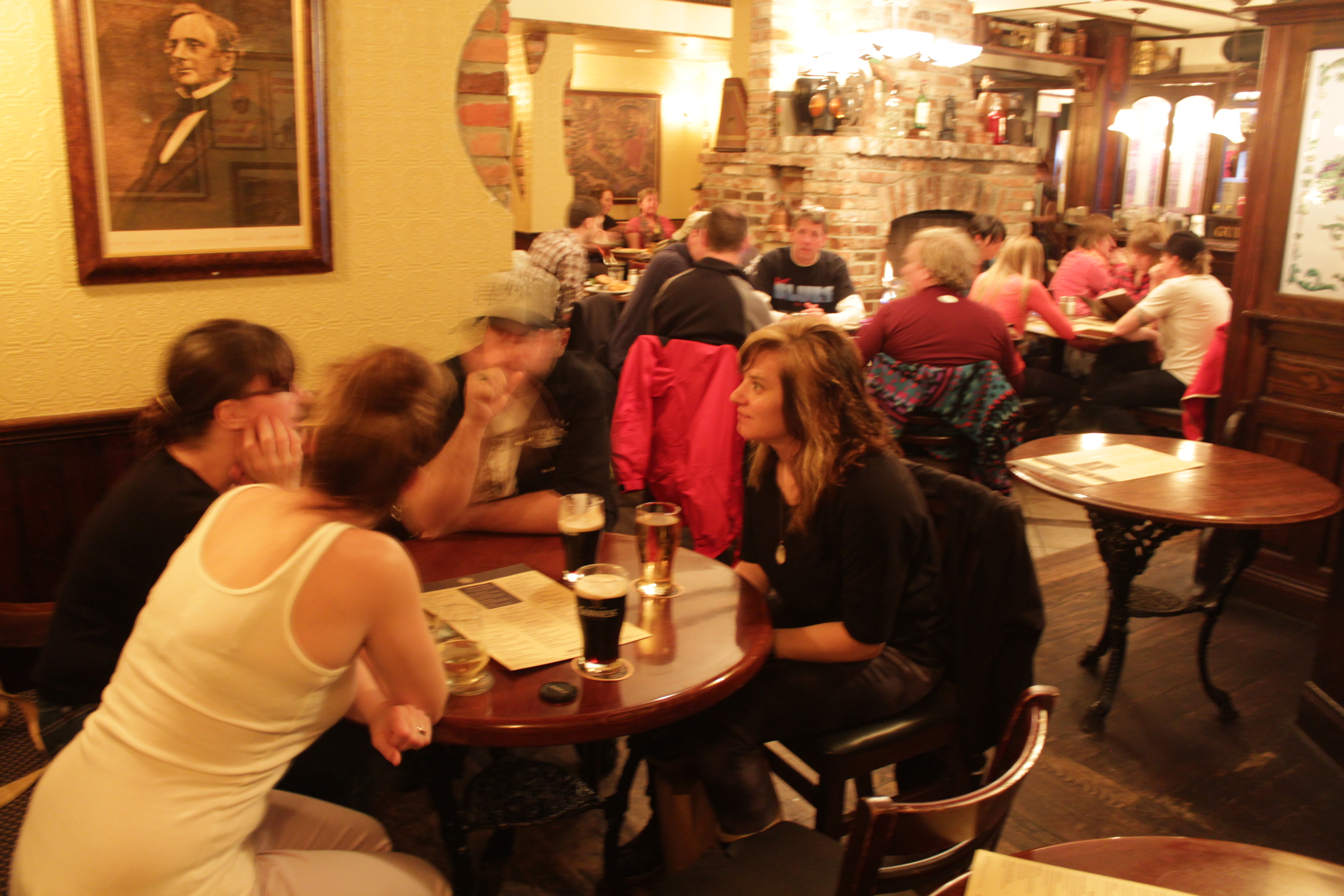
The Dubh Linn Gate begins to fill up at the World Ski and Snowboard Festival.
It’s 4:20 p.m. on 4/20 in Whistler and the aroma wafting through the village is unmistakeable: Axe body spray with just a hint of beef jerky. It smells like a high school locker room, which is probably why my 15-year-old son Ryan doesn’t seem to notice. Either that or he’s carrying too much Axe and beef jerky to notice.
The final weekend of Whistler’s ski season is also the final weekend of the World Ski and Snowboard Festival. That means all manner of free arts, music, and sports events. It also means free giveaways – Axe, beef jerky, Monster Energy drinks and yoghurt. It’s an odd combination, but a popular one among teens nonetheless.
It makes for an eclectic scene: Sweet-smelling kids amped on caffeine. (Monster drinks are for over-18s, but plenty of parents were indulging their under-18s.) Bandana-wearing dogs fresh from Whistler DogFest, mingling with toddlers and locals mingling with visitors to the beat of G. Love and Special Sauce, (they’re a band). Somehow it all works.
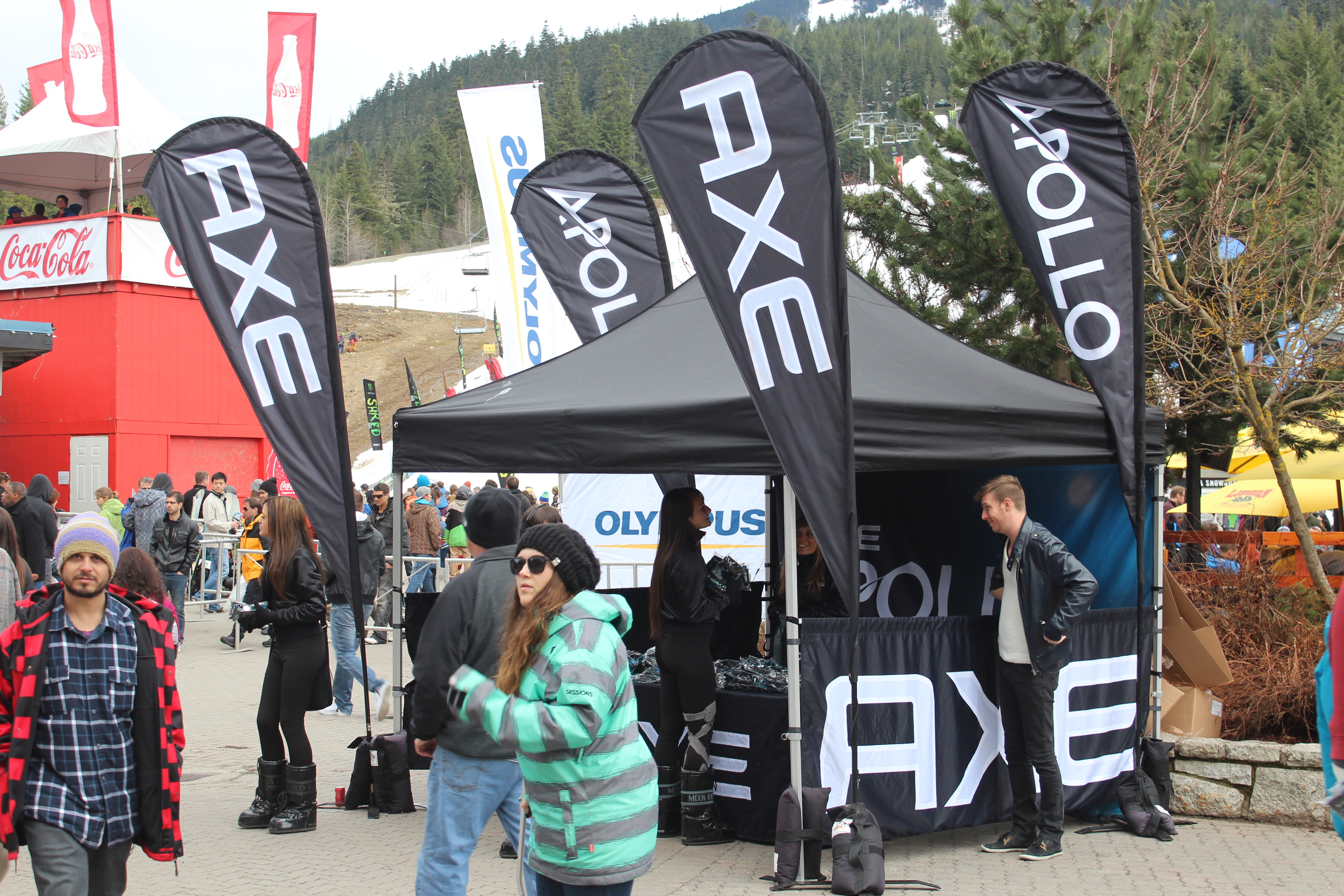
You want some Axe with that beef jerky?
We’ve skied out to the village just in time for Fashion EXPOSED, a fast-paced, high-energy show on a catwalk set up by the main stage. Macklemore’s infectious hit, Thrift Store is booming over the speakers as models come and go every few seconds. G. Love and Special Sauce, the day’s first live act, are up next and pretty soon everyone from the decks of the Garibaldi Lift Company to The Longhorn to the crowd in between are swaying to bluesy hip hop. The lead singer looks like Justin Timberlake and plays a mean harmonica.
Aside from abundant yoghurt and beef jerky, our immediate après options look sparse with lineups at almost all the bars fronting the main stage. Thank goodness for the Dubh Linn Gate where there’s room at the back. Pints of Guinness and a poutine and fries later, we’re back outside for Vancouver’s very own enduring hip hop band, the Swollen Members. They’re a more than capable warm-up act for the ever-popular Big Air event and Monster Energy Shred Show. (Try saying “Shred Show” fast! It’s easier after a Monster Energy drink.)
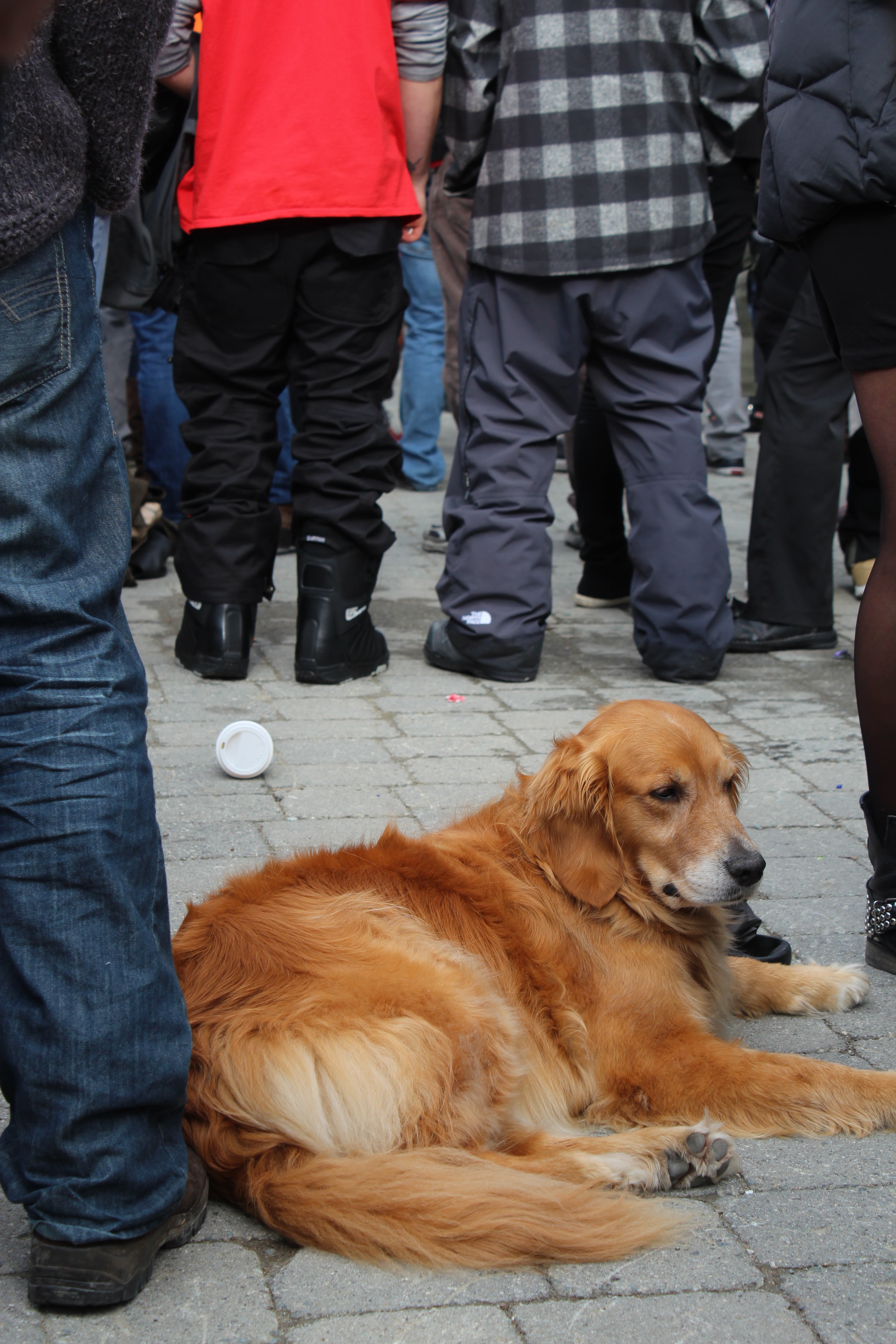
Lab chills out to G. Love and Special Sauce.
As darkness and temperatures fall, pro snowboard riders soar upwards of 70 feet in competition for a $15,000 cheque and the 2013 Big Air title. It’s an impressive finale made all the sweeter by 18-year-old Canadian Maxence Parrot landing a Triple Cork to beat a Norwegian and an American for the victory. As the lineups to the village’s bars and clubs grow ever-longer, we head back to the Fairmont Chateau Whistler and find refuge in the Fitzsimmons Pub (The Fitz, as it’s known to locals) opposite the hotel. No lineups, great food and a solid beer list. ($13.75 a pitcher!)
Telus no longer sponsors the World Ski and Snowboard Festival, but that has not diminished the event’s appeal. On the contrary, organizers expanded the WSSF’s arts and culture scene this year. Open daily at the Whistler Conference Centre, State of the Art celebrated the mountain community in a variety of media. Storytelling and improv were the themes of the Mountain Multiplicity Show and the Chairlift Revue. And Vengeance in the Valley, the resort’s inaugural roller derby bout, sold out.
Skiing on Blackcomb continues until late May. Meanwhile golf season starts May 4. Visit fairmont.com/whistler for details of Whistler golf packages, starting at $139 per person.
For everything else Whistler, visit whistlerblackcomb.com.
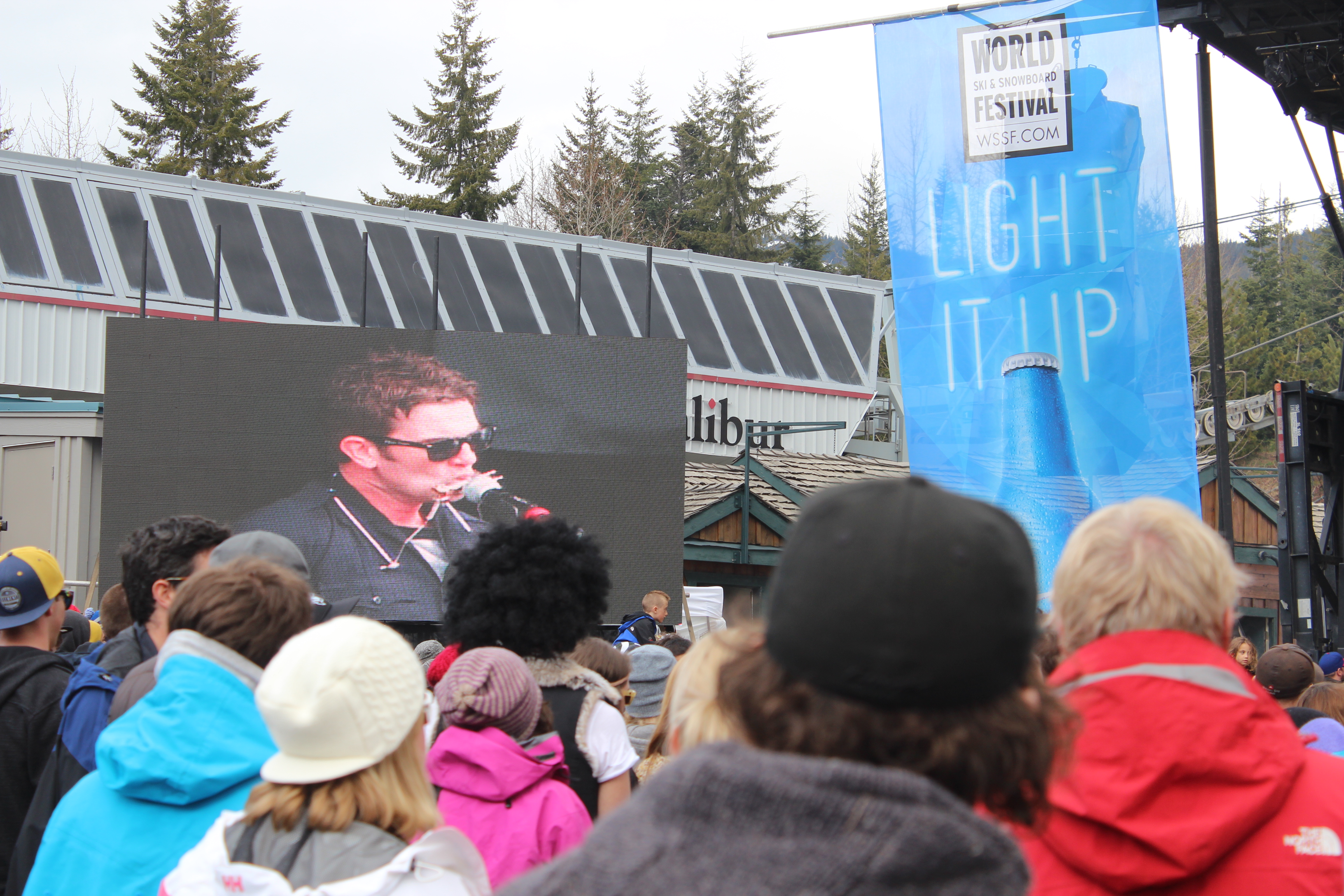
G. Love’s Garrett Dutton breaks from ‘Booty Call’ to harmonica.
Bright lights, big city
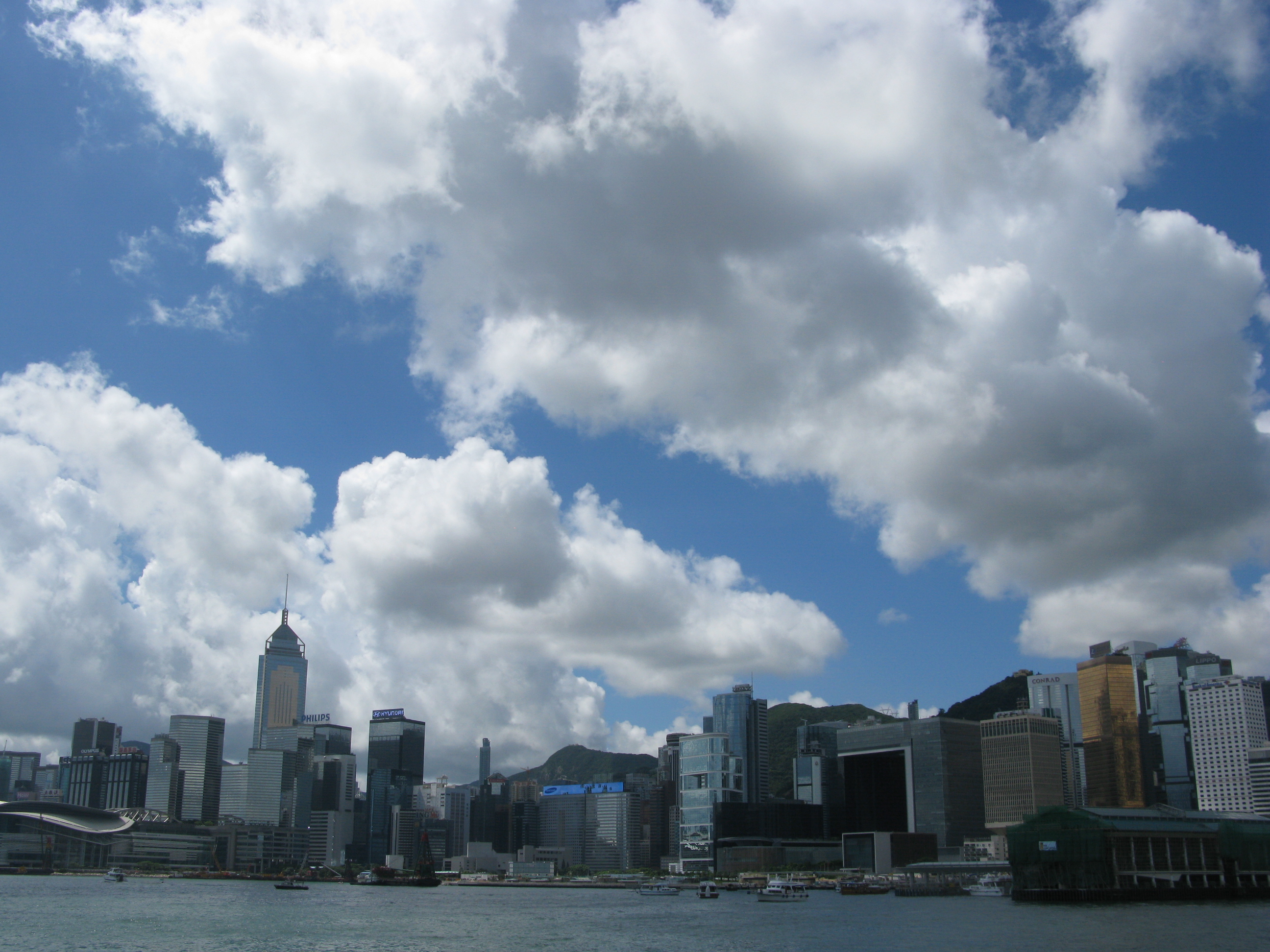
Hong Kong can feel like a science fiction movie: From the airport, set adrift from Lantau Island on a strip of man-made land, to the steep condo blocks that sprout like weeds on even steeper hillsides.
Rush hour in Mongkok starts at about 4 a.m. Or maybe that’s when it finishes.
It’s hard to tell in this Hong Kong neighbourhood, which has the dubious distinction of being the most densely populated place on earth.
With 130,000 people for company in one square kilometre, you stop saying “excuse me” after a while. You also learn that outside of Mongkok’s air conditioned malls and hotels, deodorant is a waste of time. So is sleep. There’s far too much to see.
Langham Place in Mongkok stands as a bridge between two very different worlds. From the rooftop pool, 42 storeys up, to its spas, bars and restaurants, the hotel exudes opulence. But within a block you’ll find markets selling everything from snakes and frogs, freshly skinned and dismembered, to sea cucumbers and dried pig skin.
Such extremes are everywhere in Hong Kong.

Mongkok’s street markets cater to a wide variety of tastes, including freshly skinned snakes.
From the moment we landed, everything about the place felt like a science fiction movie: From the airport, set adrift from Lantau Island on a strip of man-made land, to the steep condo blocks that sprout like weeds on even steeper hillsides.
Before Mongkok, we stayed two nights in Central on Hong Kong Island, which faces Kowloon from across Victoria Harbour. As our cab driver raced from the airport through a blur of neon and thundershowers, 13 hours aboard Cathay Pacific suddenly didn’t seem so gruelling.
Especially when we arrived at 38 Elgin Street, a third-storey condo we’d booked through airbnb.com. (See sidebar.) After driving on such modern highways and tree lined city boulevards, Elgin Street was a shock. Steep and winding, it barely fit one-way traffic between sidewalks buzzing with bars, restaurants and late-night shoppers.
Within 50 yards we could choose from Thai, Japanese, Moroccan, and Italian, yet we fought off fatigue at The Globe, a pub with as extensive a beer list as I’ve ever seen. With a pint of Old Speckled Hen, a scotch egg and tandoori chicken skewers, midnight came and went.
Aided by jet lag and adrenaline, we were up six hours later on Hollywood Road, eating breakfast at the Tsui Wah 24-hour restaurant. Fried beef in noodles with scrambled eggs and buttered bun set us back about $2 each and set us up for a morning of walking through cobbled streets as chaotic as the numerous signs competing for space above us.
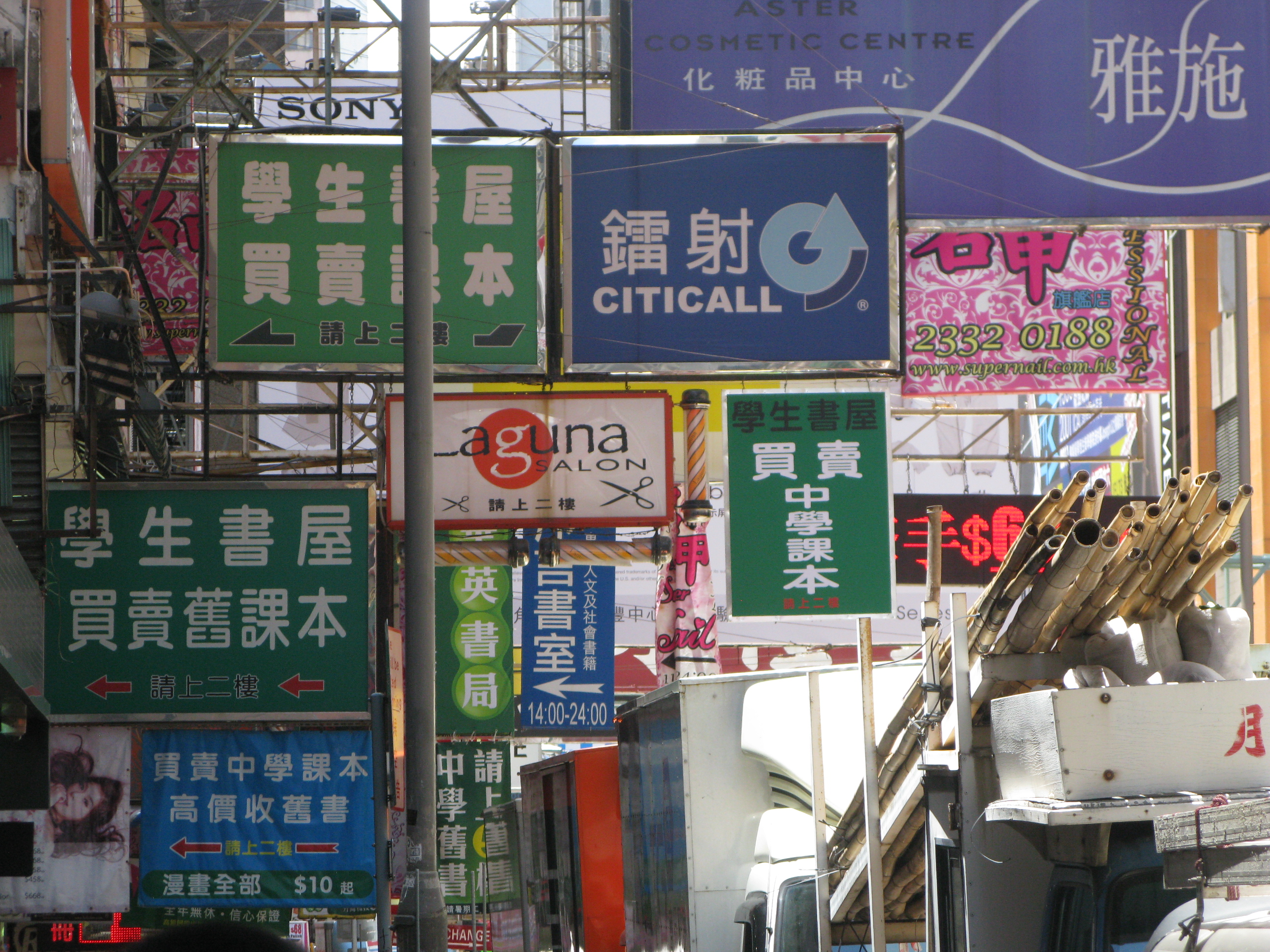
It’s not just people jostling for space in Hong Kong: signs are everywhere!
With 150 square feet to call home, the average Hong Kong resident clearly prefers to live life outside. On first impressions, shopping, socializing and worshipping all seem to shape those lives. At the Wong Tai Sin Temple, we found respite from Hong Kong’s hustle. Dwarfed by high-rise apartments to the south and hills to the north, the temple’s pools and waterfalls consoled us in the 35-degree heat and 100 per cent humidity. Followers of Taoism, Buddhism and Confucianism worship at the temple where they pray for spiritual answers beneath hundreds of hanging lanterns in a haze of incense.
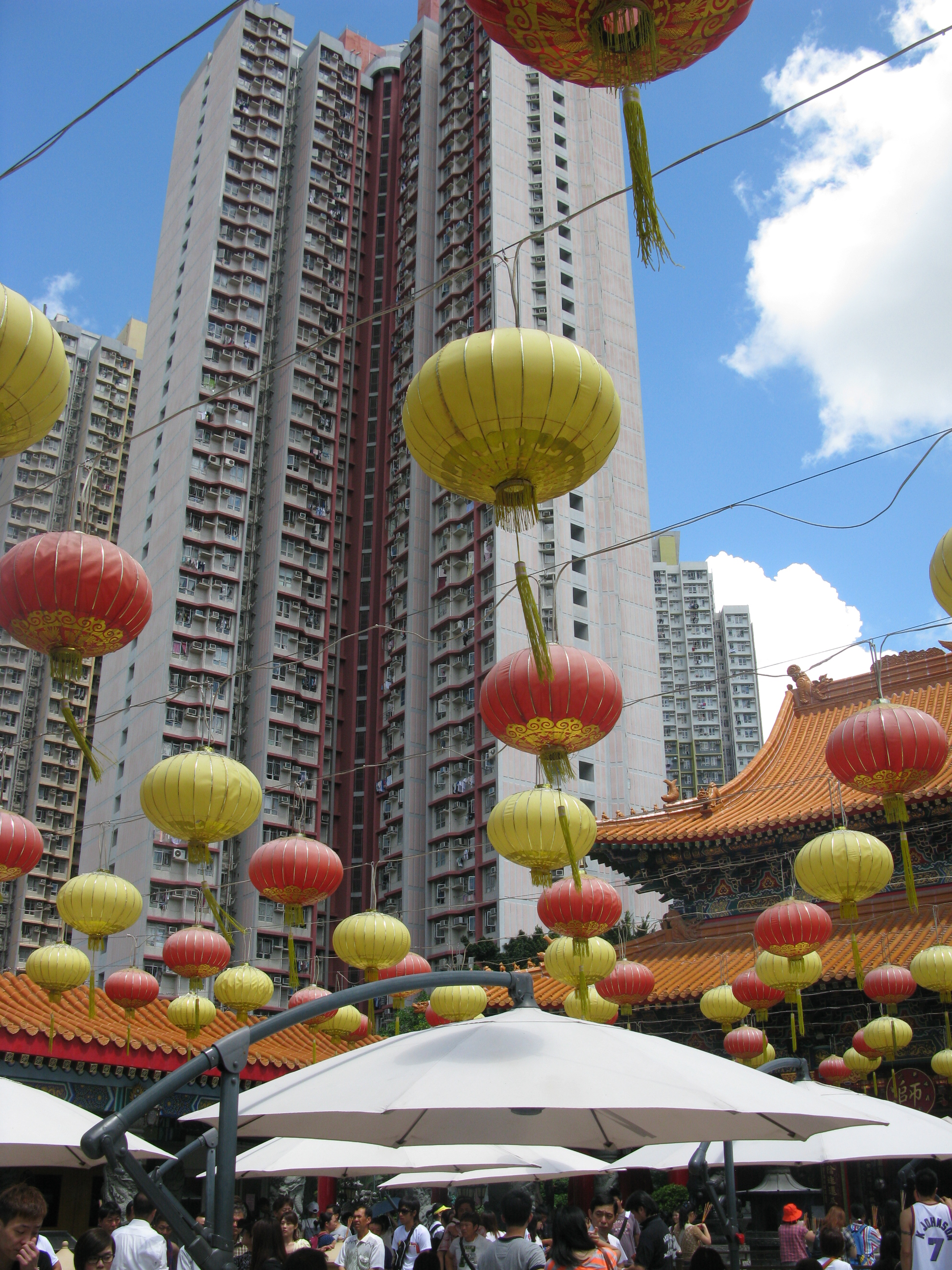
Dwarfed by high-rise apartments to the south and hills to the north, Wong Tai Sin Temple’s pools and waterfalls consoled us in the 35-degree heat and 100 % humidity.
One temple for three different religions and open to all sums up tolerance in Hong Kong. During five sweltering, crowded days and nights in Hong Kong, I did not witness even a hint of anti-social behavior – even during an afternoon at Hong Kong Disneyland! And this is an exceptionally easy place to get around quickly. On Hong Kong’s MTR (Mass Transit Railway System), we didn’t wait longer than two minutes for a train and above ground, less than five minutes for a bus. Star Ferries across Victoria Harbour operate about every 10 minutes and are a cheap way to see Hong Kong’s skylines up close.
To see those skylines from above, we rode the 124-year-old funicular Peak Tram to the top of Victoria Peak – at 552 meters, the highest point of Hong Kong Island. It’s the best place to definitively gauge your bearings of Hong Kong and witness the magnitude of its growth. Forty years ago, few buildings here rose more than six storeys. Today, legions of skyscrapers bounded by ocean, islands, and forested hills stretch to the horizon.
If you can’t catch a breeze atop Victoria Peak, you should get one on the 30-minute ferry ride to Lamma Island. With quiet walking trails, sandy beaches and a coal-fired power station, Lamma is a surreal escape from the city. Within sight of the power station’s towers, we swam at Hung Shing Ye, a beach with life guards, changing rooms and cabbages floating in the ocean. A thunderstorm chased us from the waves and we took cover at the Bookworm Café in the village of Yung Shue Wan – one of two ferry stops on Lamma. The Bookworm epitomizes the village’s bohemian vibe, with good vegan food and indifferent service.
There’s a surreal air about the Ngong Ping 360 experience on Lantau Island, too. From the MTR’s Tung Chung Station, Ngong Ping’s cable cars ferried us 5.7 kilometres over Tung Chung Bay, past Hong Kong International Airport and high above the Lantau North Country Park – all with a glass bottom to look through. The 25-minute cable car ride alone is worth the price of admission, but so too is what awaits at Ngong Ping village, the Tian Tan Buddha, otherwise known as the Big Buddha. Despite being a popular tourist attraction, it’s possible to find a little serenity at the 34-metre bronze statue, or on any of the 240 steps to its base. And it’s not all tourists here. I watched an elderly lady stop and pray on every single step.
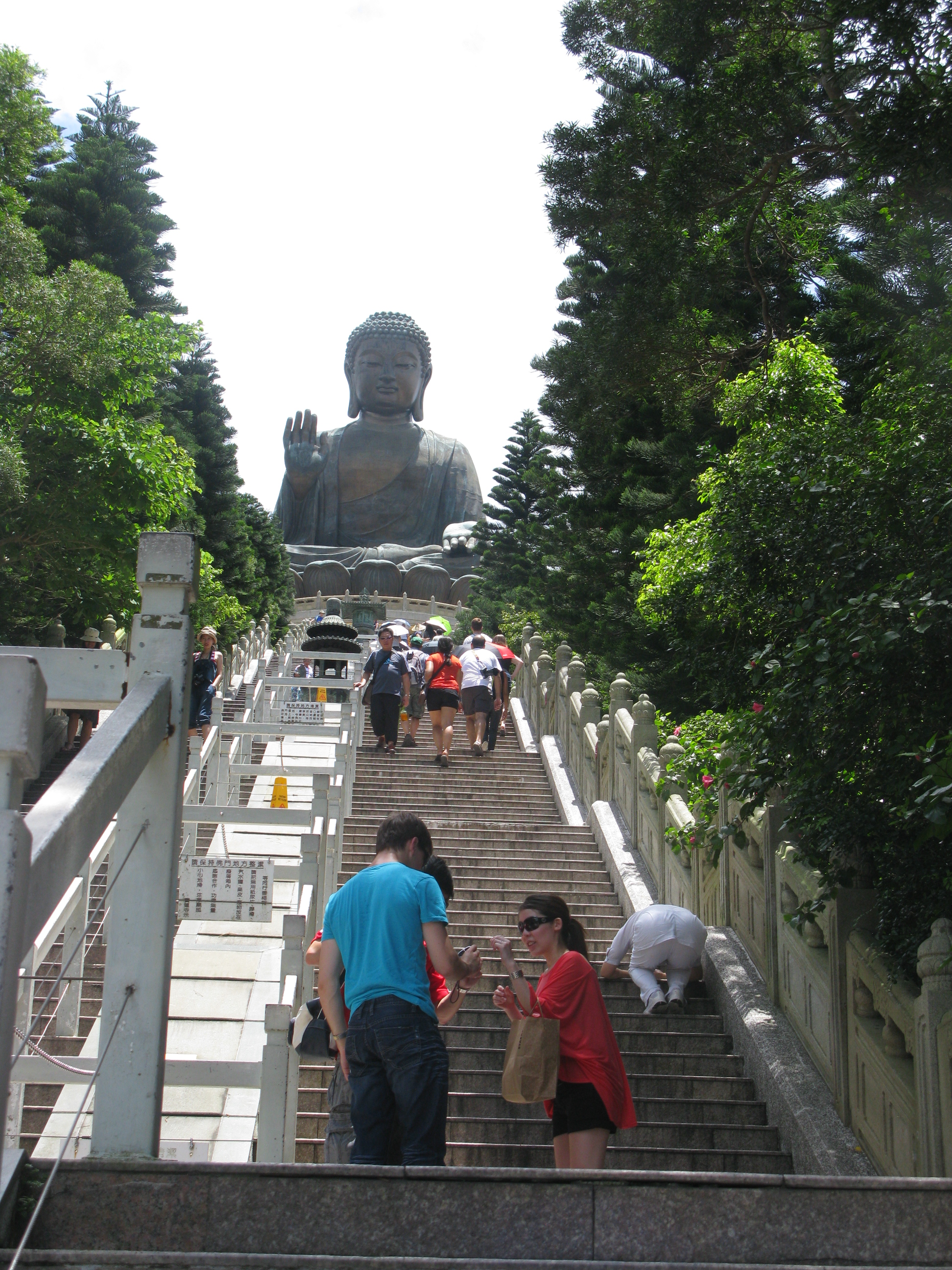
Take it one step at a time to the base of Tian Tan Buddha, otherwise known as the Big Buddha
Ngong Ping’s ‘Chinese-themed’ village, complete with fast food and souvenir stores, were of little distraction. All the consumerism we could handle was back in Mongkok. By mornings we’d shop the markets close to the Langham for fresh oranges, bananas, persimmons, mango, pears, lychees and cherries. By night, we immersed ourselves in Mongkok’s night markets. Nothing quite prepares you for the human tide that flows back and forth down Mongkok’s streets full of merchandise and vendors waiting to haggle: unless you’re a teenager with cash burning a hole in your pocket.
While my wife and daughter disappeared into Tung Choi Street (aka Ladies Street for its clothing and cosmetics), I watched my 15-year-old son Ryan buy soccer cleats and a Liverpool jersey on Fa Yuen Street (aka Sneakers Street, where you’ll find all sporting goods), Dre Beats headphones and iPod case on Sai Yeung Choi Street (an electronics mecca) and two watches on Temple Street (men’s fashions).
“You should buy something,” Ryan told me.
He was right. About 50 cents later I was eating fried squid and spicy fish balls from a food stand. And I didn’t haggle.
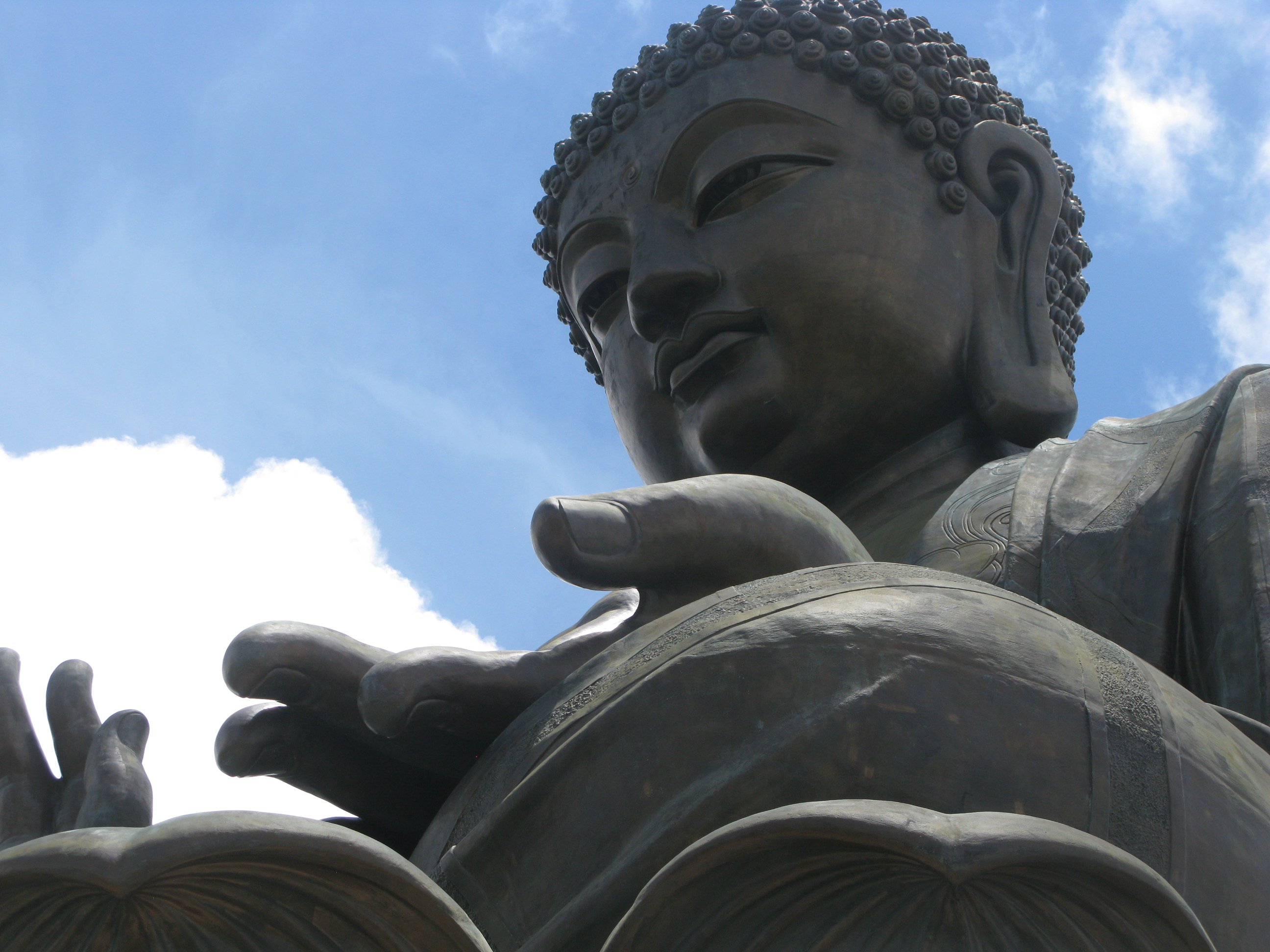
Serenity now with the Big Buddha in Ngong Ping village.
If you go
Langham Place (http://hongkong.langhamplacehotels.com/) might be the only hotel with a pillow menu, (scents include rose and lavender) such is its attention to whims and wishes. It also offers free guided walking tours to acquaint guests with nearby markets, culture and history.
Airbnb.com is an online marketplace for people to list and book unique accommodations worldwide. We followed instructions to text a housekeeper upon landing, and she was there to let us in to our home away from home. It came with everything we needed, including the use of a computer and several of the owner’s local restaurant reviews.
Disney-lovers will find most of their favourite rides at Hong Kong Disneyland, including Grizzly Gultch – similar to Big Thunder Mountain and newly opened this summer. (hongkongdisneyland.com)
For more on Ngong Ping, visit www.np360.com.hk
For more on Hong Kong, visit www.discoverhongkong.com
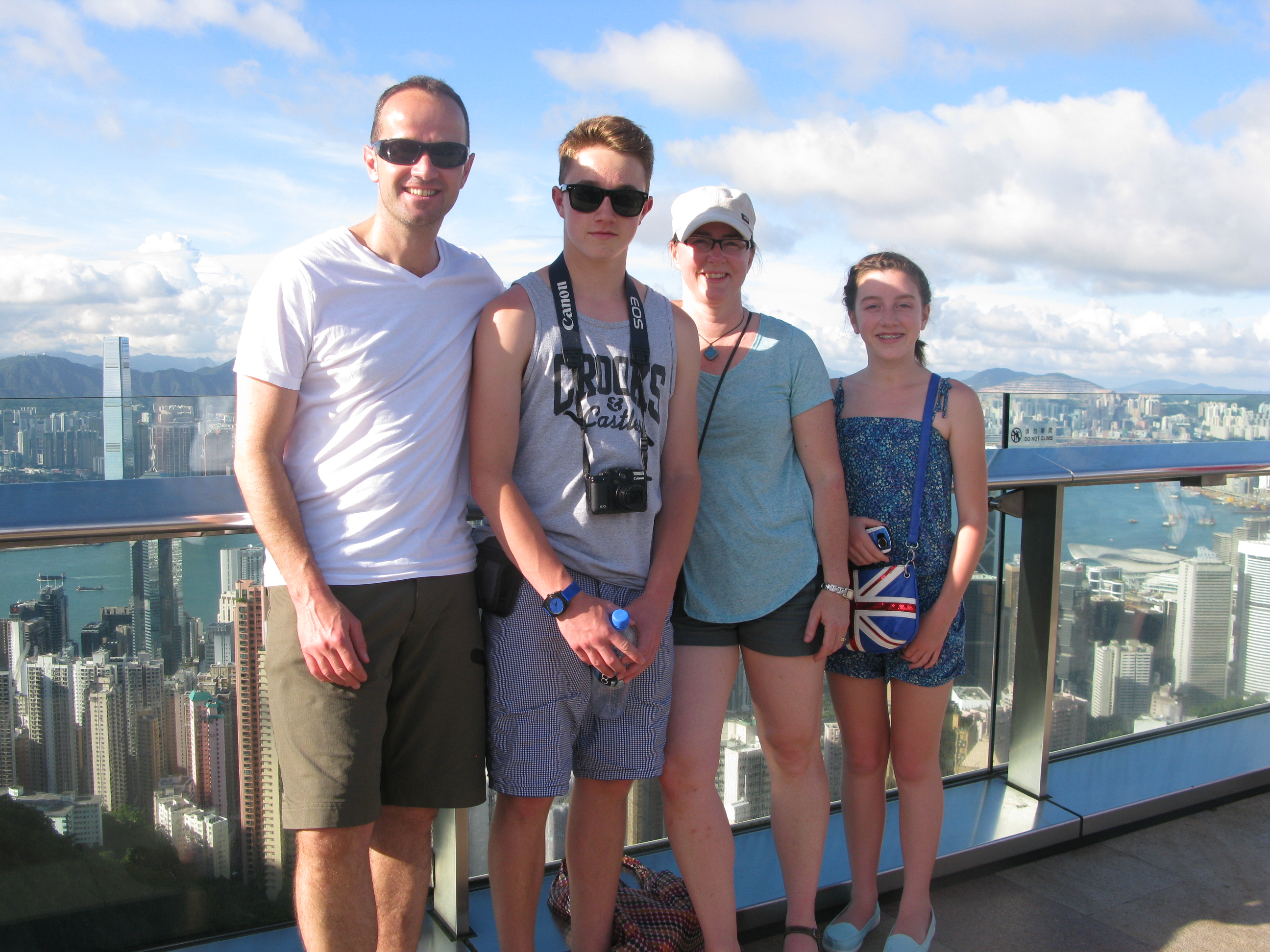
No one in the history of Hong Kong tourism ever thought to take the same photo atop Victoria Peak – seriously!
 Nev Judd: Online and out there